
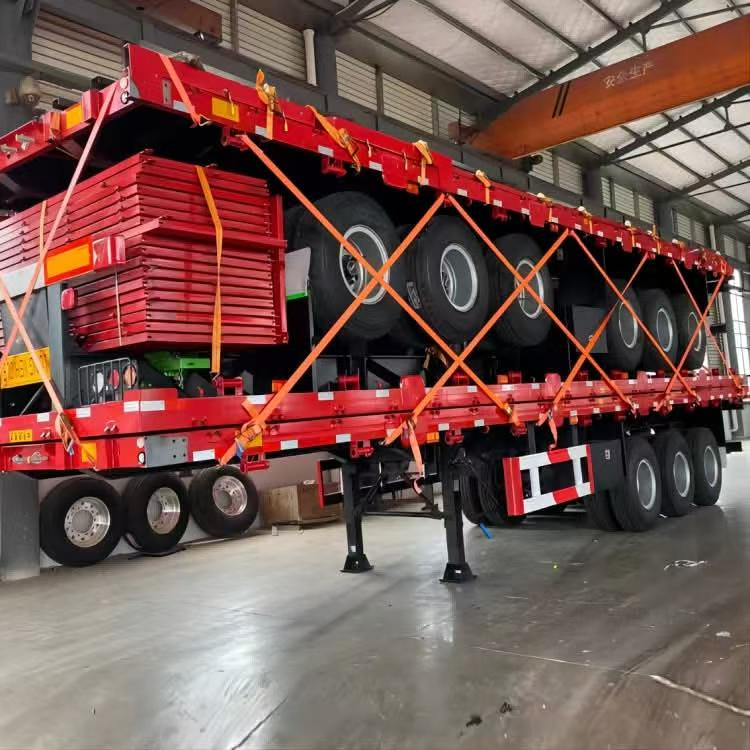
20ft vs 40ft Flatbed Semi Trailer: Which One Should You Choose?
Compare 20ft, 40ft, and 45ft flatbed trailer options for container transport, steel cargo, machinery, road conditions, axle layout, and export configuration.

For container transport, steel cargo, timber, machinery, pipe bundles, and construction materials, trailer length changes daily transport efficiency. However, the longest trailer is not always the best answer. A 40ft flatbed semi trailer is often a balanced export choice because it can handle 20ft containers, 40ft containers, steel materials, and mixed freight. Still, a 20ft flatbed trailer can be easier to operate in narrow yards, while a 45ft flatbed semi trailer can support longer cargo when route conditions allow it.
Therefore, the right decision should start from cargo length, loading weight, container size, axle layout, turning radius, road condition, and destination regulations. This guide compares 20ft, 40ft, and 45ft flatbed trailer options from a real export-use perspective, so the final configuration can match the route instead of only matching a product name.
What Is a Flatbed Semi Trailer?
A flatbed semi trailer is an open-deck transport platform. It has no fixed side walls and no roof, so cargo can load from the side, rear, or top. As a result, cranes, forklifts, and side loaders can work more freely in ports, warehouses, factories, and construction sites.
In daily operation, this design suits containers, steel beams, rebar, timber, pipe bundles, machinery, pallets, and industrial parts. However, the open platform also requires correct deck strength, twist locks, lashing points, and load balance. For that reason, size comparison should include both cargo fit and operating safety.
20ft, 40ft, and 45ft Flatbed Trailer Uses
First, a 20ft flatbed trailer fits compact cargo and tighter access routes. It works well for short containers, small machinery, pallet cargo, modular equipment, and regional material delivery. Because the deck is shorter, turning is easier in crowded yards, city roads, and construction entrances.
Meanwhile, the 40-foot flatbed is the more flexible export platform. It can carry 20ft and 40ft containers when the twist lock layout is correct. It also supports steel, pipes, timber, construction materials, machinery, and general industrial cargo. Therefore, it is often selected when one trailer must cover several cargo types.
In comparison, a 45ft flatbed semi trailer is better for longer materials. For example, long pipes, timber bundles, prefabricated structures, and oversized steel sections may need more deck support. However, the longer platform also needs more turning space, wider road access, and careful route checks.
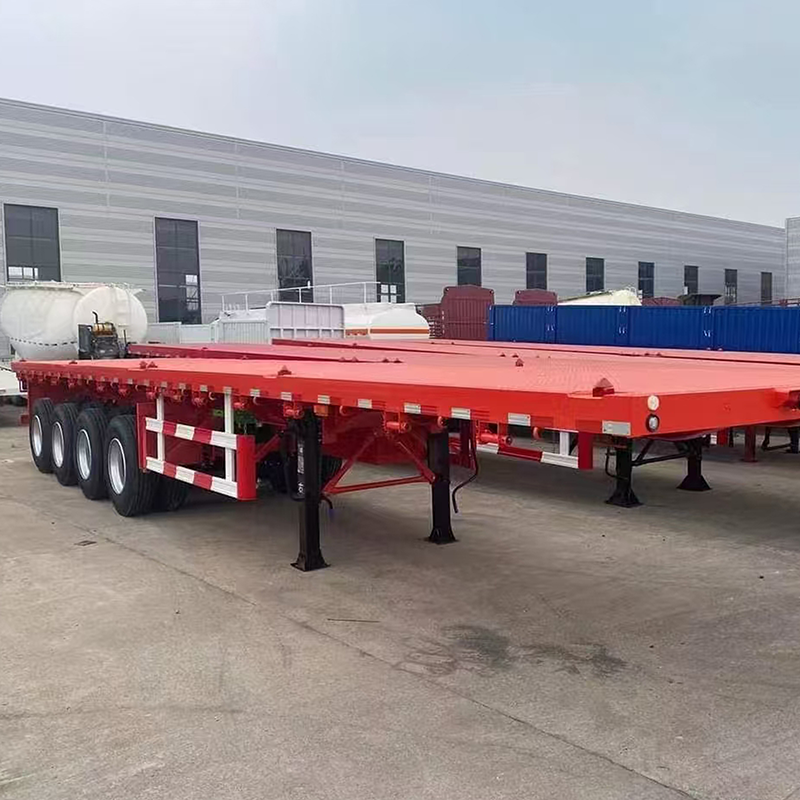
20ft Flatbed Trailer: Compact and Practical
This option is suitable when short cargo, tight yards, city routes, or smaller industrial loads matter more than maximum deck length. In addition, it can reduce operating difficulty on restricted access roads.
Key Size Differences at a Glance
For export planning, length should be compared together with cargo fit, container size, axle quantity, and turning space. The table below gives a practical starting point before confirming final specifications with drawings or cargo photos.
| Trailer Size | Best-Fit Cargo | Main Advantage | Main Limitation |
|---|---|---|---|
| 20ft flatbed trailer | 20ft container, compact equipment, pallets, short steel | Easier turning and better access in narrow sites | Limited space for long cargo and 40ft containers |
| 40ft flatbed trailer | 20ft/40ft containers, steel, timber, pipes, machinery | Balanced size for mixed export transport | Needs more turning space than 20ft models |
| 45ft flatbed semi trailer | Long pipes, long timber, steel structures, project cargo | More deck length for longer loads | Requires stronger route and legal-length checks |
A simple way to narrow the choice is to look at the cargo that appears most often, not the longest load that appears only occasionally. A 20ft trailer is usually the practical option for dedicated 20ft container work, compact machinery, and short-distance routes with restricted yard access. It keeps maneuvering easier and avoids carrying unnecessary deck length on every trip.
For fleets that regularly switch between 20ft and 40ft containers, steel, timber, pipes, and machinery, a 40ft platform normally provides the strongest balance between cargo flexibility and route accessibility. A 45ft model becomes worthwhile when long cargo is a repeated part of the transport plan and the destination route can support the added turning space and overall length.
Container Size and Cargo Length
Container transport is the clearest reason to compare deck length carefully. A 20ft container can fit a shorter flatbed when the operation only handles short boxes. However, many port and warehouse routes require both 20ft and 40ft container movement. In that case, a longer platform with correct twist lock positions is more flexible.
Besides container length, cargo footprint also matters. Steel pipe bundles may need steady support across the deck. Machinery may place high pressure under wheels, tracks, or support legs. Timber packs may require more lashing points along the platform. Therefore, deck length, cross beam spacing, and cargo securing equipment should be reviewed together.
For dedicated container work, a container chassis trailer may be more suitable. However, mixed work often favors a flatbed because it can carry containers on one route and steel or construction materials on the next route.
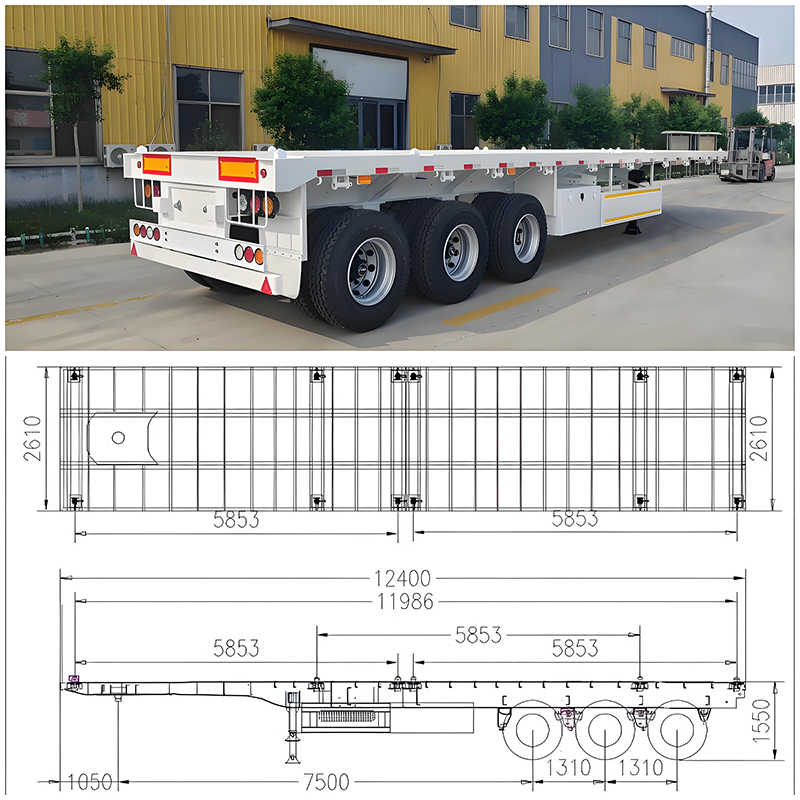
40-Foot Flatbed Trailer: The Balanced Export Choice
This size is practical for container transport, steel cargo, pipes, building materials, and machinery. Moreover, it offers enough length for common export loads without becoming as route-sensitive as a 45ft model.
Key Specifications to Compare Before Ordering
A flatbed trailer should not be selected by length alone. In fact, two trailers with the same deck size may perform very differently after months of loading, braking, turning, and rough-road operation. The main beam, cross beams, axles, suspension, tires, brakes, and lashing system all affect long-term reliability.
Therefore, the specification sheet should include the following points before production confirmation:
- Axle layout: 2 axles may suit lighter duty, while 3 axles are common for container and mixed cargo work.
- Loading capacity: total weight and concentrated weight should both be confirmed.
- Suspension: mechanical suspension is simple and durable, while air suspension improves ride quality for selected routes.
- Main beam and cross beams: stronger steel and suitable spacing help resist bending and deck fatigue.
- Twist locks: lock positions should match 20ft, 40ft, or combined container transport.
- Tires and brakes: tire size, brake system, and parts availability should match the destination market.
- Lashing points: rope hooks, rings, stake pockets, and chain points help secure steel, pipes, timber, and machinery.
Turning Radius and Road Condition
Turning radius becomes important in ports, mining roads, industrial parks, construction sites, and older city areas. A 20ft flatbed trailer is easier to turn and easier to position in a small yard. Therefore, compact routes may favor the shorter model even when a longer platform looks more useful on paper.
By contrast, a 40-foot flatbed needs more room but still works well on many highway, port, and warehouse routes. It offers strong cargo flexibility while keeping route planning manageable. However, entrance width, loading bay size, and local turning areas should be checked before final selection.
A 45ft model needs the most careful route review. It may increase efficiency for long cargo, but tight curves, narrow gates, toll stations, and uneven roads can reduce that advantage. For machinery with low ground clearance or heavy concentrated weight, a lowbed trailer may also be worth comparing.
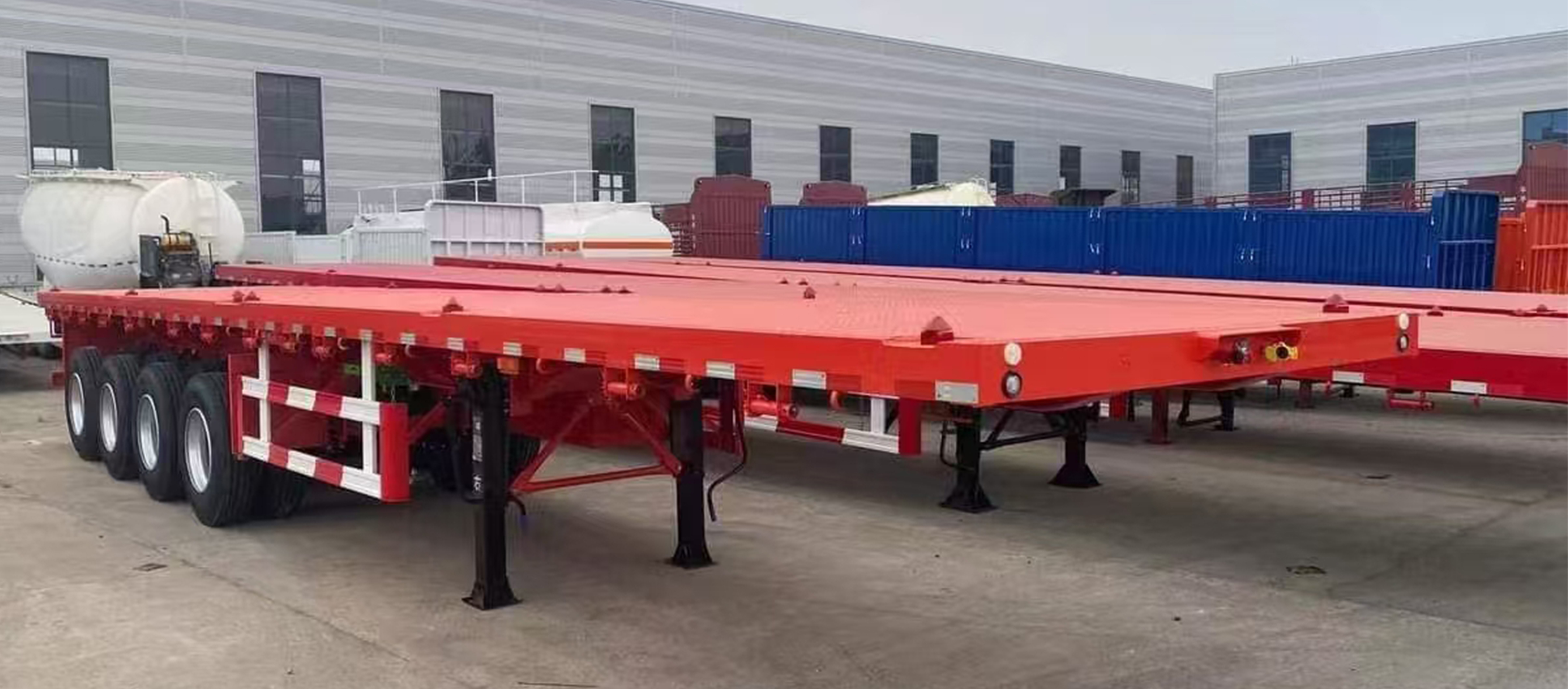
45ft Flatbed Semi Trailer: More Length for Long Cargo
This option suits long pipes, timber, steel structures, and project materials. However, it should be selected only after checking legal length, turning radius, yard access, and road condition.
How to Choose the Right Configuration
First, confirm the main cargo type. Container work needs twist locks and correct lock positions. Steel and pipe transport need enough deck length, lashing points, and beam strength. Machinery transport needs careful checking of weight concentration and loading method.
Next, review the road environment. Paved highway routes can use a standard structure in many cases. However, rough roads, mining sites, rural routes, and construction access roads may need reinforced beams, heavy-duty suspension, stronger landing gear, and suitable tire choices.
Then, check destination rules. Axle load, overall length, brake system, lighting, side protection, and reflector requirements can vary by market. As a result, destination country and route type should be included in the quotation request from the beginning.
Finally, avoid over-specification. A stronger trailer can improve durability, but unnecessary weight and cost may reduce operating value. Likewise, a light-duty trailer may appear economical at first, yet rough-road use can increase repair risk later. The best specification sits between cargo demand, road reality, and maintenance convenience.
BOCA Configuration Advice for Export Projects
For export work, Boca Vehicle can match flatbed trailer configuration with cargo length, loading weight, axle quantity, road condition, and destination country. This approach is more practical than choosing only by trailer size.
A typical configuration review may include deck length, main beam strength, cross beam spacing, twist locks, suspension type, tire size, brake system, paint treatment, lashing points, and export shipping method. In addition, production photos and video confirmation can help review important details before shipment.
- Choose 20ft when compact access and shorter cargo define the route.
- Choose 40ft when containers, steel, timber, and machinery share the same transport plan.
- Choose 45ft or extendable design when long cargo appears often enough to justify extra deck length.
When an Extendable Flatbed Trailer Makes Sense
Sometimes, fixed length is not enough. Long beams, utility poles, bridge parts, and irregular project cargo may require a longer support surface. In that situation, an extendable flatbed trailer can provide extra deck length when needed while still supporting standard transport work in other periods.
However, extendable structure should solve a repeated problem, not a rare one. If long cargo appears only occasionally, a fixed 40ft or 45ft platform may remain simpler and more cost-effective. If long cargo appears regularly, an extendable design can reduce loading adjustments and improve cargo support.

Extendable Flatbed Trailer: Flexible Length for Project Cargo
This layout can help when cargo length changes often and fixed-deck trailers keep creating loading compromises. Moreover, it is useful for long cargo that needs better support across the platform.
Information to Prepare Before Inquiry
A clear inquiry helps create a more accurate recommendation. Instead of asking only for a standard model, the request should include real cargo and road details. This prevents undersized beams, incorrect axle layouts, poor lock placement, or unnecessary accessories.
Before requesting a configuration, prepare the following information:
- Cargo type, such as container, steel, pipe, timber, machinery, or mixed freight.
- Cargo dimensions, including length, width, height, and loading footprint.
- Loading capacity, including total load and heaviest single item.
- Container size, such as 20ft, 40ft, or both.
- Preferred axle quantity, or openness to a factory recommendation.
- Road condition, such as highway, rough road, port road, mining road, or construction site.
- Destination country and destination port.
- Special needs, such as twist locks, air suspension, front wall, side posts, toolbox, spare tire carrier, or paint color.
Final Selection Advice
In short, trailer length should follow the work. A 20ft flatbed trailer fits compact access and shorter cargo. A 40-foot flatbed handles mixed container, steel, machinery, timber, and general freight tasks. A 45ft flatbed semi trailer supports longer cargo when road access and regulations allow it.
For a practical export recommendation, send cargo type, loading capacity, axle quantity, road condition, destination country, and preferred shipping port. Then the final 40ft flatbed semi trailer configuration can be matched to real transport conditions, not only to a standard product label.
Extended Reading
Flatbed Semi Trailer Buying Guide for Mixed Cargo
For a complete overview of container, steel and machinery transport requirements, read our flatbed semi trailer buying guide. It explains how deck length, axle layout, twist locks, beam strength, load concentration, road conditions, and cargo-securing points should be compared before ordering.
Extendable Flatbed Trailer Guide: When You Need Extra Length
A useful follow-up for long steel, pipe, beam, and project cargo routes where fixed deck length creates repeated loading compromises.
40 ft Shipping Container Trailer: 3 Axle vs 4 Axle Chassis
This article helps compare axle layout and container transport requirements when container work is the main route.
Tri Axle Container Chassis Buying Guide
A related guide for transport projects that focus more on container movement than general flatbed cargo.
FAQ
Is the 40-foot flatbed the most common export choice?
Yes, it is often the most balanced option for mixed export transport. It can handle 20ft containers, 40ft containers, steel materials, pipes, timber, machinery, and general cargo. However, road access, legal length, axle load rules, and loading weight still need confirmation.
When is a 20ft flatbed trailer better?
A 20ft flatbed trailer is better when compact cargo, narrow roads, tight yards, and smaller delivery areas are more important than long deck space. It is also practical for short-distance industrial transport, small equipment, and regional construction material movement.
Can one flatbed carry both containers and steel cargo?
Yes, one flatbed can carry containers and steel cargo if the trailer has correct twist locks, enough deck strength, proper lashing points, and suitable axle capacity. For container-only routes, a container chassis may still be more efficient.
Can trailer length and twist locks be customized?
Yes, deck length, twist lock positions, axle layout, suspension type, tire size, lashing points, front wall, and paint color can be configured around cargo type, container size, road condition, and destination requirements.
Is a 45ft flatbed always better than a 40-foot flatbed?
No. A 45ft flatbed offers more deck length, but it also needs more turning space and stronger route checks. It is better for long cargo projects, while a 40-foot flatbed remains more balanced for general export transport.