
3 Axle Flatbed Semi Trailer vs Tandem: Which Fits Your Route?

The wrong axle layout usually does not show its weakness on the quotation sheet. It shows up later, when the route gets longer than expected, the cargo gets denser, or one trailer suddenly has to cover steel, machinery, and container work in the same month. That is why this choice matters more than it first looks. In most cases, tandem suits shorter regional work, moderate loads, tighter unloading space, and a simpler operating pattern. A 3 axle layout usually makes more sense for longer runs, heavier cargo, steel, machinery, container work, and roads that are less forgiving from start to finish. In Boca’s flatbed range, both tandem and 3 axle layouts are offered across common working sizes such as 40 ft and 45 ft.
Why axle count changes the route more than it first seems
On paper, both versions do the same basic job. They are open-deck trailers built for cargo that cannot be boxed in easily. In real transport work, though, axle count changes how the trailer carries weight, how calm it feels under denser cargo, and how much variation the route can throw at it before the setup starts feeling undersized.
That is why this is less a spec-sheet debate than a route decision. If the trailer is staying close to home, carrying steady freight, and backing into tighter sites, tandem often feels like the right level of trailer. If the same unit is expected to run farther, carry denser freight, and move between different kinds of jobs, the extra axle tends to solve problems before they start.

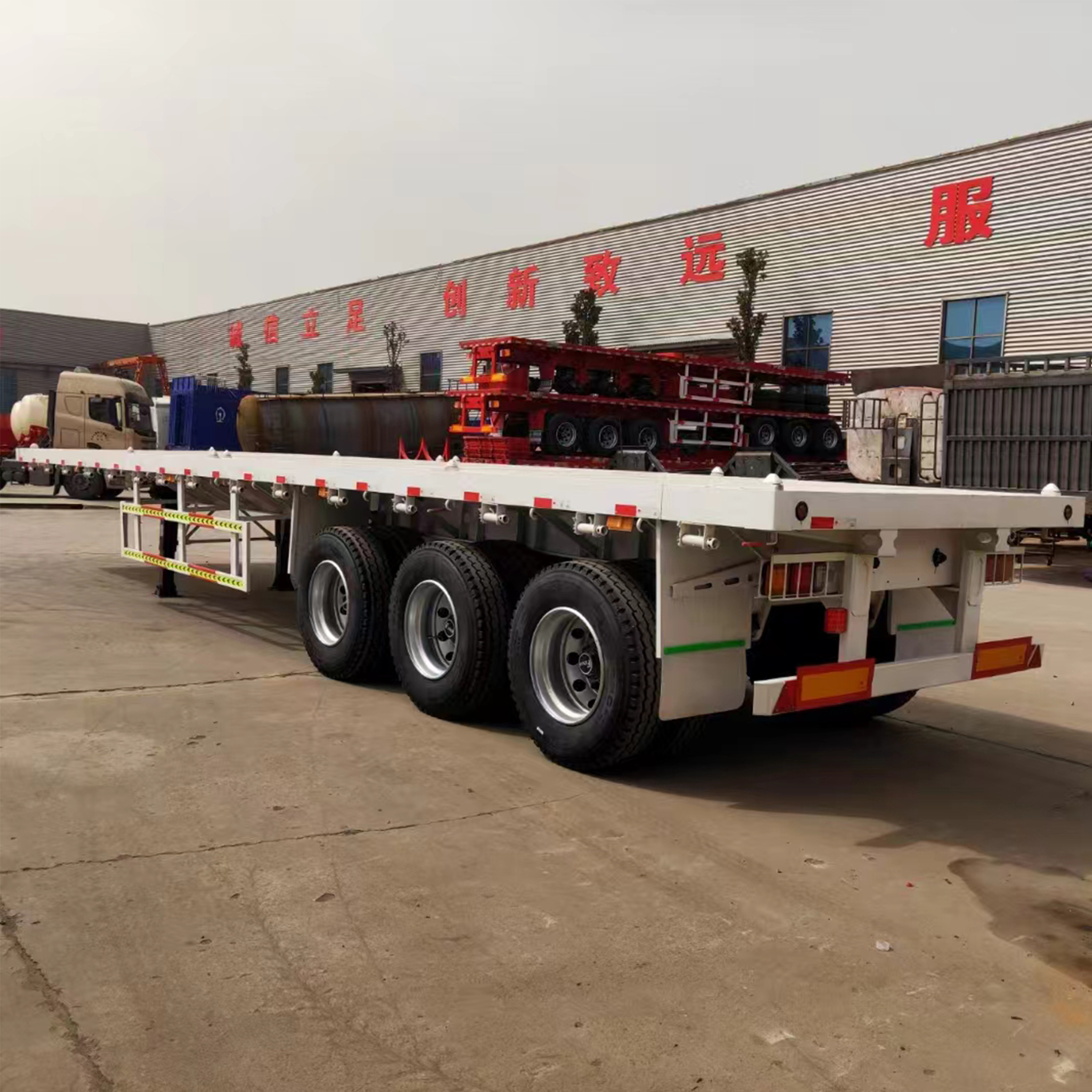
3 axle flatbed trailer from Boca’s product range.
Where tandem still makes the most sense
Tandem flatbed trailers are often the better fit when the work is steady rather than extreme. Regional building materials are a good example. The loads may be regular, but not unusually dense. The route may involve tighter yards, busier unloading points, and shorter cycles where easy handling matters as much as outright capacity. In that kind of work, moving to a heavier layout does not always improve the result. In practical terms, tandem belongs on the simpler side of the job, while a 3 axle layout is usually the better fit once the work becomes heavier or less predictable.
The same logic applies to everyday palletized freight, shorter steel sections, and routine site supply work. If dispatch stays inside a middle range most of the time, tandem keeps the trailer straightforward. It is easier to justify, easier to live with, and often easier to match to regional work without paying for capability that rarely gets used.
In practice, tandem is usually the better fit when the route looks more like this:
- short to medium haul
- moderate cargo weight
- tighter loading or unloading areas
- fewer shifts between cargo types
- stronger pressure on initial budget than on maximum flexibility
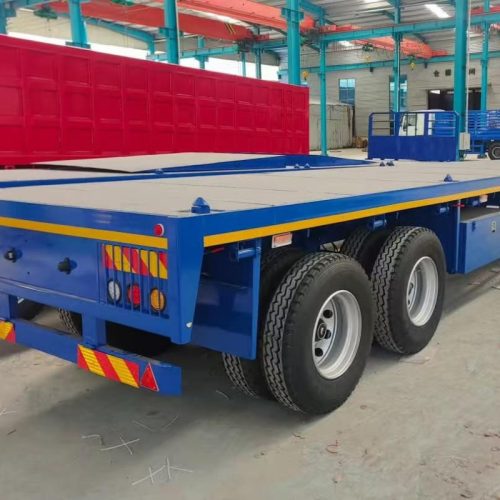
Tandem flatbed trailer shown on Boca’s current product page.
Where a 3 axle flatbed semi trailer earns its keep
A 3 axle flatbed semi trailer starts to look right when the route gets broader and the freight gets less predictable. Long-distance machinery moves are one example. Dense steel is another. Container work mixed with general cargo is another again. In all of those cases, the trailer is being asked to do more than one clean, repetitive job. That is where the extra axle usually pays off. That is exactly the kind of route profile where a 3 axle flatbed semi trailer usually starts to make more sense.
This matters even more when road quality changes after the highway ends. Many routes look simple on a map and then become uneven near industrial yards, project sites, ports, or rural delivery points. A 3 axle layout usually handles that mixed rhythm more comfortably, especially when the cargo is dense and the trailer cannot count on perfect loading conditions every trip.
It is also the more practical option when one trailer has to cover several roles over the year. A fleet may not want one unit for containers, another for steel, and another for equipment. In that situation, a 3 axle trailer often makes more sense than buying a cheaper setup and then trying to keep the work inside its comfort zone.
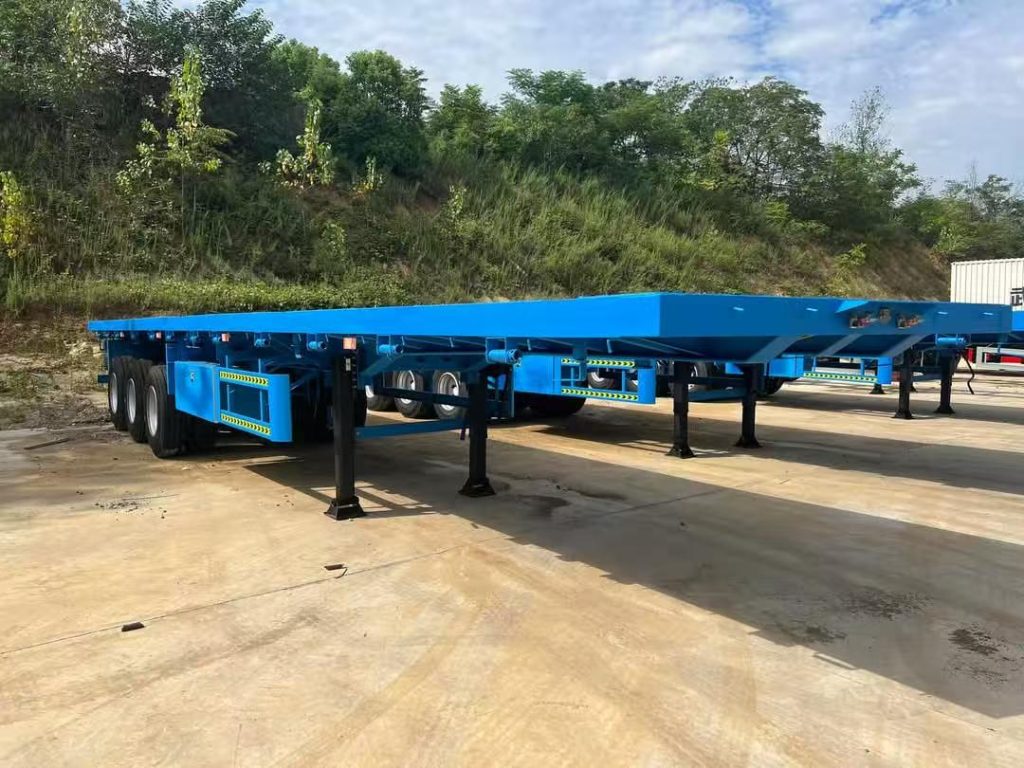
Tri axle flatbed trailer from Boca’s flatbed gallery.
The choice usually comes down to four practical checks
The first is cargo. Not all “heavy” freight behaves the same way. Bagged material, pipe bundles, compact machinery, steel sections, and containers load the deck differently. If the route keeps coming back to denser cargo or freight with more concentrated weight, the argument for 3 axles gets stronger. If the cargo stays more routine and evenly distributed, tandem is often enough. That is why axle choice becomes clearer once the actual cargo mix is clear, not just the nominal payload.
The second is distance. A trailer on short repetitive work does not need the same margin as one spending long days on the road. That is why a 40 ft flatbed semi trailer with 3 axles often makes more sense on longer lanes, especially when the cargo is not light to begin with.
The third is road quality. This point is easy to miss during quotation. A route may be mostly paved and still have rough sections where the trailer actually earns its keep: quarry approaches, site roads, uneven shoulders, industrial parks, port ramps. Routes like that are usually where a 3 axle layout starts to justify itself much more clearly.
The fourth is loading style. A route built around forklift loading of moderate goods is one thing. Crane-loaded machinery or mixed container and general cargo work is another. Open-deck trailers are flexible by design, but some routes ask more from that flexibility than others. In those mixed jobs, the right flatbed semi trailer is usually the one that still works when the load plan changes midweek, not the one that simply looked cheapest at quotation stage.
A few route examples make the decision easier
For regional building materials, tandem is often the cleaner answer. The work is usually regular, the sites can be tighter, and the loads often stay within a moderate band. In that lane, a simpler trailer is not a compromise. It is simply the right tool for the job.
For long-haul steel and machinery, 3 axles usually make more sense. The issue is not only maximum weight. It is repeated dense cargo over distance. That is usually the point where the heavier layout becomes easier to justify.
For operations that switch between containers and ordinary freight, the decision often moves toward 3 axles as well. That kind of mixed scheduling is often exactly where 3 axles become the more practical choice.
For routes with tighter access but no real need for heavy-duty reserve, tandem still holds up very well. Not every operation benefits from moving up a class.
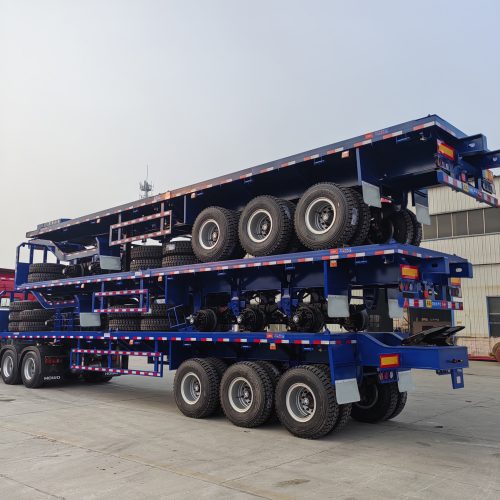
3 axle flatbed trailers prepared for shipment in Boca’s yard.
What buyers often overlook
One common mistake is looking at purchase price before looking at how the route may change over the year. A tandem trailer may look like the obvious value at first. Then the work starts to shift. A few machinery moves appear. A container lane is added. A project site comes in with rougher access roads. Suddenly the cheaper trailer is being asked to do work it was not really chosen for. That does not make tandem a bad product. It only means the route was judged too narrowly at the start.
Another easy mistake is focusing on deck length and not on cargo density. A 40 ft flatbed semi trailer can carry very different kinds of freight. Some loads look large but are not especially demanding. Others are compact and much harder on the trailer. That is why length alone rarely answers the tandem versus 3 axle question.
Road quality is another blind spot. Many decisions get made around the main highway portion of the route, even though the unloading point is where problems show up first. Industrial yards, temporary project roads, quarry entrances, and rough shoulders all change how a trailer feels in daily use. In practice, the last few kilometers often tell more than the first fifty.
Mixed-use work also gets underestimated. On paper, one route may look like container work and another like general cargo. In real scheduling, the same trailer may get pulled into both. That is often the point where 3 axles start to make more sense. Flexibility can sound abstract at quotation stage, but it stops feeling abstract once dispatch needs it every week.
Price matters, but route fit matters more
Tandem usually starts lower, and that pattern is easy to see across common flatbed configurations.
There are plenty of cases where that lower purchase price is the smarter decision, not just the cheaper one. If the work is mostly regional, the cargo stays in a moderate band, unloading space is tighter, and the trailer is unlikely to be reassigned into heavier-duty jobs, tandem can be the right buy from the beginning. In that situation, paying more for 3 axles may simply mean paying for margin that the route will never use.
The logic changes when the route is not that stable. If the trailer will cover longer distances, denser cargo, container overlap, machinery transport, or roads that are decent in one section and rough in the next, the higher starting price of 3 axles can be easier to justify. The reason is simple: the trailer is less likely to feel limited once work picks up or shifts. That matters in fleets where one trailer may end up handling several kinds of jobs instead of one clean lane.
So the real procurement question is not “Which costs less today?” It is “Which one will still suit the route when the easy assumptions are gone?” Lower purchase price is not always better route fit. It only works when the route really stays as simple as expected.
Final take
For most regional work, tandem remains the sensible answer. It suits moderate loads, shorter cycles, and sites where space is tighter and the work stays predictable. For longer routes, denser cargo, machinery, steel, and mixed container work, 3 axles usually make more sense.
The better decision usually comes from four simple checks: cargo type, route distance, road condition, and loading method. Those four tell more than a long specification table, and they usually tell more than the first quotation as well. A trailer that looks attractive on paper can still be the wrong fit once freight gets denser, roads get rougher, or the same unit starts covering more than one kind of work.
For operations comparing both layouts, Boca’s flatbed trailer range is a practical place to compare tandem and 3 axle models side by side, while the semi-trailer manufacturer page gives a broader view of available configuration options. In the end, the right flatbed semi trailer is the one that matches the real route before it matches the spec sheet.
Need a quote for tandem or 3 axle flatbed trailers?
WhatsApp: +86-17274039217
Email: info@bocaautomobile.com
FAQ
If the route may expand later, is it worth moving from tandem to 3 axles now?
Often, yes. If the trailer may move from regional work into denser cargo, machinery, or mixed-use jobs, choosing 3 axles earlier can be the more practical decision.
Is tandem still enough for regional building materials?
Usually, yes. If the loads stay moderate and the route remains short to medium distance, tandem is often the cleaner fit.
Does a 40 ft flatbed trailer always need 3 axles?
No. Deck length alone does not decide it. The better choice still depends on cargo weight, route distance, road conditions, and whether the trailer also handles containers or machinery.
For mixed-use routes, what matters more than the first quote?
Usually flexibility. If the same trailer may carry containers one week and heavier general cargo the next, the starting price matters less than whether the trailer can handle that change without feeling undersized.