
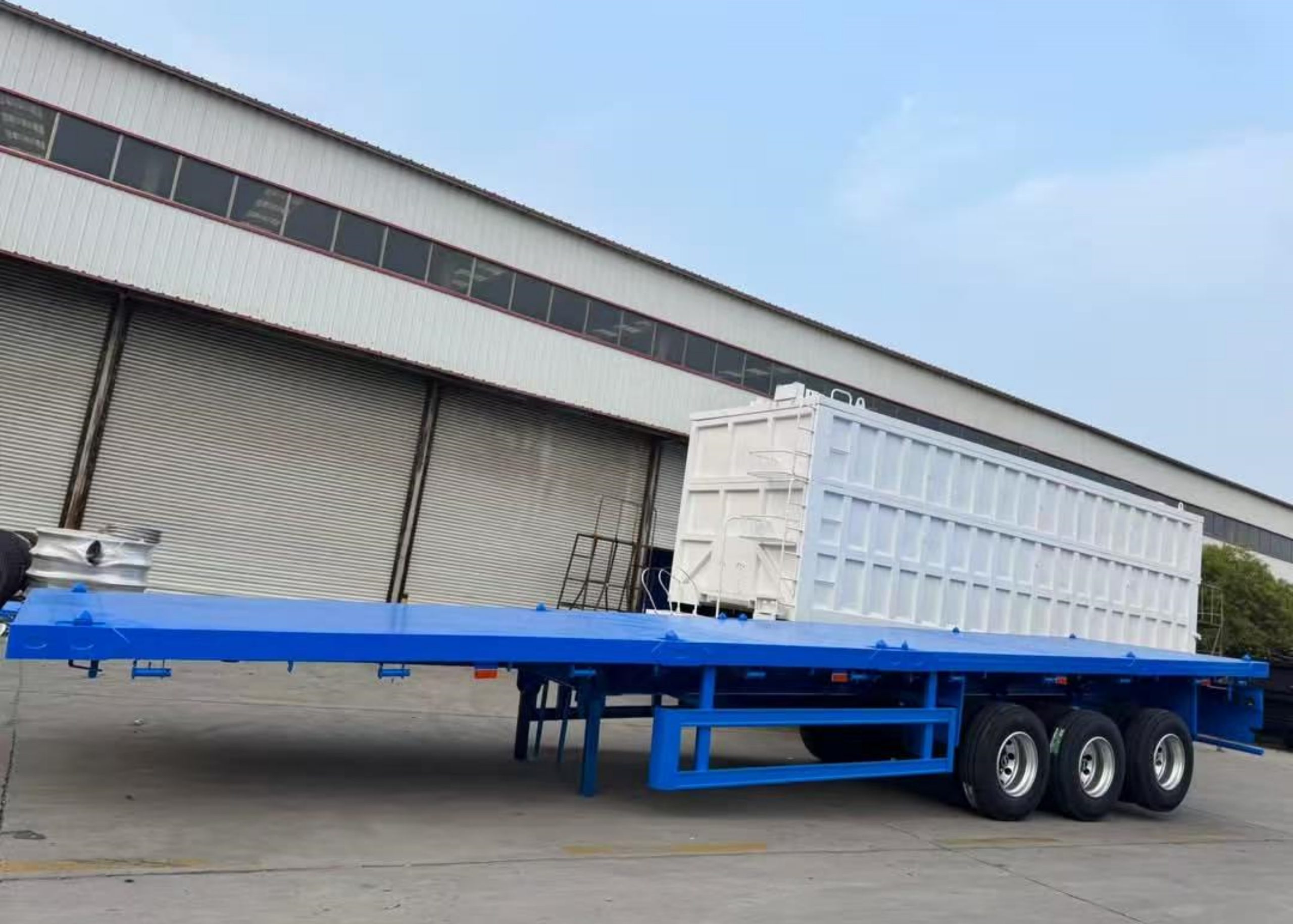
What Is a Flat bed Semi Trailer Complete Overview and Uses

Introduction:
Flat bed semi trailer offers exceptional flexibility—thanks to its open chassis design, cargo can be loaded and unloaded from any direction. If you’ve ever seen a truck transporting long steel pipes, machinery, or lumber, it was likely a flat bed semi trailer for sale.
In this guide, we’ll explain what a flat bed semi trailer for sale, exploring its structure, specifications, and advantages, and help you understand why it remains one of the most popular flat bed semi trailer types in global logistics.
What is a flat bed semi trailer?
Flat bed semi trailer with a flat, level bottom and no fixed sides or roof. This vehicle is designed to transport large or unusually shaped cargo that cannot easily fit inside a standard box or side-mounted semi-trailer.Due to its open design, a flat bed semi trailer for sale can be loaded from the top, side, or rear, making it ideal for transporting bulky or heavy equipment.
Basic Structure
A semi flat bed trailer typically consists of the following components:
Main beam:The primary load-bearing structure made of high-strength steel or aluminum.
Deck:This flat loading and unloading surface is typically made of wood, steel, or aluminum.
Axles and suspension system:Support the flat bed semi trailer weight and provide stability during transport.
Axles and undercarriage:Connect the flatbed semi truck trailer to the front of the tractor and support it when uncoupled.
Braking and electrical systems:Ensure safety and lighting during highway driving. Secure pockets and tie-down points,Use straps or chains to secure cargo.
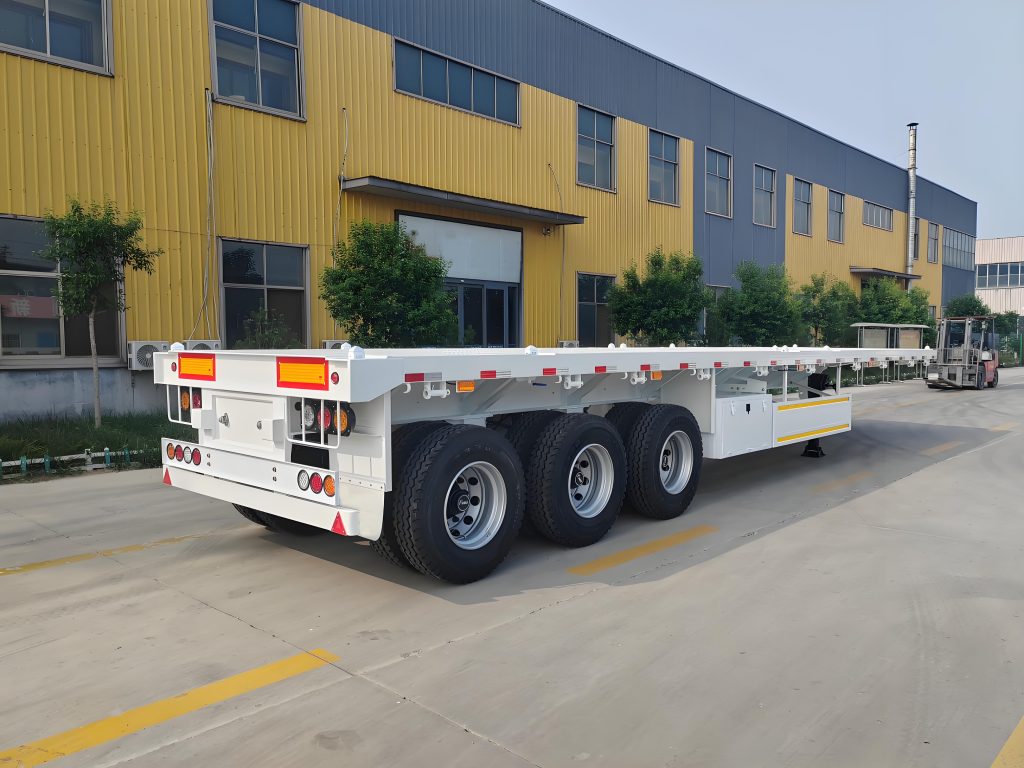
Flat bed Semi Trailer For Sale Specifications (Typical Parameters)
Below is a detailed table listing the standard specifications for flatbed semi truck trailer. Actual values may vary depending on the flatbed semi trailer manufacturer and regional regulations.
| Parameter | Standard Specification | Notes / Options |
| Overall Length | 12.5m – 16.5m (40ft – 53ft) | Extendable models up to 24m (80ft) for long cargo |
| Width | 2.5m – 2.6m (8.2ft – 8.5ft) | Standard road width limit |
| Height (Deck from Ground) | 1.3m – 1.6m (4.2ft – 5.2ft) | Drop-deck models are lower |
| Load Capacity | 30 – 60 tons | Depending on number of axles and frame strength |
| Axles | 2, 3, or 4 | 3-axle type is most common |
| Tare Weight | 6 – 9 tons | Aluminum versions are lighter |
| Main Beam Material | Q345/T700 high-tensile steel | Improves strength and reduces weight |
| Tires | 8.25R20 / 12R22.5 | Regional variations apply |
| Braking System | ABS/EBS optional | Ensures safer braking performance |
| Kingpin Size | 2” or 3.5” | Matches with tractor fifth wheel |
Advantages of flatbed truck trailer for sale
Flat bed semi trailer offer numerous advantages, making them the preferred mode of transport for transporters and shippers worldwide:
1. Maximum Loading Flexibility
Loading and unloading can be performed from any direction (top, side, or rear).
Ideal for large or irregularly shaped cargo that doesn’t fit in a van.
2. High Load Capacity
Loads can reach up to 60 tons, depending on axle configuration.
Ideal for heavy industrial and construction applications.
3. Versatile Cargo Transport Options
Suitable for containers, machinery, lumber, pipes, and more.
One container flatbed semi trailer can serve multiple industries.
4. Easier and Faster Loading
The lack of a roof and walls speeds up loading with cranes and forklifts.
Reduces downtime and increases turnover rates.
5. Durability and Longevity
Constructed with high-strength steel beams for a long service life.
The streamlined design means easier maintenance.
6. A Cost-Effective Solution
Reduced need for multiple specialized trailers.
Due to the wide market demand, its resale value is extremely high.
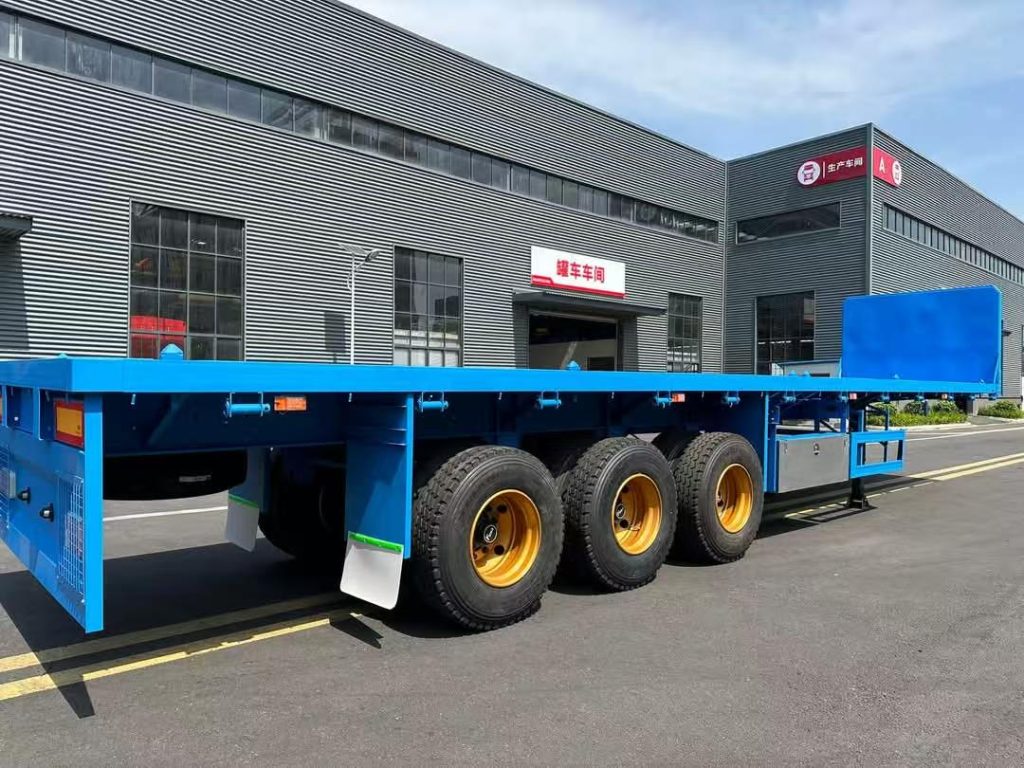
Disadvantages although flatbed truck trailer for sale are versatile:
| Challenge | Impact | Solution |
| Cargo exposure to weather | Damage from rain, sun, or dust | Use tarpaulin or Conestoga cover system |
| Cargo securing complexity | Requires careful strapping | Use rated chains, straps, and edge protectors |
| Higher risk of load shifting | Safety hazard | Regular inspection during transport |
| Height/weight regulations | Fines or delays if exceeded | Pre-plan routes and obtain oversize permits |
Conclusion
A flatbed semi trailer is more than just a piece of equipment,it’s a versatile logistics solution that keeps a wide range of industries running smoothly. Its open frame construction, large capacity, and loading flexibility make it suitable for transporting a wide range of cargo, including construction materials and heavy machinery.
Understanding the types, specifications, and applications of semi flatbed trailer will help you make more informed purchasing decisions and ensure your operations remain safe, efficient, and compliant.
Whether you’re a fleet owner, logistics provider, or construction company, investing in a high-quality flatbed semi trailer can significantly improve your transportation efficiency and increase your return on investment.