
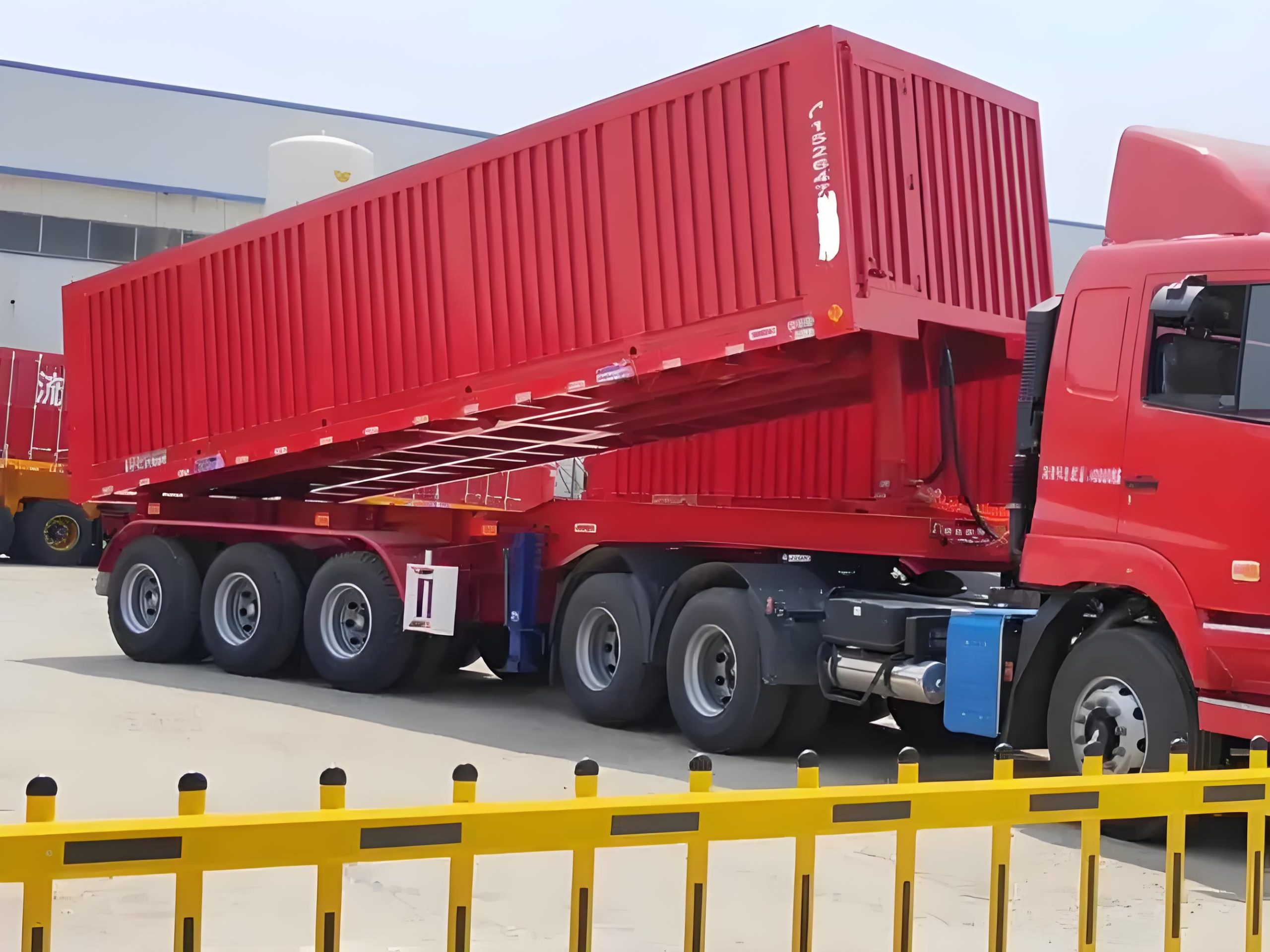
The Ultimate Guide to heavy-duty dump trailer

Overview
Heavy-duty dump trailer play a vital role in construction, mining, quarrying, and infrastructure projects. With ever-increasing demands for material transport efficiency and cost control, selecting the right Heavy-duty dump semi trailer has become more important than ever. This guide provides a comprehensive technical analysis, including specification sheets and comparison charts, to help buyers choose the most suitable dump semi-trailer for their business.
Whether you’re transporting sand, rocks, aggregates, construction waste, coal, or ore, this article will help you understand each configuration and make the right purchasing decision.
What is a Heavy-Duty Dump Trailer?
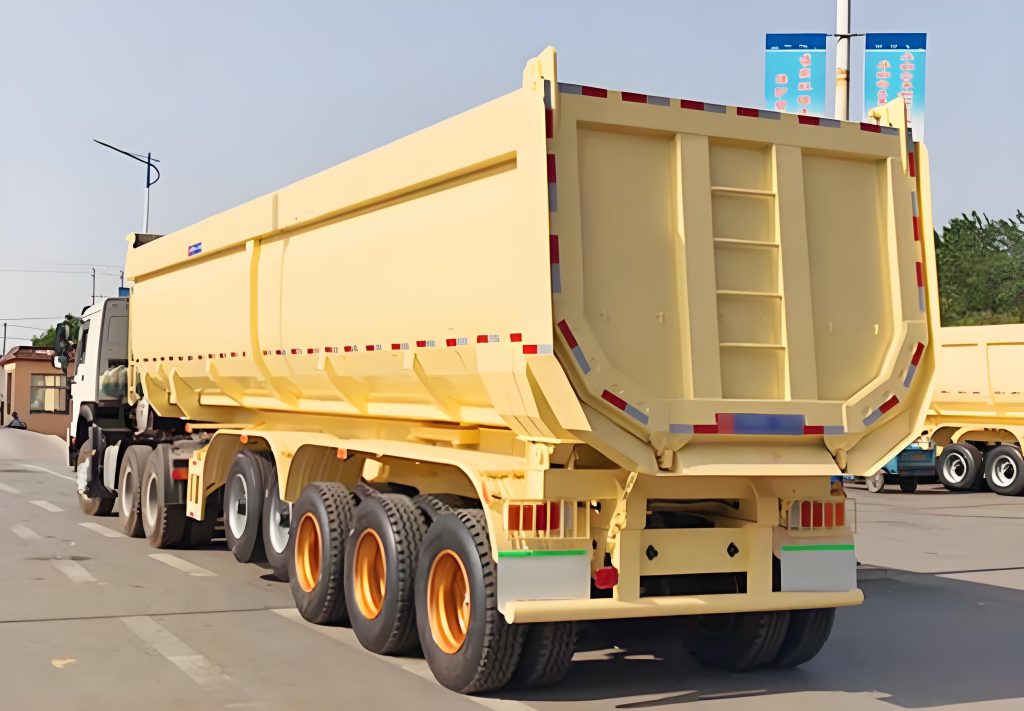
Heavy-duty dump semi trailer (also known as tipper semi trailers or dump truck semi trailers) are trailers specifically designed for transporting and unloading large quantities of bulk materials. They utilize a powerful hydraulic lifting system to raise the trailer body, allowing materials to be unloaded quickly and efficiently through the rear doors.
Compared to standard freight semi trailers, heavy-duty dump trailers are constructed with reinforced structures, high-strength steel, and heavy-duty components to withstand extreme loading conditions. They are widely used in industries requiring efficient handling of large quantities of materials, including construction, mining, quarrying, and infrastructure development.
Key Features of Heavy-Duty Dump Trailers
High Load Capacity
Heavy-duty dump semi trailers design for transporting large quantities of bulk materials. Depending on axle configuration, suspension system, and trailer structure, their payload capacity can range from 40 tons to 120 tons or even higher.
Powerful Hydraulic Dumping System
The hydraulic lifting system is the core component of a dump trailer. It provides stable lifting force, allowing the trailer bed to reach the appropriate tilt angle for rapid unloading.
The hydraulic system can customiz to meet payload requirements and working conditions.
Heavy-Duty Structural Design
Heavy-duty dump trailers construct with reinforced components to withstand harsh operating environments.
These include a high-strength steel chassis, a reinforced dump bed, and a heavy-duty suspension system.
This design helps the trailer withstand impacts from rocks, gravel, and other abrasive materials, while extending its service life.
Excellent Stability and Safety
Safety is paramount when transporting and unloading heavy loads. A well-designed dump semi-trailer features: an optimized center of gravity, strong frame stability, and reliable braking performance. Its multi-axle configuration helps distribute weight evenly, reduces tire pressure, and improves stability on rough terrain.
Common Applications of Heavy-Duty Dump Trailers
Construction Projects
Used for transporting sand, gravel, concrete materials, and construction waste in large infrastructure projects.
Mining and Quarrying Operations
Designed for handling heavy materials such as ore, coal, and stone in harsh mining environments.
Road Construction
Ideal for supplying aggregates, asphalt materials, and earthmoving materials for highway and municipal projects.
Demolition and Earthmoving Engineering
Used for clearing demolition waste and transporting large quantities of soil and debris.
Industrial Material Transport
Suitable for large-scale material handling operations requiring high efficiency and continuous transport.
Main types of heavy-duty dump trailer for sale
Damage to the trailer body structure significantly affects unloading speed, durability, and load-carrying efficiency.
Table 1: Overview of heavy duty dump semi trailer Body Types
| Body Type | Shape | Advantages | Best For | Disadvantages |
| U-shape dump body | half-round | strong impact resistance, fast unloading | stones, river sand, aggregates | slightly higher cost |
| Square box dump body | rectangular | large capacity, easy to load | soil, demolition waste, construction materials | slower discharge of sticky materials |
| End dump tipper | rear lifting | simple design, economical | all general applications | limited stability on slopes |
| Side dump | side tipping | unload without reversing | road construction, sand | not suitable for heavy rocks |
For heavy materials, the optimal choice is a U-shaped Hadox unloading box.
Dump Body Material Options
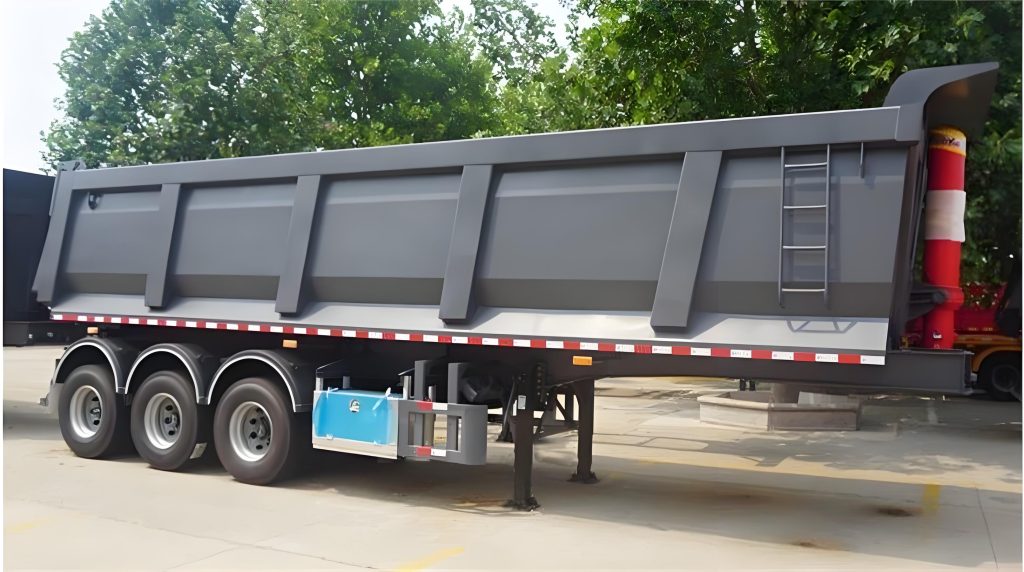
Choosing the right steel determines the heavy-duty dump trailer lifespan and load-bearing capacity.
Table 2: Body Steel Material Comparison
| Steel Type | Model | Hardness | Thickness | Strength Level | Ideal Application |
| High-strength carbon steel | Q345 | 170–190 HB | 6–10 mm | good | general construction |
| Wear-resistant steel | Hardox 450 / 500 | 420–470 HB | 4–6 mm | excellent | rocks, gravel, ore |
| Lightweight high-strength steel | Domex 700 / 900 | 250–300 HB | 4–6 mm | very good, reduces weight | long-distance/high payload |
Recommendation: If your customers frequently transport crushed stone, choose Hardox 450 material for the unloading box and Q345 material for the chassis.
Heavy-duty dump trailer Hydraulic System
The hydraulic system determines the lifting speed, stability, and safety.
Table 3: Hydraulic Cylinder Options
| Type | Brand | Section | Stroke | Benefits | Recommended Use |
| Front-mounted telescopic | HYVA / JOST | 5–7 stage | 110–214 | best lifting stability | most dump trailers |
| Middle dual-cylinder | FC series | 2–3 stage | 120–250 | stronger power | mining & ultra-heavy jobs |
| Economical telescopic | Chinese brand | 3–5 stage | 100–170 | cost-effective | medium-duty |
The most popular configuration globally: Front-mounted HYVA 214.
Axles, Tires, Suspension, and Braking Systems
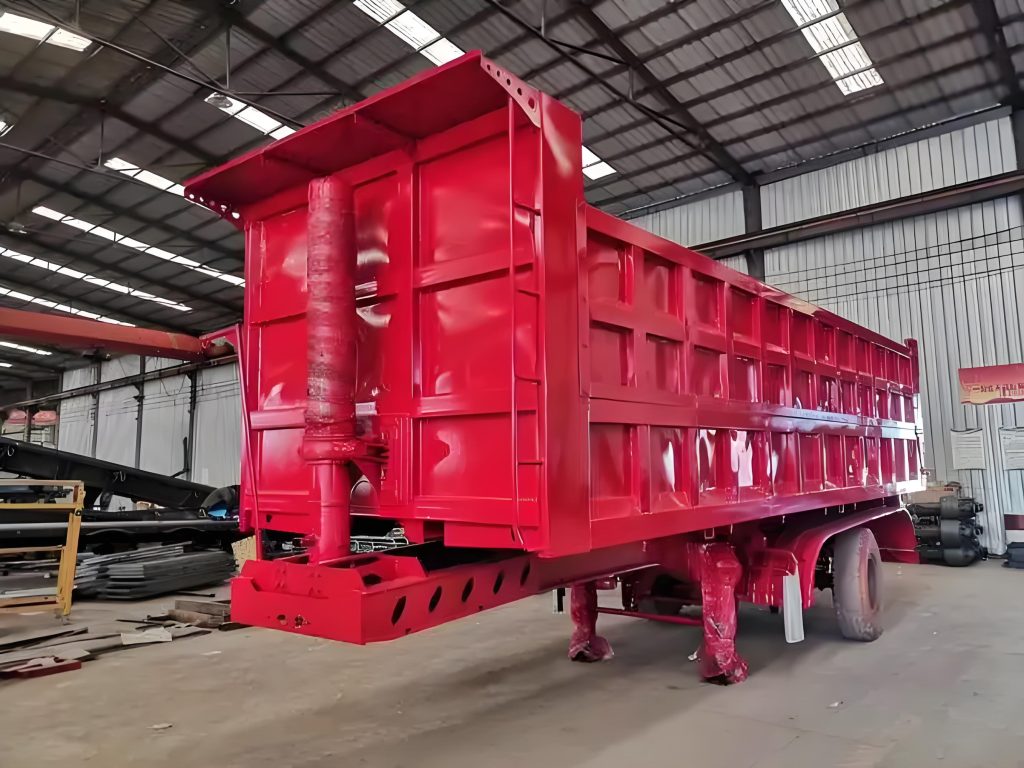
A stable system ensures heavy-duty dump semi trailer stability and a long service life under high load conditions.
Recommended Running Gear Components
| Component | Options | Advantages |
| Axles | 13–20 ton FUWA/BPW | heavy-duty load capacity |
| Tires | 12R22.5 / 315/80R22.5 | high traction and durability |
| Suspension | Mechanical leaf spring | strongest for bad road conditions |
| Braking | WABCO ABS + air brake | better downhill safety |
| Landing Gear | JOST 28T | stable and durable |
For mining or rugged terrain environments, a 16T axle + heavy-duty leaf spring suspension system should select.
Technical Specifications
Table 4: Standard Specifications Overview
| Item | Specification |
| Payload | 40–80 tons |
| Dimensions | 8500–12500 mm |
| Body Volume | 25–45 m³ |
| Body Material | Q345 / Hardox |
| Floor Thickness | 6–8 mm |
| Side Thickness | 4–6 mm |
| Axles | 2-4 axles, 13T/16T |
| Suspension | leaf spring / bogie |
| Hydraulic System | HYVA front cylinder |
| Tire | 12R22.5 / 315/80R22.5 |
| Braking | ABS optional |
| King Pin | 50mm / 90mm |
| Chassis | High-strength steel |
| Unloading | rear tipping |
Conclusion
Heavy-duty dump trailer are among the most critical pieces of equipment used for large-scale construction and mining transport. By properly combining components such as steel, body shape, axle system, hydraulic cylinders, and suspension, your trailer can achieve maximum durability and efficiency.
The tables and configuration guidelines above can help you match tipper semi trailer specifications to the actual needs of your project—ensuring superior performance, longer service life, and lower operating costs.