
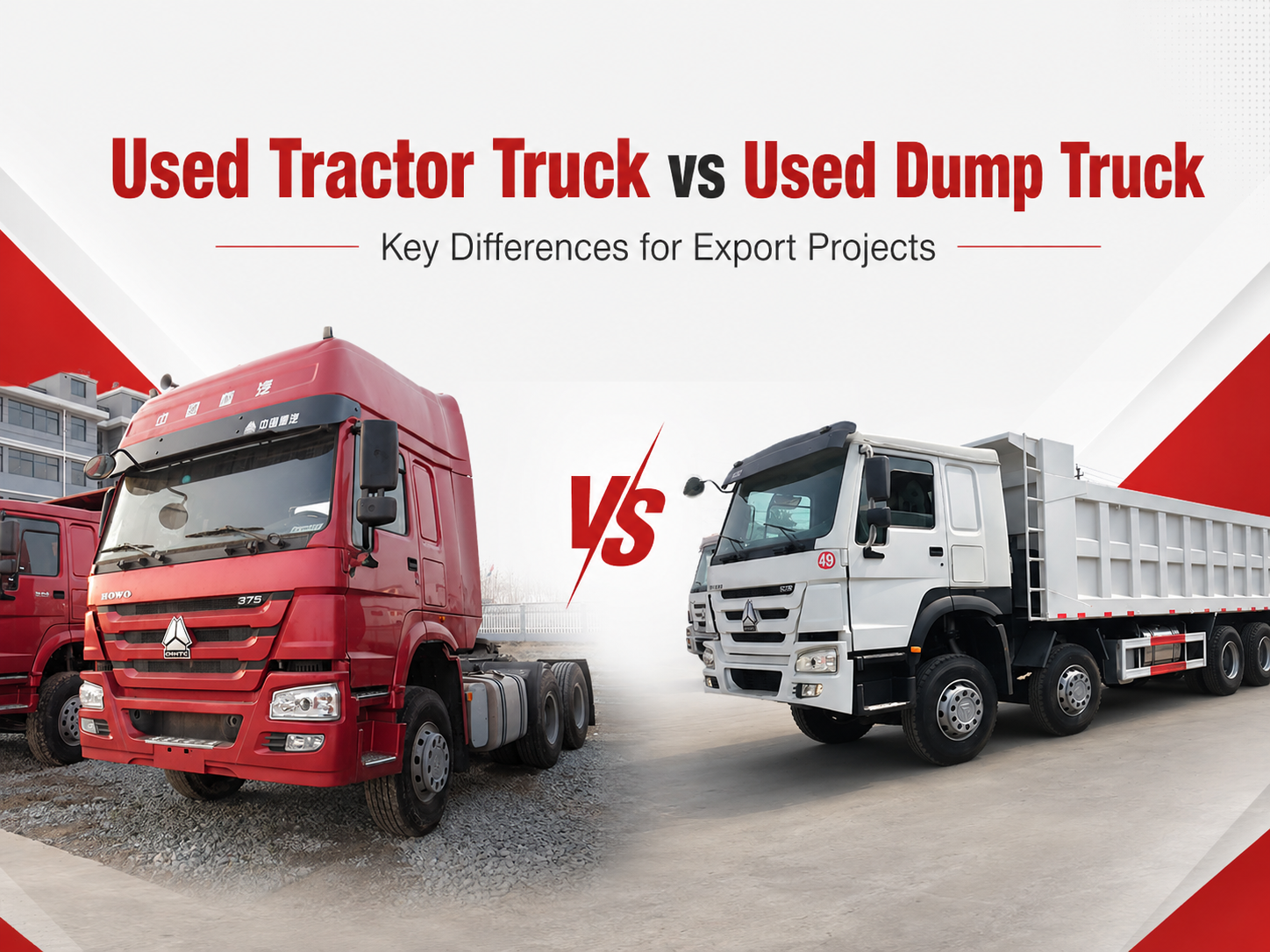
Used Tractor Truck vs Used Dump Truck: Key Differences for Export Buyers
This guide compares used tractor trucks and used dump trucks for export projects, covering towing, dumping, inspection points, trailer matching, and quotation details.

For export fleets, construction contractors, mining projects, quarry operators, port logistics teams, and long-haul transport companies, the used tractor truck vs used dump truck decision affects much more than purchase price. It changes the loading method, road performance, inspection checklist, operating cycle, trailer-matching plan, maintenance priorities, and quotation details required before shipment.
A clear comparison of used tractor truck and used dump truck options helps match the vehicle with cargo type, axle demand, road condition, loading cycle, destination country, inspection evidence, and expected working life.
Used Tractor Truck vs Used Dump Truck: Quick Answer
Tractor trucks and dump trucks solve different transport problems. A tractor truck pulls semi trailers for container movement, flatbed cargo, heavy machinery transport, tanker routes, and long-distance freight. By contrast, a dump truck carries loose material in its own body and unloads through a hydraulic lifting system.
Therefore, confirm the correct vehicle type before discussing model year, repainting, refurbishment level, or shipment details. A vehicle may look suitable in photos but still fail to match the cargo, trailer, road gradient, loading cycle, or unloading method after arrival.
| Choose a tractor truck when | The project needs to pull flatbed, lowbed, container chassis, tanker, cargo, or other semi trailers. |
| Choose a dump truck when | The project moves sand, gravel, stone, ore, coal, soil, aggregate, or construction waste and needs direct hydraulic unloading. |
| Confirm before quotation | Cargo type, route, road slope, axle preference, loading cycle, destination country, refurbishment scope, and inspection requirements. |
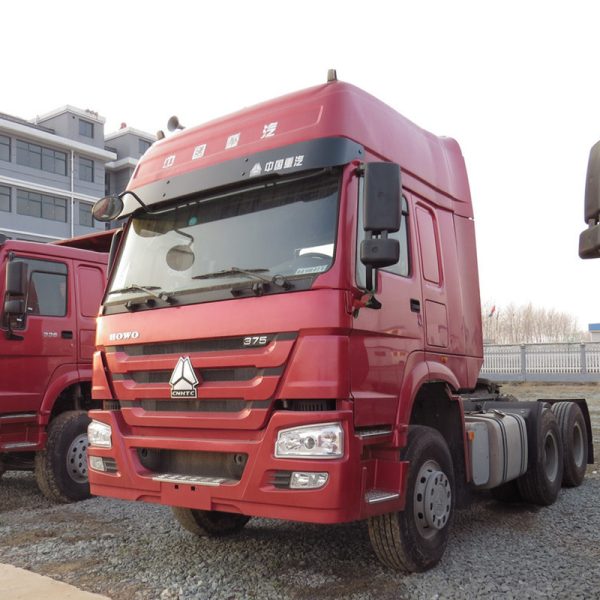
Used HOWO Tractor Truck
Suitable for flatbed, lowbed, container chassis, tanker, cargo trailer, port logistics, cross-border transport, and long-distance semi-trailer fleets.
View Used Tractor Truck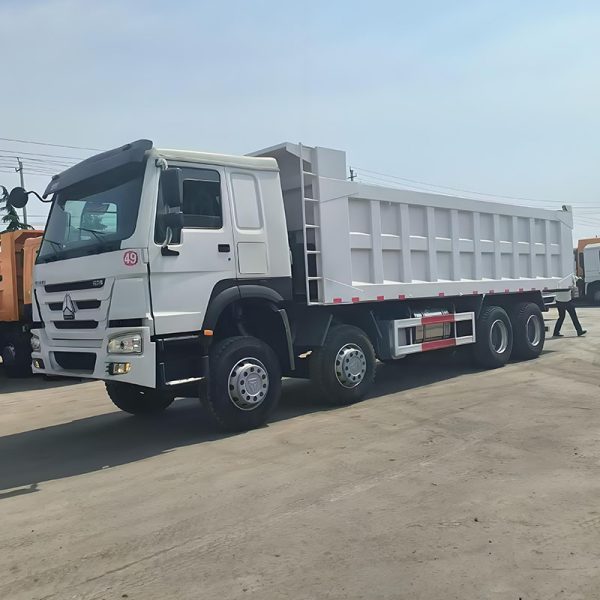
Used HOWO Dump Truck
Suitable for sand, gravel, stone, soil, coal, ore, aggregate, mining roads, quarries, road construction, and earthwork projects.
View Used Dump TruckMain Function Difference: Towing vs Dumping
A used tractor truck is a power unit designed to pull semi trailers. Instead of carrying cargo in a fixed rear body, it connects to a trailer through the fifth wheel behind the cabin. Its working value depends on engine performance, gearbox response, clutch condition, fifth-wheel wear, rear axle strength, braking stability, and compatibility with the intended trailer.
A used dump truck includes its own cargo body, power take-off system, hydraulic cylinder, subframe, rear hinge, and tailgate. It loads loose material directly into the body and unloads by raising that body. The hydraulic system and body structure therefore become major inspection points.
In practical terms, a tractor truck creates value through trailer flexibility and route utilization. A dump truck creates value through fast loading, short transport cycles, and direct unloading at a mine, quarry, construction site, road project, or material yard.
| Comparison Point | Used Tractor Truck | Used Dump Truck |
| Main function | Pulls semi trailers through the fifth wheel | Carries loose material in a hydraulic dump body |
| Common work | Long-haul logistics, ports, containers, machinery, steel, liquid cargo | Construction, mining, quarrying, earthwork, road projects |
| Key structure | Engine, gearbox, clutch, fifth wheel, chassis, rear axles, brakes | Dump body, hydraulic cylinder, PTO, pump, subframe, hinge, chassis |
| Main inspection focus | Towing components, road test, drivetrain, fifth wheel, brakes, tires | Lifting test, body wear, hydraulic leakage, frame stress, rear axles |
| Operating pattern | Longer routes and interchangeable trailer work | Repeated loading, short-cycle hauling, and direct unloading |
| Main cost risk | Drivetrain, clutch, fifth wheel, axle, fuel use, trailer mismatch | Hydraulic repairs, body wear, chassis fatigue, tire and suspension damage |
For a complete tractor-head inspection and trailer-matching checklist, read our used tractor truck buying guide.
Key Specifications That Affect the Right Choice
Most importantly, the right truck should match actual work conditions rather than a model name alone. Procurement teams should review axle layout, cargo demand, engine condition, transmission response, suspension, tires, brakes, steering, cabin condition, chassis history, and refurbishment scope.
Axle Layout and Road Conditions
Axle layout affects traction, load distribution, braking stability, tire wear, turning radius, and maintenance cost. For a tractor truck, the selected layout should match the trailer type, gross combination weight, route length, road gradient, and destination rules. The towing unit must remain stable under acceleration, braking, and long downhill sections.
A dump truck works under a different load pattern. Material density, body volume, road slope, loading frequency, and site surface all affect the axle and suspension demand. Mining roads and quarries usually create more impact, vibration, wheel slip, and frame twisting than paved logistics routes.
Loading Capacity, Material Density, and Working Cycle
Do not estimate loading capacity from body size or exterior photos. For a tractor truck, the practical towing demand comes from trailer tare weight, cargo weight, route gradient, axle ratio, engine condition, and braking capability. A tractor pulling a container chassis does not experience the same working stress as one pulling a heavily loaded lowbed trailer.
By comparison, evaluate dump-truck body volume together with material density. A large body filled with low-density material creates a different load from the same body filled with stone, ore, or wet soil. Repeated short cycles also increase wear on the clutch, gearbox, hydraulic system, rear suspension, tires, and brakes.
Engine, Gearbox, and Drivetrain
The engine should start smoothly and run without severe vibration, persistent abnormal smoke, visible coolant loss, or major oil leakage. A cold-start video is useful because it shows starting behavior before the engine has warmed up. An engine-running video should also show idle stability, dashboard warnings, exhaust condition, and basic throttle response.
Gearbox inspection should cover forward gears, reverse gear, clutch engagement, unusual noise, delayed response, and oil leakage. For tractor trucks, transmission performance affects long-distance drivability, fuel use, hill climbing, and trailer pulling. For dump trucks, it affects repeated starts under load and movement on rough or inclined sites.
Driveshaft joints, differential noise, rear axle leakage, and axle temperature after a test run also deserve attention. A clean exterior cannot compensate for a weak drivetrain, so mechanical evidence should carry more weight than paint condition.
Suspension, Tires, Steering, and Brakes
Suspension checks should cover leaf springs, spring brackets, U-bolts, axle alignment, shock absorbers, and visible frame balance. Uneven ride height or irregular tire wear may indicate alignment problems, suspension fatigue, or previous overloading.
Tire inspection should include tread depth, sidewall cracks, cuts, matching size, production age where available, and uneven wear. In addition, buyers should ask whether the quotation includes the displayed tires or replacement tires before shipment.
Brake checks should cover air-pressure build-up, brake response, air leakage, brake chambers, hoses, drums or discs, parking brake, and test-driving performance where possible. Before export, also inspect steering free play, power-steering leakage, and wheel alignment.
Fifth Wheel and Trailer Compatibility
The fifth wheel connects a tractor truck to the semi trailer and transfers pulling and vertical load. Inspection should cover the plate, locking jaw, kingpin contact area, mounting bolts, lubrication, operating handle, height, and visible wear.
Compatibility also includes fifth-wheel height, trailer kingpin size, air connectors, electrical sockets, turning clearance, and gross combination weight. For example, a tractor may pull a flatbed semi trailer, container chassis, lowbed, tanker, or cargo trailer, but buyers should check each combination before quotation.
Dump Body and Hydraulic Lifting System
A dump truck inspection should include the hydraulic cylinder, PTO, pump, oil tank, control valve, hoses, lifting speed, lowering control, and leakage signs. A complete lifting video is more useful than a short clip showing only the body already raised.
Likewise, inspect the body floor, side plates, reinforcing ribs, tailgate, rear hinge, subframe, and mounting points. Heavy deformation, thin floor areas, repeated welding repair, or an unstable lift may increase refurbishment cost after delivery.
Vehicle Condition Matters More Than Fresh Paint
Exterior repainting can improve presentation and protect repaired surfaces, but it does not prove mechanical condition. Buyers should separate cosmetic refurbishment from functional refurbishment when comparing quotations.
Cosmetic Refurbishment
Cosmetic work may include washing, rust removal, repainting, cabin cleaning, seat repair, mirror replacement, lamp replacement, and replacement of damaged exterior trim. These improvements are useful, but they mainly affect appearance and basic usability.
Mechanical Refurbishment
Mechanical work may include engine servicing, oil and filter replacement, cooling-system repair, clutch adjustment, gearbox repair, axle servicing, brake repair, suspension replacement, tire replacement, electrical repair, fifth-wheel repair, or hydraulic-system repair. Therefore, the quotation should clearly list the included work and the items that remain in used condition.
Model Year, Mileage, and Working History
Model year and recorded mileage are useful reference points, but they should not replace condition checks. A vehicle used on paved logistics routes may show different wear from a truck used in a mine or quarry. However, when service records are limited, engine videos, chassis photos, road tests, component inspections, and clear refurbishment details become even more important.
Inspection Points Before Shipment
Used-truck export work depends heavily on inspection evidence. Photos and videos should cover more than exterior paint and cabin appearance. A useful inspection package should show the engine, gearbox, chassis, axles, tires, brakes, steering, cabin, electrical system, and the working components that are specific to each truck type.
As an official maintenance reference, 49 CFR Part 396 on inspection, repair, and maintenance illustrates why commercial vehicles require systematic attention to safety-related components. Export buyers should still follow the vehicle inspection, registration, and road-use requirements of the destination country.
Engine and Cooling System
Request a cold start, warm idle, throttle response, engine-bay close-ups, coolant condition, visible hose condition, oil leakage checks, and dashboard warning-light confirmation. When possible, ask whether the supplier will replace engine oil, filters, belts, coolant, and other service items before shipment.
Chassis, Axles, and Suspension
Inspect the chassis for serious deformation, cracks, heavy corrosion, poorly repaired welds, and uneven frame alignment. Close images should cover axle housings, differentials, leaf springs, brackets, U-bolts, brake chambers, and tire contact patterns. Dump trucks need additional checks around the rear frame and lifting subframe, while tractor trucks need close inspection around the fifth-wheel mounting area.
Cabin, Controls, and Electrical Functions
Next, inspect the cabin seat, dashboard, steering response, mirrors, air conditioning, wipers, lights, horn, gauges, switches, doors, and sleeper area where fitted. A dashboard video can show warning lights, air-pressure build-up, instrument response, and basic electrical operation.
Road Test and Working Test
A road test should show starting, acceleration, gear changes, steering, braking, reverse movement, and abnormal noise where site conditions allow. Tractor-truck inspection should include fifth-wheel operation and trailer-connection details. Dump-truck inspection should include a complete lift-and-lower cycle with the hydraulic system operating under controlled conditions.
Photos and Videos Worth Requesting
Clear inspection media can shorten quotation discussions and reduce wrong matching. The vehicle identification information shown in photos should also match the quotation and export documents where available.
For Tractor Trucks
- Cold-start and engine-running video
- Gear shifting, clutch, and road-test video
- Fifth-wheel plate and locking-jaw close-ups
- Rear axle, driveshaft, tires, and brakes
- Air and electrical trailer connections
For Dump Trucks
- Full hydraulic lifting and lowering video
- Cylinder, PTO, pump, hoses, and oil tank
- Body floor, side plates, and reinforcing ribs
- Tailgate, rear hinge, and subframe
- Rear axle, suspension, tires, and chassis
For Both Truck Types
- Cabin, dashboard, and lighting video
- Chassis and visible leakage close-ups
- Tire tread and sidewall photos
- Identification plate or chassis details
- Written refurbishment scope before shipment
How to Choose by Project Type
The correct direction starts with the work. Trailer towing, container transport, machinery delivery, and long-haul logistics normally point toward a tractor truck. Loose-material loading and direct hydraulic unloading normally point toward a dump truck.
Port and Container Transport
For port and container movement, a tractor truck matched with a container chassis trailer is generally the appropriate combination. Check fifth-wheel condition, air and electrical connections, braking response, tire condition, turning clearance, and compatibility with the required container-chassis height.
Flatbed Cargo and General Freight
A tractor truck with a flatbed trailer can move steel, pipes, timber, pallets, building materials, machinery frames, and general cargo. Accordingly, review trailer deck strength, lashing points, axle quantity, cargo securing, route limits, and tractor pulling demand together.
Heavy Machinery Transport
Excavators, bulldozers, loaders, rollers, and graders often require a tractor truck matched with a lowbed semi trailer. Before selection, confirm tractor power, fifth-wheel height, trailer axle layout, ramp design, machine weight, route gradient, and overall transport height.
Mining, Quarry, and Earthwork
A dump truck is generally more suitable for repeated movement of sand, gravel, stone, ore, coal, soil, aggregate, and construction waste. The selection should match material density, haul distance, road slope, loader capacity, body volume, axle demand, tire condition, and expected number of cycles per shift.
Mixed Fleet Projects
Some projects need both vehicle types. Tractor trucks may move machinery, fuel, parts, steel, or containers to the project area, while dump trucks handle short-cycle material movement inside the site. In that case, each vehicle type should have its own inspection checklist, spare-parts plan, maintenance schedule, and driver-training requirements.
For cargo transport units, packing, blocking, bracing, and lashing awareness, the IMO/ILO/UNECE CTU Code provides an authoritative reference. Nevertheless, operators must still follow local loading, road-use, and cargo-securing rules.
Operating Cost and Fleet Utilization
Purchase price is only one part of the decision. Operating cost also includes fuel, tires, brakes, routine servicing, unexpected repairs, downtime, driver availability, route efficiency, and whether the vehicle can remain productive throughout the project.
Tractor-Truck Operating Logic
A tractor truck can work with different trailer types when the fleet has compatible equipment. This flexibility may improve utilization, but only when trailer demand exists. Fuel use, clutch wear, tire wear, and drivetrain stress will vary according to trailer weight, route gradient, speed, loading pattern, and driver operation.
Dump-Truck Operating Logic
A dump truck works most productively when the project team organizes loading equipment, haul roads, unloading points, and cycle times well. Long waiting times reduce productivity, while overloading can increase body wear, hydraulic stress, tire damage, brake wear, and chassis fatigue.
Spare Parts and Local Maintenance
Before ordering, check local access to filters, brake parts, clutch parts, suspension components, tires, hydraulic seals, hoses, electrical components, and engine-service support. A technically suitable truck may still create downtime when replacement parts or qualified mechanics are difficult to find.
Common Mistakes During Used-Truck Selection
Choosing by Exterior Appearance
Fresh paint, polished wheels, and a clean cabin improve presentation but do not prove engine, gearbox, axle, chassis, fifth-wheel, hydraulic, or brake condition. Mechanical evidence and working videos should support the appearance.
Comparing Only the Lowest Price
Two trucks with similar model names can have different tires, refurbishment work, engine condition, gearbox condition, body wear, included accessories, and shipment preparation. Instead, compare quotations line by line rather than by headline price alone.
Ignoring the Road and Loading Cycle
Highway logistics, port work, mountain routes, quarry roads, mining sites, and construction access roads create different stress. A truck suitable for paved routes may not be the best choice for repeated loaded starts on a steep, uneven site.
Accepting an Unclear Refurbishment Scope
The order should clearly list the parts that the supplier will inspect, repair, replace, clean, or repaint. Moreover, it should explain which inspection photos and videos the supplier will provide before shipment. Clear scope reduces disputes and makes quotations easier to compare.
Export Documents and Shipment Preparation
Vehicle details in the quotation, commercial invoice, packing information, shipping documents, and inspection records should remain consistent. The buyer should confirm vehicle identification information, model description, quantity, destination port, and any documentation required by the importing country.
Shipment preparation may include cleaning, anti-rust treatment, removal or protection of loose accessories, fuel-level control, battery handling, photo records, and loading confirmation. The exact method depends on Ro-Ro, bulk, flat-rack, or other shipping arrangements.
If the project requires third-party inspection, destination compliance documents, or special certificates, discuss these needs before the supplier completes refurbishment. Late requests can delay shipment or require additional work.
BOCA Vehicle Support and Inquiry Details
BOCA Vehicle supports used-truck and semi-trailer export projects with model matching, configuration discussion, inspection support, refurbishment confirmation, and quotation preparation. The objective is to match the truck with the actual transport task rather than provide one standard recommendation for every market.
For tractor-truck projects, the inquiry should explain the intended trailer, cargo, route, gross weight, and road conditions. For dump-truck projects, it should explain material type, material density, body requirement, loading equipment, haul distance, road slope, and daily loading cycle.
Information to Send Before Quotation
For a Tractor-Truck Inquiry
- Trailer type: flatbed, lowbed, tanker, chassis, or cargo trailer
- Cargo type, expected weight, and route length
- Road gradient and highway or rough-road conditions
- Axle layout and power preference
- Fifth-wheel height and trailer-connection requirements
- Inspection, refurbishment, tire, and shipment requirements
For a Dump-Truck Inquiry
- Material: sand, gravel, stone, ore, soil, coal, or aggregate
- Material density and target load
- Body size, axle layout, and unloading requirement
- Loading equipment, haul distance, slope, and site surface
- Expected daily loading cycles
- Hydraulic, body, chassis, tire, and inspection requirements
Extended Reading for Related Export Decisions
Container Chassis Trailer Guide
Useful when a tractor-truck project involves port, terminal, warehouse, depot, or cross-border container routes.
Read Container Guide →Flatbed Semi Trailer Buying Guide
Helpful for steel, machinery, timber, pipes, pallets, building materials, and mixed container transport planning.
Explore Flatbed Guide →Lowboy Trailer vs Lowbed Trailer
Relevant when the tractor truck will tow a heavy-equipment trailer for excavators, bulldozers, loaders, or other machinery.
Compare Lowbed Options →FAQ
Is a used tractor truck suitable for construction-material transport?
Yes. A used tractor truck can move construction materials when the fleet matches it with a suitable flatbed, cargo, lowbed, or other semi trailer. Before selection, confirm the trailer type, cargo weight, road condition, fifth-wheel compatibility, and loading method.
Is a used dump truck better for mining and quarry projects?
It is usually more practical for repeated loose-material movement and direct unloading. Final suitability still depends on material density, body size, haul distance, road gradient, loading cycle, hydraulic condition, chassis strength, tires, and rear-axle condition.
What should be checked before exporting a used tractor truck?
Check engine starting, gearbox response, clutch, brakes, steering, fifth wheel, rear axles, suspension, tires, cabin functions, chassis condition, electrical connections, road-test evidence, refurbishment scope, and trailer compatibility.
What should be checked before exporting a used dump truck?
Check the dump body, hydraulic cylinder, PTO, pump, hoses, lifting test, tailgate, rear hinge, subframe, chassis, rear axles, suspension, tires, engine, gearbox, cabin, brakes, and any visible welding repair or leakage.
Does a newer model year always mean better condition?
No. Working history, road conditions, loading habits, maintenance, accident repair, and refurbishment quality can matter as much as age. Instead, consider model year together with inspection evidence and component condition.
Can one fleet use both tractor trucks and dump trucks?
Yes. Tractor trucks can handle trailer-based logistics and long-distance transport, while dump trucks handle loose-material movement inside or around the project site. Each type should have a separate inspection checklist, operating plan, and spare-parts strategy.
Final Selection Advice
A tractor truck and a dump truck serve different working systems. A tractor truck pulls semi trailers for logistics, port transport, container movement, machinery transport, tanker routes, and long-haul cargo. A dump truck carries loose material and unloads it through a hydraulic lifting system.
The final decision should follow the real project rather than exterior appearance or model name alone. Cargo type, loading cycle, trailer match, axle demand, road gradient, destination country, refurbishment scope, local maintenance access, and inspection proof all influence the correct choice.
- Define the work: choose the tractor-truck direction for trailer towing and the dump-truck direction for loose-material hauling.
- Review mechanical evidence: request engine, gearbox, chassis, tire, brake, fifth-wheel, body, and hydraulic proof according to truck type.
- Confirm refurbishment: separate cosmetic work from mechanical repairs and replacement parts.
- Prepare quotation details: include cargo, payload, route, road slope, axle preference, destination, quantity, and inspection requirements.