

Bomb Cart Trailer: How Port Terminals Reduce Crane Waiting Time and Yard Congestion

A quay crane can be ready for the next lift while the ground operation is still catching up. A tractor may be returning from the yard, a loaded cart may still occupy the interchange, or an empty receiving position may be trapped behind other traffic. That mismatch is where bomb cart trailer port terminal efficiency becomes an operational issue rather than an equipment claim. The useful question is whether the terminal can keep containers moving when crane rhythm, tractor circulation and yard handling operate at different speeds.
The visible delay often appears beside the vessel. However, its real cause may sit several handoffs away. A tractor can complete the loaded run quickly, yet the cart may remain unavailable because the container has not been removed at the yard.
Meanwhile, another empty cart may already be released but unable to return through a congested lane. As these small delays accumulate, the crane-side equipment pool becomes thinner. Eventually, lifting capacity begins waiting for ground transport.
For that reason, the strongest terminal review follows the complete circulation loop. It examines where carts wait, where tractors lose time, where lanes become blocked and how quickly an empty receiving position returns to the next active crane.
Where Crane Waiting Develops in a Terminal Cycle
Crane waiting rarely starts with the crane itself. Instead, a delay elsewhere in the container terminal cycle eventually reaches the quay. A loaded unit may remain too long at the yard, or a tractor may be unavailable when an empty cart is ready to return.
At first, the operation can absorb that variation. Several receiving positions may still be available beside the crane. However, every cart held inland reduces the remaining buffer.
Once the buffer disappears, a ground-side problem becomes crane waiting. Therefore, the useful investigation starts at the visible delay and follows each previous handoff backward.
Follow the delay backward from the quay
Consider a normal import discharge move. The crane places a container on the receiving equipment, and the tractor leaves the berth. Next, the unit travels toward the designated yard or interchange area.
If the receiving process cannot clear that container, the cart waits. Another loaded cart may arrive behind it, while a third remains in transit. Consequently, several pieces of equipment can become unavailable without any obvious mechanical problem.
The opposite situation also occurs. Empty carts may be waiting near the yard, yet no tractor is available to return them. In that case, adding more carts would create additional parked equipment rather than solve the constraint.
Ask where the unavailable receiving positions are
Fleet quantity alone gives little insight. A stronger review identifies how many carts are loaded, waiting for yard handling, released but waiting for tractors, returning empty, under inspection or genuinely ready beside the active crane.
Separate ground delay from other crane interruptions
Not every crane pause points to a terminal transport problem. Vessel-side work, lifting restrictions, planned crane positioning and other operating events can interrupt the sequence as well.
Therefore, delay records need a clear cause. Only pauses linked to missing or delayed ground equipment should drive decisions about tractors, carts or terminal circulation.
How Bomb Carts Decouple Quay Moves From Road-Ready Chassis
A quay crane and a terminal tractor rarely work at one perfectly synchronized pace. The crane follows vessel activity, while tractor cycle time changes with route length, traffic, interchange dwell and yard equipment availability.
When one tractor and one road-oriented chassis remain tied together through every internal stage, delays can travel directly back to the crane. By contrast, a dedicated terminal cart pool can create a controlled buffer between lifting and ground circulation.
This does not mean parking large numbers of carts beside the berth. Instead, the operating model keeps enough receiving positions available to absorb normal variation while tractors continue circulating through the yard.
A buffer only works while equipment keeps returning
A line of loaded carts at the yard can look productive because several containers have already left the quay. However, those carts are no longer available for another lift.
If container removal slows, the available quay-side pool continues shrinking. Therefore, yard dwell is part of the cart circulation problem even though the delay occurs away from the crane.
The same principle applies to empty return travel. Once a container leaves the cart, the equipment still has to reach the next useful position. A released cart sitting at the wrong end of the terminal does not support the next crane move.
This operating distinction also matters when reviewing broader BOCA container chassis solutions. Internal terminal transfer and public-road container transport should be evaluated as different duties whenever their routes, regulations and handoff requirements differ.
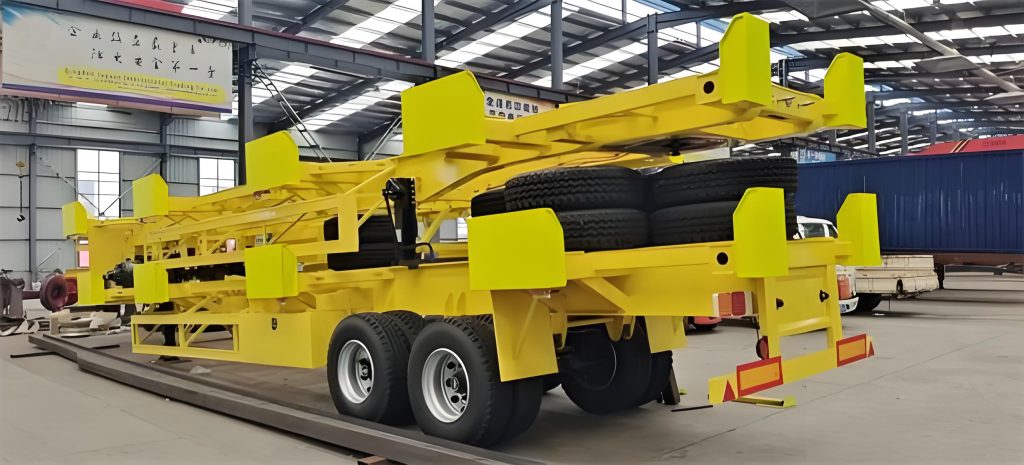
Map Handoff Points Between Crane, Yard and Tractor
Many terminal delays appear between machines rather than inside them. One team may consider a container delivered after the tractor enters the interchange. Meanwhile, the receiving side may not consider the move ready until the unit reaches a specific handling position.
That difference creates hidden dwell. Therefore, each handoff needs a clear physical event that can be observed and recorded.
01 QUAY-SIDE AVAILABILITY
Record when a usable receiving position is actually available for the next container lift.
02 LOADED DEPARTURE
Track the time between container placement and the moment the loaded unit clears the working area.
03 YARD HANDOFF
Separate arrival at the interchange from the moment yard equipment removes the container.
04 EMPTY RETURN
Record when the empty cart is released and when it becomes available beside the next active crane.
Short distance does not always mean short cycle time
A short terminal route may contain several merge points, reversing movements, blind corners or shared intersections. As a result, a physically short transfer can still produce unpredictable cycle times.
By comparison, a slightly longer one-way route may allow more consistent movement. Therefore, the route study should record actual travel time as well as distance.
Loaded and empty directions also deserve separate review. Loaded units may receive priority through one junction, while returning empty carts accumulate elsewhere. The loaded operation then appears efficient even as crane-side availability gradually falls.
Give exception containers somewhere to go
A misrouted box, unavailable yard slot or damaged container can interrupt a normal transfer sequence. If that exception remains in the primary interchange lane, several routine moves may queue behind it.
Where terminal procedures allow, exception handling should therefore have a defined location and ownership rule. One unusual container should not quietly convert a transfer lane into temporary storage.
Match Cart Availability to Peak Lifting Demand
Total daily container volume says little about the hardest part of a shift. A terminal may have enough equipment across the full operating day while still losing crane time during a concentrated discharge period.
For that reason, cart availability should be compared with peak lifting demand. The review needs to show how quickly receiving positions leave the quay and how long they remain unavailable before returning.
A simple relationship helps frame the discussion. Higher container handoff rates require faster equipment circulation or more available positions. Likewise, longer round trips remove each cart from the crane-side pool for a longer period.
This relationship is useful for planning, but it is not a universal fleet-sizing formula. Terminal layout, yard dwell, tractor allocation and operating variability still determine the real requirement.
Separate tractor shortage from cart shortage
More carts cannot compensate for every tractor constraint. If several loaded units are waiting for tractors, another trailer mainly adds another waiting position.
Likewise, more tractors do not solve a shortage of available receiving carts. A terminal can have prime movers ready to work while usable carts remain occupied at the yard.
Useful equipment status categories
- Empty cart available near the active quay crane
- Loaded cart waiting for tractor movement
- Loaded cart in transit
- Loaded cart waiting for yard handling
- Empty cart released but awaiting return
- Empty cart returning to the quay
- Cart held for inspection or maintenance
- Terminal tractor available for assignment
Plan for recovery after a short disruption
Normal operation shows only part of the fleet requirement. A yard crane interruption, blocked route or equipment issue can temporarily hold several loaded carts away from the quay.
Once the interruption clears, the terminal must process delayed work while supporting new crane demand. Consequently, recovery may place more pressure on interchange space and tractor assignment than the original disruption.
A practical plan therefore identifies where delayed carts can wait safely, which moves receive priority and how empty equipment returns after the queue begins to clear.
Reduce Empty Travel and Blocked Interchange Lanes
Loaded trips receive most operational attention because they move containers. However, empty repositioning determines whether the next crane lift has somewhere to land.
An empty cart moving back toward the quay is therefore performing useful work. By contrast, an empty unit parked at the wrong yard location represents capacity that exists physically but cannot support immediate demand.
Map loaded and empty paths separately
Loaded equipment often follows a well-defined terminal route. Empty units, meanwhile, may return through whichever path appears available. That informal pattern can create unnecessary crossings and inconsistent travel times.
Therefore, the route study should track both directions independently. Repeated U-turns, unnecessary circulation loops, lane-access waiting and travel caused by late dispatch changes all deserve attention.
Do not let interchange lanes become parking areas
An interchange lane supports flow only while containers continue moving through it. Once loaded carts remain there for extended periods, transfer capacity becomes storage capacity.
For example, one cart can arrive before the yard equipment becomes available. Another unit then stops behind it. If the first cart cannot leave independently after unloading, the queue may remain even after one container is removed.
This is why usable interchange capacity is more important than the number of painted positions. Turning geometry, exit access, reversing requirements and interference with through traffic all change how the area performs during a peak.
WHEN LOADED CARTS QUEUE AT THE YARD
Check container-removal time and yard equipment availability before increasing the cart fleet.
WHEN EMPTY CARTS WAIT AFTER RELEASE
Check tractor assignment and empty-return dispatch before assuming more carts are required.
WHEN TRACTORS QUEUE BEFORE THE INTERCHANGE
Review lane capacity, arrival sequencing and the time each transfer position remains occupied.
WHEN THE QUAY RUNS OUT OF RECEIVING POSITIONS
Trace where the circulating cart pool is trapped rather than looking only at total fleet quantity.
Track Cycle-Time Indicators Without Inventing Benchmarks
Generic terminal productivity targets can mislead because berth layout, vessel mix, yard distance and operating rules vary significantly. Consequently, a stronger benchmark starts with the terminal’s own operating history.
The complete cart cycle should be measured from usable quay-side availability until the same cart becomes available again. However, one total number is not enough for diagnosis.
Breaking the round trip into stages shows where equipment capacity is actually being consumed. It also prevents a slow yard handoff from being mistaken for a trailer shortage.
Data worth collecting during real operating periods
- Time the crane becomes ready for the next ground position
- Time a usable cart reaches the crane
- Container placement and loaded departure time
- Loaded travel time to the yard or interchange
- Queue time before entering the transfer area
- Dwell before the container leaves the cart
- Time the empty cart is released
- Empty return travel and quay re-entry time
- Cart downtime for inspection or maintenance
- Location and cause of recurring lane blockage
Averages can hide the cycles that cause crane waiting
A shift may show an acceptable average round-trip time while a smaller group of slow cycles repeatedly interrupts the quay. Therefore, the typical cycle and slower recurring cycles should be reviewed separately.
Suppose most carts return smoothly from one yard block, while movements to another zone repeatedly encounter congestion. The overall average blends those conditions and makes the second route look less problematic than it really is.
The same logic applies to crane delay. A total delay figure provides little value unless each event has a useful reason code. Transport-related waiting should remain separate from vessel-side, lifting or planned operational interruptions.
Compare before and after under similar operating conditions
A workflow change should not be judged by comparing unrelated vessel operations. A quiet shift before the change and a heavy discharge period afterward create an unfair comparison.
Instead, compare periods with similar crane activity, yard destinations and operating conditions where practical. Ground-related crane waiting, cart round-trip time, yard dwell, empty return time and blocked-lane events can then show whether the process actually improved.
When a Bomb Cart Workflow Fits the Terminal Operation
A bomb cart workflow makes the strongest case when it solves a measurable internal transfer problem. Repeated quay-to-yard movements, variable tractor cycle times and recurring ground-related crane waiting all justify closer evaluation.
Physical layout matters just as much. The terminal needs enough controlled staging space for carts to support the crane without blocking traffic, turning paths or emergency access.
Conditions that support a closer review
- Quay cranes repeatedly wait for ground receiving equipment.
- Road-ready chassis spend unnecessary time in short terminal-only loops.
- Quay-to-yard distance creates noticeable tractor cycle variation.
- The terminal has defined locations for loaded handoff and empty release.
- Empty equipment can return through a controlled circulation path.
- Dispatch can see which carts are available, occupied or held.
- Quay-side staging can operate without compromising traffic safety.
Situations where more carts may not solve the problem
If containers already move directly onto outbound chassis without significant ground waiting, another internal transfer stage may add little value. Likewise, a terminal with severely limited staging space may create more congestion by adding parked equipment.
Slow yard handling is another warning sign. When loaded carts already spend long periods waiting for container removal, increasing cart quantity mainly expands the queue.
In those situations, route control, yard capacity, dispatch rules or interchange design may deserve attention first.
Review the real terminal geometry before defining equipment quantity
A useful technical discussion should include quay-to-yard distance, turning areas, lane direction, interchange positions, tractor availability, expected container flow and recurring congestion points.
Surface condition, coupling interface and operating restrictions also need attention. Where equipment will enter public roads, the applicable destination-country requirements must be reviewed separately from terminal-only operation.
BOCA’s wider container chassis range provides context for operations that connect terminal handling with road container transport. However, the final configuration should follow the actual duty rather than treating every container movement as the same chassis application.
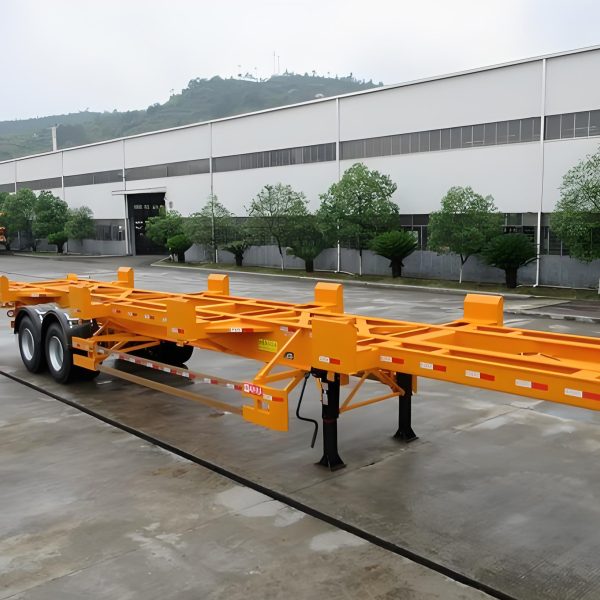
Before Changing the Workflow
Collect enough information to identify the real constraint
A useful review does not need invented productivity targets. It needs enough local evidence to explain why the current circulation loop loses capacity.
- Active crane pattern during the busiest operating period
- Quay-to-yard route and approximate travel pattern
- Number of terminal tractors actually available during the peak
- Loaded interchange dwell before container removal
- Empty cart release and return sequence
- Locations where carts or tractors repeatedly queue
- Staging positions available without blocking traffic
- Photos or layout drawings showing critical handoff areas
FAQ
Keep the crane, cart and yard cycle in balance
A useful terminal transfer system does more than move containers away from the quay. It must also return enough usable equipment to support the next lift without filling the yard with waiting carts.
Therefore, fleet quantity should come after the cycle analysis. Crane rhythm, yard distance, tractor availability, interchange dwell and empty-return conditions provide the evidence needed for a practical configuration decision.
- Record ground-related crane waiting and complete cart round-trip time during peak operations.
- Map loaded and empty routes separately, then identify where equipment stops circulating.
- Compare the required quay-side buffer with tractor capacity, yard release rate, staging space and maintenance availability.
Terminal Workflow Review
Match the Cart Configuration to the Actual Terminal Cycle
A useful technical review begins with the operating pattern rather than a generic fleet count. Relevant information includes crane operating rhythm, quay-to-yard distance, available terminal tractors, peak container volume, interchange layout and locations where congestion repeatedly forms.
Site drawings or clear photographs can add context around turning areas, staging positions, traffic conflicts and handling interfaces. Container flow, operating surface conditions and applicable local requirements should also be included where they affect the proposed configuration.
With those inputs, bomb cart trailer port terminal efficiency becomes a measurable circulation decision. The next step is to determine whether the operation needs more receiving positions, faster empty return, different dispatch rules, improved yard handoff or another terminal transport arrangement.
Submit Terminal Operating Details