

Chemical Tanker Trailer Cargo Compatibility: Tank Material, Seals and Previous Loads
A practical guide to chemical tanker trailer cargo compatibility, covering wetted materials, seals, hoses, temperature limits and previous load checks for safer tanker configuration decisions.

A pre-loading review should answer one practical question: can the exact liquid move through the complete tanker system under the planned conditions without attacking contact materials, creating an unwanted reaction, or carrying contamination from the previous load?
At a loading rack, a clean-looking tanker can still hide an unresolved compatibility problem. A valve seal may have been replaced, a hose liner may not match the planned liquid, or residue may remain in a low point after the last discharge.
Therefore, chemical tanker cargo compatibility has to connect the exact chemical, concentration and temperature with every wetted component and the trailer’s recent cargo history. If one essential fact remains unknown, loading approval should remain pending.
Why Compatibility Is a Cargo-Specific Decision
A chemical tanker trailer is not permanently suitable for a broad group called acids, solvents or industrial chemicals. Instead, suitability belongs to a defined combination of substance, concentration, temperature, exposure time and cargo-contact materials.
For example, the tank surface may resist a liquid while a gasket swells after prolonged contact. Likewise, a suitable gasket does not make an incompatible hose liner acceptable. One weak component can control the whole decision.
This becomes especially important when a trailer changes duty. A familiar commercial product may arrive at another concentration, while a replacement hose may use a different internal liner. Consequently, successful previous service should not become automatic approval for the next load.
Exact substance, grade, concentration and formulation should match the documents used for technical review.
Tank surface, lining, seals, valves, piping, hoses and couplings form one product-contact path.
Temperature, exposure time, transfer method and cleaning cycle can change material behaviour.
Previous cargo, cleaning media and recent maintenance can affect the next loading decision.
Broad material labels should therefore support early screening only. A statement such as “stainless tank” or “chemical hose” does not identify the exact grade, lining, elastomer or hose construction needed for a final review.
Equipment planning should start from the intended liquid and duty. BOCA Vehicle’s chemical tanker trailer solutions provide a relevant tanker category for configuration discussions, while final medium acceptance still depends on the actual cargo-contact specification and qualified technical review.
Identify the Exact Chemical and Concentration
The first check should happen before a tanker is assigned. A dispatch description such as “acid,” “alkali” or “solvent blend” is too broad because material resistance can vary greatly between substances within the same family.
Therefore, the loading file should identify the actual product used in the transport operation. Current shipping documentation and the relevant Safety Data Sheet should describe the same material and concentration.
Concentration can change the result
A diluted chemical does not always behave like its concentrated form. In some systems, water content, dissolved salts, stabilisers or process additives also change corrosion behaviour and polymer resistance.
Similarly, proprietary mixtures deserve additional attention. Even when the major ingredients appear familiar, a finished formulation may contain minor components that affect a lining, seal or hose.
Collect operating data with the cargo name
A chemical name without service conditions still leaves important gaps. Loading temperature, likely transit temperature, discharge temperature and expected residence time should be recorded before material data is compared.
In addition, the transfer method matters. Gravity discharge, pumping or another approved transfer method can expose hoses, valves and seals to different mechanical and thermal conditions.
- Exact chemical or product name
- Current Safety Data Sheet
- Concentration or composition range
- Grade or formulation
- Important additives where relevant
- Expected loading temperature
- Expected transit temperature
- Expected discharge temperature
- Planned residence time
- Loading and unloading method
- Cleaning method after discharge
- Applicable handling restrictions
An SDS is essential source information, but it should not automatically be treated as a compatibility table for every trailer component. It may describe hazards and handling precautions without evaluating the exact hose liner or valve-seat compound fitted to a specific system.
Consequently, component-specific information may still be required from the chemical producer, lining supplier, hose manufacturer, seal supplier or another competent technical authority.
An uncertain concentration, unclear formulation or mismatched document set is not a minor paperwork issue. Without a defined chemical, a defensible material review cannot be completed.
Check Tank, Lining, Seals, Hoses and Valves as One System
Once the liquid is defined, the next task is to map every component it can touch. During loading and discharge, the product path may extend far beyond the visible tank shell.
Depending on the configuration, cargo can contact the internal tank surface, lining, manway gasket, bottom valve, piping, pump, hose liner, coupling gasket, drain and sampling points. Therefore, each material needs its own place in the compatibility review.
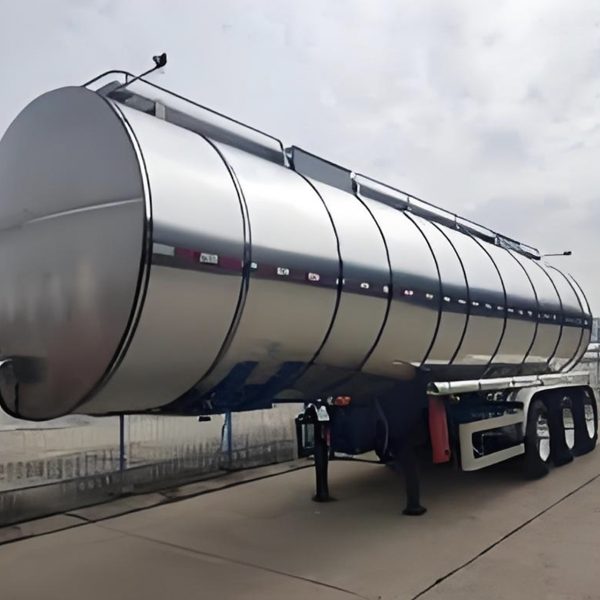
Start with the actual internal contact surface
The structural tank material and the cargo-contact surface are not always identical. Where a lining or coating exists, the transported liquid first interacts with that internal layer.
Physical condition matters as well. A nominally suitable lining may no longer provide the same barrier if cracking, blistering, delamination or an undocumented repair exposes another material underneath.
Treat each seal position separately
A manway gasket, valve seal and hose-end gasket may look similar while using different compounds. Consequently, colour and appearance should not be used to infer chemical resistance.
Polymer deterioration can appear as swelling, hardening, softening, cracking or dimensional change. In the field, that may first show up as a coupling that no longer seals normally or a gasket that changes shape after service.
Identify the hose by construction, not appearance
The visible hose cover does not determine liquid compatibility. Instead, the product-contact liner and exact hose construction should match the manufacturer’s service guidance for the chemical and temperature involved.
At the same time, compatibility data cannot compensate for mechanical damage. Blistering, exposed reinforcement, deep cuts, permanent kinks, unusual soft areas or loose couplings require physical investigation before transfer.
Do not stop at the valve body
A valve can contain several materials. Its body may be suitable while the seat, stem packing, diaphragm or another internal sealing component has a different resistance limit.
Small contact points matter for the same reason. Drain seals, sampling connections and coupling gaskets may have little surface area, yet failure can still create leakage or cross-contamination.
| Contact Area | Information Needed | Typical Evidence | Reason to Escalate |
|---|---|---|---|
| Tank interior | Exact contact material or lining | Equipment and repair records | Material or repair is unknown |
| Manway and valve seals | Actual gasket or seal compound | Parts and manufacturer data | Compound cannot be identified |
| Transfer hose | Exact hose model and liner | Hose manufacturer documentation | Service conditions exceed published data |
| Valve internals | Seat and internal seal materials | Valve technical information | Only the body material is known |
| Couplings and drains | Contact and gasket materials | Component records and inspection | Seal identity or condition is uncertain |
A simple wetted-parts register turns a vague tanker description into a traceable material map. More importantly, it reveals exactly which missing specification still prevents final acceptance.
Review Temperature and Operating Conditions
Compatibility charts only have meaning within their stated conditions. Therefore, a material that performs acceptably at one temperature should not automatically be assumed suitable for a hotter loading cycle.
Temperature can change corrosion behaviour and the response of seals or hose liners. Exposure duration also matters because brief transfer contact differs from remaining immersed throughout a long transport cycle.
Separate loading, transit, unloading and cleaning
A liquid can enter the tank warm, cool during the route and later experience different conditions during discharge. Meanwhile, the transfer hose may contact the product briefly while the tank interior remains exposed for the full trip.
Consequently, one temperature figure does not describe every component’s duty. The review should match each wetted material with the actual stage where it contacts the product.
Cleaning conditions should not be overlooked. In some service cycles, hot cleaning media or repeated exposure to cleaning chemistry may be more demanding on seals and linings than the transported liquid itself.
Mechanical operating limits remain separate from chemical resistance. A hose liner may resist the liquid, yet the complete hose assembly may still be unsuitable for the intended temperature, pressure, vacuum or transfer method.
Compatibility information should not be extrapolated outside its documented range. When the proposed operating envelope falls outside available evidence, specialist review is the appropriate next step.
Evaluate Previous Cargo and Cleaning History
A technically suitable tanker can still become unsuitable for the next assignment because of what remains inside it. Product film can stay in drains, valve cavities, hose sections, pumps or other low points after the main tank appears empty.
Therefore, “empty” and “ready for another chemical” are different states. The previous cargo and cleaning history need to be part of the acceptance decision.
After discharge, the main compartment receives the planned cleaning cycle. However, the previous product also passed through a secondary hose and a low drain connection.
If the cleaning record does not show that those components were included, the changeover remains incomplete. The missing evidence matters even when the main compartment looks clean.
Start with the immediate previous load
The previous cargo should come from traceable transport records rather than memory. In addition, the review should establish which hoses, valves and auxiliary lines actually contacted that product.
Next, the interaction between possible residue and the incoming chemical needs attention. Depending on the substances involved, concerns may include contamination, heat generation, gas formation, precipitation or another unwanted reaction.
Review how the system was cleaned
A cleaning record has greater value when the underlying process is clear. Relevant information may include the cleaning medium, rinsing, drying, exposed lines and any verification required before the next cargo.
Moreover, cleaning chemistry introduces another possible residue. The sequence may therefore involve the previous cargo, the cleaning medium and the next substance rather than only two chemicals.
- What was carried immediately before the planned load?
- Which tank sections, hoses and lines contacted that cargo?
- Which cleaning method and cleaning media were used?
- Were low points, valves and transfer hoses included?
- Was rinsing, drying or verification required?
- Did maintenance change any wetted component after cleaning?
Visual cleanliness is useful but limited. A surface may look clean while retaining a film that matters chemically or affects the incoming product’s quality.
Where the applicable SOP calls for analytical verification, rinse testing or another defined cleanliness check, that requirement should control the release decision.
Require Authoritative Compatibility Data and Specialist Approval
General compatibility tables can help with early screening. However, final acceptance should rely on information specific enough to represent the actual chemical, material and service conditions.
For seals, hoses, valves, linings and other proprietary components, manufacturer technical data is especially valuable because it relates to a defined construction or compound.
Move from generic descriptions to traceable specifications
Terms such as “rubber,” “plastic,” “stainless” or “chemical hose” are broad screening descriptions. A final review needs more precise material identification wherever that information affects the cargo-contact decision.
The same principle applies to the liquid. A general chemical family provides weaker evidence than an exact formulation at a defined concentration and operating temperature.
Conflicting data should stop routine approval
Compatibility references sometimes disagree because they use different material formulations, temperatures or exposure conditions. In that situation, selecting the more convenient rating creates an unsupported decision.
Instead, the conflict should be escalated to competent technical personnel or the relevant component manufacturer. The same rule applies when a wetted material cannot be positively identified.
- Chemical identity or concentration cannot be confirmed.
- A gasket, hose liner or other wetted material is unknown.
- Published data does not cover the actual operating temperature.
- Previous cargo or cleaning history is incomplete.
- Relevant technical references provide conflicting conclusions.
- Physical damage changes confidence in the documented material condition.
Chemical transport also sits within a regulatory and operational framework. Applicable destination-country rules, dangerous-goods requirements, cargo-owner procedures, terminal requirements and fleet SOPs should therefore remain part of the final decision.
Where specialist approval is required, the review should come from appropriately qualified engineering or technical personnel. A general chart, article or previous operating habit cannot replace that responsibility.
Document the Acceptance Decision Before Loading
A strong acceptance decision should be reproducible. If the same transport task returns later, the record should show which cargo conditions, components and technical sources supported the earlier conclusion.
More importantly, documentation moves technical questions away from the loading rack. An unidentified gasket is easier to resolve during planning than after the tanker has entered a busy loading lane.
Use a clear status: accepted, conditional, pending or rejected
A vague note such as “should be suitable” is difficult to act on. Instead, the decision should show whether the proposed service is accepted, conditionally accepted, awaiting information or unsuitable for the reviewed configuration.
Any restriction should also be explicit. For example, an approval may depend on a defined temperature range, documented hose construction or a particular cleaning requirement when supported by authoritative technical data.
Recheck the actual trailer before connection
Paperwork only remains valid when it matches the physical equipment at the loading point. A substituted hose, replaced valve or repaired lining can change the material map after the original review.
Consequently, the final pre-load check should confirm equipment identity and visible condition. Any unexplained corrosion, seal distortion, lining damage, hose deterioration or residual liquid should trigger the appropriate inspection procedure.
- Define the cargo. Confirm product identity, concentration, formulation and documentation.
- Define the operating envelope. Record temperature, exposure time and transfer conditions.
- Map the wetted system. Identify tank, lining, seals, valves, hoses, piping and couplings.
- Review previous service. Confirm the previous cargo and cleaning history.
- Match authoritative data. Check each critical material against the planned conditions.
- Resolve every open item. Unknown or conflicting information remains pending.
- Verify the physical configuration. Confirm that the equipment at the loading point matches the approved record.
This sequence creates a clear stop point when evidence is incomplete. It also keeps cargo acceptance separate from schedule pressure, which is particularly important during short-notice cargo changes.
Information That Supports a Focused Tanker Configuration Review
A useful tanker enquiry should describe the transport task rather than ask whether a trailer is broadly “suitable for chemicals.” A defined operating brief makes it easier to identify which cargo-contact materials require confirmation.
For a planned chemical transport duty, the following information creates a stronger starting point.
- Exact chemical name
- Concentration and grade
- Current SDS
- Important formulation information
- Loading temperature
- Transit and discharge temperature
- Expected transport duration
- Loading and unloading method
- Tank contact surface
- Lining or coating
- Seal and hose materials
- Valve and coupling information
- Previous cargo
- Cleaning records
- Relevant maintenance
- Destination and operating requirements
These records do not create automatic approval. Instead, they allow the actual compatibility questions to be identified before the tanker configuration is finalised.
The broader tank semi-trailer range can then be reviewed once the transported medium and operating brief are clear.
Related BOCA Vehicle Resources
These pages provide relevant tanker and product context without replacing a cargo-specific technical review.
Review the corresponding BOCA Vehicle product page before discussing a tanker configuration for a defined chemical transport task.
View ProductSee a related BOCA Vehicle chemical tanker application for additional context around corrosive-liquid transport equipment.
Read Related PageFAQ
Can tank material alone confirm chemical compatibility?
No. The tank surface is only one part of the liquid-contact system. Gaskets, hoses, valve seats, piping, couplings and linings may use different materials.
Therefore, every relevant wetted component should be reviewed against the exact chemical, concentration, temperature and exposure conditions.
Why do seals and hoses need separate compatibility checks?
Seal compounds and hose liners can respond differently from the tank surface. Depending on the material and chemical, exposure may cause swelling, hardening, softening or other deterioration.
As a result, the exact seal compound and hose construction should be checked against relevant technical data rather than inferred from appearance.
How can a previous load affect the next chemical cargo?
Residue can remain in low points, hoses, valves, drains or piping after discharge. The incoming liquid may then react with that residue or suffer unacceptable contamination.
Consequently, previous cargo, cleaning chemistry, rinsing, drying and any required cleanliness verification should be part of the changeover review.
Does a successful previous trip prove the same cargo can be loaded again?
Not automatically. Concentration, temperature, formulation, hoses, seals, repairs or cleaning conditions may have changed since the earlier trip.
Previous service provides useful evidence, but the current load still needs to remain within the documented approval conditions.
Final Pre-Load Priorities
A defensible compatibility decision does not come from the tank shell alone. It comes from connecting the actual liquid with every relevant contact material, the full operating cycle and the previous service history.
Before transfer begins, three actions deserve priority:
- Confirm the exact chemical, concentration, temperature and current documentation before equipment assignment.
- Match the tank surface, lining, seals, hoses, valves and couplings with authoritative material data.
- Keep the loading decision pending when previous cargo, cleaning evidence, material identity or specialist approval remains unresolved.
For a proposed tanker duty, the technical brief should include the exact cargo name, concentration, expected temperature, previous load, cleaning history and known wetted-component materials. Ultimately, chemical tanker cargo compatibility should be confirmed by qualified personnel under applicable destination regulations, cargo-owner procedures, terminal requirements and transport SOPs.
Provide the exact chemical name, concentration, expected temperature, previous cargo, cleaning record and known tank, seal, hose and valve materials.
A defined operating brief makes the tanker configuration discussion more useful while leaving final chemical and regulatory approval with the responsible qualified personnel.
Send Chemical Tanker Requirements