
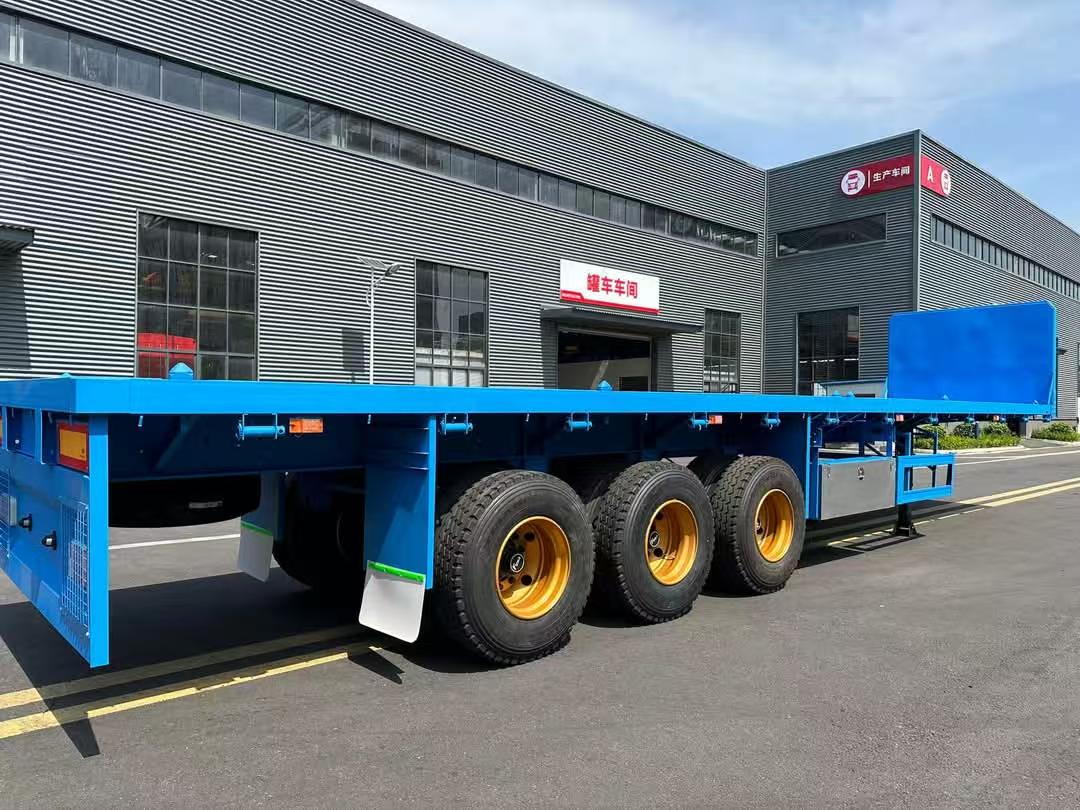
How to Choose the Best china heavy duty flatbed trailer for Your Business

Introduction
Choosing the right china heavy duty flatbed trailer is more than just a matter of purchasing semi trailer,it’s about improving the efficiency, profitability, and safety of your transportation operations.
Global demand for heavy-duty flatbed trailer continues to grow, driven by booming industries such as construction, infrastructure, and manufacturing. Businesses rely on these Chinese made flatbed trailer for transporting oversized, heavy, and oddly shaped goods—from steel pipes to heavy machinery and containers.
But with so many designs, materials, and configurations available, how do you choose the right heavy-duty flatbed trailer for your business needs?
This comprehensive guide covers key considerations, comparison charts, and expert advice to help you make an informed purchasing decision.
Why Choosing the Right Heavy Duty Flatbed Trailer is Crucial
Choosing the wrong heavy duty flatbed semi trailer will not only affect performance, but will also directly impact your costs, safety, and operational efficiency.
Risks of Choosing the Wrong Trailer:
Inefficient Operation:
Mismatched trailer size or design may result in underutilized space or difficulty securing cargo. Higher Maintenance and Repair Costs:
An unsuitable chassis or fragile structure will wear out faster under heavy loads.
Compliance Issues:
Incorrect dimensions or axle configuration may lead to overloading or oversize violations, resulting in fines and delays.
Increased Safety Risks:
Poor load stability may cause cargo shifting, braking problems, or even accidents.
Benefits of Choosing the Right Flatbed Trailer:
Perfect Match for Your Cargo:
Whether transporting steel, machinery, or containers, a suitable design ensures proper loading and securing.
Improved Fuel Efficiency:
Optimized weight and aerodynamic design reduces fuel consumption over long distances. Extended Service Life:
High-quality materials and proper configuration reduce wear and extend service life.
Reduced Downtime:*Reliable construction and components minimize failures and maintenance interruptions.
Key Considerations When Choosing a Heavy Duty Flatbed Trailer:
Cargo type and size
Load capacity and axle configuration
Road and terrain conditions
Material quality (e.g., high-strength steel)
Manufacturer reliability and after-sales service
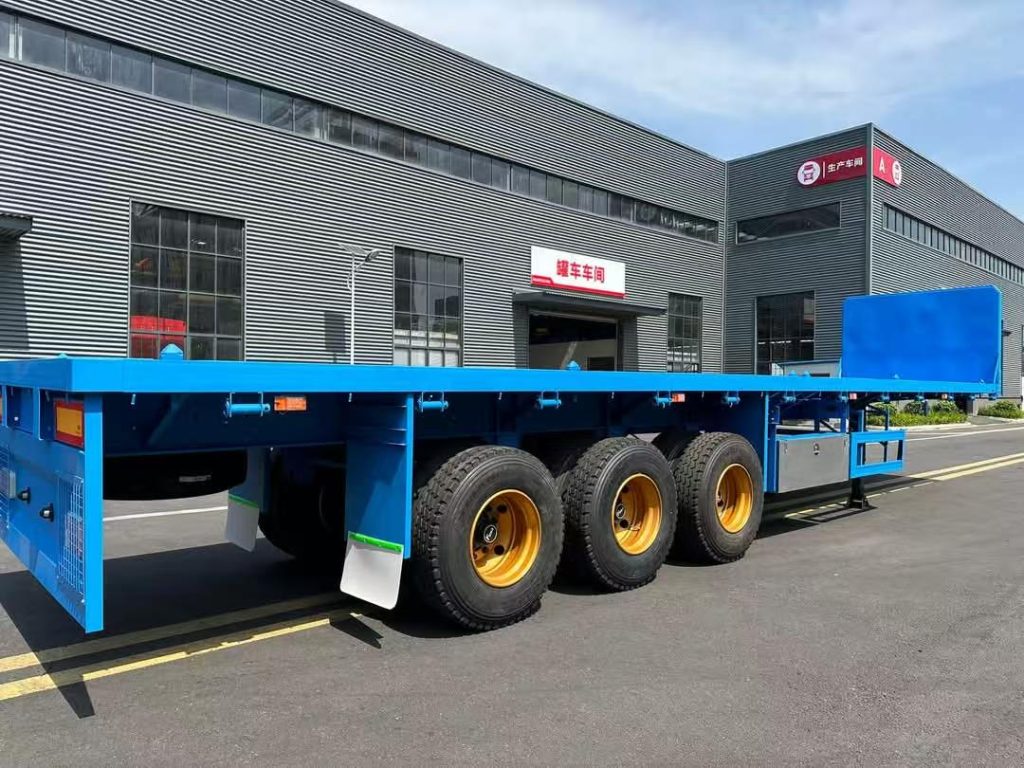
Key Factors When Choosing a flatbed trailer:
Determine the Type and Size of Cargo
The first and most important step in choosing the right flatbed semi trailer is to clearly understand your cargo requirements. This ensures that the trailer you choose is both efficient and compliant with transport regulations.
Key Factors to Analyze:
Cargo Dimensions (Length × Width × Height)
Knowing the exact dimensions helps you choose the appropriate trailer length and avoid overhang or gap issues.
Load Capacity (Average vs. Maximum)
Determines the required axle configuration and structural strength of the trailer.
Cargo Shape and Type
Different cargo types require different trailer designs:
Beams and Steel → Standard Flatbed Semi Trailer
Tanks or Cylindrical Cargo → Requires an appropriate securing system
Machinery or Containers → May require reinforced structures or locking devices.
Check Load Capacity and Axle Configuration
The number of axles on a trailer determines its legal load capacity and stability.
| Axle Configuration | Load Capacity (approx.) | Usage |
| 2 axle flatbed trailer | 25 – 35 tons | Light-duty or regional transport |
| 3 axle flatbed trailer | 40 – 60 tons | Most common type |
| 4 axle flatbed trailer | 60 – 80 tons | Heavy-duty, specialized transport |
Choose the Right Material
| Material | Pros | Cons |
| Steel | High strength, durable, affordable | Heavier, higher fuel use |
| Aluminum | Lightweight, corrosion-resistant | Higher cost, less load capacity |
| Hybrid (Steel Frame + Aluminum Deck) | Balanced strength and weight | Moderate price |
Heavy duty flatbed trailer suspension system type.
The suspension system directly affects ride comfort, cargo protection, and maintenance.
| Type | Advantages | Disadvantages |
| Mechanical (Leaf Spring) | Low cost, easy to repair | Rougher ride, more vibration |
| Air Suspension | Smooth ride, adjustable height | More expensive, complex maintenance |
Comparing Flatbed Semi Trailer Manufacturers: Quality and Service
When purchasing flatbed semi-trailers from China , comparing different manufacturer is crucial. Product quality, production standards, and after-sales service all significantly impact the vehicle’s long-term performance and operating costs.
1. Welding Quality
Inspect the main beam welds for smoothness, uniformity, and absence of cracks.
High-quality manufacturers use automated welding systems to ensure consistency.
Poor welding quality can lead to structural damage under heavy loads.
2. Steel Materials and Certifications
Reliable manufacturers clearly specify the steel grade, such as:
Q345 high-strength steel
T700 or equivalent reinforced steel.
Certified materials ensure higher load-bearing capacity and longer service life.
Avoid suppliers without clear material specifications.
3. Surface Treatment and Rust Protection
High-quality trailers use sandblasting + rust-preventive primer + top coat.
A robust coating system extends service life, especially in humid or coastal environments.
Poor surface treatment can lead to premature rust and structural weakening.
4. After-Sales Technical Support
Availability of spare parts and professional technical support is crucial.
Excellent manufacturers provide:
Warranty coverage
Rapid response to technical issues
A global or regional spare parts supply network.
5. Customization Capabilities
A professional flatbed semi trailer manufacturer should offer flexible customization services, including:
Axle brand (Forward, Bosch, etc.)
Tire size and specifications
Suspension type (mechanical or air suspension)
Trailer length, load capacity, and structural design
Evaluate maintenance and lifecycle costs
The initial price isn’t the only cost to consider.
| Cost Element | Impact on ROI |
| Purchase Price | Upfront investment |
| Maintenance Frequency | Higher with mechanical suspension or steel decks |
| Spare Part Availability | Affects downtime |
| Fuel Efficiency | Related to trailer weight |
| Resale Value | Aluminum and branded trailers hold value longer |
Choose a china heavy duty flatbed trailer that balances cost, durability, and maintenance to ensure long-term profitability.
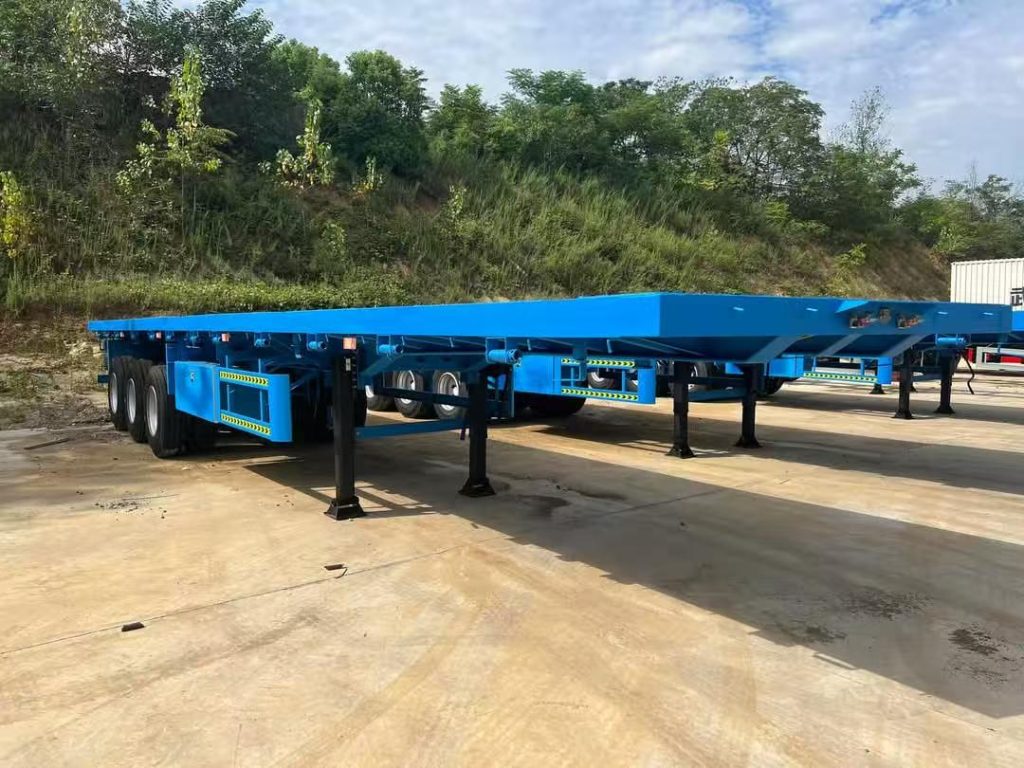
Evaluate Optional Features
Consider adding features that enhance safety and convenience:
Twist locks for container transport–container flatbed semi trailer
Sidewalls or stakes for securing bulk cargo–side wall semi trailer
Carrying systems for tool boxes and spare tires–box semi trailer
Anti-lock braking system (ABS/electronic braking system)
Retractable cargo platform for transporting oversized cargo
Hydraulic ramps (for transporting machinery)
Each feature enhances flexibility but may slightly increase cost and reduce load capacity.
Example comparison: Steel flatbed vs. aluminum flatbed
| Feature | Steel china heavy duty flatbed trailer | Aluminum Trailer |
| Tare Weight | 8 – 9 tons | 6 – 7 tons |
| Durability | Very strong, impact-resistant | Corrosion-resistant but less rigid |
| Payload Capacity | High (up to 60 tons) | Slightly lower |
| Fuel Efficiency | Moderate | Better (saves 5–10%) |
| Cost | Lower initial cost | 20–30% higher |
| Maintenance | Periodic painting | Minimal |
| Lifespan | 10–15 years | 12–20 years |
Conclusion: Steel china heavy duty flatbed trailer for sale are suitable for heavy-duty work; aluminum trailers are ideal for long-haul or fuel-efficient fleets.
How to Buy Heavy Duty Flatbed Trailers from China
With its advanced production technology, competitive prices, and extensive export experience, China has become one of the world’s major manufacturing bases for heavy-duty flatbed trailers.
Why Choose China for Flatbed Trailer Manufacturing?
Advanced robotic welding technology and automated production lines
Competitive raw material supply and lower manufacturing costs
Extensive experience in global export markets
Ability to provide customized trailer solutions for various industries
Key Factors to Consider When Purchasing:
Verify Manufacturer Certification
Check the Quality of Main Beam Steel
Request Technical Drawings and Production Details
Review axle layout, suspension design, and loading platform structure
Confirm customization options before production begins.
Pre-shipment Quality Inspection
Confirm Warranty and After-Sales Service Support
Safety and Maintenance Checklist
| Inspection Item | Frequency | Purpose |
| Frame and Beam Integrity | Every 3 months | Detect cracks or rust early |
| Tire Pressure & Wear | Weekly | Prevent blowouts |
| Brake System | Monthly | Ensure stopping distance safety |
| Lighting & Electrical | Monthly | Comply with road regulations |
| Load Securement Equipment | Every trip | Avoid cargo shifting |
| Deck Surface | Monthly | Replace damaged planks |
| Axle & Suspension | Semi-annually | Maintain balance and ride comfort |
Proper maintenance not only ensures you meet safety standards china heavy duty flatbed trailer but also extends the lifespan of your china heavy duty flatbed trailer by 30% or more.
Common Mistakes to Avoid
Ignoring cargo height—this can lead to route restrictions or permitting issues.
Overloading axles—this can cause premature damage to the suspension and tires.
Choosing the cheapest model—low-quality materials can lead to high costs in the long run.
Neglecting after-sales service—a lack of parts supply can lead to extended equipment downtime and significant costs.
Not providing driver training—improper loading techniques or securing measures can lead to accidents.
Conclusion
Choosing the china heavy duty flatbed trailer for your business is a strategic decision that directly impacts your operational efficiency, safety, and profitability. By evaluating your cargo type, weight, container flatbed semi trailer material, suspension system, manufacturer quality, and maintenance requirements, you can select a trailer that provides long-term durability and is cost-effective.
Whether you’re transporting steel coils, machinery, or containers, choosing the right flatbed ensures you meet regulations, remain competitive, and achieve profitability.
FAQ
1. What are heavy duty flatbed trailer mainly used for?
They are mainly used for transporting containers, heavy machinery, steel, and building materials in the logistics and industrial sectors.
2. What weight can a Chinese flatbed trailer carry?
Depending on the configuration, it can carry:20 tons to over 80 tons
3. What is the most common type of flatbed trailer?
This three axle flatbed trailer is widely used
4. Are Chinese flatbed trailers reliable?
Yes. Many Chinese manufacturers produce trailers that meet export standards and have obtained CE and ISO certifications. These trailers are widely used in Africa, the Middle East, and Asia.
5. How do I choose between a 3 axle and a 4 axle flatbed trailer?
3 axle → Standard cargo transport
4 axle → Heavy machinery and mining equipment transport
6. What is the price of a Chinese-made heavy duty flatbed trailer?
Typical price range:US$7,000 – US$18,000
7. Can flatbed trailers carry containers?
Yes.With twist locks installed, they can carry 20foot and 40foot international standard containers.