
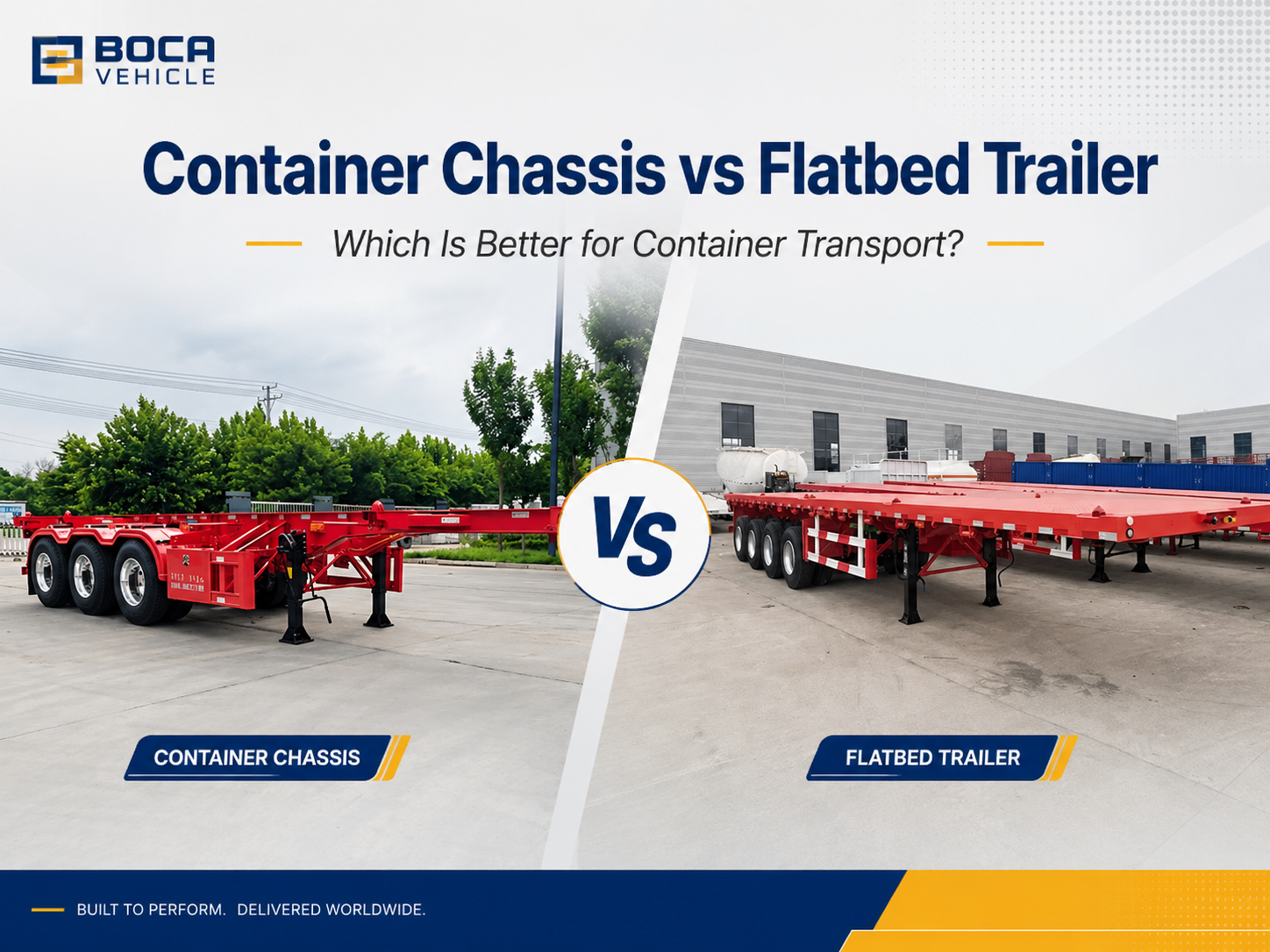
Container Chassis vs Flatbed Trailer: Which Is Better for Container Transport?
This guide compares container chassis and flatbed trailers for container transport, helping export buyers choose the right trailer for port drayage, long-distance routes, mixed cargo, and budget control.

When buyers compare container chassis vs flatbed options, they are usually not asking whether both trailers can carry containers. They want to know which trailer is more suitable for port drayage, long-distance delivery, mixed cargo operation, and budget control. A port operator, inland depot, freight forwarder, construction supplier, or cross-border carrier may all move 20ft and 40ft containers, but their daily transport conditions are not the same. Some need fast loading inside a container yard, while others need one trailer to carry steel, machinery, timber, or pallets after delivering a container. In export purchasing, the better choice depends on cargo mix, loading equipment, local road rules, tractor matching, and return-load planning. For buyers whose main business is repeated ISO container movement from port to yard or depot, a dedicated container chassis is usually the more efficient choice because it is built around twist locks, container corner positions, and fast port operation.
A flatbed trailer, however, can be the better choice when the fleet needs more cargo flexibility. In many export markets, return cargo is uncertain, and one trailer may need to handle containers, steel products, pipes, machinery, building materials, and general freight. The right decision is not only about which trailer can carry a container. It is about which trailer keeps your fleet working more days, reduces empty return trips, and matches the real road and loading conditions in your market.
Quick Buyer Decision
| Choose chassis when | Containers are your main business, especially port-to-yard, depot, bonded warehouse, or stable ISO container routes. |
| Choose flatbed when | The same trailer must also carry steel, pipes, machinery, timber, palletized goods, or construction materials. |
| Confirm before quote | Container size, loaded weight, axle quantity, twist lock layout, suspension, tire specification, road condition, and destination country. |
What Is a Container Chassis?
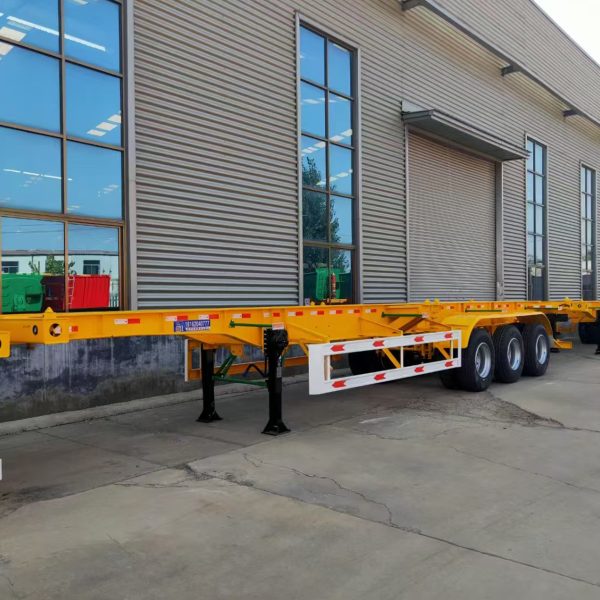
A container chassis, also called a skeletal trailer or container chassis trailer, is designed specifically for transporting ISO containers. Instead of a full loading platform, it uses a strong steel frame with cross members, twist locks, axles, suspension, landing gear, kingpin, lighting, and braking system. The container is lifted by crane, reach stacker, or terminal equipment and placed directly onto the chassis. The twist locks then secure the container through the corner castings.
This structure is simple, light, and efficient. It is especially useful for container yards, port drayage, railway transfer stations, bonded warehouses, and long-distance container routes where the trailer carries containers every day. Because it does not need a full deck, a chassis usually has lower tare weight than a flatbed trailer, which can help reduce fuel use and improve legal payload efficiency.
What Is a Flatbed Trailer?
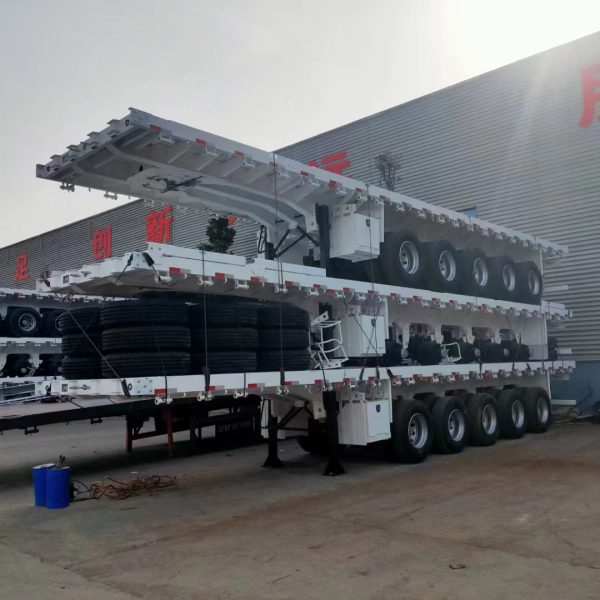
A flatbed trailer has a full open platform. It can carry containers when it is equipped with suitable twist locks, but it is not limited to container transport. A properly configured flatbed semi trailer can also transport steel beams, pipes, rebar, machinery, timber, building materials, palletized cargo, and other oversized goods that can be loaded from the top, side, or rear.
The biggest advantage of a flatbed is flexibility. If your company does not carry containers every day, or if trucks often need to find return cargo after delivering containers, a flatbed may create better fleet utilization. The trade-off is that a flatbed is usually heavier, may require more cargo securing work, and may not be as fast as a chassis in high-frequency port operations.
Container Chassis vs Flatbed: Main Differences
| Comparison Point | Container Chassis | Flatbed Trailer |
|---|---|---|
| Frame structure | Skeletal frame designed around ISO container corner positions. | Full platform deck for containers and general cargo. |
| Cargo flexibility | Mainly for 20ft, 40ft, and 45ft containers. | Containers, steel, machinery, timber, pipes, pallets, and project cargo. |
| Tare weight | Usually lighter because there is no full deck. | Usually heavier because of the platform and multi-purpose structure. |
| Twist locks | Standard key securing system for container corner castings. | Optional or customized; must be confirmed before ordering. |
| Loading method | Best with crane, reach stacker, top loader, or port equipment. | Can be loaded from top, side, or rear depending on cargo. |
| Best application | Port drayage, terminal transfer, depot movement, stable container routes. | Mixed logistics, long-distance transport, return cargo, and project freight. |
Key Specifications Buyers Should Compare
Axle Quantity and Loading Capacity
Most export buyers compare 2-axle, 3-axle, and 4-axle configurations. A 3-axle trailer is common for 40ft container transport because it balances payload, road approval, stability, and cost. But axle selection should not be based on container length only. A heavy 20ft container may create different axle load pressure compared with a light 40ft container. Buyers should confirm loaded cargo weight, road condition, bridge limits, and destination country regulations before choosing the axle layout.
Twist Lock Layout
Twist locks are the core safety point for container transport. A chassis usually has dedicated lock positions for containers. A flatbed needs optional or customized twist locks if it will carry containers regularly. Confirm whether you need one 20ft container, one 40ft container, two 20ft containers, 45ft compatibility, or a flexible multi-position layout. If the twist lock layout is wrong, the trailer may look correct in photos but fail in real operation.
Suspension, Tires, and Brake System
Mechanical suspension is often selected for rough roads, easier maintenance, and lower operating cost. Air suspension may be preferred for long-distance highway transport, smoother running, and cargo protection. Tire size, rim type, brake chamber, ABS requirement, electrical socket, reflective marking, and spare tire carrier should be checked before production.
Frame Strength and Surface Protection
For a chassis, buyers should focus on main beam design, cross member strength, welding quality, twist lock quality, and anti-rust paint. For a flatbed, buyers should also check platform floor material, lashing points, side beam structure, cross beam spacing, and deck strength. If the trailer will operate near ports, coastal roads, mining roads, or humid areas, surface treatment and electrical protection are not small details.
How to Choose the Right Configuration
Choose a container chassis if containers are your main business.
If more than 80% of your daily transport is container movement, a chassis is usually the better investment. It is lighter, faster to load with port equipment, easier to inspect, and more suitable for repeated port-to-yard routes. For a fleet that works mainly between port, warehouse, customs yard, and inland depot, the chassis structure helps reduce unnecessary platform weight and improves loading efficiency.
Choose a flatbed if your cargo changes often.
If your trucks carry containers one week and steel, machinery, pipes, or bagged cargo the next week, a flatbed is more practical. It improves return-load flexibility and helps reduce empty running. The key is to specify the flatbed correctly with twist locks, sufficient frame strength, suitable lashing points, and the right deck structure.
Match the trailer with the tractor truck.
The trailer must match the tractor’s fifth-wheel height, kingpin size, air line, electrical connection, brake system, and gross combination weight. If the tractor is already in your fleet, send the tractor model and fifth-wheel height before quotation. If the trailer and tractor will be purchased together, confirm the complete working weight, route condition, and registration requirements at the same time.
Budget Control: Which One Costs Less in Real Operation?
A container chassis may have a lower operating cost in dedicated container work because it usually has less tare weight, fewer platform components, and faster loading efficiency. In high-frequency port or depot operation, this can reduce waiting time and fuel consumption. It is also easier for drivers and maintenance teams to inspect because the structure is more open.
A flatbed may cost more because of the full platform and multi-purpose structure, but it can earn more when return cargo is not always containerized. The real question is not only purchase price. Buyers should calculate trailer utilization, empty return rate, maintenance access, loading time, cargo opportunity, and local road rules. A cheaper trailer that cannot do the job will be more expensive in daily operation.
Boca Vehicle Solution for Export Buyers
Boca Vehicle supports export buyers by matching trailer structure with actual transport scenarios. For container chassis projects, the key points are container size, twist lock layout, axle quantity, suspension, tire specification, braking system, tare weight, and local road requirements. For flatbed projects, buyers should also confirm deck strength, lashing points, platform length, floor material, and mixed cargo use.
Before production, buyers can confirm technical drawings, main specifications, production photos, video inspection, paint color, shipping method, and export documents. Clear confirmation helps reduce misunderstanding between the buyer, factory, shipping agent, customs broker, and local registration team. It also helps buyers compare quotations more accurately because two trailers with similar names may have different steel structure, axle quality, and real working performance.
Extended Reading
If you also want to understand when a flatbed is practical for container work, this related guide can help you compare mixed-cargo use and return-load flexibility before ordering.
Read More: Flatbed Trailer for Shipping ContainerFAQ
Is container chassis better than flatbed for containers?
Yes, if your main work is container transport. A container chassis is lighter, faster to load with port equipment, and designed with fixed twist lock positions for ISO containers. It is usually better for port drayage and repeated container routes.
Can a flatbed carry containers safely?
Yes. A flatbed can carry containers safely if it has correct twist locks, sufficient frame strength, and proper container positions. Buyers should confirm 20ft, 40ft, or 45ft compatibility before ordering.
Which one is lighter?
A container chassis is usually lighter because it uses a skeletal frame instead of a full platform deck. The final tare weight depends on axle quantity, steel structure, suspension, tires, and reinforcement design.
Which is better for mixed cargo?
A flatbed trailer is usually better for mixed cargo because it can carry containers, steel, machinery, timber, pallets, and other freight. It is more flexible for logistics companies that do not transport containers every day.
What information should I prepare before asking for a quote?
Prepare your cargo type, container size, loading capacity, axle quantity, road condition, destination country, tractor truck model, suspension preference, tire requirement, and whether you need 20ft and 40ft compatibility on the same trailer.
Further Planning for a Dedicated Container Chassis
The comparison above helps buyers decide between a container chassis and a flatbed trailer, but choosing a dedicated chassis is only the first step. A trailer used mainly for standard 40ft containers on smooth port roads may need a different frame, axle and suspension configuration from one carrying dense 20ft containers over rough inland routes. Container length alone does not determine the correct specification. Loaded weight, twist-lock position, road condition, tractor fifth-wheel height, turning space and local axle rules should be reviewed together.
Before requesting a quotation, confirm whether the chassis must carry one 20ft container, one 40ft container, two 20ft containers, 45ft units, or a combination of different sizes. Buyers should also decide whether fixed, sliding or multi-position twist locks are required and whether mechanical or air suspension better matches the route and maintenance conditions. These details affect loading efficiency, weight distribution, tire wear, inspection access and long-term operating reliability.
For a step-by-step review of chassis structure, container compatibility, twist-lock layouts, axle selection, suspension and port transport requirements, read our container chassis trailer guide. It is the next reference for buyers who have already decided that a dedicated chassis is the better option and now need to prepare a clear specification for quotation and production.
Final Recommendation
For buyers comparing container chassis vs flatbed trailers, the decision should follow the real transport job. If you only or mainly transport containers between port, warehouse, customs yard, and inland depot, choose a container chassis. It is lighter, faster, and more specialized. If you need one trailer for containers and many other cargo types, choose a flatbed trailer with correct twist locks and a strong platform.
Send your cargo type, loading capacity, axle quantity, road condition, destination country, container size, and tractor truck details before quotation. This helps the supplier recommend a practical configuration instead of only giving a basic price.
Contact Boca Vehicle