

Curtain Side Semi Trailer: How to Prevent Curtain Bulging and Water Ingress with Tall Palletized Cargo

Tall palletized freight can fit comfortably at floor level and still create problems higher up. Carton lean, wrapping, edge protection or restraint tension may reduce side clearance until the upper load begins pressing against the curtain. Once that happens, curtain bulging, abrasion and water-entry complaints can start to appear together.
The important question is not simply whether the curtain can still close. It is whether the finished cargo envelope, restraint arrangement and trailer configuration are suitable for the load before the vehicle leaves the yard.
A typical problem starts with a tall wrapped pallet that looks correctly positioned from ground level. The pallet base remains inside the planned loading line, but cartons or protection materials project farther outward near the top.
If the curtain has to accommodate that shape, the issue is no longer only curtain adjustment. The cargo, restraint and usable trailer space need to be considered together.
Why Tall Palletized Cargo Creates Curtain Bulging
Cargo height by itself does not cause curtain bulging. The problem usually appears when height is combined with limited usable width, upper-layer lean, packaging deformation or a local hard projection.
A forklift may place the pallet squarely on the deck while the upper cartons already lean slightly because of uneven compression. Stretch film can preserve that shape instead of correcting it, and soft packaging may continue to settle during staging or transport.
This is why a load that appears acceptable at pallet level can have much less clearance near the top. A local rectangular bulge that lines up with one pallet position is therefore more useful evidence than the overall appearance of the curtain.
Unusual closure effort is often the first warning
The curtain should not need abnormal pulling, levering or repeated buckle adjustment simply because one pallet is tall. If normal closure suddenly becomes difficult, checking the cargo position is more useful than applying more tension.
The curtain should also not be used to push leaning cartons back toward the pallet. That may improve the outside appearance temporarily while leaving the actual loading problem unchanged.
The Finished Cargo Envelope Matters More Than the Pallet Size
Nominal pallet dimensions are only a starting point. Once cartons, corner protection, straps and wrapping are added, the finished load may be wider or less regular than the packaging plan suggests.
For tall cargo, the difference becomes more important because a small amount of lean can reduce upper clearance much more than the pallet-base measurement indicates.
| Measurement | What Matters | Why It Matters |
|---|---|---|
| Maximum loaded width | Widest point after wrapping and protection | Finds overhang missed by pallet dimensions |
| Overall height | Highest finished point of the cargo | Shows where upper clearance becomes critical |
| Side clearance | Gap at lower, middle and upper levels | Reveals lean or widening with height |
| Hard projections | Pallet edges, clips, straps and rigid corners | Identifies concentrated curtain pressure |
Average clearance can also be misleading. One corner may already be touching the curtain while most of the pallet face still has sufficient space. The narrowest real gap is therefore more useful than an average measurement.
There is no single side-clearance figure that should be assumed for every trailer and every type of freight. Trailer geometry, cargo behavior and restraint design differ. When the curtain has to wrap around the load rather than close beside it, the cargo position or the trailer configuration deserves another look.
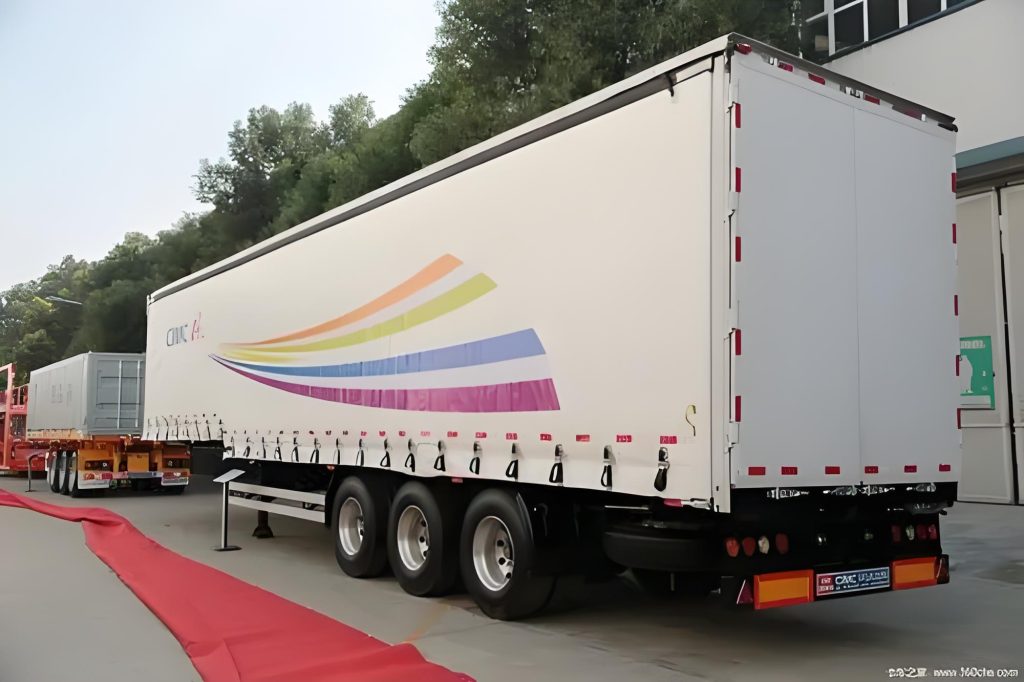
If tall palletized cargo is part of a regular transport program, usable cargo space, restraint layout and curtain-side configuration should be considered together rather than as separate specifications.
View Curtain Side TrailerSmall Contact Points Can Create Larger Curtain Problems
Curtain wear often begins at one small contact point rather than across the full side. A damaged pallet board, protruding nail, rigid carton edge, strap clip or hard corner protector can concentrate pressure into a narrow area of fabric.
That contact may appear minor while the vehicle is stationary. During transport, vibration and relative movement can turn it into repeated abrasion.
- Upper carton corners hidden beneath stretch film.
- Timber or plastic pallet edges facing the curtain.
- Steel straps, clips or rigid corner protection.
- Loose packaging caught between the pallet and curtain.
- Existing rub marks that repeatedly align with the same pallet position.
Existing wear can be useful evidence. If abrasion repeatedly appears at the same height and matches a regular cargo position, the underlying issue may be the loading pattern rather than the curtain alone.
Load Restraint and Curtain Function Should Not Be Confused
A side curtain should not automatically be treated as the primary system controlling pallet movement. Some trailer systems may have documented containment capability, but that role must be confirmed for the specific equipment and operating conditions.
For other applications, the cargo should remain stable without relying on continuous pressure against the curtain. This becomes particularly important with tall pallets because restraint tension itself can change the cargo envelope.
Straps can compress cartons, draw the upper load sideways or slightly rotate a pallet that was not seated squarely. A load that had acceptable clearance before restraint may therefore need to be checked again afterward.
More curtain tension is not a substitute for more usable space
Tightening a curtain around a leaning pallet can make the outside profile look cleaner for a short time, but it does not correct the cargo position. It can also increase local stress on the fabric and fastening hardware.
If the same cargo repeatedly needs abnormal curtain tension to close, the better question is whether the pallet arrangement, restraint layout or trailer configuration is appropriate for that transport requirement.
If you regularly transport the same tall palletized cargo, provide the finished pallet width, maximum loaded height, loading method and restraint arrangement when discussing a trailer. Those details are more useful than nominal pallet size alone.
Discuss your cargo dimensions with BOCA VehicleCurtain Alignment Can Help Separate Cargo Problems from Hardware Problems
Once cargo position and restraint are satisfactory, the curtain system itself becomes easier to assess. The full side is more useful than one buckle or one local wrinkle viewed in isolation.
A sudden local bulge that follows the outline of a pallet points back toward the cargo. A section that remains poorly aligned without matching cargo pressure may indicate a curtain, fastening or structural issue that deserves separate attention.
Upper and lower interfaces both matter
At the top, trapped packaging, damaged fabric, displaced fittings or outward cargo pressure can change the relationship between the curtain and roof-side structure.
At the lower edge, dirt, road spray, loose packaging or inconsistent fastening can create a different type of problem. If one section repeatedly needs more adjustment than the rest, checking for cargo interference or hardware misalignment is more useful than simply tightening it further.
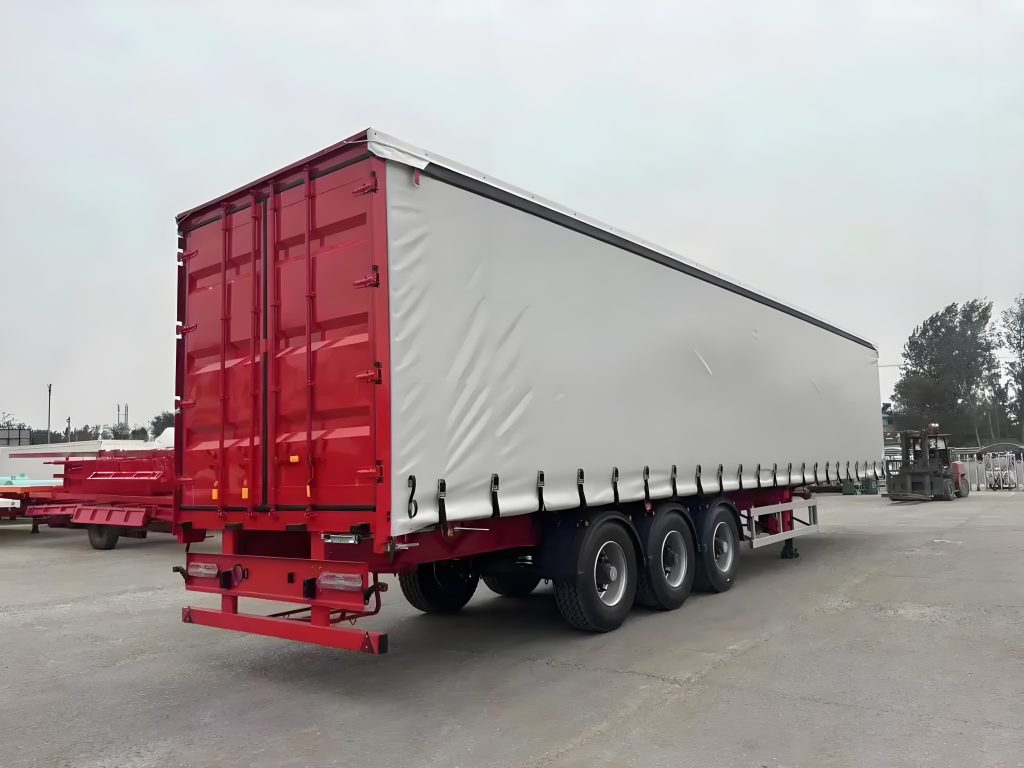
Curtain layout, available cargo space, restraint points and loading method should support the same operating requirement.
See Curtain Side Trailer DetailsWhy Curtain Bulging and Water Ingress Can Appear Together
A wet carton does not always sit directly below the point where water entered. Moisture can travel along curtain surfaces, packaging or structural interfaces before appearing inside the load space.
Curtain bulging does not prove the source of a leak, but it can provide useful context. If a distorted area changes the normal relationship between the curtain, roof-side interface, end closure or lower fastening line, that location deserves attention when it matches the moisture pattern.
Compare local bulging with the roof-side curtain interface.
Look for folds, damaged edges or trapped packaging.
Consider fastening condition, contamination and road spray exposure.
Compare abrasion or repairs with recurring cargo contact points.
Moisture can also come from wet pallets, damp freight, rain during loading or condensation, so the wet pattern should be considered before blaming the curtain itself.
A recurring wet area that repeatedly matches the same cargo position is much more useful evidence than one isolated damp carton.
Recurring Bulging Is Often More Useful Than a One-Time Complaint
When the same freight moves regularly, recurring patterns can help distinguish a cargo issue from a trailer issue. If one pallet format remains stable in one part of the deck but repeatedly pushes the curtain outward in another position, the difference may point to local loading geometry or restraint arrangement.
Packaging changes can have the same effect. A new carton, thicker edge protector or altered stacking pattern can increase finished load width even though the pallet specification has not changed.
Recording maximum loaded width, overall height, narrowest side clearance and pallet position gives the transport operator and trailer supplier something concrete to compare when the problem returns.
When the Trailer Configuration Should Be Reviewed
If the same tall cargo continues to create curtain pressure after pallet position, packaging and restraint have been corrected, repeatedly adjusting the curtain is unlikely to solve the underlying issue.
At that point, the useful comparison is between the real cargo envelope and the trailer specification: usable width at the relevant height, restraint-point arrangement, loading access and the way the curtain system closes around the cargo space.
This is also the point where a supplier discussion becomes useful. Instead of asking only for a standard curtain-side trailer quotation, provide the cargo dimensions and loading conditions so the proposed configuration can be reviewed against the actual transport requirement.
FAQ
Should a curtain restrain palletized cargo?
Not by assumption. Some curtain systems may have documented containment capability, but that function must be confirmed for the specific trailer, cargo condition and applicable operating requirements.
Otherwise, pallet movement should be controlled by a suitable restraint arrangement that does not depend on continuous curtain pressure.
Why can tall pallets cause curtain bulging even when the pallet base fits?
The finished load can be wider near the top because of carton lean, packaging deformation, overhang, edge protection or restraint tension.
This is why upper side clearance should be judged from the real cargo profile rather than pallet-base dimensions alone.
What information is useful when requesting a curtain-side trailer for tall pallets?
Provide pallet length and width, maximum loaded height, finished cargo width, loading method and restraint arrangement.
If bulging or moisture has already occurred, photographs of the cargo position, curtain profile and recurring wet areas can make the configuration discussion more useful.
Match the Trailer to the Finished Cargo, Not Only the Pallet Specification
Curtain bulging with tall palletized cargo is often the result of several small factors appearing together: upper-layer lean, packaging width, a hard pressure point, restraint movement or limited clearance in a particular loading position.
If the problem happens once, correcting the loading condition may be enough. If it returns with the same cargo, it becomes useful information for trailer selection and configuration rather than just a curtain-maintenance issue.
The most useful next step is to compare the finished cargo dimensions and loading method with the trailer layout before another unit is specified or quoted.
Send us the pallet length and width, maximum loaded height, finished cargo width, loading method and restraint arrangement. If you already have curtain bulging or water-ingress concerns, include a few photos of the loaded trailer.
BOCA Vehicle can use those details to discuss whether the issue is mainly loading-related or whether the trailer configuration should also be reviewed before quotation.