

Drop Side Semi Trailer Hinge and Latch Wear Under Frequent Forklift Loading

At a busy warehouse, port yard or building-material depot, the side panel may open repeatedly through one shift. Meanwhile, forklifts pass close to the lower rail, hinges, latches and side posts. A panel that begins to sag can therefore have several possible causes. In particular, drop side trailer hinge and latch wear must be separated from direct forklift contact before adjustment or repair begins.
The important distinction
Gradual free play usually develops differently from sudden impact distortion. Therefore, the most useful inspection starts with the loading movement, then follows the force path through the panel, hinges, brackets, latch and supporting structure.
How Forklift Loading Cycles Stress Hinges and Latches
A drop-side panel looks mechanically simple, yet several parts work together every time it opens. The hinge pins guide rotation, brackets hold the pivot position, and the latch returns the panel to its retained position. As a result, wear at one location can change the load carried somewhere else.
High-frequency side loading makes this relationship more important. One trailer may remain closed for most of a highway trip. Another may stand beside a warehouse aisle while pallets enter from the side throughout the day. Consequently, the second trailer accumulates far more panel cycles even when both units cover similar calendar time.
Small hinge clearance can become a latch problem
The first change may be difficult to notice. A hinge pin develops additional clearance, and the panel drops slightly after release. Later, the latch begins approaching its keeper lower than before.
At that point, the latch may still close. However, rubbing marks begin appearing on one side of the keeper. Closing effort may also increase because the latch is now pulling a misaligned panel into position.
This sequence matters during diagnosis. Replacing the latch alone can restore a cleaner feel for a short period, while the hinge clearance remains unchanged. Therefore, a recurring latch complaint should always include a check of the complete panel geometry.
Forklift loading creates a different force direction
Road vibration and normal panel cycling load the hardware in predictable directions. Forklift contact is different. A tyre, fork tip or pallet corner can push the panel sideways, upward or inward.
For example, a forklift may enter the opening without touching anything. During straightening, however, the rear wheels can swing toward a lowered panel. A pallet may also sit slightly skewed on the forks and strike a post during withdrawal.
These events do not always leave a dramatic dent. Instead, a bracket may move a few millimeters, or one panel corner may sit differently after the shift. That small geometric change can be enough to alter latch engagement.
- The panel drops noticeably when the latch releases.
- One hinge moves before the others.
- The latch starts scraping one side of its keeper.
- Closing requires lifting or pushing the panel.
- Fresh paint damage appears beside hinge or latch hardware.
- One panel begins behaving differently from adjacent panels.
Observe Impact Points During Normal Loading
A trailer parked in a workshop shows the result, but it often hides the cause. Where positive latch engagement, panel support and mounting integrity have first been confirmed safe for controlled operation, several normal loading cycles should be observed before adjustment begins. If retention is uncertain or cracking, displacement or unpredictable movement is visible, routine loading should stop instead. This step is especially valuable when one panel develops the same problem repeatedly.
The final part of the forklift approach deserves close attention. Narrow aisles often require a steering correction beside the trailer. Meanwhile, a load that blocks forward visibility may change the departure path after the pallet has been placed.
Follow the rear-wheel path, not only the forks
Fork tips are an obvious impact risk, yet rear steering can create equally important contact. As the forklift turns, the rear of the machine swings laterally. Consequently, a tyre or counterweight may approach the panel even though the front of the machine remains clear.
Floor markings can help, but the actual wheel path matters more than the painted route. Scuff marks, polished concrete and repeated tyre contact beside one panel may reveal where real movements differ from the intended path.
Watch the lowered panel during the full cycle
A lowered side panel can visually disappear into the loading area. However, it still contains hinges, edges and structural connections. If a tyre presses against that panel during turning, force reaches the hinge line even without a sharp collision.
Uneven ground can add another load. One end of an open panel may rest against a raised surface while the opposite end remains unsupported. In that condition, routine opening can twist the panel and load the hinges unevenly.
Match damage height with the movement that could create it
Narrow horizontal gouges often deserve comparison with fork height. Rubber transfer suggests tyre contact, while a broader dent may fit a pallet or packaged load. Still, the mark should be considered together with timing and direction.
Fresh coating damage beside a newly misaligned bracket creates a stronger connection than an old scratch that has remained unchanged for months. Therefore, photographs taken immediately after an unusual loading event can become valuable maintenance evidence.
Inspect Hinge Pins, Brackets and Weld Zones
Once the loading path is understood, mechanical inspection can begin at the pivot and move outward. Before close examination, the trailer and panel should be secured according to applicable site procedures. Any panel that could swing or fall unexpectedly requires suitable support.
Check the pin and the surrounding interface
A hinge pin should remain correctly located within its assembly. First, check for unusual projection, axial migration or damaged retention features. Next, watch the hinge while the panel begins moving.
Vertical movement can indicate clearance between the pin and its surrounding bore or sleeve. Sideways movement may point toward worn components, loose mounting or bracket distortion. Meanwhile, polished metal, scoring, rust powder or fretting can show where movement is occurring.
Importantly, the pin itself can still look acceptable while its mating surface has enlarged. Therefore, inspection should cover both sides of the moving interface rather than judging the pin alone.
Compare every hinge on the same panel
Multiple hinges should share movement across a common panel. If one pivot develops excessive clearance, the remaining hinges can begin carrying load differently. As a result, a single local fault may create wear elsewhere.
Comparison is therefore useful. One bracket may show a different angle, one pin may sit higher, or one hinge may have much heavier polishing. A panel that moves freely at first but binds later can also indicate that several hinge axes no longer line up correctly.
Bracket deformation can be more important than pin wear
A bent hinge bracket changes the pivot position even when the pin remains intact. Paint cracking along one edge, displaced witness lines or a new gap between adjoining parts can reveal movement before severe deformation becomes obvious.
Lubrication may reduce friction where the design provides for it. Nevertheless, lubrication cannot correct a bent bracket, enlarged hole or shifted mounting point. Persistent stiffness after normal servicing therefore deserves a geometry check.
Extend the inspection into the weld zone
The visible weld bead is only part of the load path. Nearby parent material also deserves inspection for cracking, coating separation, rust lines, tearing or local distortion.
A forklift strike can bend a bracket while the weld still appears visually intact. However, the force may have entered the surrounding rail or panel frame. For this reason, severe deformation or suspected cracking should move the inspection beyond routine maintenance.
Visible structural cracking, torn material or uncertain mounting integrity requires competent technical assessment. Applicable roadworthiness requirements, workplace procedures and qualified repair practices should control the next step.
Check Latch Engagement, Free Play and Panel Alignment
Latch inspection should start before the handle closes. Bring the panel toward its normal retained position and observe how the latch approaches the keeper. A correctly aligned panel should not require the latch to correct obvious sag or twist.
If the panel must be lifted before the latch engages, the hinge system deserves attention. Likewise, repeated sideways pressure can indicate a moved bracket, twisted panel or displaced side post.
Contact marks reveal the closing path
A keeper often records the problem before the mechanism fails. Repeated scraping on one edge means the latch is entering off-center. Over time, the contact surface may polish, round or develop a groove.
Those marks should be compared with panel gaps. If one panel corner sits lower than the opposite corner, the latch wear may be a consequence rather than the primary defect.
Trace free play to the component that creates it
A “loose latch” can involve several interfaces. Movement may exist at the handle pivot, hook, keeper, fastener, mounting plate or surrounding structure. Therefore, the mechanism should be checked step by step rather than treated as one component.
Direction also matters. Vertical panel movement often directs attention toward hinges or supports. Local movement at the latch can point toward worn engagement surfaces. Meanwhile, sideways movement after a loading incident may involve both systems.
No universal free-play limit should be invented. Serviceability should follow verified technical guidance, repair criteria and competent assessment for the actual hardware. A sudden change from an established fleet baseline is often more informative than an unsupported generic number.
Look along the complete panel edge
A local dent does not always change overall geometry. Conversely, modest damage near an edge can twist a complete panel. Sight along the upper and lower edges, then compare gaps near hinges, posts and latch points.
One useful observation is whether the top and bottom reach the closed position together. If one corner arrives first, continued forcing can transfer additional stress into the latch bracket, keeper and hinge line.

Separate Forklift Contact Damage From Normal Wear
The first visible symptom does not always reveal the damage mechanism. Both repeated cycling and forklift contact can produce a loose latch, poor alignment or excessive hinge movement. Therefore, timing and physical evidence need to be read together.
| Inspection clue | Progressive cycle wear | Possible forklift contact |
|---|---|---|
| Timing | Gradual increase across repeated inspections | Sudden change after one shift or reported event |
| Surface marks | Polishing at expected moving interfaces | Fresh dent, scrape, tyre transfer or concentrated gouge |
| Bracket shape | Clearance increases without obvious directional bending | Bracket or edge displaced in a clear force direction |
| Latch behavior | Closing effort changes slowly | Binding or misalignment appears abruptly |
Normal wear tends to follow movement surfaces
Cycle-related wear usually appears where parts repeatedly touch. Hinge pivots, latch pivots and keeper contact areas can polish gradually. In many cases, several similar components show related ageing rather than one sharply localized deformation.
Service history strengthens that interpretation. If free play increased across several inspections without a sudden event, progressive wear becomes more plausible. Still, uneven wear can occur when one hinge begins carrying a greater share of the panel load.
Impact damage often carries directional evidence
Forklift contact often leaves a direction. A horizontal scrape, inward dent, bent edge or shifted bracket can indicate where force entered. Likewise, a tyre mark may appear where a rear wheel repeatedly passes the lowered panel.
The strongest diagnosis combines several clues. Fresh damage, sudden functional change, matching forklift height and photographs from the loading area create a more coherent explanation than any one mark alone.
Mixed damage is common
Existing hinge wear can lower a panel into a more vulnerable position. Later, a minor forklift contact can bend a bracket and accelerate the original wear. In the opposite sequence, one impact can move the panel and then create abnormal wear during every later cycle.
For that reason, repair planning should address both contributors when the evidence supports them. Replacing hardware without correcting a repeated collision path may simply restart the same damage cycle.
Improve Loading-Zone Discipline and Inspection Records
Repeated hardware damage often reflects more than component age. A narrow approach lane, poor housekeeping or a consistent steering correction can expose the same panel section every day. Therefore, loading-zone control belongs in the maintenance discussion.
Make the forklift path repeatable
Where space allows, most steering correction should occur before the forklift reaches exposed side hardware. The intended path should account for rear-wheel swing, pallet width and exit movement as well as the forward approach.
Temporary obstacles matter too. Empty pallets, packaging and stored material can narrow a safe aisle during a busy shift. Consequently, housekeeping can influence hinge and latch life even though it appears unrelated to trailer maintenance.
Track loading intensity, not only calendar time
A calendar inspection interval does not show how many times a panel has moved. One unit may complete long routes with little side access. Another may cycle continuously at a regional warehouse.
A practical record can therefore note approximate daily openings or loading intensity. Exact counts are not always necessary. The objective is to distinguish occasional access from a genuinely high-cycle application.
- Approximate daily side-panel cycles
- Panel section used most often
- Forklift entry direction
- Forklift exit and turning pattern
- Known impact locations
- Changes in closing effort
- Hinge and latch photographs
- Previous adjustment or repair dates
Photograph alignment as well as damage
A close-up of a worn latch records detail but loses context. Therefore, each inspection should also include wider views showing the complete panel, adjacent posts and the hinge line.
Consistent photographs create a useful baseline after repair. If a panel gap begins changing again, the recurrence becomes visible before the latch reaches the same severe condition.
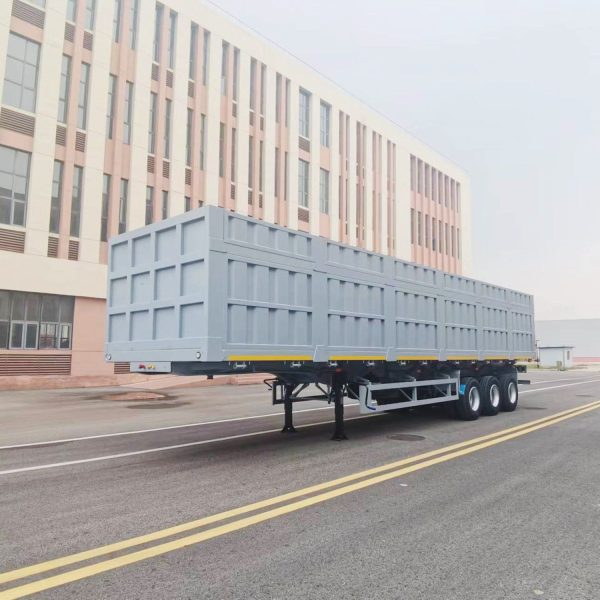
For additional product context, the confirmed cargo semi trailer range includes side-wall and drop-side configurations used for general freight and side-loading applications.
When Worn Hardware or Structure Needs Professional Repair
Routine maintenance and structural repair should not be treated as the same task. A serviceable pivot may need normal attention, while cracked mounting structure or uncertain latch retention requires a different level of assessment.
Escalate when positive retention cannot be confirmed
A latch that only closes after several attempts is already providing useful evidence. Likewise, a mechanism that appears closed but does not reach its intended engagement position should not be normalized.
If the side panel cannot remain positively secured, routine operation should stop until the cause is identified. The fault may lie in the latch, keeper, hinge line, panel frame or supporting structure.
Escalate visible cracks and major bracket distortion
Cracking around a hinge bracket changes the problem from normal hardware wear to structural condition. The same applies when a mounting plate or rail has moved significantly after impact.
Repeated straightening or uncontrolled heating should not replace a suitable repair assessment. Structural repair methods need to match the material, affected load path and applicable local requirements.
Repeated component replacement signals a root cause
When the same latch is replaced again and again, attention should shift beyond that latch. Hinge clearance, keeper alignment, panel twist and forklift contact all deserve another look.
Similarly, repeated wear at one hinge location can indicate concentrated loading cycles or a persistent geometry problem. Maintenance history becomes especially valuable at this stage because it shows whether the defect follows time, location or loading intensity.
A Practical Inspection Sequence After Repeated Forklift Loading
A fixed sequence helps prevent the visible latch from receiving all the attention. Instead, the inspection follows the operating event and then works through the hardware.
- Record the operating condition. Note loading frequency, panel section, cargo format and the normal forklift route.
- Observe normal loading. Watch approach, rear-wheel swing, fork height, pallet overhang and departure.
- Inspect the closed panel. Look for bowing, twist, changed gaps and fresh impact marks.
- Release the latch slowly. Watch whether the panel drops or moves sideways before opening.
- Check each hinge. Inspect pin position, clearance, brackets, mounting points and weld zones.
- Close without forcing. Observe whether the panel naturally reaches its retained position.
- Check latch engagement. Trace free play through the mechanism and keeper rather than judging the handle alone.
- Compare evidence. Decide whether the pattern looks progressive, impact-related or mixed before planning repair.
Related BOCA Vehicle Resources
FAQ
Why do drop-side latches loosen under frequent loading?
Repeated opening and closing adds movement at latch pivots, keeper contact surfaces and mounting points. Meanwhile, hinge clearance may slowly change the panel position.
As alignment changes, the latch can begin entering the keeper at an angle. That extra rubbing and closing force may accelerate wear. Therefore, recurring looseness should trigger a hinge and panel-alignment check rather than latch adjustment alone.
How can forklift impact damage be identified?
Useful evidence includes fresh fork gouges, rubber marks, directional dents, moved brackets and sudden panel misalignment. Matching the height and direction of those marks with the normal forklift path adds useful context.
However, a single mark does not prove the cause. Maintenance history, photographs and any change immediately after a loading event should also be considered.
When should a misaligned side panel be removed from routine service?
Escalation is appropriate when positive latch engagement cannot be confirmed, the panel moves unpredictably, hinge hardware is displaced or structural cracking is visible.
Persistent misalignment that requires force to close also needs professional assessment. Final serviceability should follow verified technical guidance, applicable local rules and qualified judgment.
Does every loose latch need replacement?
No. The looseness may originate inside the latch, but hinge wear, keeper movement, panel sag or impact distortion can create the same symptom.
The complete closing geometry should therefore be checked first. Replacement is appropriate when the actual hardware condition and verified service criteria support that decision.
Final Inspection Priorities
High-cycle forklift loading makes small changes easier to miss because each cycle still appears routine. Nevertheless, a slightly lower panel, a new scrape on the keeper or repeated bracket damage can reveal a developing problem before the hardware becomes difficult to operate.
For that reason, drop side trailer hinge and latch wear should be assessed together with the real loading path, panel geometry and repair history. The objective is not simply to restore movement. Instead, the inspection should identify why the hardware changed and whether the same condition will return.
- Record the duty: approximate daily panel cycles, loading position and the panels used most frequently.
- Record the evidence: forklift path, impact locations, hinge and latch close-ups, and full-panel alignment photographs.
- Escalate uncertain structure: positive retention problems, displaced mounts, cracking and major deformation should receive qualified technical review before routine use continues.
A focused review is easier when the operating information is specific. Useful inputs include approximate daily loading frequency, forklift approach and exit paths, known contact locations, hinge and latch photographs, panel alignment, cargo format and site conditions.
These details help distinguish a trailer-configuration question from an existing maintenance or structural repair issue. Structural repair decisions should remain with qualified technical personnel.
Contact BOCA Vehicle