

Heavy Payload Lowboy Trailer: How to Verify Actual Equipment Operating Weight Before Loading
Learn how to verify the actual operating weight of heavy equipment before lowboy loading, including attachments, fuel, modifications, scale records and other factors that can affect trailer selection.

A machine can arrive beside the loading ramp looking exactly like the unit shown in its specification sheet while its real transport condition tells a different story. A different bucket, extra guarding, partial fuel, added counterweights, repair steel, tools or loose equipment can all change the number that matters. Before trailer selection is finalized, the practical task is to verify the actual equipment operating weight before lowboy loading rather than treating one catalog figure as the final transport number.
This problem often appears before anyone begins discussing axle count or trailer configuration. An excavator, dozer, loader, drilling machine, crusher or other heavy unit is scheduled to move, and dispatch receives a weight copied from a brochure, fleet database, previous transport sheet or old scale ticket.
The number may be correct for the machine that existed when the record was created. The machine in the yard today may not be the same configuration.
That changes the planning question. Instead of asking only, “What does this model normally weigh?” the transport team needs to establish what this specific machine weighs in the condition that will actually reach the trailer.
Published weight and transport weight answer different questions
A published machine weight describes a defined configuration. Transport planning has to describe the actual machine, its current attachments, fluids, modifications and any additional equipment moving with it.
When Catalog Weight Stops Describing the Machine in Front of You
Catalog data remains a useful starting point. The mistake is treating the number as universal before checking what the manufacturer meant by it.
One specification may describe operating weight. Another may refer to shipping weight or a base configuration. Notes beneath the table may also define whether fuel, an operator, standard work tools or counterweights were included.
The model name may be the same while the transport weight is not
Heavy machinery can vary significantly within the same model family. Track width, tire configuration, boom length, stick arrangement, blade type, hydraulic options, cab protection and counterweight packages may all change without altering the familiar model name used in everyday conversation.
That is why a complete configuration code, serial-number-specific document or verified equipment record is more useful than simply finding the nearest brochure page.
Typical yard situation
The fleet record lists the correct excavator model, but the machine now carries a different bucket and a quick coupler. The brochure number is still useful, but it no longer describes the full transport condition. The next job is to identify the configuration difference—not to hide it inside a generic allowance.
Removing a component does not always remove it from the transport weight
A crawler excavator may work with one bucket but travel with another. A dozer blade, counterweight, boom component or other assembly may also be removed before loading.
If the removed component still travels on the same trailer, its mass still belongs in the cargo total. The useful distinction is between the machine’s own transport condition and additional cargo carried beside it.
Keeping those two numbers separate also makes later changes easier. If an attachment is transferred to another vehicle, the verified machine record does not have to be rebuilt from scratch.
The Same Model Name Can Hide a Different Transport Configuration
A spreadsheet cannot resolve a configuration problem that has never been checked at the machine. The identification plate, complete model designation and physical setup need to agree with the weight source being used.
Manufacturer documents, equipment-management records, service files and earlier verified weighing records can all be useful. When two credible sources disagree, the difference itself becomes a clue: something about the machine, its condition or the earlier measurement may have changed.
What identifies the machine strongly enough for transport planning?
The record does not need to become a long inspection form. It only needs enough detail to connect the weight evidence with the physical unit being moved.
- Manufacturer and complete model designation
- Serial number or equipment identification number
- Track, axle, wheel or tire configuration
- Boom, stick, mast, blade or work-tool arrangement
- Installed counterweight configuration
- Cab protection, guarding, tanks or structural additions
- Attachments remaining installed during transport
- Components travelling separately on the same trailer
Photographs help when paperwork is incomplete because they can preserve the visible condition of the machine at the time of planning. They may confirm the bucket, blade, guarding, track arrangement or auxiliary tank that was present.
They are still identification evidence, not weight evidence. Two attachments that look similar can have different construction and mass.
A documented value and an assumption should never look identical in the file
A manufacturer operating-weight figure may be well supported. An attachment nameplate may provide another clear value. A fabricated guard or auxiliary tank with no surviving records belongs in a different category.
Keeping those evidence levels visible stops a convenient estimate from gradually becoming an accepted fact.
The nearest specification is not automatically the safest specification
If the machine plate is unreadable, a major component cannot be identified or two configuration records conflict, the unresolved difference should be investigated whenever it could change the transport decision.
What Usually Makes the Real Machine Heavier Than the Recorded Weight?
Once the base machine is understood, the most useful check is physical rather than theoretical: look at what is actually attached to, carried by or contained in the machine today.
Large work tools attract attention first, but counterweights, tanks, service fluids, loose equipment and accumulated material can also create a gap between the reference document and the load being moved.
Attachments are part of the configuration, not an afterthought
Buckets, breakers, grapples, blades, rippers, forks, shears, couplers and similar tools matter when they remain on the machine. Even a quick coupler can mean that the unit beside the trailer is no longer the same configuration described in the original brochure.
Strong evidence may come from an attachment nameplate, manufacturer document, fleet inventory record or direct weighing. Visual estimation is much weaker when the component is substantial enough to change the movement.
A bucket on the deck still belongs to the load
A removed bucket can sit beside the excavator during staging and later be chained to another part of the trailer. The same is true of blades, counterweights, boom sections, tire assemblies and other detachable components.
Listing those items separately keeps the machine mass clear while allowing the complete cargo total to change when the loading arrangement changes.
Why this matters
A counterweight may be removed to change loading geometry, but if it is secured elsewhere on the same lowboy, the complete trailer cargo has not become lighter. Only the distribution and machine configuration have changed.
Fuel condition can change between the workshop and the loading yard
A weight record created after service may reflect a different tank condition from the same machine arriving directly from a jobsite. The difference becomes more important when the transport plan is already close to a payload, axle-load or route constraint.
Auxiliary fuel tanks deserve separate attention because both the tank structure and its contents may sit outside the assumptions behind the original factory figure.
If the source document does not define fuel condition, leave the uncertainty visible instead of quietly inventing a correction.
Operating fluids are normally part of the story, but the definition still matters
A genuine operating-weight figure commonly accounts for normal service fluids. That does not remove the need to check how the source defines the number.
Additional hydraulic circuits can introduce extra reservoirs, hoses, accumulators, pumps and fluid. Specialized industrial equipment may carry other process liquids or auxiliary systems that never appeared in the original base specification.
Draining fluids simply to make an uncertain number fit should not become an improvised transport solution. Manufacturer instructions, site procedures, environmental requirements and qualified technical guidance remain controlling.
The overlooked weight is often already travelling with the machine
Chains, spare teeth, hoses, lifting gear, tools, grease containers, mats, replacement parts and maintenance supplies often become permanent residents of a working machine.
Tracks, buckets and body cavities may also hold soil, stone, water, scrap or other residue that would never appear in a clean factory specification.
That is both a weight issue and a transport-preparation issue. Loose material should be dealt with before loading rather than treated as an invisible part of the machine.
Evidence Check
Can every part of the final weight be traced?
The purpose of this record is not paperwork for its own sake. It shows which parts of the total are measured, documented or still unresolved.
| Weight Item | What Needs to Match | Useful Evidence | Decision |
|---|---|---|---|
| Base machine | Exact model and documented condition | Manufacturer record or verified weighing | Confirm |
| Attachments | Exact installed or detached tool | Plate, supplier data or inventory record | Confirm |
| Fuel and fluids | Actual condition versus source assumption | Machine indication and technical records | Record |
| Modifications | Added tanks, guarding, steel or structures | Fabrication record, supplier data or weighing | Resolve |
| Loose cargo | Detached components and added equipment | Inventory or individual measurement | Add |
Older Machines Often Drift Away From Their Factory Weight
Working machinery accumulates history. Repairs, guarding, tool carriers, auxiliary tanks, reinforcement and job-specific structures can remain on the equipment for years.
That creates an important distinction: the old factory document may still be correct, but it may no longer describe the machine waiting for transport.
Permanent additions become easy to stop noticing
Cab protection, belly guards, rock guards, auxiliary fuel tanks, additional counterweights, platforms, toolboxes, hydraulic packages and structural reinforcement can gradually become visually “normal” to operators and maintenance teams.
Maintenance photographs, fabrication records and comparison with the documented factory arrangement can help reveal which items appeared later.
A common documentation gap
An auxiliary structure has been on the machine long enough that everyone assumes it is original equipment, but no one can produce a fabrication drawing or component weight. That does not justify guessing a percentage. It identifies the specific part of the load that needs stronger evidence.
Missing documentation changes the evidence strategy
An undocumented modification may be resolved through supplier information, fabrication drawings, component measurement or complete machine weighing. The right method depends on how significant the unknown is to the transport decision.
The age of a record also matters. An undated handwritten number should not automatically outrank a recent credible scale record simply because it is easier to use.
Machine identity is unclear
The nearby specification is not yet strong enough evidence.
A major added structure has no weight record
The unknown belongs to that structure, not inside an arbitrary overall percentage.
Two credible sources disagree
The difference needs an explanation before either number becomes the basis of the movement.
When Documentation Is Not Enough, Weighing Becomes the Better Evidence
Good records can sometimes establish the transport condition without another weighing event. The value of physical measurement increases when major attachments, permanent modifications or contradictory records remain unresolved.
Even then, the scale result needs context. A precise number is less useful six months later if nobody recorded which attachment, counterweight or fuel condition was present when the machine was weighed.
A suitable weighing facility can give the cleanest answer
A suitable verified weighing facility can provide strong evidence of total machine mass when the equipment, approach and scale arrangement can safely accommodate the machine.
The useful record is more than the final number. The weighing date, relevant scale information, attachment configuration and fuel condition should remain connected with the result.
Remote work may require portable weighing
Portable systems can be useful at construction, mining, industrial and remote project sites where taking the machine to a fixed facility is impractical.
Surface condition, support, calibration status and setup procedure can influence the result. The measurement is only as useful as the way the system was used.
Loaded-minus-empty calculations are only as good as the comparison
Some operations weigh the loaded transport combination and subtract a verified empty combination to estimate cargo mass.
Different fuel quantities, dunnage, chains, personnel, spare equipment or vehicle combinations can distort that comparison. Both original records should therefore remain attached to the derived number.
Cross-checking is useful because disagreement tells you where to look
A recent scale record can be compared with documented machine weight plus known attachments and modifications. Previous transport records also become useful when their configuration is known.
The objective is not to force every source to agree. A mismatch may expose a missing component, different configuration or unsuitable measurement condition.
Some uncertainty is large enough to stop being a paperwork issue
If the unresolved difference could change trailer suitability, route planning or compliance, another verification step is more useful than continuing with a convenient assumption.
Uncertainty Should Be Traced, Not Buried Inside a Generic Percentage
Weight verification does not always produce perfect information. The important question is what remains uncertain and whether that uncertainty can change the movement.
A wrong machine variant, unidentified counterweight, undocumented guard and unknown fuel condition are different problems. Applying one percentage to the whole machine hides those differences instead of resolving them.
The source of the number matters
A useful record can distinguish measured values, manufacturer-documented values, supplier information, historic records and unresolved estimates.
That lets the next reviewer see not only the total, but also how much confidence the evidence deserves.
A range is useful only when both ends have evidence
Documentation sometimes shows several legitimate component options while the physical identification is still being resolved. In that situation, a temporary range can support planning.
If neither limit comes from credible evidence, however, the range simply turns one guess into two.
Not every unknown deserves the same response
A small undocumented toolbox and a large unidentified structural assembly do not carry the same planning consequence. What matters is whether the unknown could change trailer suitability, loading approval, route planning or legal compliance.
When it can, stronger evidence or qualified technical review should come before dispatch. Applicable destination-country regulations, road requirements, project procedures and competent engineering advice remain controlling where regulated limits are involved.
Verified Weight Is Where Trailer Selection Should Begin
Once the machine record is credible, the discussion can move from “What might this equipment weigh?” to “Which trailer configuration fits the real movement?”
Weight is still only one part of that decision. Transport dimensions, footprint, ground clearance, loading geometry, support locations and available center-of-gravity information can all change the final arrangement.
Machine mass and complete trailer cargo are not always the same number
If a bucket or removable counterweight travels separately on the deck, the machine’s verified mass and the complete cargo mass should remain distinguishable.
That distinction allows the loading plan to change without losing the original machine record.
The right lowboy discussion starts with the verified load, not a nominal payload label
With the machine data established, the BOCA lowbed semi trailer range can be reviewed against the real equipment configuration and transport requirement.
A nominal trailer payload number alone cannot determine the complete arrangement. Load position can influence tractor reactions, trailer axle groups, structural loading and route compliance.
Axle-load rules, permit requirements, bridge restrictions and other infrastructure limits should be evaluated for the intended route by qualified personnel where required.
Trailer Reference
Use the machine data to start comparing actual trailer configurations
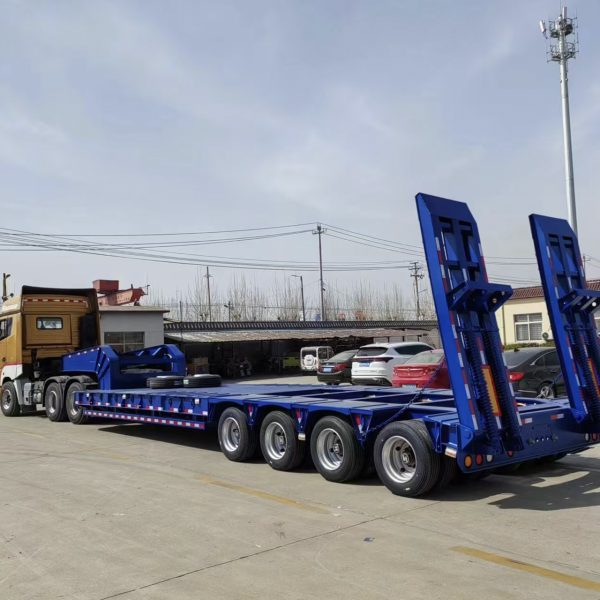
A trailer image can show the type of transport platform involved, but suitability still depends on the verified equipment weight, footprint, load position, loading geometry, route and destination requirements.
The Weight Number Is Only Useful If the Next Person Knows What It Represents
A transport handover should preserve the meaning of the number, not just the number itself. If dispatch changes, another shift takes over or the plan is technically reviewed later, the evidence should still make sense without relying on memory.
The useful file normally brings together the machine identity, weight source and the conditions that could change the result:
- Exact machine make, model and identification
- Verified base or operating-weight source
- Installed attachments and counterweight configuration
- Detached components travelling with the load
- Fuel and relevant fluid condition
- Permanent modifications or added structures
- Recent weighing record and measurement date, where available
- Known unresolved weight items
- Transport dimensions and equipment footprint
- Available center-of-gravity information
- Loading-site and known route constraints
One final comparison at the trailer can prevent an old record from becoming today’s mistake
Heavy-haul plans often change late. A different attachment may be installed, fuel may be added or a removed component may return to the machine after the original planning review.
The last useful check is therefore simple: does the machine arriving at the trailer still match the condition represented by the verified weight? If not, the changed item needs to re-enter the transport calculation before the movement continues.
FAQ
The best trailer decision starts with a machine weight you can explain
The most useful transport weight is not simply the largest number found in a brochure or an old file. It is the number that can be connected to the machine beside the trailer: the correct configuration, the attachments travelling with it, the current condition and the evidence behind each material difference.
Once that information is credible, lowboy selection becomes a much more meaningful comparison of actual cargo weight, dimensions, load position, loading geometry and route requirements.
Choose the Trailer From the Real Machine Data
Bring the Machine Details Into the Lowboy Selection
If you are comparing lowboy configurations for a heavy equipment movement, start with the information that actually changes the decision: verified machine weight, transport dimensions, installed work tools, counterweight arrangement, permanent modifications, detached components and the intended loading condition.
Route restrictions, loading-site access, available center-of-gravity information and relevant photographs can then be reviewed alongside the lowboy and lowbed trailer options. The goal is not to match a machine name to a nominal payload label, but to compare the trailer against the real movement.
Send the machine model or equipment plate, verified or documented weight information, transport dimensions, attachments and route details so the trailer discussion can begin from the actual cargo condition.
Send Machine Details for Trailer Review