
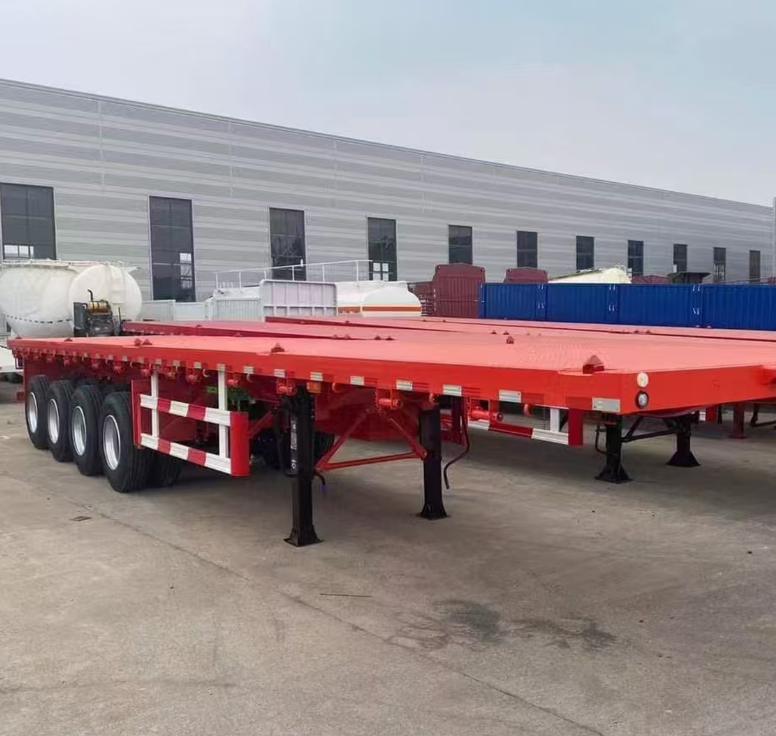
Extendable Flatbed Trailer Guide: When You Need Extra Length

The first sign usually shows up in the yard, not on a spec sheet.
A long beam is already on the deck. Then someone asks for another round of repositioning. The overhang looks workable, but not ideal. Securement points are closer together than anyone would like. The loading team pauses for that familiar discussion: can this move safely as it sits, or is the trailer simply too short for the job?
That is the moment an extendable flatbed trailer starts to make sense. Not because longer always looks better, and not because every oversized load needs a telescopic deck. It starts to matter when regular work keeps running into the same compromise: cargo technically fits, yet never sits quite right. Boca’s lineup makes that comparison easier because the broader flatbed trailer range includes fixed-deck and extendable options in the same product family.
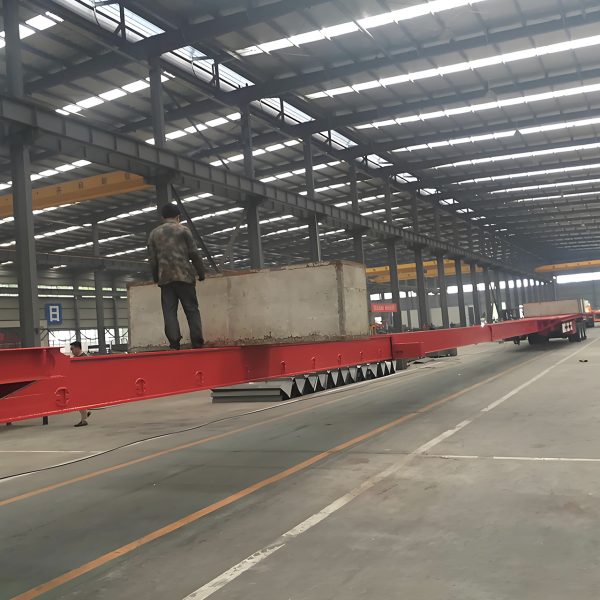
This guide stays focused on one question procurement teams, fleet managers, and importers actually care about: when does extra length solve a real transport problem, and when is a standard flatbed trailer already the cleaner answer? If you want to look at the telescopic model itself while reading, Boca’s Extendable Flatbed Trailer page is the most direct reference point.
When Extra Length Starts to Make Sense in Flatbed Trailer Work
A telescopic deck earns attention when cargo length stops being the exception and starts becoming part of the weekly routine. Long steel sections, fabricated frames, utility poles, pipes, bridge pieces, and similar freight often live in that zone. None of them automatically require a specialized heavy transport setup. Still, they can make a standard platform feel one step too short, again and again.
That is usually how the need develops. It rarely begins with one dramatic load. More often, it builds through repetition. The same types of cargo keep arriving. The same loading conversation keeps happening. The same compromise keeps showing up around deck support, load balance, or securement spacing.
A fixed flatbed trailer may still move those loads. The issue is that the work starts feeling forced.
Common signs that extendable length is becoming genuinely useful:
- Long cargo is showing up every month, not once or twice a year
- Yard loading keeps involving last-minute cargo repositioning
- Overhang becomes normal instead of occasional
- Securement spacing feels tighter than it should
- The load fits, but the setup always takes extra discussion
- One trailer is expected to cover both routine work and irregular long freight
That last point matters more than it may seem. Many transport operations do not want a trailer that only works for unusual jobs. They want a trailer that behaves like a normal flatbed trailer most of the time, then stretches when longer cargo appears. That is exactly where an extendable design becomes practical rather than theoretical.
Boca positions its extendable model around long and heavy cargo such as beams, pipes, building materials, and machinery, which is exactly where adjustable deck length starts solving a real loading problem rather than simply adding more specification. That is the right way to think about it. The value is not “more trailer” in the abstract. The value is having a deck that adapts when the cargo stops being standard.
Another useful test is this one: does the trailer keep becoming the limiting factor even before the route starts? If the team is already negotiating placement in the yard, extra length may be doing more than adding space. It may be removing friction at the start of the job.
When a Standard Flatbed Trailer Is Already Enough
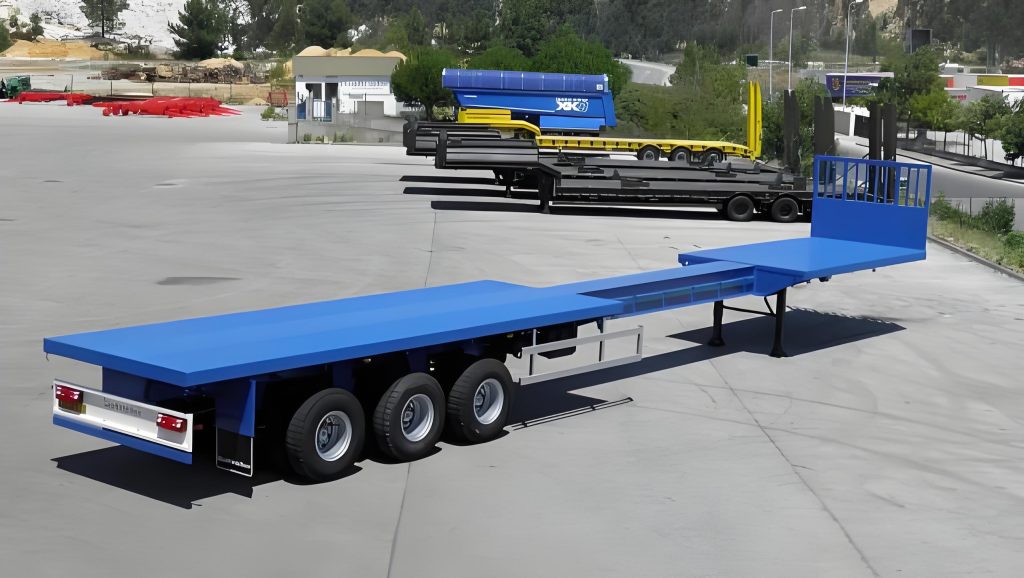
This part matters just as much, because not every long-looking load justifies a telescopic deck. In plenty of operations, a fixed 40ft or 45ft trailer remains the better tool. It is simpler, more predictable, and easier to keep moving across routine assignments. If most freight already sits cleanly on a standard platform, extension may add complexity without solving much.
That is especially true when cargo length is stable. “Predictable range” does not mean every load is identical. It means the work tends to stay inside a familiar window. The loading team already knows where the cargo usually sits. Drivers know what kind of overhang to expect. Dispatch is not constantly guessing which trailer will be needed. That kind of repetition has value. It keeps the day moving.
A fixed-deck trailer works best when the loading pattern is familiar and the team already knows where the freight belongs. Once placement becomes routine, a standard platform can be very efficient. There is less adjustment, less extra mechanism, and usually less temptation to overthink the setup.
There is also a dispatch side to this that buyers understand immediately. A fixed 40ft or 45ft trailer is often easier to assign across the fleet because it fits more everyday jobs without explanation. It can be sent out for general materials one day, machinery the next, and still come back into the normal trailer pool without anyone treating it like a special piece of equipment. The more easily a trailer can move between jobs, the easier it is to keep it earning.
A fixed 40ft or 45ft option often makes more sense when:
- Most loads already fit without awkward overhang
- Long cargo appears, but not often enough to shape fleet planning
- Container work still matters in daily scheduling
- Maintenance simplicity is more valuable than occasional flexibility
- The yard prefers repeatable loading patterns over adaptable deck length
- The operation wants broad trailer interchangeability across regular jobs
This is where 40ft and 45ft models deserve to be treated as real alternatives, not as “almost extendable” choices. A 45ft trailer, for example, can solve many deck-length problems without moving into a more specialized setup. It stretches the usefulness of a fixed platform further, which is exactly why it remains so relevant in mixed-duty transport. That is why 40ft and 45ft units remain the baseline comparison before moving into telescopic territory. For many operations, they already cover container work, machinery transport, construction materials, and mixed project cargo without adding the extra complexity of an extendable deck.
There is a practical reason for that. A lot of cargo only needs a bit more room, not a fully adjustable deck. If the load is long but still consistent, a 45ft trailer often gives the operation enough breathing room without changing the whole logic of the fleet. That is very different from freight that changes length from job to job.
The same logic applies to 40ft units. In many fleets, 40ft is still the everyday workhorse. It covers enough ground across general materials, machinery, and mainstream flatbed trailer work that moving to an extendable flatbed trailer only makes sense once the cargo mix starts pushing beyond that comfort zone consistently.
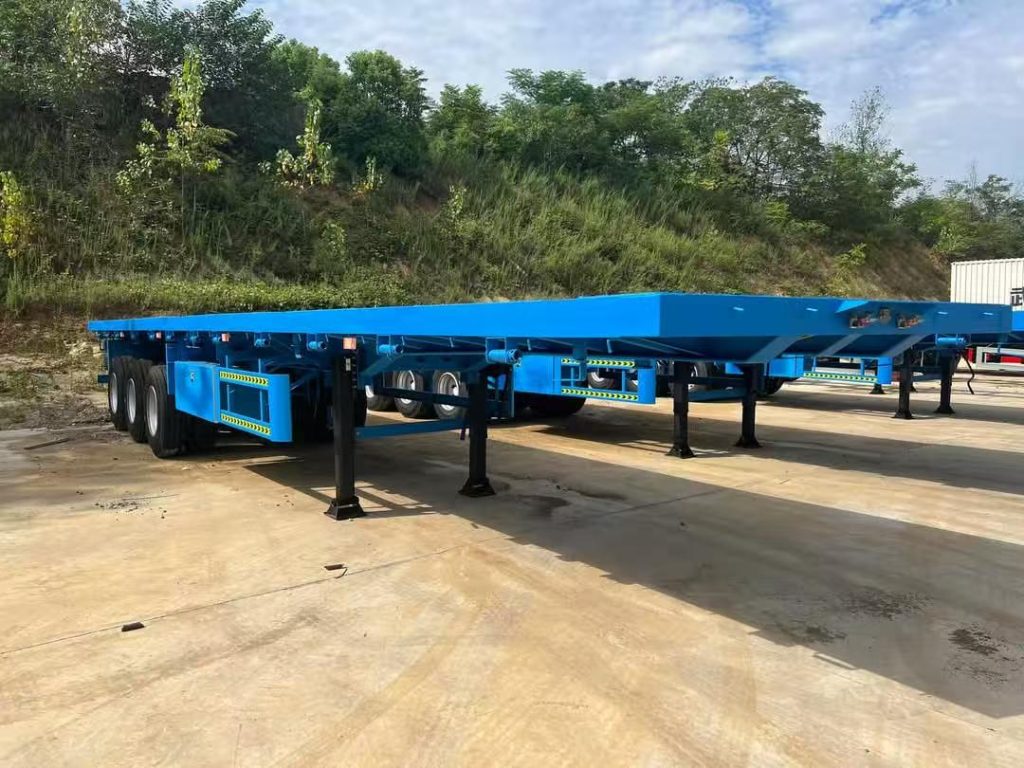
There is also a quieter point here that gets missed in a lot of buying discussions: a fixed trailer is not a compromise if it already fits the work. It only becomes a compromise when the operation keeps trying to make it cover cargo it was never meant to handle comfortably.
What extra length actually changes on the job
The real value of extra length is not abstract. It shows up in small operational moments that repeat across the month.
It shows up when a long fabricated section finally sits with better support under it. It shows up when the loading team does not have to keep nudging the cargo back and forth to find a workable position. It shows up when securement points stop feeling cramped. And it shows up when the conversation in the yard gets shorter because deck length is no longer the main problem in the room.
That is why an extendable flatbed trailer should not be thought of as “just more platform.” On the job, the benefit is usually about reducing awkwardness.
What that reduction looks like in practice:
- More usable support under long cargo
- Cleaner load balance on the deck
- Less dependence on uncomfortable overhang
- Better spacing for chains, straps, and other securement points
- Fewer loading arguments about where the cargo should sit
- More freedom when one week’s freight is very different from the next
None of those points sounds dramatic by itself. Together, they change how the job feels. And that matters. Transport work becomes expensive long before a trailer fully fails. It gets expensive when the same assignment keeps eating time, attention, and workarounds.
A lot of extendable value lives exactly there, in the way the deck reduces repeated yard adjustments before the truck even leaves.
It also changes tempo in the yard. A load that fits more naturally on the deck usually gets settled faster. There is less of that stop-start rhythm where someone asks for a slight move forward, then a slight move back, then another look at the rear overhang. Less back-and-forth means less crane time tied up, less waiting around the trailer, and fewer moments where a straightforward loading job starts turning into a group decision.
That does not sound dramatic, but anyone who has spent time around yard loading knows how quickly those small delays stack up. The trailer may still leave on time. The issue is all the effort burned before it leaves.
Extra length can also make securement feel less like damage control. On a marginal setup, the gear may still go on, but it often feels like the securement plan is being built around the trailer’s limits rather than around the cargo itself. Once the deck fits the load more naturally, the securement conversation tends to change. The team is no longer asking how to rescue a difficult setup. They are just securing the freight the way they would have preferred to in the first place.
That shift matters because fewer workarounds usually means fewer judgment calls under pressure. The cleaner the setup, the less likely the job is to depend on someone “making it work” at the last minute.
There is also a commercial side to it. When project freight comes in waves, the deck may need to deal with beams this week, long machine frames next week, and bundled pipe after that. A fixed trailer can handle part of that mix well. An extendable one can sometimes cover more of it without forcing the operation to keep outsourcing the awkward jobs.
That does not make extendable better by default. It becomes more valuable only when the freight mix keeps changing shape often enough to justify the extra flexibility. Boca’s extendable product page frames the model around exactly that kind of flexibility for long and oversized cargo, which is a much more realistic use case than treating it as a universal replacement for every flatbed trailer in the yard.
The easiest mistake: confusing “can carry it” with “can carry it well”
This is where many decisions go wrong.
A fixed trailer may be able to move a long load. That still does not mean it moves it well. Plenty of loads are technically possible and operationally annoying at the same time. The freight gets loaded. The chains go on. The move happens. Yet the setup never feels quite right, and everyone involved knows it.
That gap between technically possible and operationally comfortable is where extension becomes worth discussing.
A trailer is doing its job well when the cargo sits naturally, the securement plan makes sense without improvisation, and the loading team is not forced into another round of adjustments just to make the deck work. When that stops being true on a regular basis, the platform is no longer matching the cargo cleanly.
Signs the trailer may be “carrying it, but not carrying it well”:
- The same type of load keeps triggering extra yard debate
- Support under the cargo feels thinner than it should
- Overhang is always being “managed” instead of avoided
- Securement works, but only after compromise
- Placement changes keep happening late in the loading process
- The trailer looks usable on paper but awkward in real setup
This is one of the best ways to judge the need for an extendable trailer without getting lost in a parameter discussion. The real question is not whether a load can be forced onto a fixed deck. The real question is whether the work keeps becoming more awkward than it needs to be.
How to Tell If the Operation Truly Needs an Extendable Flatbed Trailer
A lot of buying decisions become clearer once the conversation shifts away from trailer categories and toward recurring job patterns. The most useful review usually begins with transport history, not with brochures.
The first thing to look for is repetition. One difficult long load does not prove much. A regular pattern of difficult long loads proves a lot more. If the same work keeps creating the same loading compromises, the issue is likely structural rather than occasional.
The second thing to look for is how often the team “makes it work.” That phrase sounds positive, but it usually hides extra effort. When a trailer is right for the job, loading should not keep turning into negotiation. There should not be repeated debate over deck contact, overhang, or whether the securement plan feels tight.
The third thing to look for is scheduling pressure. Sometimes the issue is not only whether the load fits, but whether the operation keeps losing flexibility because the right trailer is not available when longer cargo appears.
A simple internal checklist helps:
- Are long loads now part of normal work rather than occasional work?
- Does cargo repositioning happen too often during yard loading?
- Does overhang keep pushing the setup into compromise?
- Do securement discussions keep happening on the same freight types?
- Is there a growing gap between what the deck can take and what the cargo needs?
- Would extra length remove repeated friction rather than serve as a rare backup option?
If most answers lean toward yes, an extendable flatbed trailer starts to look like a working tool rather than a niche purchase.
If most answers lean toward no, a fixed 40ft or 45ft trailer may still be the more disciplined choice.
That is an important point for procurement teams, fleet managers, and importers. The smartest purchase is not the trailer with the broadest headline capability. It is the one that matches the workload without building extra complexity into ordinary jobs.
What to look at before buying, without turning it into a spec-sheet exercise
Once the case for extension is real, the next step is not to drown in numbers. The better approach is to look at the parts of the trailer that affect daily use most directly.
Start with closed-form practicality. An extendable trailer should still make sense when it is not fully stretched out. If it becomes awkward the moment it returns to routine work, then the operation may be buying too much specialization. That question is more important than it sounds. Some buyers focus so heavily on maximum reach that they forget most of the trailer’s life may still be spent in ordinary assignments.
Next, look at the way freight actually gets handled. A trailer can sound flexible in a brochure and still feel inconvenient in the yard. The loading method matters. So does the way securement points line up with the kinds of cargo that move most often. The more real loading conditions shape the buying discussion, the better the final choice tends to be.
It also helps to think about who will actually use the trailer. Will it be handled by one team that understands exactly what it is for, or will it rotate through normal dispatch with different jobs and different loading crews? That changes what “practical” means. A trailer that works well for a dedicated project workflow may feel less convenient if it has to keep jumping between mixed assignments.
Another useful question is whether the trailer will be shared across jobs or held back for specific freight. That distinction matters more than many buyers expect. A trailer that must rotate through everyday dispatch usually needs to stay simple and versatile in closed form. A trailer that is mainly reserved for long cargo can justify more specialization, because its value will be measured against a narrower but more demanding workload.
Buyers do not always ask that early enough. If the answer is “shared across jobs,” then ease of day-to-day assignment matters more. If the answer is “mainly for long cargo,” then specialization may be easier to justify.
Then there is yard habit. Every operation has one, whether it talks about it or not. Some yards are comfortable with variation. Others run best when loading routines stay predictable and fast. A trailer should fit the rhythm of the yard, not just the dimensions of the freight. That is part of why two companies can look at the same cargo profile and make different trailer decisions for equally sensible reasons.
The most useful things to review before making a decision:
- Whether the trailer still works well in closed form
- How often extension will actually be used
- Whether the securement layout suits real cargo, not just generic cargo
- Whether the deck style fits yard handling habits
- Whether the operation needs flexibility every week or only once in a while
- Whether the added complexity is paying back through smoother assignments
One more buyer question deserves to be stated plainly: is the operation buying for a current pain point, or for a future possibility? Both are valid reasons, but they are not the same. Buying for current friction usually leads to clearer decisions. Buying for a possible future cargo mix can still make sense, but it is easier to overbuy if that future remains vague.
Price belongs in that conversation too, but only in context. Boca presents extendable pricing as configuration-dependent, which is the right way to read it. An extendable flatbed trailer may sit in a higher example range than a fixed flatbed trailer, depending on configuration, but the better question is whether it removes enough recurring friction to justify that step. If you are comparing configurations and sourcing options, Boca’s semi trailer manufacturer page is a useful place to see the wider product scope and factory background before narrowing down the exact model.
That same caution applies to feature comparison. It is easy to get pulled toward details that sound impressive but do not change the actual work. The better filter is always the same: does this trailer make regular long-load handling cleaner, or does it simply sound more capable?
When you probably do not need an extendable flatbed trailer
This is the short section many buyers appreciate most.
If most of the work is standard machinery, containers, repeatable construction cargo, or anything else that already sits cleanly on a fixed platform, an extendable trailer may not improve much. The same goes for operations where long loads appear only occasionally and can already be handled without constant yard compromise.
In that kind of fleet, a fixed 40ft or 45ft trailer is often the smarter everyday asset. It is easier to schedule, easier to keep active, and less likely to spend its life carrying flexibility that the workload rarely uses.
In that kind of fleet, simplicity is not a weakness. It is often the reason the trailer stays productive across a wider mix of assignments. When a fixed deck already handles the work cleanly, adding extension may increase cost and complexity without adding much practical return.
Fixed length still has a place in disciplined fleet planning
It is worth saying this clearly because extendable equipment can be easy to romanticize. A well-chosen fixed trailer is often the more disciplined asset. It can be easier to assign, easier to inspect, and easier to keep moving across a wide mix of routine jobs. If the freight profile stays stable, there may be no need to complicate the fleet.
That is why 20ft, 40ft, and 45ft models still deserve their own space in the conversation.
A shorter 20ft platform belongs to a different lane and is usually chosen for compact, dense, or more contained work. It is not competing directly with a telescopic trailer for the same role.
A 40ft deck often remains the practical center of gravity for general flatbed trailer work.
A 45ft deck becomes relevant when the operation wants more fixed length without moving into extendable territory.
And an extendable trailer only makes sense once the freight mix keeps pushing beyond what those fixed formats can handle comfortably.
That is not a hierarchy. It is simply a more honest map of how these trailers fit into real operations.
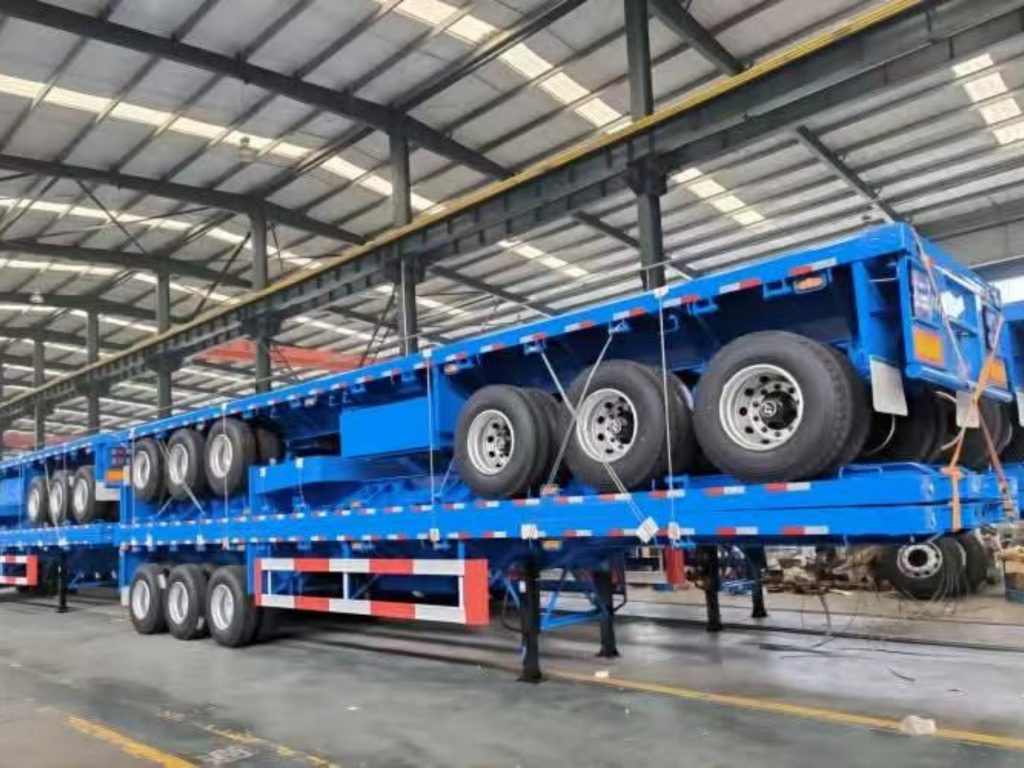
A cleaner way to think about ROI
The return on an extendable trailer does not usually show up in one dramatic number. It shows up in accumulated relief. Fewer awkward setups. Less cargo repositioning. Less time lost in the yard. Fewer jobs that feel like a stretch before the truck even leaves.
That kind of return is easy to underestimate because it does not arrive as one obvious line item. It arrives as fewer workarounds.
An extendable trailer starts paying off when it does things like:
- Reduce repeated loading adjustments
- Cut down on overhang compromise
- Improve securement confidence on long freight
- Cover a wider spread of project cargo without constant outsourcing
- Let one trailer stay useful across changing cargo lengths
If those benefits show up only rarely, the business case gets thin. If they show up every month, the value picture changes fast.
That is the clearest way to avoid overbuying or underbuying. Instead of asking, “What is the most capable trailer available?” it helps to ask, “What keeps slowing down long-load work right now?” If the answer keeps circling back to deck length, that is a strong clue.
Where Boca’s lineup fits into that decision
Boca’s lineup is easiest to read as a family rather than as isolated product pages. The category view gives a practical frame: shorter decks, mainstream fixed-deck units, a longer 45ft option, and the extendable platform all sitting in the same conversation. That makes it easier to judge where the work actually belongs. The manufacturer page also shows that flatbed trailer models sit within a broader export-oriented semi trailer range, which is useful context for buyers comparing sourcing routes instead of looking at a single product page in isolation.
The extendable page becomes most useful once the decision has already narrowed. It gives the clearest view of what Boca is positioning the model to do: carry longer cargo that no longer sits comfortably on a standard deck, with pricing and setup varying depending on configuration.
Closing thoughts
An extendable flatbed trailer is worth serious attention when long cargo keeps turning normal loading into a compromise. Not once. Not as a rare exception. Repeatedly. When the yard keeps coming back to repositioning, overhang, and securement spacing, extra length stops being a “nice to have” and starts looking like a practical correction.
If that pattern is not there, a fixed 40ft or 45ft deck is often the better answer. It is simpler, steadier, and easier to keep busy. That is why the best decision is usually not the most ambitious one. It is the one that matches the work with the least amount of forcing.
If your team is comparing fixed and extendable options, get a quote from Boca with your cargo length, route, and loading requirements. You can also contact the team on WhatsApp at +86-17274039217 or email trade@bocaautomobile.com to discuss the right configuration for your job.
FAQ
When is an extendable flatbed trailer actually worth buying?
An extendable flatbed trailer is worth buying when longer cargo shows up often enough to create repeated loading compromise on a fixed deck. The strongest signal is not one oversized shipment. It is the same pattern happening again and again: cargo repositioning in the yard, overhang becoming routine, and securement discussion taking longer than it should.
How can a team tell if a fixed 45ft flatbed trailer is already enough?
A fixed 45ft flatbed trailer is often enough when longer freight still sits cleanly on the deck without awkward support gaps or repeated overhang issues. If the work stays predictable and the loading setup rarely needs last-minute adjustment, staying fixed may be the cleaner choice.
What is the real advantage of an extendable flatbed trailer in daily use?
The biggest advantage is not simply extra deck length. It is the way that extra length makes long cargo easier to place, support, and secure. In daily use, that often means fewer workarounds, less debate during yard loading, and a cleaner setup before the trip even starts.
Does an extendable flatbed trailer make sense for occasional long loads?
Usually not. If longer loads are only occasional, a fixed-deck trailer may remain the more efficient asset overall. Extendable value becomes much easier to justify when those longer shipments are regular enough to shape scheduling and loading routines.
What should matter most before choosing an extendable flatbed trailer?
Cargo pattern should come first. How often long freight appears, how it gets loaded, and where fixed decks keep falling into compromise are more important than chasing impressive-sounding details. After that, it helps to look at whether the trailer still works well in closed form and whether extension will be used often enough to matter.
Is price the main reason to stay with a fixed flatbed trailer?
Not by itself. Price matters, but the better question is whether extra length removes enough recurring friction to pay back its added complexity. Boca presents extendable pricing as depending on configuration, which is exactly how this kind of purchase should be evaluated.