
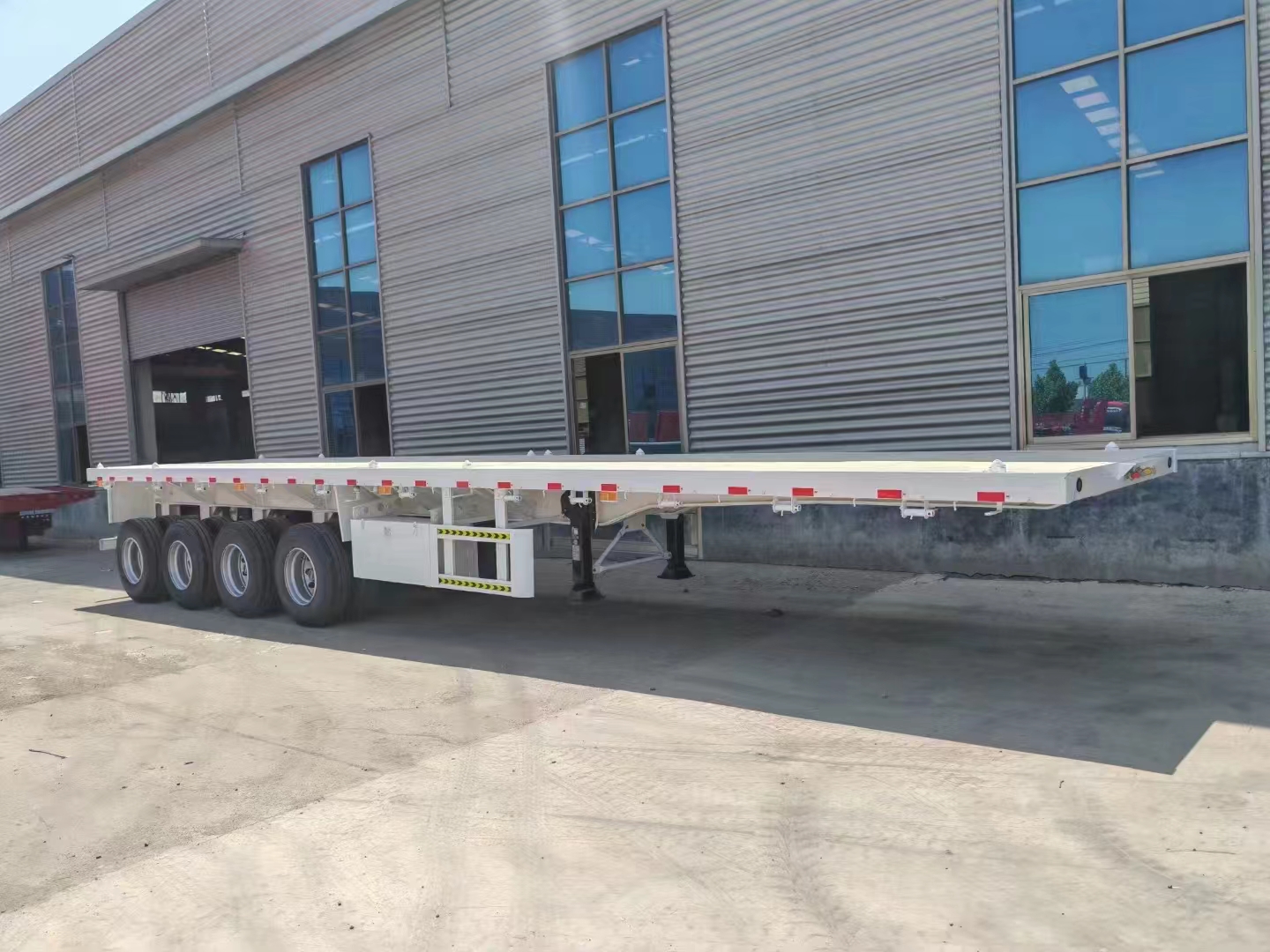
Flatbed semi truck trailer buying guide

If you are looking for a flatbed semi truck trailer, you are most likely seeking a reliable transportation solution for carrying containers, construction materials, machinery, steel coils, timber or oversized cargo. In the logistics and trucking industry, flatbed semi trailers are among the most versatile transportation equipment.
In this guide, we will provide you with a detailed introduction to: where to find flatbed flatbed semi-trailers; the various types of trailers available on the market; the key factors to consider before purchasing; and why choosing a suitable manufacturer is of vital importance.
What is a flatbed semi truck trailer?
Flatbed semi trailers are open top semi-trailers specifically designed for transporting goods that cannot fit into enclosed trucks. Their flat platforms facilitate the loading and unloading of goods from the sides, rear or top using forklifts or cranes.
Common applications include:
Containers
Heavy machinery
Steel products
Wood and pipes
Agricultural equipment Building materials
Due to its flexibility and durability, flatbed semi-trailers are widely used in global freight transportation.
Types of Flatbed Semi trailer Trucks
Before making a purchase, it is necessary to first understand the common types of flatbed trailers.
Standard Flatbed Trailer
The standard flatbed truck trailer is the most common type. It is highly suitable for transporting palletized goods, steel, wood, and containers.
Typical Specifications:
Length: 40 foot to 53 foot
Axles: 2 axles or 3 axles
Load Capacity: 30 to 80 tons
Lowbed Semi Trailer
Lowbed trailers are designed for oversized and heavy machinery transportation. The lowered deck height improves stability and allows taller cargo to comply with road height limits.
Container Flatbed Trailer
Container flatbed trailers are specially designed for transporting 20ft and 40ft shipping containers. They usually include twist locks for container securing.
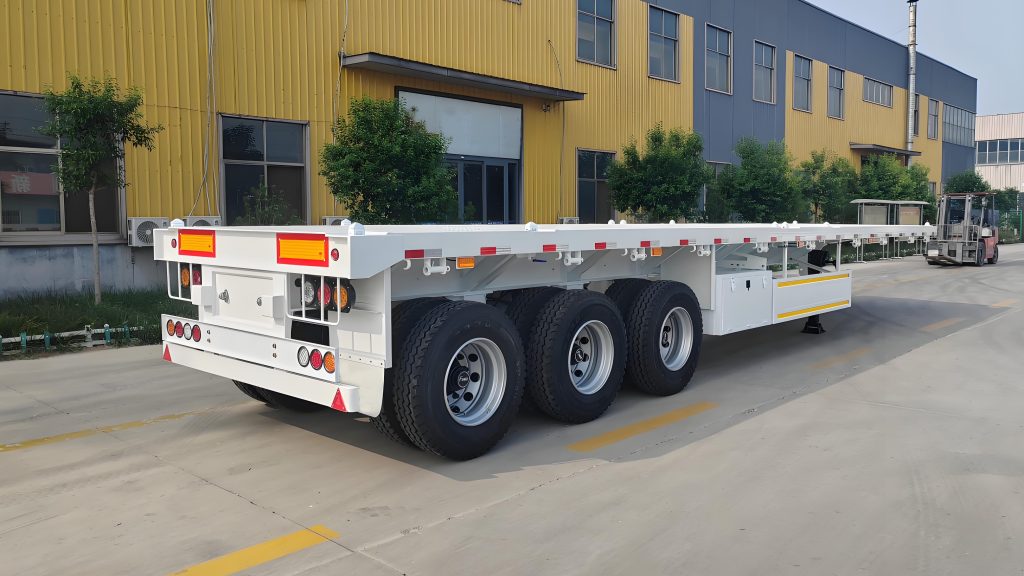
How to choice flatbed trailer manufacturer from china?
Selecting a suitable manufacturer of flatbed semi trailers from China requires a careful assessment to ensure that you obtain a reliable and high-quality trailer that meets both your operational needs and local regulatory requirements.
Define Your Needs
| Factor | What to Consider |
|---|---|
| Trailer Type | Standard flatbed, extendable, lowbed, or container chassis depending on cargo and transport needs |
| Load Capacity | Typical ranges from 20 to 60 tons; choose based on the heaviest cargo you plan to transport |
| Axle Configuration | Two, three, or four axles depending on payload and regional road regulations |
| Suspension Type | Mechanical (durable for rough roads) or air suspension (smoother ride) |
| Material Preference | Carbon steel, Q345B, or alloy steel for strength, durability, and corrosion resistance |
| Regulatory Compliance | Ensure compliance with local road, weight, and import regulations |
Find Reputable Manufacturers
Conduct online research and verify business legitimacy
Look for manufacturers with industry certifications (ISO, CCC, CE, etc.)
Evaluate their experience and history in producing flatbed trailers
Check for references or partnerships with international buyers
Evaluate Manufacturers
| Evaluation Criteria | Why It Matters |
|---|---|
| Production Capacity | Ensure they can handle your order volume |
| Quality Control | Consistent product quality reduces risks of defects |
| Customer Feedback | Reviews and testimonials reflect reliability and service quality |
| Technical Support | Strong engineering support helps with customization |
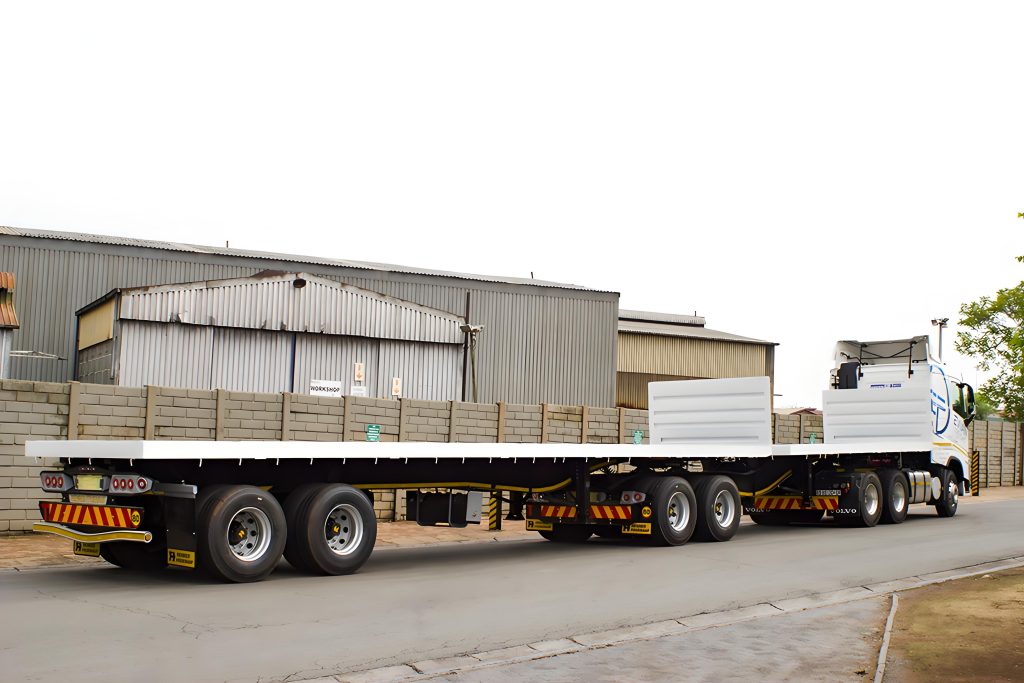
Compare Prices:
Request quotes from flatbed trailer truck manufacturers to compare prices.
Make sure quotes include all relevant costs, such as shipping, taxes, and any additional fees.
Consider product quality alongside cost to avoid compromising reliability.
Advantages of Flatbed Container Trailers
Flatbed truck trailer are highly suitable for transporting heavy goods due to their sturdy construction and versatility. Here are some of their main advantages:
High load capacity:
Made of high-strength steel, it has excellent tensile strength, ensuring durability and reliability, and is suitable for long-distance transportation of heavy goods.
Heavy-duty suspension:
Equipped with a sturdy mechanical spring suspension, it can efficiently carry heavy goods and maintain vehicle stability.
Customizable options:
Can be customized according to specific needs, including length and width.
Variable suspension:
Air suspension and steering frame suspension systems enhance the applicability of flatbed trailers in semi-trailers.
Versatility:
Suitable for multiple industries, various uses, and transportation of various types of goods.
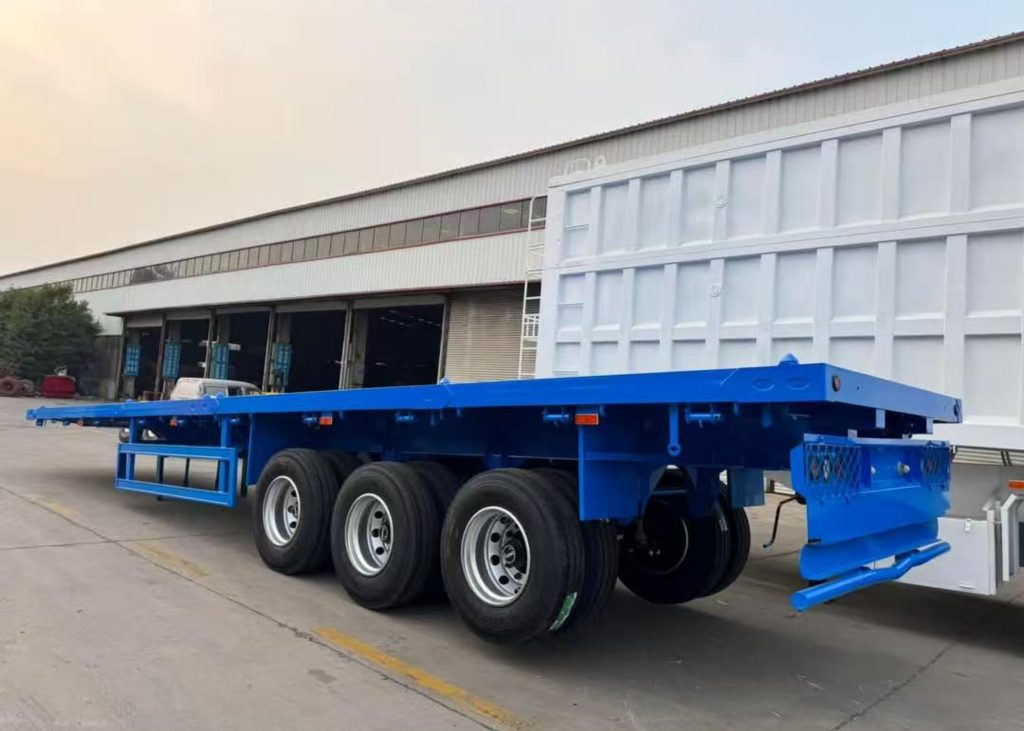
The main features of the flatbed trailer main beam
The main beam is a critical component of a flatbed semi-trailer, exerting a significant influence on the trailer’s service life and overall performance. The material selected for the main beam directly impacts the trailer’s capacity to carry heavy loads. Two common materials utilized for main beams are manganese steel and high-strength steel; each possesses unique mechanical properties tailored to meet specific operational requirements.
Manganese Steel:
1. Yield Strength: Manganese steel is renowned for its exceptionally high yield strength—a characteristic crucial for maintaining structural integrity under heavy-load conditions. Consequently, it is ideally suited for use in flatbed semi-trailers that frequently transport substantial weights.
2. Ductility: It also exhibits excellent ductility, meaning it can undergo slight elongation or deformation under stress without fracturing. This inherent flexibility aids in absorbing shocks and vibrations during transit.
High-Strength Steel:
1. Enhanced Strength: High-strength steel possesses a higher tensile strength than manganese steel, making it perfectly suited for heavy-duty applications where load-bearing capacity requirements are exceptionally rigorous.
2. Superior Durability: This type of steel is distinguished by its outstanding durability and resistance to wear and tear. Its robust nature ensures that the flatbed semi-trailer can withstand prolonged periods of use, even when operating under harsh environmental conditions.
In summary, regarding the main beams of flatbed semi-trailers, the choice between manganese steel and high-strength steel ultimately depends on the specific demands of the intended application. Manganese steel strikes an optimal balance between strength and flexibility, whereas high-strength steel offers superior strength and durability. Trailer designers and manufacturers must carefully evaluate these distinct properties to select the material that best aligns with their specific requirements.
Key Components of flatbed semi truck trailer.
Flatbed semi truck trailer are essential in the transportation industry, designed to efficiently and safely transport a wide variety of cargo. Understanding the key components of these low flatbed semi trailer is crucial for their effective operation and maintenance.
Here are some of the key components:
(1)90# Kingpin:
Typically made of durable chrome alloy, the 90# kingpin is a key component that connects the tractor to the container flatbed trailer. It inserts into the center clip, ensuring a secure connection between the two, which is crucial for stability and safety during transport.
(2)Ladning Gear:
This component provides support and is crucial for evenly distributing the weight of the cargo on the trailer. The kickstand enhances stability, especially when handling heavy or uneven loads, prevents the vehicle from tipping over, and ensures a smooth ride.
(3)Brake System:
A reliable brake system is crucial to the safety of the flat bed semi trailer and its cargo. It ensures the trailer can be effectively controlled, especially in emergencies, and reduces the risk of accidents on the road.
(4)Mechnical Suspension system:
This component plays a vital role in absorbing shock and vibration during transport. By providing a smoother ride, the plate suspension protects cargo from damage and enhances overall transport comfort.
These components work together to ensure the efficient and safe operation of a semi flat bed trailer. Regular maintenance and understanding the functions of each component can significantly extend the life of the trailer and improve its performance, resulting in safer and more reliable transport operations.
How much does a flatbed trailer cost?
A thorough analysis of the various factors that influence flatbed semi truck trailer cost provides a solid foundation for making an informed purchasing decision. Here’s a brief summary to help you navigate the decision-making process:
Key Factors Affecting Flatbed Trailer Cost
(1)Size and Load Capacity
Size: Larger flatbed semi truck trailer are more expensive but offer greater cargo space. Choose one based on the size of your typical cargo.
Load Capacity: flatbed truck and trailer with higher load capacities require a sturdier structure, which increases the cost. Choose the appropriate load capacity based on your cargo needs for maximum efficiency.
(2) Material
Aluminum: Lightweight and corrosion-resistant, but more expensive.
Steel: More affordable and durable, but heavier, which can reduce fuel efficiency.
Composite: A balance between weight and strength, with the cost depending on the material selected.
(3)Additional Features
Siderails and Ramps: Enhance safety and practicality, but increase cost.
Storage Compartments: Provide convenience, but increase expense.
Personalization: Custom features or branding can significantly increase costs.
(4)Cost Range
Prices range from a few thousand dollars for a basic model to tens of thousands of dollars for a larger or customized trailer. Please evaluate your needs to avoid unnecessary expenses.
(5)Strategic Purchasing Tips
Balancing Cost and Features: Prioritize the key features that meet your business needs.
Evaluate Options: Compare different models and flatbed truck and trailer suppliers to ensure the best value for money.
Consult the Experts: Communicate with suppliers for professional advice and negotiate better terms.
By understanding these factors and conducting a strategic evaluation of options, you can select a flatbed semi truck trailer that will effectively support your business operations and stay within your budget.
Flatbed vs Other Trailer Types
Different trailer types are designed for different cargo categories. Choosing the right one depends on the weight, shape, and handling requirements of your goods.
| Type | Main Use | Key Advantage |
|---|---|---|
| Flatbed Trailer | General cargo (steel, machinery, containers, construction materials) | High flexibility and easy loading from all sides |
| Lowbed Trailer | Heavy machinery (excavators, bulldozers, oversized equipment) | Low center of gravity for better stability and safety |
| Fence Trailer | Loose goods (agricultural products, livestock, bulk cargo) | Prevents cargo from falling while allowing ventilation and easy access |
Flatbed Trailer
Open platform design
Suitable for a wide range of cargo types
Can be loaded using cranes or forklifts
Best for flexible logistics operations
Lowbed Trailer
Lower deck height for heavy-duty equipment
Ideal for oversized and high-weight machinery
Provides improved stability during transport
Commonly used in construction and mining industries
Fence Trailer
Equipped with side fences for cargo protection
Suitable for loose or bulk materials
Often used in agriculture and light logistics
Allows partial airflow and easy loading/unloading
FAQ
1.What is the weight capacity of a flatbed semi trailer?
Most flatbed semi-trailers have a load capacity ranging from 20 to 80 tons, depending on the axle configuration:
2 axle: 20-30 tons
3 axle: 40-60 tons
4 axle: 60-80 tons
2.What sizes of flatbed semi-trailers are available?
Common sizes include:
20 foot flatbed trailer
40 foot flatbed trailer
45 foot or extended flatbed trailer
Standard width is typically 2.5 meters..
3.How much does a flatbed semi-trailer cost?
$7,000 to $18,000
4.Can flatbed trailers carry containers?
Yes. Flatbed semi-trailers equipped with container locks can transport 20 foot and 40 foot containers.
5.Which countries commonly use flatbed semi-trailers?
Nigeria, Kenya, Tanzania, UAE, Saudi Arabia and so on
6.Why choose flatbed semi-trailers made in China?
Competitive pricing, customizable designs and convenient spare parts supply.