

Flatbed Trailer Rub Rail Cracks: Inspection After Repeated Forklift Side Loading
Repeated forklift side loading can damage a flatbed trailer's rub rail and nearby connections. Learn how to recognize potential structural concerns, document inspection evidence, and plan the next assessment.

A forklift repeatedly approaches the same edge of a flatbed trailer during a busy loading period. Later, a hairline mark appears beside the rail. It is tempting to blame repeated contact—or dismiss it as damaged paint. Neither conclusion is reliable without knowing which part is affected.
The useful starting point for flatbed trailer rub rail cracks is to distinguish a mark on an outer protective rail from a possible discontinuity in a structural side member or its connection. That distinction determines what evidence to collect and when the trailer needs qualified assessment rather than ordinary cosmetic attention.
Locate the damaged part before naming the failure
At the loading edge, several components can appear to form a single rail. An exposed rub rail may be fitted outside the deck edge, while a side rail or side beam may support the floor assembly or connect to crossmembers. On some trailer designs, these elements are integrated. The words used by a driver or workshop are not enough to establish their structural roles.
That is why the first useful photograph is not simply the closest view of the crack. A wider view should show its position relative to the deck, outer rail, attachment brackets and nearby beam connections. The trailer identification and manufacturer’s drawing then help establish whether the visible feature is a separate protective element or part of a combined assembly.
The distinction matters: A dent confined to an outer guard does not establish damage to the side beam. Equally, a line that appears to pass through an attachment or into the member behind the guard cannot safely be classified as superficial by appearance alone.
Record whether the indication follows a painted surface, exposed metal, the edge of a weld or the joint between two parts. A photograph may capture its position, but it cannot by itself prove crack depth, origin or structural significance. Where the component identity is uncertain, describe the location without assigning a failure mechanism.
Compare crack location with side loading contact history
A repeated scrape at forklift height can tell a maintenance manager where contact probably occurred. It says far less about what happened inside the metal. A fork tip, pallet corner or part of the forklift can strike the trailer edge, but an impact mark and a fatigue crack are different kinds of evidence.
Compare the defect with the way pallets or steel products actually enter the deck. Does loading concentrate on one side or one short section? Are there reports of forks, loads or the machine itself touching the rail during approach or withdrawal? Was the line noticed after a particular event, or did it become more visible over successive inspections? An accurate time sequence can be more revealing than a dramatic-looking scratch.
Supports an account of contact at that location. It does not show whether an adjacent weld or side member has cracked.
Raises a different question about material or connection integrity. Its presence alone does not confirm fatigue as the cause.
Damage along the loading edge may result from a single impact, repeated contact, a pre-existing defect, or a combination of factors. The pattern should be weighed against dated photographs, earlier inspection notes and any available incident records rather than attributed to repeated loading automatically.
The same loading history will later be useful when comparing flatbed semi trailers for a site with frequent side access. It does not, however, establish that the trailer already showing a suspected crack is suitable for continued use.
Inspect adjacent brackets and structural connections
The outer face is often the easiest part to see, but a connection behind it may explain why an indication deserves further attention. A blow to an exposed rail can transfer force through brackets and welds into the surrounding assembly. How much of that force reaches a load-carrying member depends on the actual design, not the component name.
With the trailer secured under the operator’s approved procedures, the inspection record should identify visible changes near the affected area: a bracket that no longer aligns with its neighbors, a gap at a mounting point, deformation around a crossmember connection, or an indication continuing from a weld toe into adjacent material. The aim is to document observable conditions for a qualified reviewer, not to test the connection by forcing or moving damaged parts.
Comparison with the opposite side or an unaffected section can be helpful when the assemblies are genuinely comparable. Different paint condition, corrosion, old repairs and lighting can also make two sound surfaces look different. Likewise, a bent bracket may support an impact explanation without ruling out a separate crack nearby.
When assessing a suspected side-rail crack, its position relative to welds, attachments and the load path matters more than calling it a “minor rail crack.” When a line crosses a connection or the supporting member appears displaced, the question has moved beyond routine surface damage.
Decide what evidence requires a structural assessment
The point of collecting evidence is not to diagnose a crack from a photograph. It is to recognize when a suspected defect is too uncertain or consequential to treat as cosmetic. Visible metal separation, a line extending toward a possible structural beam, distortion around a load-bearing connection, or unexplained movement at an attachment all warrant professional attention.
Follow the operator’s approved stop-use and isolation procedures and refer the vehicle to qualified personnel. No generic crack length, photograph-based judgment or previous successful journey can substitute for a model-specific assessment and the applicable return-to-service process.
One of the most common gaps in a repair enquiry is context. A close-up may show the indication clearly yet omit which trailer it belongs to, whether the rail is separate from the beam and what kind of loading preceded it. A useful handover connects those pieces of information:
- Identification and location: vehicle or equipment identification, component names and relevant structural drawings, where available.
- Condition: overview and close-up photographs of the original indication, nearby connections and any visible deformation.
- History: forklift side-loading arrangements, contact reports, earlier inspection photographs and past repairs.
- Assessment: any findings already issued by a qualified engineer and the outstanding questions requiring further examination.
Prepare your operating details before enquiring. Where records are missing, state that openly so the reviewer can decide what further inspection is needed. Do not clean, dismantle or repair a suspected crack merely to make photographs easier to interpret without an authorized procedure. The article does not provide a repair method or a release-to-service decision.
Discuss loading access and protection needs with the supplier
Once the condition of the existing trailer is in the hands of the appropriate technical reviewer, the loading history serves another purpose: it explains what a replacement or future configuration would actually face. A fleet moving pallets from a spacious yard has a different side-access problem from a warehouse where the forklift must approach close to the same deck edge throughout the day.
Rather than asking only for a stronger rail, explain the forklift approach, turning space, cargo footprint, typical contact locations and frequency of side transfers. Ask the supplier to identify the proposed model’s rub rail, side member and attachment arrangement in its own drawings, and what evidence is available to assess the intended duty. A rail that looks substantial in a product photograph is not proof that the surrounding structure suits repeated contact.
That discussion may lead to reviewing loading routes, protection requirements or alternative flatbed cargo support options. None should be treated as an approved solution until the specific model, configuration and operating conditions have been checked. The repair assessment for a damaged trailer and the suitability review for a future trailer remain separate decisions.
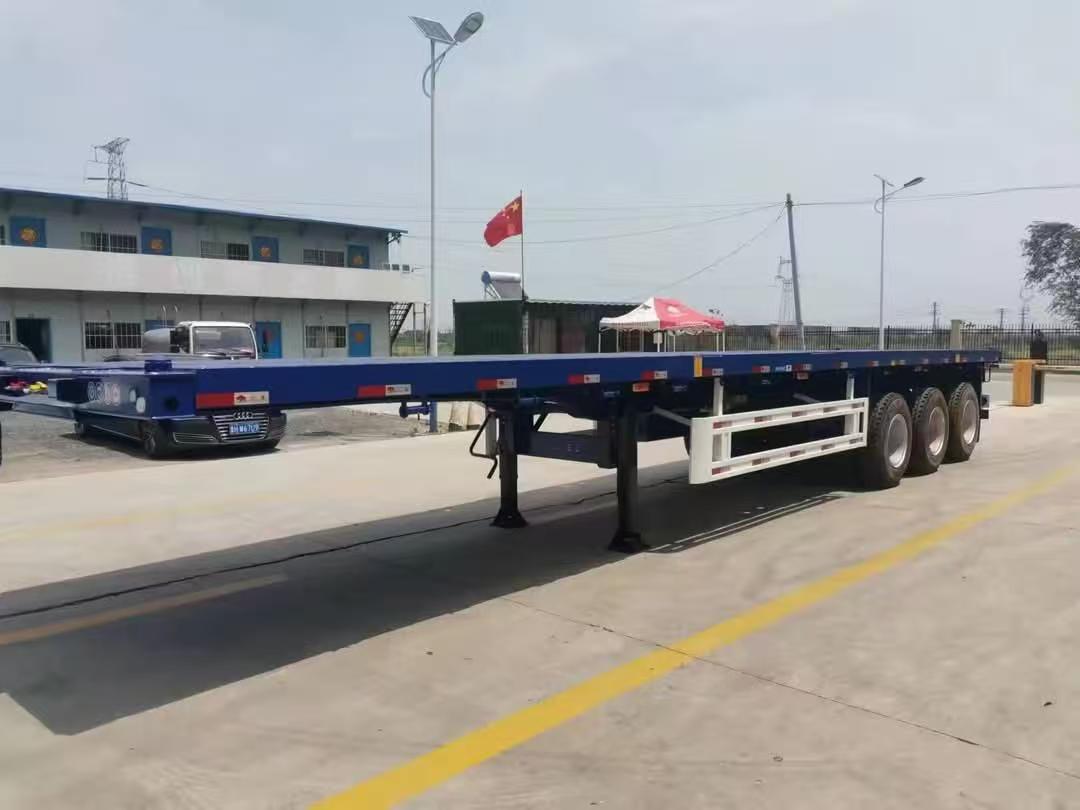
This BOCA flatbed photo shows the accessible deck edge and side profile. It is a product reference, not a photograph of a crack or a confirmed fatigue inspection. The component drawings for a specific trailer are still needed to distinguish the rub rail from any structural side member.
Explore Flatbed Semi TrailersFrequently Asked Questions
Is a rub rail always the structural side beam?
No. It can be a separate external member or part of an integrated side assembly. Use the manufacturer’s component drawing to establish the structural role on the particular trailer.
Can paint cracking confirm a metal crack?
No. Coating damage is not proof of a metal discontinuity, and a coating can also obscure one. A qualified reviewer must determine the appropriate inspection method when the underlying material is in question.
What should be recorded before a repair assessment?
Preserve the defect’s original location and appearance, when it was noticed, relevant loading or impact events, and previous coating or repair work. Keep dated overview and close-up photographs so later changes are distinguishable.
If flatbed trailer rub rail cracks have raised questions about future side-loading access, compare the flatbed range against your actual cargo footprint and forklift approach conditions. To discuss a specific configuration with BOCA, prepare your vehicle or equipment identification, side-loading records, defect photographs and any available engineering assessment. A supplier enquiry does not replace professional assessment or clearance of a damaged trailer.
Review Flatbed Range & Quote OptionsOn the flatbed page, choose “Get Trailer Quote” to submit your operating details.