

Flatbed Trailer Stake Pocket Wear: Inspection Before Timber and Pipe Transport
Loose trailer stakes may indicate pocket wear, corrosion, or connection damage. Learn how to assess the signs before timber or pipe transport and what evidence to review.

Before a timber or pipe load goes onto a flatbed, a side stake that rocks in its pocket deserves attention. The stake may still stand straight, and the previous trip may have passed without incident. Neither tells you why it moves—or whether that connection is fit for the next load.
Flatbed trailer stake pocket wear is not always a problem with the pocket itself. The play may come from the removable stake, its retaining arrangement or the pocket’s connection to the trailer structure. Those are different faults with different implications for maintenance.
A loose connection does not automatically call for a new trailer, and a tighter replacement stake is not automatically a repair. Cracks, distortion, doubtful retention or suspected structural damage change the decision: the affected loading operation should stay on hold under the approved procedure until qualified personnel assess the assembly.
Why a Loose Stake Is Not Always a Worn Pocket
It is tempting to blame the pocket opening as soon as a stake starts to wobble. Yet the same movement can come from a worn stake face, corrosion inside the pocket or a replacement post with the wrong profile. The source of the play matters more than how loose the connection feels.
The cargo changes the picture. Logs, bundled timber and sawn material do not all meet their side supports in the same way. Pipe bundles add the possibility of rolling or shifting, which has to be controlled by the intended support and securement system—not by an assumption that the stakes will catch everything.
Bright contact marks may simply show where a stake has rubbed during use. A change in fit, a distorted opening or play that remains with a correctly matched stake is more revealing. Those clues help separate ordinary contact from damage to the pocket or its mounting.
If the movement appears only with one replacement stake, its compatibility is worth questioning. If several pockets behave similarly, the pattern calls for a broader look. Movement of the pocket assembly against the surrounding structure is a different concern altogether.
The visible wobble is a starting point, not a diagnosis. What happens at the contact surfaces and around the mounting area determines where the closer investigation needs to focus.
Where Pocket Wear Becomes a Connection Problem
The top opening is the easiest part to see, but wear may be concentrated farther down the pocket. Damage around its attachment or welds can be even less obvious from above.
Uneven contact marks, a flared opening, damaged walls and corrosion do not all indicate the same fault. A polished strip can show where repeated contact occurs, for example, but it does not establish an unacceptable level of wear on its own. The original pocket geometry and approved condition are the reference.
Fit and retention are also different questions. A stake may slide into the pocket neatly yet lack the locating or retaining parts required by that design. When those parts are missing, damaged or mismatched, the correct reference is the actual assembly documentation—not how secure the stake seems by hand.
Cracks beside a weld, separation at the mounting or local deformation point to a more serious concern. They may indicate damage beyond the removable post and the pocket opening. That is a matter for qualified technical assessment, not a routine adjustment to take up clearance.
A close-up photograph shows the mark; a wider photograph shows where it is. Together with the matching stake and any earlier maintenance records, those views can make it easier to see whether a localized problem is recurring or getting worse.
The same history is useful when comparing flatbed semi trailers for future timber or pipe work. It gives a buyer something more concrete to discuss than a request for “stronger stakes,” although it does not replace a maintenance decision on the current trailer.
Why a Tighter Fit Can Be Misleading
Neither the stake nor the pocket can be judged properly in isolation. They are matching components, and a change in either one can alter how the connection feels.
A stake worn at its contact faces may wobble in an otherwise serviceable pocket. A sound stake may do the same in a distorted opening. And an incorrectly sized replacement can create play even when the original pocket has not worn beyond its design limits.
The way a stake feels by hand cannot reliably distinguish those cases. Two stakes may seem equally snug yet contact different surfaces or rely on different retaining details.
Drawings and approved fit criteria make the difference between an observation and a judgment. Without them, comparing one trailer with another might reveal something unusual, but it cannot establish an acceptable clearance or confirm serviceability.
Corrosion can be deceptive too. Rust buildup may make a stake difficult to insert even as corrosion has damaged the underlying surface. A connection that feels tighter than before may simply be distorted or fouled.
Staining around a weld or a split in the coating deserves attention, but neither alone tells you how much, if any, structural damage lies beneath.
A good maintenance record keeps the visible evidence separate from possible causes. That gives the person making the serviceability decision more to work with than a note saying only “stake loose.”
A Side Stake Is Not Automatically a Tie-Down Anchor
A side stake can help contain cargo without being an approved tie-down point. Whether it can take a restraint load depends on the particular stake, pocket, mounting arrangement and verified application.
With logs, the relationship between the stakes and the bunks or bolsters matters, as does the way removable stakes are retained. With pipe, the question shifts toward how the supports, blocking and securement arrangement prevent rolling and lateral movement. Neither application makes the pocket an approved tie-down anchor by default.
This is where a visually sound stake can give false confidence. For round cargo, the restraint plan may call for cradles, blocking or other anti-roll measures; a side stake is not a substitute simply because it is in the right place. The complete arrangement must suit the load and applicable rules.
The two judgments should not be confused: a pocket can meet its dimensional criteria without being rated for a particular restraint function, and a well-designed securement plan does not make a damaged pocket acceptable.
If cracking, mounting separation, compromised retention, significant distortion or another potentially serious defect is suspected, the affected loading operation should stop under the approved procedure. Qualified personnel must establish the required inspection, repair or engineering review before any return-to-service decision. Where the necessary design or fit evidence is unavailable, obtain it rather than assuming the component is acceptable.
An uneventful delivery is not evidence that the stake connection was sound. The trailer condition and the cargo-securement plan each need to stand up to scrutiny.
When Wear History Matters for the Next Trailer
An isolated damaged pocket is a maintenance issue first, not a reason on its own to replace a trailer. The equipment discussion changes when the work changes: longer timber, different pipe bundles or loading methods that no longer fit the existing trailer’s documented capabilities may warrant another flatbed configuration.
Consider a fleet carrying timber on one route and bundled pipe on another. A request for “heavy-duty stakes” says little about either job. Cargo dimensions, support positions, loading methods and restraint arrangements explain far more about what the trailer needs to accommodate.
Repeated movement at the same pocket adds another piece of context. It may point to a maintenance problem that remains unresolved, or a duty pattern worth discussing when planning future equipment.
Useful Details for a Trailer Configuration Discussion
Existing assembly: Vehicle or equipment identification, stake and pocket drawings, retention details and approved fit requirements.
Observed condition: Photographs of wear, corrosion, deformation and connection areas, together with available inspection or repair records.
Transport application: Timber or pipe dimensions, cargo weight and arrangement, loading equipment, support positions, operating conditions and destination market.
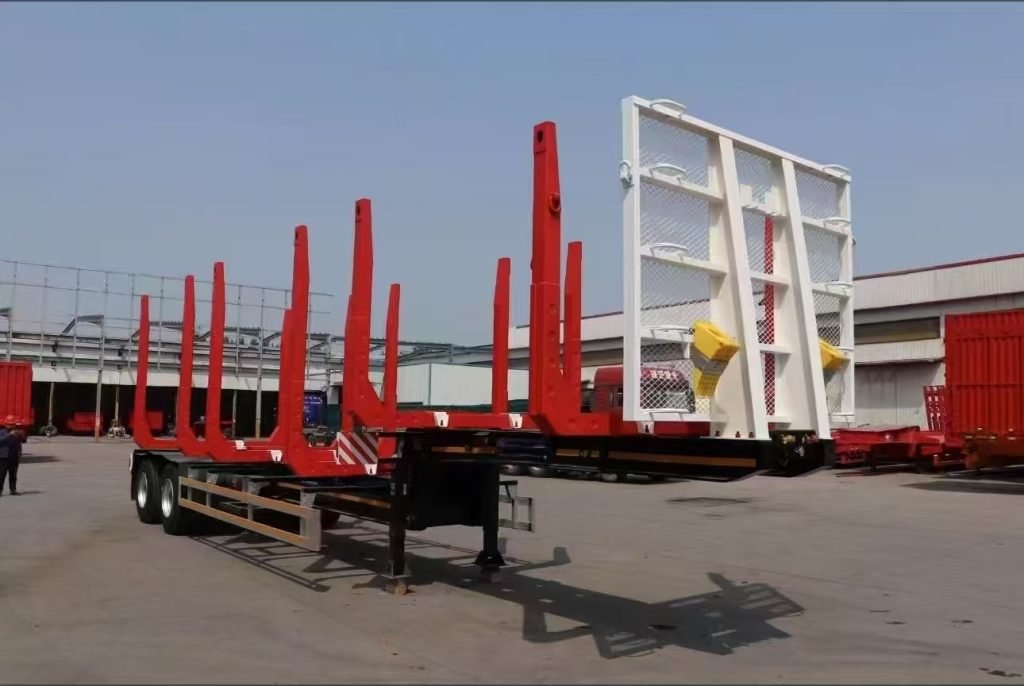
Timber Trailer Stake Configuration
BOCA’s 3 Axle Timber Log Trailer shows a side-stake layout used for timber transport. It offers a useful starting point for a conversation about loading and stake arrangements, although the photo cannot establish allowable pocket wear, retention capacity or suitability for pipe bundles. Those details depend on the selected configuration and its supporting documentation.
View Timber TrailerA supplier discussion is most productive when it starts with the loads you actually carry. That makes it easier to compare available support arrangements and identify the stake, retention and restraint details that still need confirmation.
If flatbed trailer stake pocket wear keeps recurring, that history belongs in the next equipment discussion. It should inform the specification without being mistaken for proof that a new trailer will solve the current defect.
Frequently Asked Questions
Can a stake replace a rated tie-down?
Not automatically. A stake used for cargo containment should not be treated as a rated tie-down anchor unless the particular component and mounting arrangement are approved for that function. The complete cargo-securement system must still meet the applicable requirements.
Does tighter fit always mean the pocket is serviceable?
No. A tight fit can result from distortion, corrosion buildup or an incompatible stake. It does not establish the condition of the pocket walls, weld connections or surrounding structure. Serviceability depends on the approved criteria and competent assessment.
Which timber and pipe details affect stake selection?
Relevant details include cargo dimensions, weight, shape, stacking or bundling method, loading equipment and support positions. For logs and pipes, the intended anti-roll and cargo-securement arrangements also need to be identified before the stake configuration can be evaluated.
Review Flatbed Options for Your Operating Conditions
A worn stake pocket is a maintenance question first. If the transport job is also changing, it makes sense to compare flatbeds around the timber or pipe loads you plan to carry—not just the size of the stakes.
Browse BOCA’s flatbed range and use Get Trailer Quote to share the cargo dimensions, weight, loading method, operating conditions and destination market. Existing stake drawings or inspection photos can add useful context. The final stake and restraint arrangement should be confirmed for the trailer configuration you select.
View Flatbed Range & Quote Options