
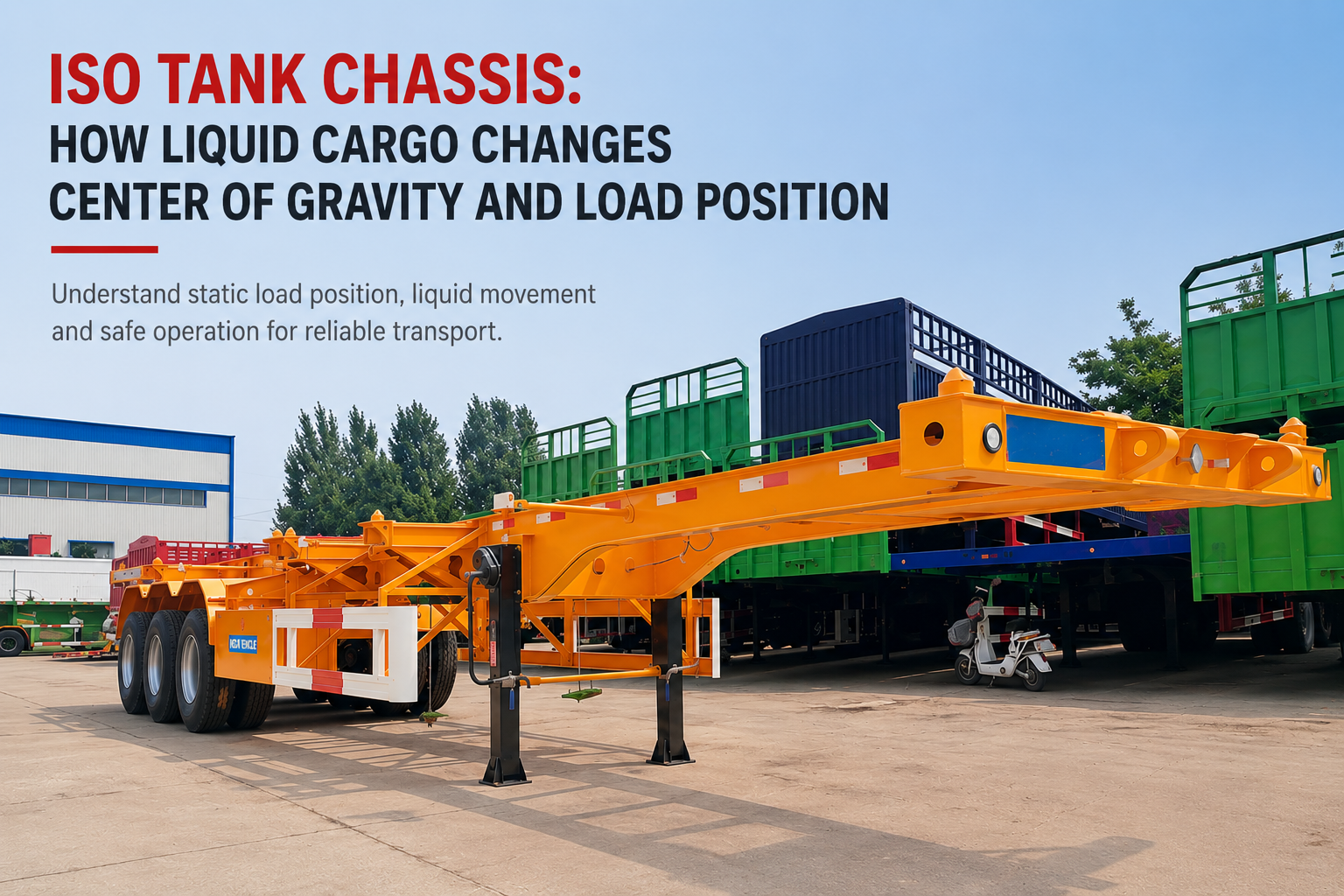
ISO Tank Chassis: How Liquid Cargo Changes Center of Gravity and Load Position

A tank container can leave the terminal correctly locked and within an expected gross weight, yet still place the tractor and trailer axles under a very different load pattern from another tank movement. The missing piece is often not total mass. It is where that mass acts and how the liquid responds once the combination begins braking, turning, and crossing uneven roads.
At a scale house, the issue can appear ordinary. The tank is seated, the coupling looks normal, and nothing appears unusual from several meters away. However, the dispatch decision still depends on whether the loaded tank sits in the right relationship to the kingpin, tractor axles, and chassis axle group.
At the same time, liquid cargo does not behave like a rigid machine or boxed load. Therefore, ISO tank chassis center of gravity needs two separate checks. The first concerns the static load position. The second concerns the liquid response once speed or direction changes.
Keeping those questions separate makes the rest of the review more useful. It also prevents a satisfactory scale ticket from being mistaken for proof that every road condition has been addressed.
The useful distinction is simple
First establish where the loaded tank acts on the parked combination. Then consider how the actual liquid state may respond during braking, steering, grades, and road inputs. One calculation should not be used as a substitute for the other.
Why Liquid Cargo Behaves Differently on a Chassis
A rigid load normally keeps its mass in nearly the same place relative to the trailer. Liquid does not. Although the ISO tank frame remains secured to the chassis, the contents can respond internally when the vehicle accelerates, brakes, turns, or passes over changes in road level.
That difference may be barely noticeable on a straight industrial road. Later, however, the same combination may enter a tightening interchange ramp or meet a queue at the bottom of a grade. Those events introduce lateral and longitudinal acceleration, so the vehicle no longer behaves as though every kilogram were fixed rigidly to the frame.
The tank stays fixed while the internal mass can react
Under braking, liquid movement can add a longitudinal response. During a turn, lateral movement becomes relevant. Meanwhile, road dips and uneven pavement can add vertical motion. In real transport, these inputs may overlap rather than occur one at a time.
Therefore, total tank mass does not explain the entire operating condition. The tank geometry, fill condition, liquid properties, internal arrangement, chassis geometry, and route all affect the final judgment.
This is why a broad instruction such as “drive carefully because it is liquid” adds little value. A stronger plan identifies the actual load state and the parts of the route that will create the greatest change in speed or direction.
Separate Static Load Position From Liquid Movement
Static load position describes how the loaded tank places weight onto the vehicle while the combination is stationary. By contrast, liquid movement describes how forces change when the contents respond to acceleration. These are connected problems, but they require different evidence.
A scale ticket is valuable because it confirms the static axle distribution at the time of weighing. However, it does not predict every temporary wheel-load change during a bend, emergency stop, road dip, or sudden steering correction.
Static question
Where does the documented loaded mass act relative to the kingpin and trailer axle group?
Dynamic question
How can the actual liquid state respond as the vehicle brakes, turns, climbs, descends, or crosses uneven pavement?
Dispatch question
Do the static axle results and the operating controls both suit the planned movement?
One good result cannot cancel a problem in the other
Careful driving cannot correct an unacceptable static axle distribution. If the tractor or trailer group is outside applicable limits, smoother braking does not solve the geometry. The static configuration needs correction or qualified technical review.
The reverse is also true. An acceptable scale reading does not remove the need to consider liquid movement. Therefore, the transport plan should carry both sets of information forward rather than allowing the weighing result to end the assessment.
Locate the Tank Container Relative to the Axle Group
Once the static question is isolated, the geometry becomes easier to read. Mark the kingpin position, the effective center of the trailer axle group, and the intended tank locking position. Then add any documented mass-center information available for the loaded tank.
A simple side-view sketch is often more useful than a long equipment description. It immediately shows whether the effective load acts closer to the tractor or closer to the chassis axles.
Moving the effective load position changes the reactions
In general, moving the effective load rearward increases the trailer-side reaction. A more forward load position generally increases the reaction toward the kingpin and tractor. Exact values, however, depend on the complete geometry and should not be guessed from appearance.
This becomes particularly important when a different tractor enters the operation. The tank and chassis may remain unchanged, yet wheelbase or fifth-wheel position can alter how the forward reaction reaches the tractor axles.
The intended locking position should remain the reference
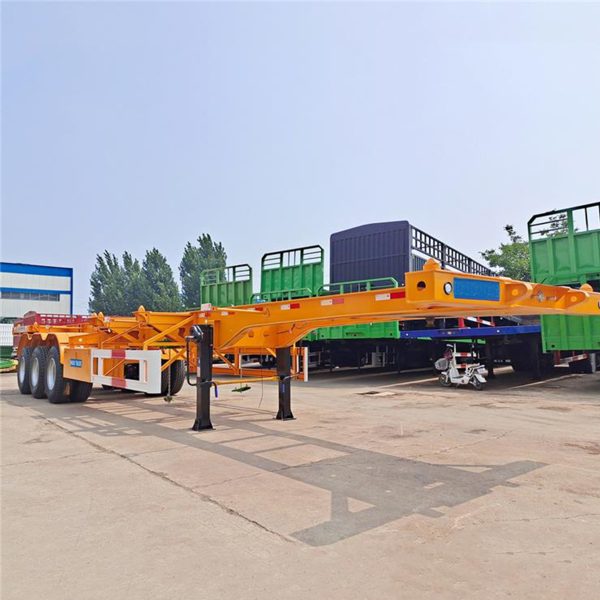
The tank frame should engage the chassis at the positions intended for the configuration. Twist locks retain the container once the interfaces are correctly seated. They should not become a method for creating an improvised longitudinal position.
Likewise, an uneven yard or abnormal suspension condition can distort visual judgment. Tire pressure differences, suspension faults, ride-height problems, or frame twist can affect what appears at the scale.
Therefore, a repeatable axle result that does not match the expected geometry deserves investigation. Tank position, tractor geometry, suspension condition, and the weighing method should all be checked before dispatch continues.
Consider Fill Condition Without Inventing Cargo Data
Fill condition matters because available free space can allow the liquid surface to move. During braking, that movement may develop longitudinally. During a curve, the response may become lateral instead.
However, there is no responsible universal percentage to insert into every ISO tank movement. Tank geometry, liquid properties, internal compartments, surge-control features, temperature conditions, and cargo-specific instructions can all change the operating picture.
“Part loaded” is not a technical specification
In a busy terminal, informal descriptions can enter the conversation quickly. A tank may be called full, mostly full, or part loaded. Those descriptions are convenient for discussion, but they are weak inputs for chassis confirmation.
Instead, the review should rely on controlled documentation for the loaded condition and declared mass. Likewise, cargo density should not be inferred from a familiar product name or a previous shipment.
If declared mass and measured results do not agree, the discrepancy should be resolved. A remembered value from another movement is not a suitable replacement because the cargo, fill condition, or operating temperature may differ.
Do not guess the information that controls liquid behavior
- Confirm the documented loaded condition.
- Use the declared loaded mass rather than an informal estimate.
- Check cargo-specific tank and handling instructions where relevant.
- Confirm internal tank information when it materially affects the assessment.
- Escalate unclear filling restrictions instead of inserting a generic percentage.
Partial fill can change what is felt during normal driving
Some liquid conditions can produce a delayed response after braking or steering. For example, the tractor may begin decelerating before the full liquid response has settled. That sensation should be treated as operating information rather than a diagnosis of the tank itself.
Where dangerous goods, fuels, food-grade products, chemicals, or temperature-sensitive cargo are involved, applicable destination-country regulations, tank instructions, shipper procedures, and qualified technical advice remain controlling.
Check Tractor, Kingpin and Axle-Group Load Response
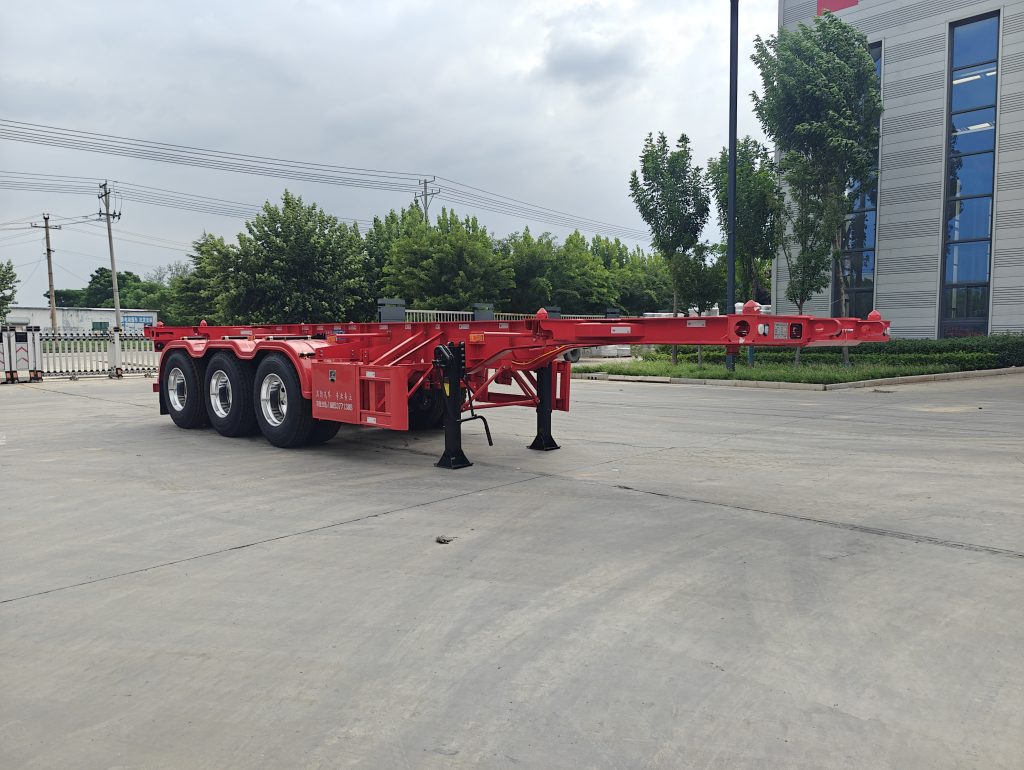
The chassis cannot be assessed separately from the tractor. Once the tank position is fixed, the forward load reaction passes through the kingpin and fifth wheel. Tractor wheelbase, fifth-wheel position, axle layout, and suspension state therefore become part of the same load path.
This matters most after a tractor substitution. From the yard, nothing about the tank or chassis may appear different. However, another coupling position can change the steer-axle and drive-axle reactions enough to justify a fresh check.
A fifth-wheel adjustment changes more than one number
Where adjustment is permitted by the tractor design and operating procedure, moving the fifth wheel can shift load between tractor axles. At the same time, the change can affect tractor-to-chassis clearance and articulation geometry.
Therefore, fifth-wheel movement should not become an improvised answer to an unsuitable chassis match. After an approved adjustment, the relevant axle readings and physical clearances need to be verified again.
Use the scale to verify the planned geometry
Where weighing is required or available, record the relevant steer, drive, and trailer axle or axle-group reactions using the accepted local method. Then compare those results with the equipment limits and applicable road rules.
If one result appears unexpected, the answer is not automatically a different chassis. First check the tank position, tractor coupling geometry, suspension state, tire condition, and weighing procedure. A repeated discrepancy is much more useful than a single unexplained number.
If acceptable load distribution cannot be achieved through approved configuration changes, normal dispatch should stop. A different tractor, chassis arrangement, load condition, or qualified engineering review may be necessary.
Plan Route and Driving Controls for the Actual Load
A combination can pass its static checks and still need a more conservative operating plan. Curves, interchange ramps, roundabouts, grades, uneven pavement, crosswinds, and congested approaches can all increase the demands placed on a liquid load.
A typical port-to-inland route illustrates the problem. The first kilometers may involve slow terminal lanes and straight industrial roads. Later, the route can enter a tighter highway ramp, followed by a descent and stop-start traffic. The same tank therefore experiences very different inputs within one movement.
Find the demanding sections before the tractor leaves
Route review should focus on places where speed or direction changes quickly. Sharp ramps, repeated roundabouts, poor pavement, steep approaches, temporary diversions, and restricted terminal entrances deserve more attention than long straight highway sections.
Smooth, early deceleration can reduce unnecessary abrupt longitudinal input. Likewise, suitable following distance provides more room for progressive speed changes. These controls do not eliminate liquid movement, but they reduce avoidable disturbances.
Grades add another concern. Long descents increase braking demand, while crests and dips add vertical movement. Gear selection, retarder use where applicable, and brake management should therefore follow tractor guidance and local operating requirements.
Route legality belongs in the same planning process
Bridge and road restrictions should be checked against the actual axle condition rather than total mass alone. A combination permitted on one corridor may not suit another because the permitted axle or bridge loading differs.
Dangerous-goods movements can add route controls around tunnels, terminals, ferries, urban areas, or border crossings. In those cases, applicable regulations, cargo documentation, shipper procedures, and competent technical advice take priority.
Agree on the stop conditions before departure
A stop decision should not depend on completing a full engineering diagnosis beside the road. It only needs enough evidence that the planned configuration or operating condition can no longer be confirmed.
- Axle results remain outside the permitted or approved condition.
- Tank or corner-frame damage becomes visible.
- Coupling or suspension condition is uncertain.
- Visible leakage or cargo-related abnormality appears.
- Required documentation is missing or contradictory.
- A route restriction invalidates the planned movement.
Information Needed Before Confirming Chassis Suitability
A useful chassis inquiry describes the actual transport condition rather than only the tank type. Tank specification, loading state, tractor geometry, chassis layout, and route conditions should arrive together whenever possible.
This changes the quality of the discussion immediately. Instead of asking whether a chassis can transport an ISO tank in general, the technical review can focus on whether one specific combination matches one specific movement.
Tank and cargo information
- Tank identification and available specification documents.
- Declared loaded mass.
- Documented fill or loading condition.
- Medium or cargo category.
- Documented center-of-mass information where available.
- Applicable handling, temperature, or dangerous-goods instructions.
Tractor and chassis information
- Intended chassis configuration and tank locking position.
- Chassis axle and suspension arrangement.
- Tractor configuration and wheelbase.
- Fifth-wheel position and coupling information.
- Measured axle or axle-group loads where available.
- Clear side-view photographs of the proposed combination.
Route and operating information
- Origin, destination, and typical road type.
- Known grades, ramps, tight curves, or rough-road sections.
- Bridge, road, or axle restrictions.
- Terminal and yard maneuvering conditions.
- Dangerous-goods routing restrictions where applicable.
- Any previous unusual steering, braking, tire, or suspension behavior.
Photographs are useful because they show the complete arrangement quickly. However, they should support measurements and controlled documents rather than replace them.
For the wider equipment discussion, the BOCA container chassis range provides the relevant starting point. Final configuration should still follow the tank, tractor, load, route, and destination requirements supplied for the actual project.
FAQ
Final Load Review
Keep Load Position and Liquid Behavior in the Same Decision
A useful assessment starts with static geometry. First locate the tank relative to the kingpin and axle group. Next, verify whether the measured axle reactions agree with that arrangement. Only then should the operating plan consider how the actual liquid state may respond on the route.
Most importantly, ISO tank chassis center of gravity should not be judged from tank appearance, gross mass, or axle count alone. The decision should connect tank documentation, loading state, tractor geometry, chassis configuration, measured load response, and route conditions.
- Confirm the load: collect tank identification, medium category, declared mass, and documented fill condition.
- Confirm the load path: record tractor geometry, fifth-wheel position, chassis arrangement, and required axle results.
- Confirm the route: review curves, grades, bridge limits, terminal access, and cargo-specific restrictions before release.
ISO Tank Chassis Matching
Match the Chassis to the Actual Tank, Tractor and Route
Useful project information includes the ISO tank specification, medium category, documented loading state, declared mass, tractor configuration, wheelbase, fifth-wheel position, axle arrangement, and planned route conditions.
Where available, axle-weight records and clear side-view photographs can also support the review. These details make it possible to discuss chassis configuration around the real transport condition instead of relying on a generic tank description.
If documents conflict, axle distribution remains unacceptable, or the load behavior cannot be explained confidently, qualified engineering or technical review should come before normal dispatch.
Submit Tank and Chassis Details