

Lowbed Trailer Tire Sidewall Overload During Tight Turns: Dispatch Inspection Points
Tight yard turns can leave suspicious marks on lowbed trailer tires. Learn how to distinguish surface scrub from possible sidewall damage and make informed dispatch decisions.

A loaded lowbed trailer negotiates a tight turn at a machinery yard. The rear tires scrub across the pavement, and fresh marks appear near one sidewall. Before the next dispatch, the maintenance team needs to establish whether the marks reflect ordinary turning scrub, physical contact, or possible tire damage.
Lowbed trailer tire sidewall overload cannot be confirmed from scuff marks alone. Tire capacity, inflation pressure, axle loading, and the location of the marks all matter. A tire may show surface abrasion without exceeding its rated load, while potentially serious damage may not be obvious from an external inspection.
The first useful detail is not how dramatic the scuff looks, but exactly where it appears. Shoulder marks across several tires raise a different question from a concentrated scrape on one exposed sidewall. Record that pattern before reviewing possible contact points, loading evidence, and inflation history; no single mark establishes the tire’s load history or fitness for service.
What Happens at the Tires During a Tight Yard Turn
As a lowbed pivots into a narrow yard entrance, the tires in a non-steering axle group cannot all follow their ideal rolling paths. Their contact patches scrub laterally across the pavement, particularly on firm, high-grip surfaces. The trace of that movement may be most visible near a tread shoulder.
Shoulder abrasion describes what happened at the road surface, not how much weight an individual tire carried. A scrape farther down the exposed sidewall may point instead to a curb or another contact point. Both observations need context before they can support a conclusion about the tire’s condition.
The distinction becomes important when a trailer carries concentrated machinery loads. Two trailers with similar gross weights may have different loads at individual axle positions. Turning direction, suspension behaviour, tire inflation, and road conditions can also affect the stresses experienced during a manoeuvre.
A separate tire inspection is especially valuable after contact with a curb, an unexpectedly sharp yard turn, or a driver report of unusual resistance, noise, or vibration. The objective is to document the event and identify any condition that requires professional assessment—not to assume every tight turn has damaged the tires.
Read Sidewall Marks Without Assuming the Cause
The location of a mark is often more informative than its apparent severity. Abrasion close to the tread shoulder may be associated with lateral movement against the road surface. A concentrated scrape lower on the exposed sidewall raises a different question: did the tire contact a curb, loading-area edge, or nearby obstruction?
Compare the affected tire with adjacent wheel positions. Are similar marks visible across several tires, or is one sidewall noticeably different? Does the abrasion correspond with the direction of the reported turn? A localized mark with matching contact evidence deserves a different investigation from widespread shoulder scuffing.
A previous inspection photograph can be particularly useful. Without a baseline, an older cut or abrasion may be mistaken for damage caused by the latest manoeuvre. Record the affected axle and wheel position, the tire identification, the loading condition, and the circumstances in which the marks were discovered.
The trailer arrangement provides useful background too. BOCA’s lowbed semi trailer guide explains configuration factors involved in transporting heavy machinery. That information can help put axle arrangement and loading conditions into context, although the condition of an installed tire must still be assessed against its own manufacturer guidance.
A bulge, deep cut, exposed reinforcement, suspected separation, or unusual sidewall distortion belongs in a different category from ordinary-looking surface scuffing. Such findings should not be interpreted as cosmetic wear without qualified evaluation.
Check Load Records, Inflation, and Nearby Contact Points
When a sidewall mark raises concern, the next useful evidence often comes from records rather than another visual inspection.
Start with the actual load distribution. A trailer may operate within its permitted gross weight while an individual axle or tire carries more than its applicable limit. Machinery position, tractor-trailer load distribution, and the axle group’s operating condition can all influence the result.
Available axle-load measurements should be compared with the relevant tire rating and manufacturer load-and-inflation information for the installed configuration. A static measurement cannot reconstruct every transient force experienced during turning, but it provides a much stronger basis for judging the loading condition than gross weight alone.
Inflation records tell another part of the story. Inadequate pressure can increase tire deflection and heat generation. Yet a tire that looks properly inflated may still be outside its required operating pressure.
Use readings obtained under the manufacturer’s specified conditions and compare them with the applicable inflation specification. A pressure reading taken immediately after operation should not be treated as equivalent to a specified cold-inflation reading. Similarly, the maximum inflation marking on the sidewall is not automatically the correct operating target for every loading condition.
Physical contact needs its own explanation. A curb or nearby structure can damage a sidewall even when the tire is operating within its rated static load. Look for corresponding marks on nearby obstacles, wheel arches, suspension components, or other surfaces around the wheel.
Clearance must be considered in the relevant loaded condition. A visible gap around a stationary, unloaded tire does not prove that the same clearance existed during the reported turn. Where the record is incomplete, the correct conclusion is that the cause remains unresolved.
Separate Turning Scrub From Evidence of Damage
The difficult part of a post-turn inspection is deciding how much weight to give each observation. A fresh mark may look alarming without identifying its cause. Conversely, a tire with limited visible damage may still need professional examination after a significant impact or abnormal operating event.
For dispatch purposes, three broad patterns help organize the evidence. They are not substitute acceptance criteria or approval to continue operating.
This distinction is consistent with general Bridgestone commercial tire inspection guidance, which identifies cuts, bulges, abrasions, and exposed structural material as conditions that warrant careful examination. The instructions for the actual installed tire remain controlling.
The driver’s report also matters. An impact, possible operation with inadequate inflation, or unexplained vibration may justify specialist review even when external evidence appears limited. Internal tire condition cannot always be established from the visible sidewall.
If structural damage is suspected, inspection and handling must follow the approved fleet and tire manufacturer’s procedures. Improvised pressure adjustments, disassembly, or other attempts to investigate a suspect tire are not appropriate substitutes for qualified service.
Before the Next Dispatch: Tire Condition and Trailer Fit
An inspection is complete only when the findings have been compared with the requirements that apply to the actual tire and vehicle. The tire model, size, load rating, mounting arrangement, manufacturer inspection criteria, and relevant inflation specification should be identifiable in the maintenance record.
Where damage is suspected, the dispatch decision must wait for qualified assessment and the required authorization. Where the tire appears externally sound but inflation or axle-load evidence is missing, those gaps still need to be resolved. A clean-looking sidewall cannot establish that the tire operated within its approved limits.
If the inspection reveals no unresolved concerns, any return-to-service decision must still follow the applicable tire manufacturer guidance, fleet procedures, and operating requirements. This article does not provide a tire acceptance standard or authorize continued service.
The pattern across several trips can be revealing. Marks repeatedly found at the same wheel position after the same yard approach suggest checking the turn path and nearby obstacles. Marks that shift between wheel positions as machinery placement changes point to a different set of questions about load distribution and clearance.
These observations can guide a closer review of the available turning space, tire-to-structure clearance under load, axle-group arrangement, machinery position, and applicable axle-load requirements. A higher advertised payload capacity alone will not solve a restricted turning path or an unresolved clearance problem.
Before approaching a supplier, prepare the tire identification and rating, the manufacturer’s inflation and inspection requirements, available axle-load records, and photographs of the affected wheel positions. Equipment identification and operating conditions will help frame the configuration discussion.
A supplier discussion should start with the operating problem, not a requested payload figure. Explain where the mark appeared, how the trailer was loaded, and which part of the turn presents a clearance concern. Those details make it easier to discuss configuration options without confusing vehicle suitability with tire serviceability.
Frequently Asked Questions
Does visible tire scrub prove overload?
No. Scrub marks show abrasion or lateral movement, not the amount of load carried by the tire. Overload assessment requires relevant tire specifications and operating evidence. Even where the marks appear minor, suspected sidewall damage should be referred for qualified evaluation.
Can correct gross weight rule out tire overloading?
No. Acceptable gross weight does not establish the load on each axle or tire. The relevant axle-load distribution, tire rating, mounting arrangement, and manufacturer load-and-inflation guidance must also be considered.
Which sidewall findings need tire specialist review?
Bulges, exposed cords, significant cuts, suspected separation, unusual distortion, and possible internal damage warrant professional assessment. The absence of obvious external damage is not a substitute for specialist review after a concerning impact or operating event.
A post-turn inspection photograph is most useful when it is tied to an exact wheel position and a description of the manoeuvre. Note whether the mark sits at the tread shoulder or on the exposed sidewall, and whether the driver reported an impact or unusual resistance.
There are then two separate questions to close: whether the installed tire can return to service under the applicable manufacturer and fleet requirements, and whether the route, machinery placement, or trailer setup needs attention before the same turn is repeated. The answer to one does not settle the other.
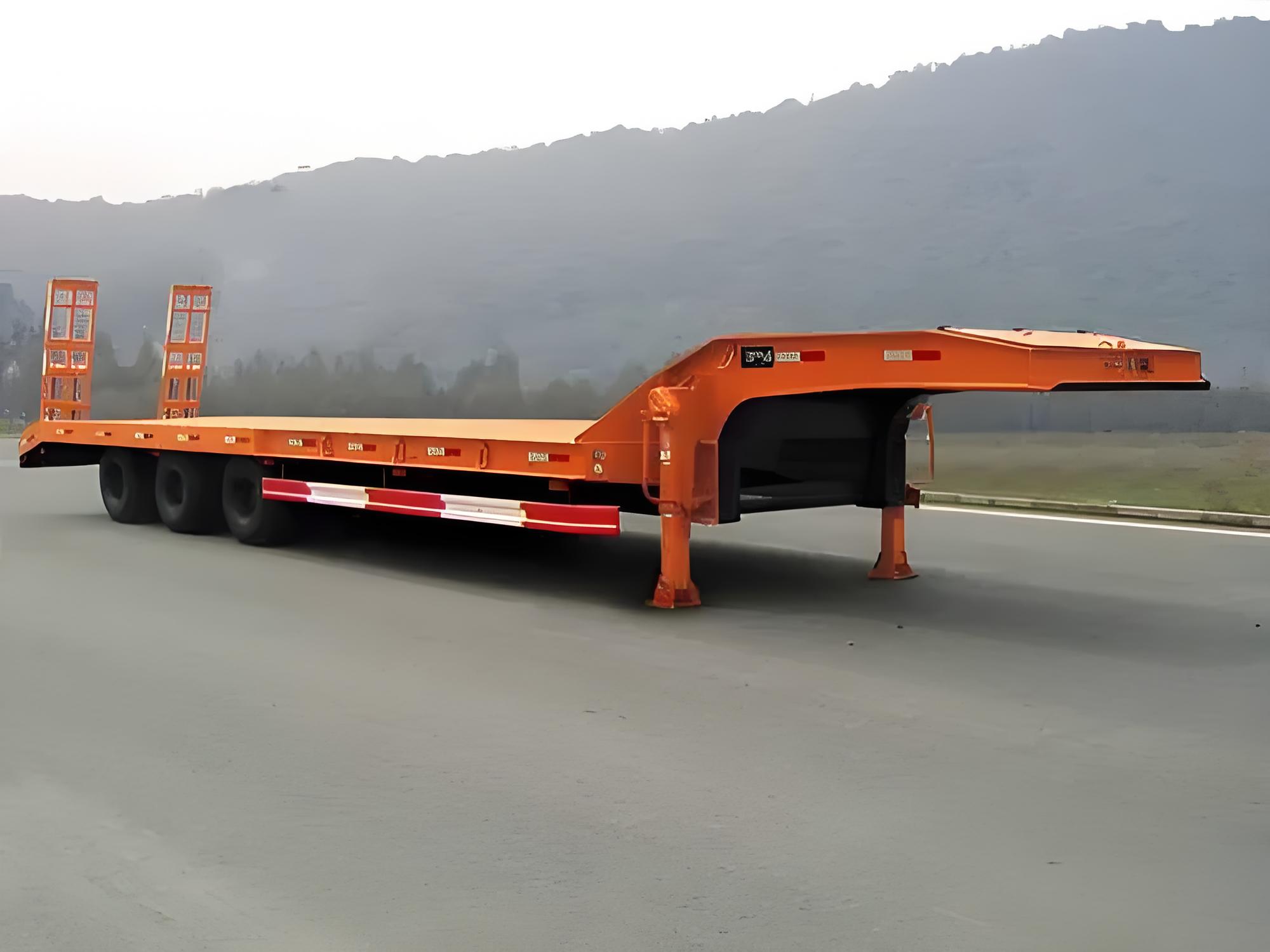
If repeated tire scrub or sidewall contact raises questions about trailer suitability, compare available configurations against the actual machinery load, axle requirements, turning space, and operating conditions. Existing tire damage must be assessed separately before any return-to-service decision.
For a configuration discussion, provide BOCA with your equipment identification, operating weight, route conditions, tire model and rating, manufacturer inflation requirements, available axle-load records, and relevant inspection photographs. These details can help establish which configurations and technical specifications need further confirmation.
Explore Lowbed Trailer OptionsOn the lowbed range page, select Get Trailer Quote to send BOCA your operating requirements.
A trailer configuration discussion does not replace qualified tire inspection or authorization to return a vehicle to service.