

Multi-Axle Flatbed Tire Scrub: Axle Alignment and Spacing Checks for Tight Turns
Tire scrub during tight turns does not always mean poor axle alignment. Learn how to assess wear patterns, axle spacing and inspection records on multi-axle flatbed trailers.

Tire scrub on a multi-axle flatbed often becomes visible when a loaded trailer turns into a depot entrance, port lane or warehouse yard. A similar turn on the empty return may leave a different pattern, so compare observations from the same turn, direction and surface under recorded cargo conditions before treating the marks as an alignment fault.
The useful starting point is to establish whether the wear follows a particular manoeuvre, changes with the cargo carried, or continues on straight routes. Those distinctions help separate turning demand from a condition that needs mechanical measurement.
Why a Tight Flatbed Turn Can Leave Scuff Marks Without an Alignment Fault
On a multi-axle flatbed with fixed axles, each axle traces a slightly different path through a tight corner. The tires cannot all roll around those paths without some lateral deformation or movement. That is why a low-speed turn may leave conspicuous pavement marks even when the axle group has no established alignment defect.
Persistent alignment-related wear tells a different story. A tire shoulder that loses tread faster over several trips, directional feathering that keeps returning, or a trailer that does not track consistently behind the tractor on straight roads deserves closer attention. Tire pressure, matched tire dimensions, suspension condition and wheel-end faults also belong in that investigation; wear shape alone does not identify a single cause.
Scuffing appears at the same confined turns, while comparable tire positions show no clear progressive difference in their wear records.
Irregular tread loss progresses beyond yard turns, differs substantially by position, or accompanies a repeated straight-line tracking complaint.
Neither pattern is a diagnosis by itself. On a flatbed, the investigation should connect the route and affected wheel positions with the cargo carried on that trip. A change in load position or axle loading can alter the context of the wear, so the tread pattern should be assessed alongside operating records before deciding what needs measurement.
Compare Cargo Position, Axle Loads and Tire-Wear Records
A flatbed fitted with twist locks may carry a container secured at those points on one trip, while another trip may involve steel or machinery arranged differently. Even when the trailer follows the same yard route, cargo weight and its position along the deck can change how load is shared between the kingpin and trailer axle group. A useful comparison therefore looks beyond whether the trailer was simply loaded or empty.
For each relevant trip, record the cargo type, dimensions or footprint, position on the deck, total load and any available axle-load readings. Connect those details with dated tread-depth readings and photographs for each axle and wheel position. Tire installation and rotation history, service distance and inflation records also matter; without comparable records, a change in wear may be attributed to the route when the load has changed as well.
Route information should identify the actual turning locations and directions, not just the destination. A yard sketch, dispatch notes or a record of repeated reversing movements can help explain why one side of the axle group experiences more lateral demand. The approximate manoeuvre radius may be worth documenting, but it should not be treated as an approved minimum without vehicle-specific information.
The same records are useful when a fleet is assessing a future configuration. BOCA’s flatbed semi trailers provide a relevant starting point for discussing axle arrangement against the intended cargo and yard conditions, but a category page cannot determine what caused wear on an existing trailer.
Some of the same multi-axle turning principles apply to dump trailers, but quarry surfaces, aggregate impact and repeated haul cycles create a different operating context. For that separate scenario, see BOCA’s guide to multi-axle dump trailer tire scrub on quarry roads. This article remains focused on flatbed cargo position and turning conditions at depots, ports and loading yards.
Measure Axle Alignment Under the Manufacturer’s Specified Setup
When the wear history raises a genuine alignment question, the comparison becomes geometric. Hendrickson’s L579 trailer-alignment procedure provides one manufacturer-specific example: the front non-steer axle is measured against the kingpin reference to establish thrust angle, while the remaining axles are compared with that front axle to assess axle-to-axle parallelism, commonly expressed as scrub angle. These are measured alignment relationships, not the tire marks left on pavement during a turn.
The preparation and measurement setup must follow the procedure for the trailer and suspension being inspected. Reference points, suspension state, ride height, measuring method and target values are not interchangeable between unrelated axle systems. A reading taken without those details cannot be compared reliably with another workshop’s result or a tolerance copied from a different manufacturer’s procedure.
The inspection record should identify the trailer, axle positions, reference points, measurement method or equipment, actual readings and the applicable acceptance criteria. Repeatable deviations, considered alongside matching wear and tracking evidence, provide a stronger basis for review. Suspension movement and wheel-end condition may still need to be ruled out before corrective work is selected. For a technical example, consult Hendrickson’s L579 trailer alignment procedure; the procedure applicable to the actual equipment remains controlling.
What a photo cannot confirm: the thrust angle, axle-centreline position or compliance with a manufacturer’s alignment limits. Photographs document visible symptoms; they do not replace measurements made under a verified inspection setup.
Relate Axle Spacing to the Flatbed’s Actual Turning Path
Axle spacing changes the difference between the paths that fixed axles must follow through a confined turn. Greater longitudinal separation can increase that geometric difference, but the amount of tire scrub also depends on the turning radius, load carried by each axle, surface friction, suspension arrangement and any steering-axle function. Spacing alone does not establish that a trailer has been assembled incorrectly.
Use the actual axle-spacing drawing with the yard layout, cargo footprint and position, tire specification and any steering- or lifting-axle arrangement confirmed for that vehicle. The drawing should identify centre-to-centre dimensions and the axle configuration under discussion. Counting axles in a side photograph is no substitute for those details.
If symptoms are limited to specific turns, the fleet may need to review route demand and configuration rather than assume an alignment fault. If tire damage, abnormal tracking, suspected suspension looseness or structural damage is present, follow approved stop-use procedures and seek a qualified assessment. Where the records are incomplete, further evidence is the next action—not an improvised axle adjustment, tire-pressure change or release-to-service decision.
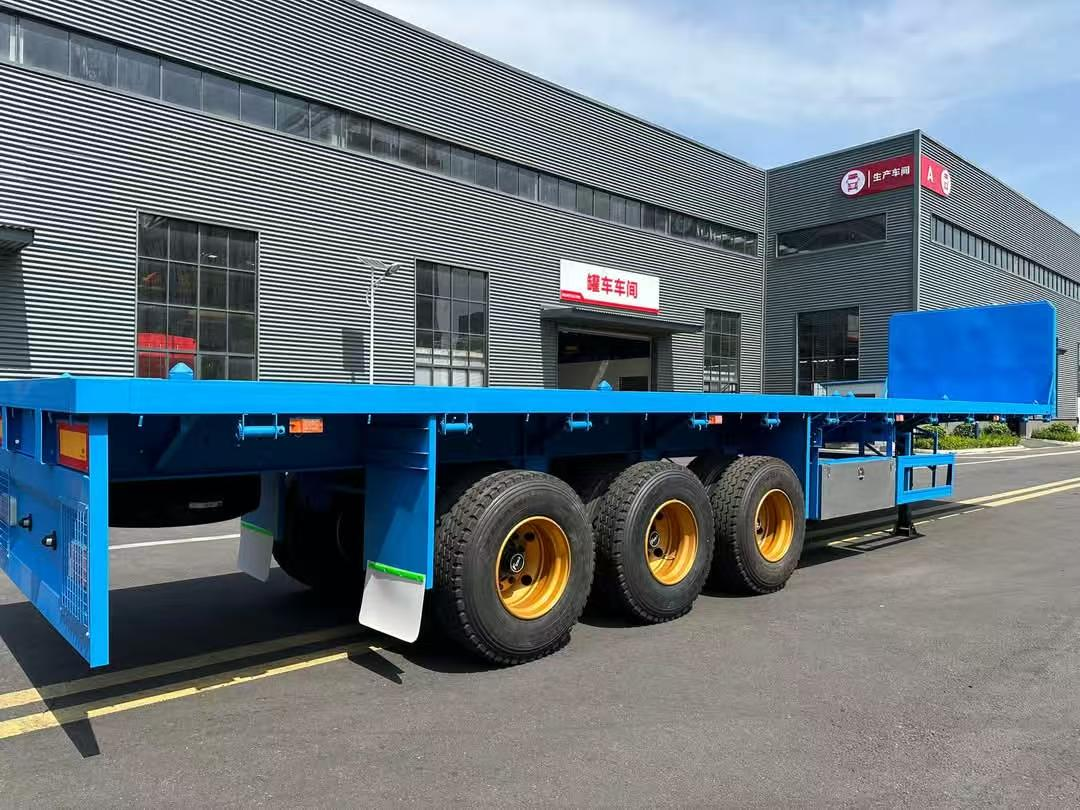
Prepare the Evidence Before Discussing a Flatbed Configuration
“Rear tires wearing on turns” gives a maintenance specialist too little context. A useful enquiry separates what was observed from what remains unproven: the affected axle and wheel positions, whether the wear continues on straight roads, the turns where it appears, and the cargo carried during those trips.
Prepare the trailer identification, axle-spacing drawing, cargo dimensions and deck position, available axle-load records, dated tire photographs, tread-depth readings, cold inflation pressures and route notes. Include tire changes, rotations and previous work on the suspension or wheel ends. If alignment measurements already exist, provide their reference points, setup conditions and method so the results can be reviewed on a consistent basis.
For an existing trailer, these records should be reviewed by a qualified maintenance or alignment specialist. The evidence may point toward route-related scrub, a mechanical or alignment condition that needs attention, or missing information that must be collected before a conclusion can be reached. It is more defensible than selecting a cause from one photograph or adjusting an axle to make the visible marks disappear.
For a fleet considering a different flatbed configuration, the same information helps a supplier understand the cargo footprint, intended turning locations and axle arrangement under consideration. A wear problem on an existing trailer does not, by itself, establish that a new vehicle or a particular BOCA configuration will solve it.
Frequently Asked Questions
Can cargo position affect tire scrub on a flatbed?
It can change how weight is shared between the kingpin and trailer axle group, and may affect individual axle loads. Compare the cargo position with available load records and tire-wear readings. A wear pattern alone does not prove that the cargo was positioned incorrectly.
Should loaded and empty turning records be compared?
Yes. Compare the same manoeuvre, direction, surface and wheel positions, while recording the cargo and load condition for each run. The comparison helps explain operating differences but does not replace manufacturer-specified alignment measurements.
Can axle spacing alone explain tire scrub?
No. Spacing is one factor alongside turning radius, axle loading, tire specification, surface friction, suspension and any steering-axle function. Use the actual trailer drawing and operating conditions rather than treating axle count or spacing as a diagnosis.
Planning a flatbed for routes with confined turns? Share the vehicle or equipment identification, cargo dimensions and load, yard-turn conditions, axle-spacing drawing, applicable alignment requirements and relevant tire-wear or inspection records. These details can support a more specific configuration enquiry.
BOCA can discuss available configurations and the information needed before selection. Any suspected fault on an existing trailer still requires separate qualified assessment.
Explore Flatbeds & Request a Quote