
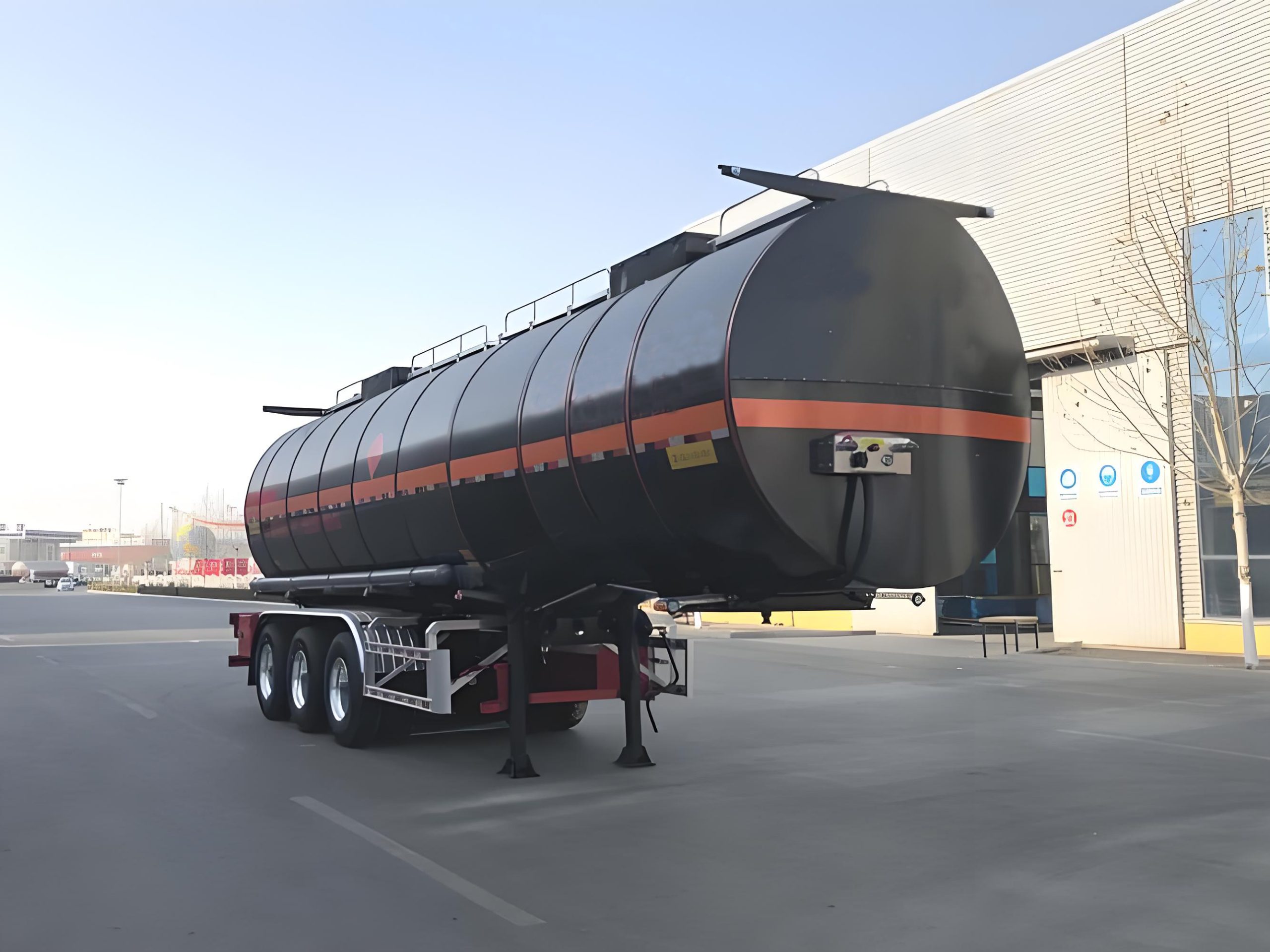
Asphalt Tanker Trailer
Asphalt Tanker Trailer Series
-
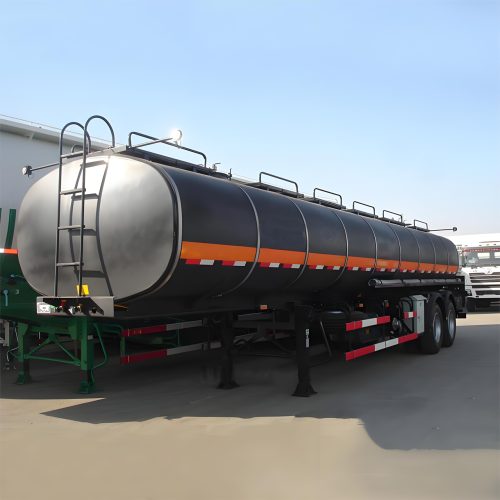
Asphalt tank semi trailer
-
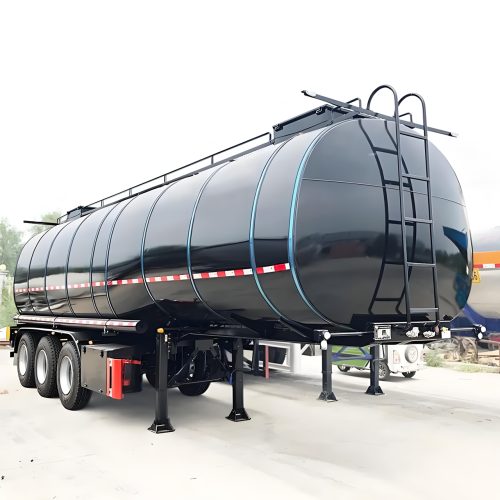
Asphalt Tanker Trailer
-
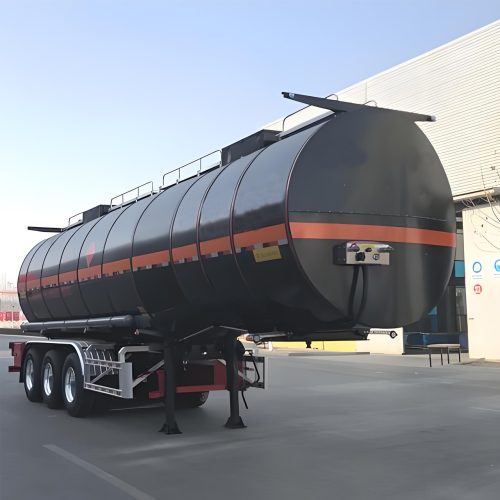
Asphalt tanker trailer for sale
-
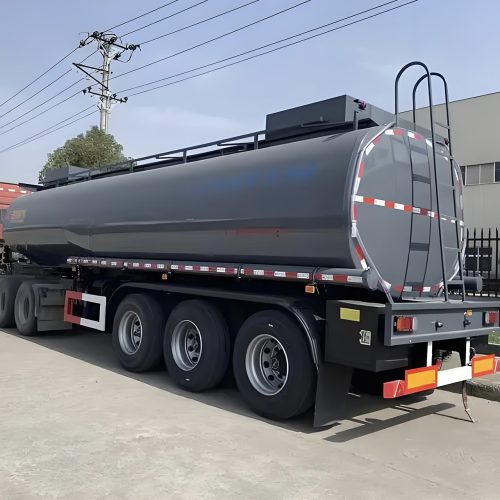
Bitumen tank trailer manufacturers
-
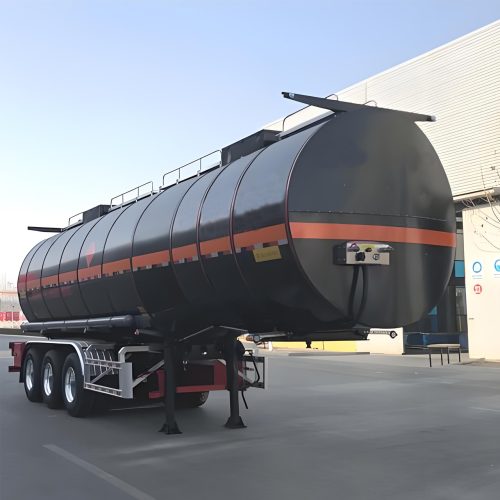
Bitumen tanker semi trailer
Structural Components of asphalt tank trailer
An asphalt tank semi trailer is equipped with a variety of specially designed components to handle high-temperature, viscous, and sometimes chemically reactive materials. The following is a detailed description of its main structural components.
asphalt tank semi trailer Tank Body
The tank body is the core component of an asphalt tanker semi trailer Typically, it is cylindrical or elliptical in shape to maximize internal volume and improve the flow performance of the liquid during transport.
Common Tank Materials
| Material | Features | Applications |
| Carbon Steel Q235 / Q345 | Strong, heat-resistant, cost-effective | Most widely used for bitumen |
| Stainless Steel | Corrosion-resistant, long lifespan | Chemical asphalt, high-corrosion environment |
| Aluminum Alloy | Lightweight but not ideal for high heat | Rare for asphalt due to poor heat retention |
bitumen tanker trailer Key Specifications
Tank Thickness: 5 to 8 mm
Capacity Range: 20,000 to 60,000 liters
Shape Options: Round, Oval, or Square-Round
Internal Corrosion Protection Coating (Optional): Epoxy Coating, Polyurethane Coating
This tank is reinforced with ribs and stiffeners to prevent deformation under high temperature and pressure conditions.
Thermal Insulation Layer
The thermal insulation layer is crucial for reducing heat loss during transport. Inadequate insulation can cause asphalt to cool and solidify rapidly inside the bitumen tanker semi trailer.
Common Insulation Materials
Rock Wool – High temperature resistance, cost-effective
Fiberglass – Lightweight and durable
Polyurethane Foam – Optimal insulation performance
Insulation Thickness
Typically 50 to 100 mm, specific dimensions depend on customer requirements and climatic conditions.
High-performance insulated compartments can control heat loss to within 3 to 5 degrees Celsius per hour, significantly reducing heating fuel consumption.
Sandwich Panel (External Protective Shell)
This cladding material protects the insulation from physical impacts, moisture, and various weather conditions.
Materials Used
0.8 - 1.2 mm stainless steel
Aluminum sheet
Galvanized steel sheet
The stainless steel cladding offers exceptional durability and aesthetics, making it particularly suitable for high-end export products.
bitumen tank trailer Heating System
A notable feature of bitumen tank semi trailer is their built-in heating system. This system maintains the temperature inside the tank or heats the solidified asphalt before unloading.
asphalt tanker trailer for sale Heating Options
1.Diesel Burner Heating (Most Common)
Uses diesel burners such as Rio or Batul.
Heats hot oil or directly heats the bottom of the tank.
Ideal for road transport.
2.Hot Oil Circulation Heating
A closed-loop system using high-temperature hot oil.
Achieves uniform heat distribution.
Ideal for long-distance transport or industrial applications.
3.Electric Heating System
Uses electric heating rods or heating pads.
Suitable for countries with low electricity costs.
Open flames are prohibited, although this is safer in certain environments.
4.Steam Heating (for stationary warehouses only)
Used for asphalt storage terminals.
This configuration is not common on mobile asphalt trailers.
Most export trailers use a system combining diesel burners and hot oil for optimal performance.
Chassis and Running Gear
bitumen tank trailer for sale must be mounted on a robust and stable chassis to ensure smooth and safe transport.
Typical Chassis Specifications
Axles: 2 or 3 axles (BOW, FuwA, or Chinese brands)
Suspension: Mechanical or air suspension
Tires: 12R22.5 or 385/65R22.5
Tires: 50 mm or 90 mm
Undercarriage: Jost, Fuwa, or equivalent
High-strength beams and crossbeams prevent fatigue and extend the trailer's service life under heavy loads.
Safety Systems
Since asphalt tank semi trailer is transported at high temperatures, safety measures are particularly important.
Key safety features include:
Safety relief valves
Overflow protection
High-temperature resistant hoses
Fire-resistant insulation materials
Emergency shut-off valves
Temperature sensors and digital display systems
Explosion-proof wiring for burners
These systems ensure operational safety in demanding environments such as desert routes, cold climates, or mountainous areas.