
RGN Lowboy Trailer Buying Guide: Structure, Applications & Specs

Which RGN lowboy trailer do you need?
RGN Trailer Selection Guide
| Requirement | Recommended RGN Configuration | Key Advantage |
| Excavators / tracked machines, front loading | Removable Gooseneck RGN | Drive equipment directly onto the deck without conventional ramps |
| Up to 35 t | 2-Axle RGN | Compact and maneuverable |
| 35–55 t | 3-Axle RGN | Good balance of capacity and maneuverability |
| 60–80 t | 4-Axle RGN | Higher capacity for large equipment |
| 100–150+ t | 5+ Axle RGN | Designed for heavy-haul applications |
| Frequent loading / precise operation | Hydraulic Gooseneck | Faster and easier neck removal |
| Harsh working conditions / low maintenance | Mechanical Gooseneck | Simpler structure and easier maintenance |
Need a quote? Send your heaviest machine and routes — Get a quote.
Introduction
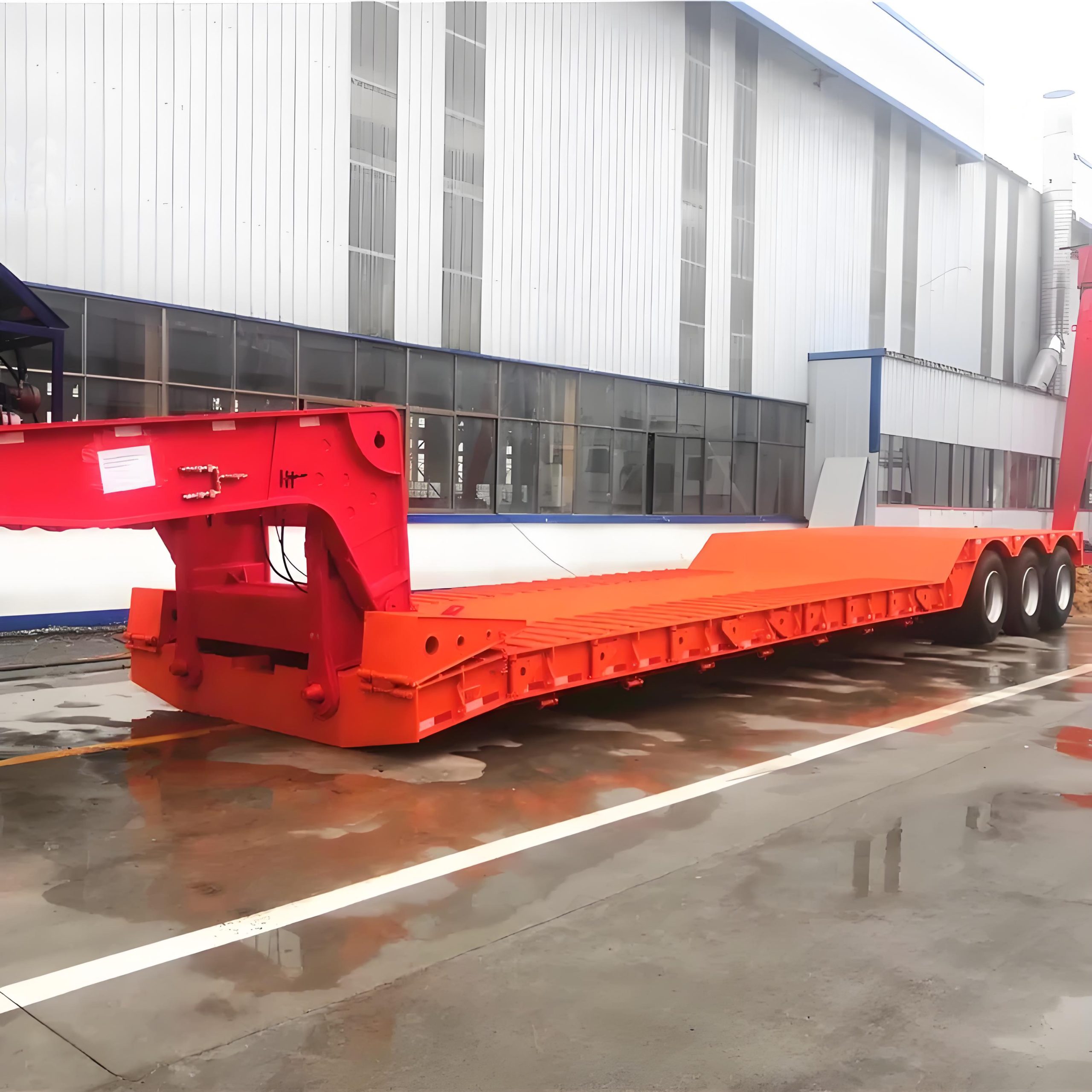
Heavy-duty transport plays a crucial role in construction, mining, energy, and industrial logistics. Among all transportation equipment, the RGN lowboy trailer (short for “Removable Gooseneck Lowboy Semi trailer“) is one of the most efficient tools for transporting oversized machinery. It combines a removable front neck with an ultra-low chassis, allowing extremely tall and heavy equipment to be loaded from the front without lifting the equipment.
This guide details the structure, function, applications, and advantages of RGN lowboy trailers, and explains how they compare to traditional lowboy trailers.

What is an RGN Lowboy Trailer?
An RGN lowboy trailer is a heavy-duty semi trailer with a removable gooseneck device that allows the trailer’s deck to lower to the ground. Equipment can then be driven onto the deck from the front. This design eliminates the need for ramps or cranes, making it ideal for:
Excavators
Bulldozers
Wheel loaders
Pavers
Pipeline equipment
Drilling equipment
Its most significant feature is the removable gooseneck design, which makes the loading process of tracked machinery safer and faster.
Key Components of an RGN Lowboy Trailer
2.1 Removable Gooseneck Connection
The gooseneck is removed via a mechanical or hydraulic system. Hydraulic systems are preferred due to their smoother operation and safer reconnection.
2.2 Low Deck Design
The platform is very low–typically 24 to 30 inches–allowing larger equipment to remain within legal height limits.
2.3 Multiple Axle Options
RGN lowboy trailers can be equipped with 2 to 10 or more axles depending on load requirements.
2.4 Suspension Systems
Mechanical suspension for durability
Air suspension for a smoother ride
Hydraulic suspension for extreme loads
Payload Capacity and Size Options
Typical configurations include:
| Axles | Capacity (Tons) | Common Use |
| 2 Axle lowboy semi trailer | 25–35 | Compact equipment |
| 3 Axle lowboy semi trailer | 35–55 | Mid-size machinery |
| 4 Axle lowboy semi trailer | 60–80 | Large construction equipment |
| 5 Axle lowboy semi trailer | 100–150+ | Heavy haul industries |
The extendable deck is suitable for long-distance drilling or wind power equipment.

Advantages of RGN Lowboy Trailer
Front-Loading Design Ensures Absolute Safety
A significant advantage of RGN lowboy trailers’ key feature is their detachable gooseneck structure, which allows the entire front of the lowboy trailer to be lowered to the ground. This design creates a natural loading ramp, meaning tracked equipment such as bulldozers, excavators, and crawler cranes can be driven directly onto the trailer without the need for additional ramps.
Best for:excavators, bulldozers, wheel loaders, tracked machines.
Not ideal for:purely rear-ramp operations — a standard lowboy is cheaper.
Extremely Low Deck Height for Oversized Equipment
The deck height of RGN lowboy semi trailer is among the lowest in the heavy-haul transportation industry. This ultra-low platform design allows for the transportation of tall and bulky machinery while still complying with height regulations.
This is particularly important when transporting oversized industrial machinery, mining equipment, and heavy construction equipment that exceeds standard trailer height limitations. The low deck design allows companies to bypass complex permitting processes and route restrictions, resulting in faster, safer, and more cost-effective transportation.
Heavy-Duty Construction for Extremely Heavy Loads
RGN lowboy trailers are designed for extreme durability, often featuring reinforced beams, high-strength steel, and multi-axle configurations. These features enable them to carry extremely heavy loads while maintaining stability on rough terrain and over long distances.
Due to their superior strength, RGN lowboy trailer are often the preferred choice in industries requiring strict adherence to regulations, such as rail transportation, heavy engineering, and oversized cargo logistics. Their robust construction ensures reliable performance under demanding operating conditions.
High Flexibility and Diverse Applications
The versatility of RGN lowboy trailer makes them suitable for numerous industries. Thanks to their low loading angle, high load capacity, and modular design, they are commonly used in:
Construction – for moving excavators, graders, loaders, and concrete equipment.
Pipeline Engineering – including transporting pipe-laying equipment, welding units, and trenching machines. The energy industry – including wind turbine components, generators, and transformers.
Mining – transporting crushers, drilling equipment, and heavy excavating machinery.
Agriculture – transporting harvesters, tractors, and various types of specialized agricultural machinery.
They can load and unload equipment of all sizes, whether standard or oversized, making RGN lowboy trailers an indispensable tool in modern heavy transport.
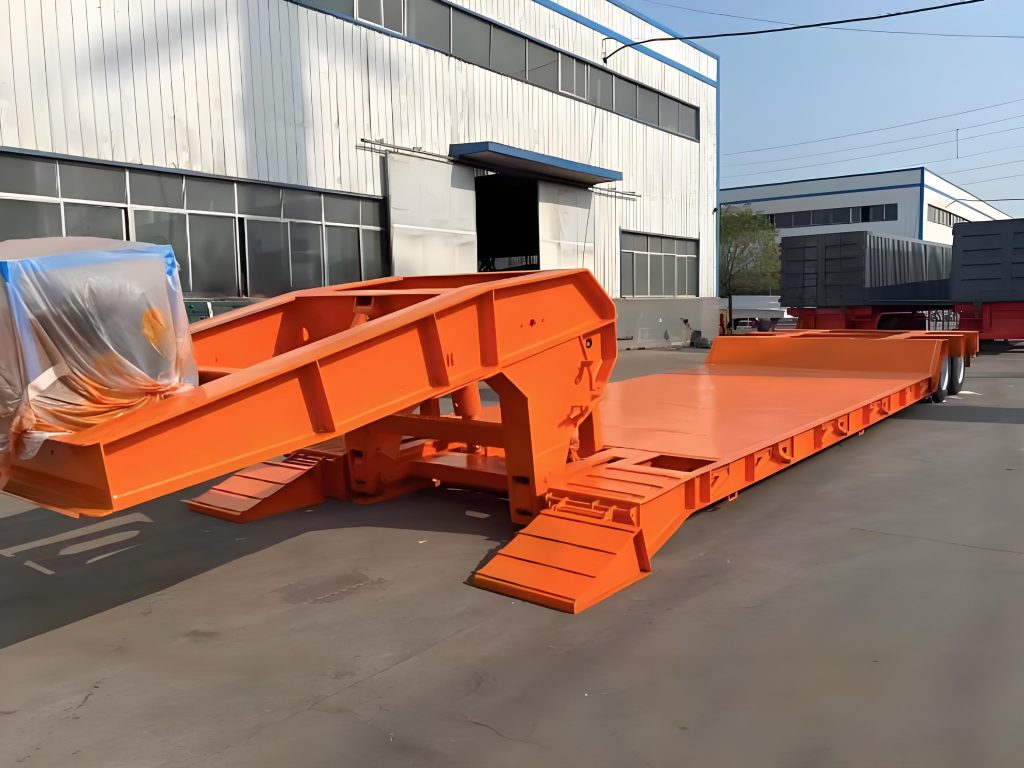
RGN vs. Standard Lowboy Semi Trailers
| Feature | RGN Lowboy | Standard Lowboy |
| Loading Method | Front load | Rear ramp |
| Safety | Excellent | Moderate |
| Time Efficiency | Faster | Slower |
| Price | Higher | Lower |
| Ideal For | Heavy + tracked equipment | General heavy cargo |
How to Choose the Right RGN Lowboy Trailer
Choosing the right RGN lowboy trailer requires considering several key factors to ensure safety, efficiency, and long-term economic viability. Here is a detailed guide to help you make the best choice:
Use this 6-step process — it is how we size an RGN lowboy for a customer.
Step 1 — Heaviest machine.
Match load rating to your largest equipment, with a margin.
Step 2 — Axle configuration.
More axles = higher payload + better weight spread. See table below.
Step 3 — Deck length & width.
Longer/wider = more space for large equipment; shorter = easier to maneuver.
Step 4 — Neck design.
Hydraulic → quick, easy loading; mechanical → simpler, more robust, lower maintenance.
Hydraulic neck best for:frequent loading, precision and quick turnaround.
Mechanical neck best for:simple, robust, lower maintenance on harsh sites.
→ Ask about neck options when you request a quote
Step 5 — Suspension.
Air → smoother ride for precision equipment; mechanical → robust, cost-effective for harsh sites.
Step 6 — Regulations & budget.
Confirm height/width/axle/weight rules locally; balance purchase price vs maintenance.
Not sure? Send your heaviest machine, deck size, and routes — we reply with a tailored configuration and FOB quote.
Maintenance Tips
Lubricate hydraulic components
Check the neck locking system
Check air lines and braking system
Tighten suspension bolts
Check the deck surface for wear and tear
Conclusion
RGN lowboy trailers excel in transporting large, oversized, and tracked machinery. Their safety, flexibility, and heavy-duty transport capabilities make them an indispensable tool for industries that require reliable long-distance transportation of heavy equipment.