
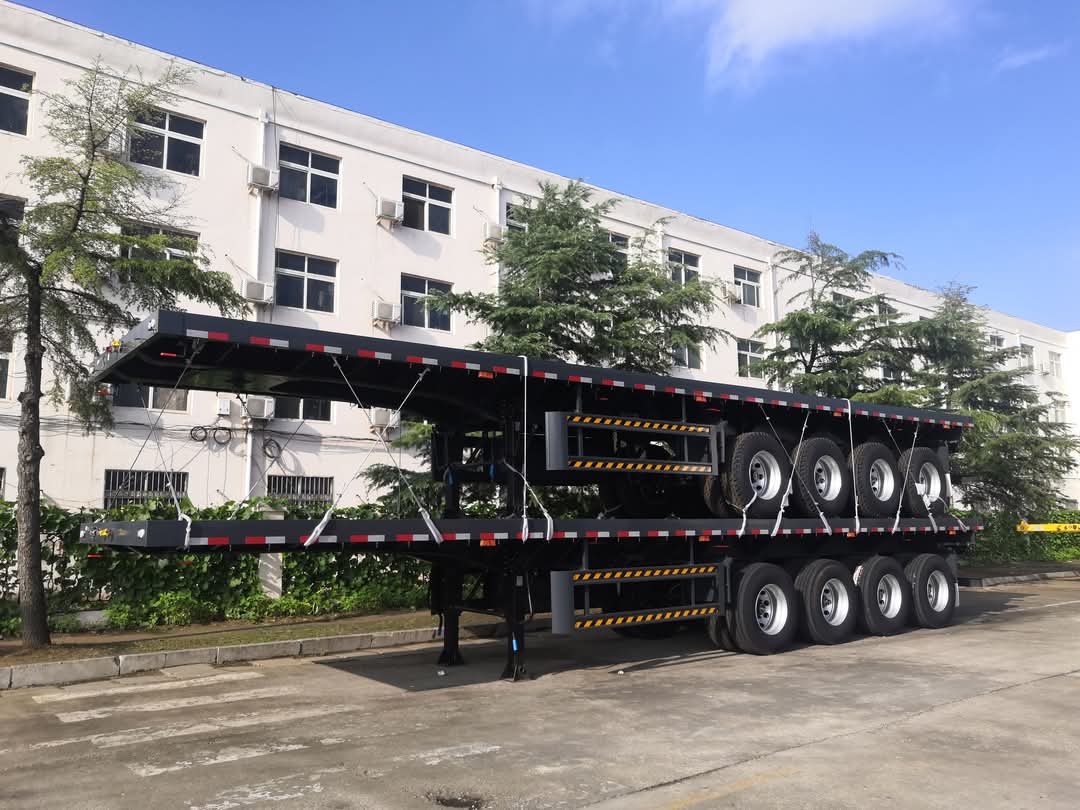
Factors Influencing the Price of semi flatbed trailer

Overview
When buyers search for a semi flatbed trailer, price is often the first concern—but it should never be the only one. In Africa, West Asia, Southeast Asia, and South America transportation project, the price of a flatbed semi trailer can vary significantly depending on multiple technical and commercial factors.
From trailer length and structural materials to axle configuration and market conditions, understanding what truly influences the cost of a flatbed semi trailer helps buyers avoid costly mistakes and choose the most cost-effective solution for long-term operations.
This article breaks down the key factors that determine the price of a heavy duty flatbed trailer, with practical insights for international buyers.

Semi flatbed trailer Length and Deck Size
Different Size Flatbed Lengths Price
One of the most direct factors affecting the price of a flatbed semi trailer is its length. Longer trailers require more steel, stronger main beams, and reinforced structures, which naturally increases manufacturing costs.
Common length options include:
50 foot flatbed semi trailer
20 foot is typically used for short-distance transport or lighter cargo and is usually the most affordable option. In contrast, a 50 foot is designed for oversized cargo and long-haul transport, making it significantly more expensive due to structural reinforcement and higher material usage.
Semi flatbed trailer Length vs. Load Efficiency
The length of a semi trailer flatbed has a crucial impact on transport efficiency, profitability potential, and operating costs. While longer trailers require a larger initial investment, they often deliver longer-term returns.
Why Length Matters
More Cargo Per Transport
Longer trailers can carry more cargo, reducing the number of trips required.
Improved Operational Efficiency
Increased cargo capacity per trip means higher revenue per trip.
More efficient use of fuel and labor.
Lower cost per ton of cargo transported means fewer trips.
Cost vs. Efficiency Trade-off
| Factor | Shorter Trailer | Longer Trailer |
| Initial Cost | Lower | Higher |
| Load Capacity | Limited | Higher |
| Trips Required | More | Fewer |
| Cost per Ton | Higher | Lower |
| Revenue Potential | Moderate | Higher |
Material Quality and Structural Design
Steel Grade and Frame Strength
The quality of steel used in a semi flatbed trailer plays a major role in pricing. High-strength carbon steel or alloy steel increases durability and load capacity but also raises manufacturing costs.
Heavy-duty flatbed semi trailers often use:
High-tensile steel main beams
Reinforced cross members
Thicker deck plates
These features are especially important in regions like West Africa and South America, where road conditions can be challenging. While cheaper trailers may reduce initial investment, poor material quality often leads to higher maintenance costs and shorter service life.

Welding and Manufacturing Standards
High-quality flatbed semi trailers rely heavily on precise welding processes and stringent manufacturing standards. Experienced Chinese manufacturers typically invest more time, skilled labor, and advanced equipment in this process—resulting in more durable and reliable vehicles.
Why Welding Quality Matters
Structural Integrity:
Strong, uniform welds ensure that main beams and crossbeams do not crack under heavy loads.
Safety Under Stress:
Poor weld quality increases the risk of structural failure, especially during long-distance or overloaded transport.
Fatigue Resistance:
High-quality welds reduce the likelihood of fatigue damage to metals over time.
Advanced Manufacturing Practices:
Leading manufacturers often use
Automated or robotic welding systems to ensure consistency
Multi-layer welding techniques to create stronger joints
Ultrasonic or non-destructive testing (NDT) to detect internal defects
Rigorous quality control processes before delivery
Semi flatbed trailer Axle Configuration and Load Capacity
Axle Number and Cost Relationship
Flatbed trailer with more axles generally costs more due to additional components such as axles, suspension systems, tires, and braking systems.
| Trailer Type | Typical Length | Load Capacity | Price Level |
|---|---|---|---|
| 2 Axle Flatbed Trailer | 20–40 ft | 25–35 tons | Lower |
| 3 Axle Flatbed Trailer | 40–45 ft | 40–60 tons | Medium |
| 4 Axle Flatbed Trailer | 45–50 ft | 60+ tons | Higher |
For example, a 40 ft flatbed trailer with three axles is a common choice for construction materials, while a 45 ft or 50 ft with four axles is preferred for heavy machinery and oversized cargo.
Suspension and Braking Systems
Advanced suspension systems (such as air suspension) and reliable braking systems increase safety and driving comfort but also add to the trailer’s overall cost. In regions with long-distance transport and high temperatures, investing in better suspension often proves cost-effective over time.
Semi flatbed trailer Customization and Optional Configurations
Custom Design Requirements
Many buyers looking for customized flatbed container semi trailers to suit specific cargo types, operational needs, or local regulations. While this customization enhances functionality, it also increases manufacturing complexity and overall cost.
Common Customization Options
Container Lock (Twist Lock)
Secures the container during transport, improving security.
Side or Rear Ladder
Facilitates inspection and cargo loading/unloading operations.
Reinforced Loading Area
Provides reinforcement for areas subjected to heavy pressure or concentrated loads.
Additional Fastening Points
Provides better cargo securing for irregular or oversized cargo.
Standard vs. Customized: How to Choose
Standard Flatbed Semi Trailer
Lower cost and Faster delivery time
Suitable for general cargo and routine transport
Customized Flatbed Truck Trailer
Higher cost but customized to your specific needs
Improves efficiency for specialized transport
Helps meet specific regulatory or operational requirements
Regional Regulation Compliance
When purchasing a trailer, adhering to local road regulations is not optional—it directly impacts your ability to drive legally and efficiently.
Key Regulatory Factors:
Different countries have regulations regarding the following:
Axle load limits → Determine weight distribution
Trailer width → Affects wheel clearance and safety
Overall length → Affects handling and legal driving capabilities.
These regulations vary significantly, so a trailer that works in one region may not be suitable in another.
Market Conditions and Logistics Costs
Raw Material Price Fluctuations
Steel is the primary material used in flatbed semi trailers, so fluctuations in global steel prices directly impact trailer costs.
When steel prices rise, trailer prices also increase, even if specifications remain unchanged.
High-strength steels (such as Q345, Q550, and T700) are more sensitive to market fluctuations.
Purchasing during periods of stable or low steel prices can help reduce costs.
For bulk buyers or fleet operators, monitoring steel price trends can significantly influence procurement budgets.
Transportation and Import Costs
For buyers in Africa, West Asia, and South America, logistics costs are a significant component of total investment.
Impact of Trailer Length on Transportation
20 foot flatbed trailers
Typically fit into standard containers
Lower transportation costs and more convenient logistics
40 foot/45 foot/5 -foot flatbed trailers
Typically require bulk cargo transport or roll-on/roll-off (load/unload)
Higher freight costs due to size and handling requirements
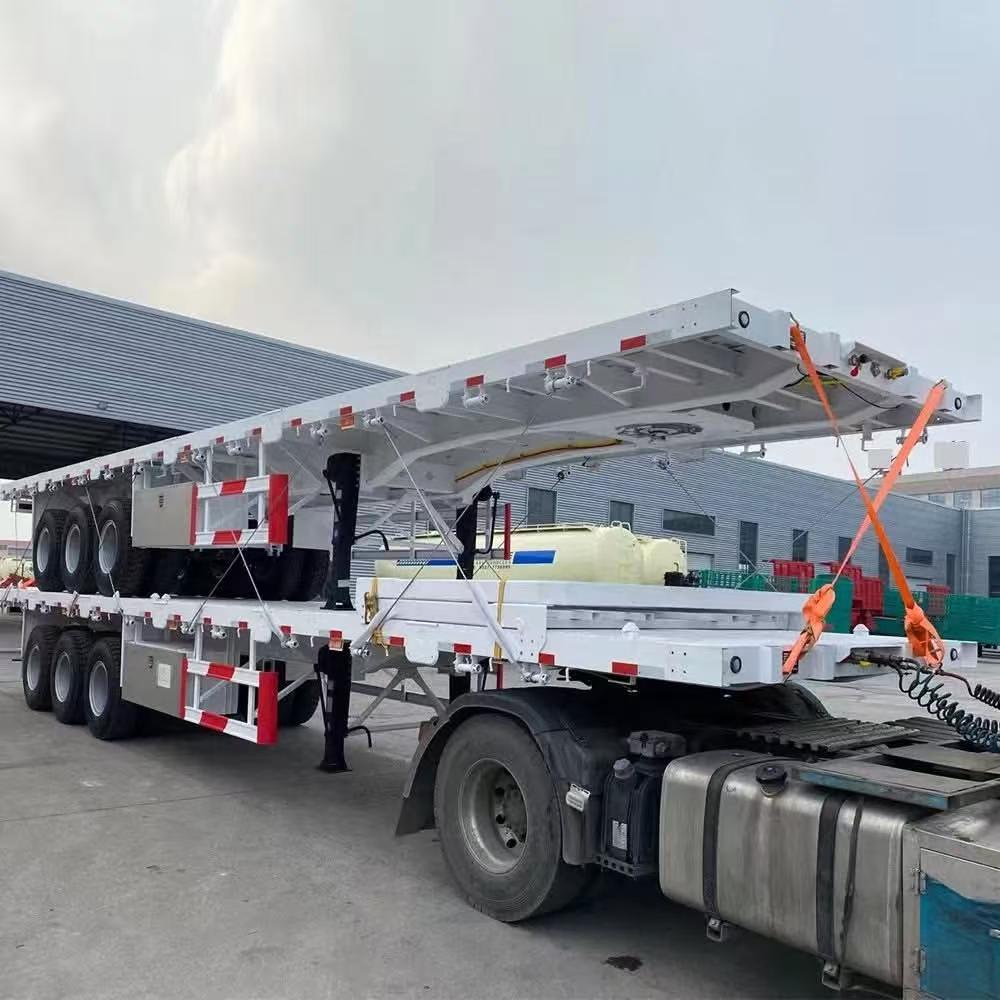
Choosing the Right semi flatbed trailer Based on Price
Focusing solely on the lowest price when buying a semi trailer can be a costly mistake. Wise buyers don’t just look at the initial price; they assess the vehicle’s total value over its entire lifespan.
Avoid Focusing Only on the Lowest Price
A cheap flatbed truck trailer may seem like a good choice at first glance, but it often has hidden drawbacks:
Frequent repairs due to the use of low-quality materials or poor manufacturing processes
Shorter lifespan, leading to earlier replacement
Increased downtime, impacting delivery times and profits
Low resale value, reducing long-term returns
In many cases, what initially seems like the “cheapest” option becomes the most expensive over time.
Balancing Price and Long-Term Value
A more appropriate approach is to assess the overall cost-effectiveness:
Choose trailers made of reliable steel (e.g., Q345 or higher)
Ensure weld quality and robust structural design
Consider fuel efficiency and load capacity
Check after-sales service and spare parts availability
FAQ
Q1: Why do best flat bed semi trailer prices vary so much?
Prices vary due to differences in length, axle configuration, steel quality, customization, and shipping costs.
Q2: Is a longer semi flatbed trailer always better?
Not necessarily. A longer trailer offers higher capacity but may face road or regulatory limitations. Choosing the right length depends on cargo and local regulations.
Q3: Which flatbed equipment trailer is most cost-effective?
For many markets, the 40 foot flatbed trailer is considered the most cost-effective due to its versatility and balanced price.
Get the Best Price
If you are looking for a reliable flatbed equipment trailer, we provide a full range of solutions including 20 foot, 40 foot, 45 foot, and 50 foot shipping container flatbed trailer.
Our trailers are engineered for the real working conditions of Africa, West Asia, Southeast Asia, and South America, offering durability, safety, and long-term value.
Contact us today to receive detailed specifications, competitive pricing, and professional guidance tailored to your transport needs.