

Semi Truck Flatbed Trailer Ultimate Guide Types, Applications, and Benefits

Introduction
The semi truck flatbed trailer plays a crucial role in transporting oversized, irregular or heavy goods. If you require flexibility, large capacity and multi-functionality, then the flatbed semi trailer is the best transportation vehicle.
This guide will cover all the information you need to know about semi truck flatbed trailer: what they are, main types, typical specifications, common applications, advantages, and how to choose the right model, etc.
What is semi truck flatbed trailer?
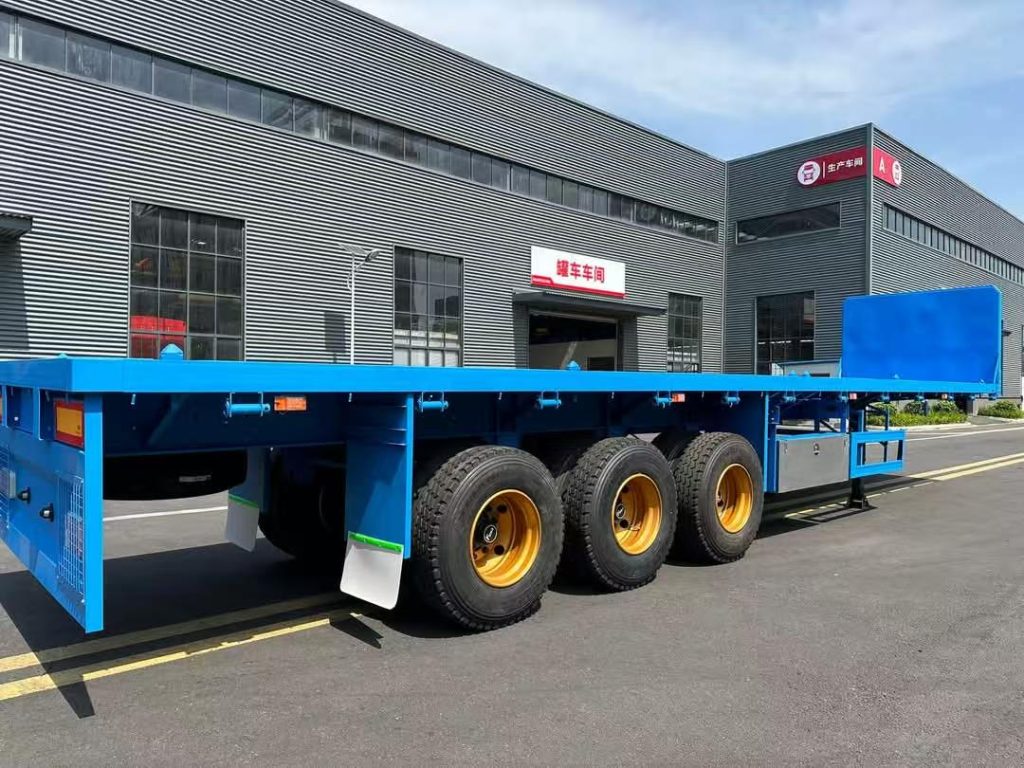
The semi truck flatbed trailer is characterized by having a flat and open cargo platform without fixed side walls or a roof. This open structure enables goods to be loaded and unloaded from both sides, the rear, or the top, making it highly suitable for transporting large or irregularly shaped goods.
Due to its versatile design, flatbed semi trailers are the most widely used transportation tools in the construction, logistics, manufacturing, and infrastructure industries.
Main Advantages
| Advantage | Description |
|---|---|
| Easy Loading & Unloading | Cargo can be accessed from multiple directions using forklifts or cranes |
| Suitable for Oversized Cargo | Ideal for large machinery, steel, containers, and construction materials |
| Flexible Cargo Handling | Can transport irregularly shaped or tall cargo that cannot fit inside enclosed trailers |
| Efficient Logistics Operation | Reduces loading time and improves transport efficiency |
Types of semi truck flatbed trailer
Choosing the appropriate semi truck flatbed trailer depends on the size (length, width, height) and loading capacity, as well as the loading and unloading method.
Here are some common types:
| Type | Description | Typical Use |
| Flatbed Semi Trailer | 20 foot,40 foot or 45 foot trailer 2 alxe,3 axle or 4 axle design | General freight: lumber, steel, palletized goods or container |
| Extendable Flatbed Semi Trailer | Deck length can be extended to accommodate long cargo | Steel beams, wind-turbine blades, oversized lengths. |
Understanding these different types will help you match the goods with the appropriate semi trailer flatbeds, thereby reducing risks and improving efficiency.
Typical Specifications:
The following are the typical specification parameters that need to consider when choosing a semi trailer flatbed truck.
| Parameter | Typical Range / Example Values | Notes |
| Length | 20ft, 40ft ,45ft, 53ft for flatbed trailer semi; extendable types | Longer lengths may require special permits. |
| Width | ~8.5 ft (≈2.6 m) | Wider loads may need permits. |
| Bed Height (from ground) | Standard ~5 ft (~1.5 m) for regular flatbed trailer | Lower bed helps with tall loads. |
| Load Capacity (cargo weight) | 30ton, 40ton, 50 ton or 60 ton for standard flatbed trailer | Heavy-haul versions with extra axles may carry much more. |
| Deck Material | Steel frame | Choice affects weight, durability and cost. |
| Axle Configuration | 2 axle, 3 axle or 4 axle optional | Important for heavy haul and regulatory compliance. |
Applications of semi truck flatbed trailer:
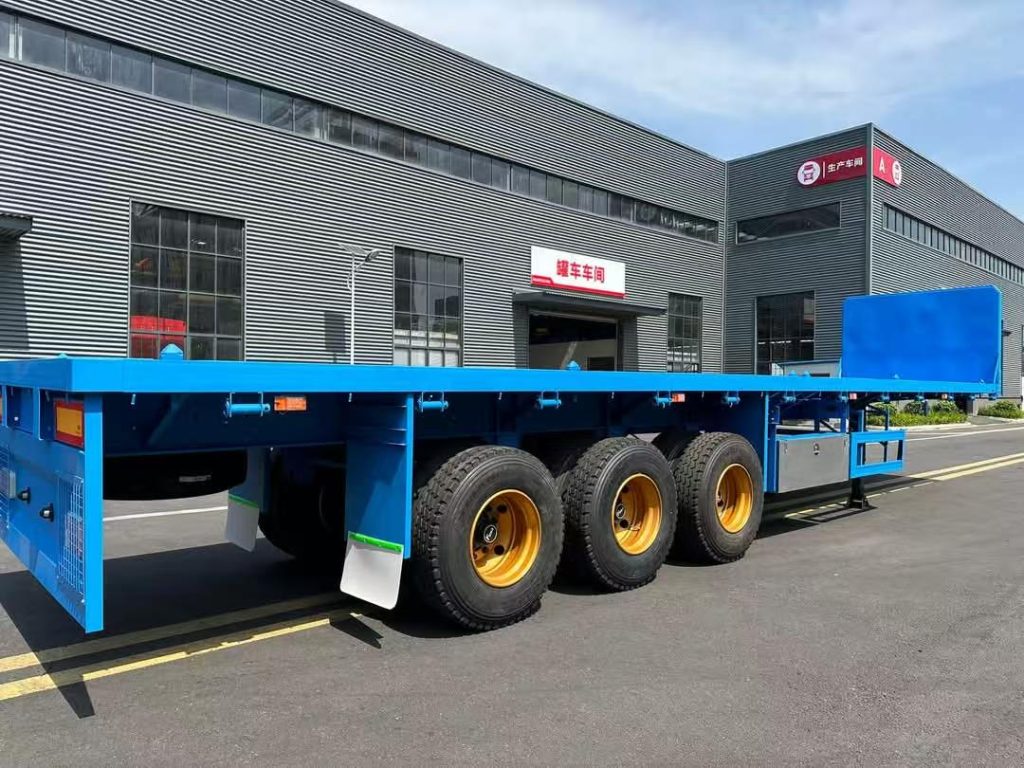
Flatbed semi trailers are suitable for a wide range of applications:
1. Construction materials: wood, steel beams, pipes, precast concrete, and large building components.
2. Heavy machinery and equipment: forklifts, excavators, agricultural tractors, and construction equipment.
3. Extra-large/long goods: wind turbine blades, long steel components, large storage tanks, and prefabricated structures.
4. Container/multi-modal transport goods: large containers or open-top containers.
5. Various large items: fiberglass storage tanks, large axle bushings, oversized modules, and industrial production equipment.
6. Irregularly shaped goods: items that cannot fit into box-type trucks due to size, shape, or side-loading requirements.
Due to this wide applicability, multiple types of flatbed semi-trailer truck compartments are available to meet various cargo transportation needs.
Benefits of Using flatbed semi truck trailer
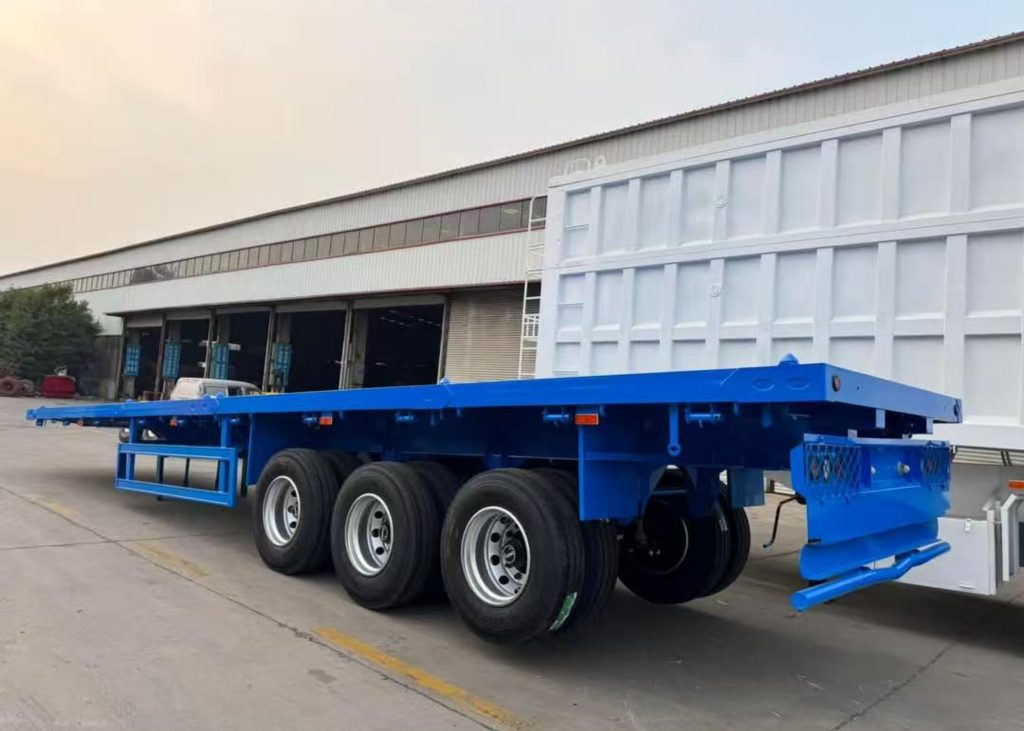
Flatbed semi trailer widely use in logistics, construction and industrial transportation due to their flexibility, high load-bearing capacity and ability to transport oversized goods. Their open-frame design makes them one of the most widely used types of trailers in the transportation industry.
| Benefit | Description | Operational Advantage |
|---|---|---|
| Flexible Loading & Unloading | Open structure allows cargo access from the sides, rear, or top | Reduces loading time and improves efficiency |
| Suitable for Oversized Cargo | Ideal for tall, wide, or irregularly shaped loads | Can transport machinery, steel, pipes, and large equipment |
| Reduced Height Restrictions | Drop deck or double-drop designs improve clearance | Easier transport under bridges and tunnels |
| High Payload Capacity | Additional axles increase carrying capability | Suitable for heavy-duty transport operations |
| Versatile Cargo Handling | One trailer can transport many different cargo types | Reduces fleet complexity and equipment investment |
| Cost-Effective Operation | Reusable for multiple industries and cargo categories | Provides strong long-term return on investment |
| Improved Turnaround Efficiency | Faster loading and unloading cycles | Increases equipment utilization and productivity |

How to Choose the Right semi truck flatbed trailer
Selecting the appropriate flatbed semi trailer requires comprehensive consideration of factors such as the type of goods, the working environment, legal requirements, and long-term business needs. The correct selection of the trailer can enhance transportation efficiency, reduce operating costs, and improve safety.
| Selection Factor | What to Consider | Why It Matters |
|---|---|---|
| Cargo Size & Weight | Check cargo length, width, height, and weight | Ensures the trailer deck size and axle configuration can safely handle the load |
| Loading Method | Side loading, top loading, crane loading, or drive-on loading | Determines whether you need a standard flatbed, drop deck, extendable, or RGN trailer |
| Regulatory Restrictions | Local axle load limits, height restrictions, and oversized permits | Helps avoid fines, route limitations, and legal issues |
| Deck Height & Clearance | Taller cargo may require lower deck height | Improves bridge and tunnel clearance compliance |
| Axle Capacity & Suspension | Number of axles and suspension type | Ensures stable load distribution and prevents axle overload |
| Trailer Material & Durability | Steel vs aluminum construction | Steel offers durability; aluminum reduces weight and fuel consumption |
| Maintenance & Lifecycle Cost | Service intervals, spare parts availability, repair cost | Impacts long-term operating profitability |
| Flexibility vs Specialization | Standard flatbeds vs specialized trailers (RGN, extendable) | Standard trailers offer flexibility; specialized trailers suit unique cargo |
| Resale Value & Market Availability | Standard trailer sizes and common configurations | Easier resale and better spare parts support |
| Manufacturer Reputation & Support | Quality, warranty, and after-sales service | Ensures stable operation and reduced downtime |
Maintenance and Safety Tips
Safe operation and maintenance of flatbed semi truck trailer are crucial. Here are some tips:
Inspect the frame regularly:
Check for cracks, rust, loose fasteners, and wear in mounting grooves, welds, and high-stress areas.
Maintain the axles, suspension, and brakes:
Carrying heavy or irregular loads on semi truck flatbed trailer for sale places additional stress on the suspension and brake systems—adhere to service intervals.
Regular Structural Inspections:
For heavily used or heavily loaded flatbed semi truck trailer, regular professional inspections of welds, frame integrity, and alignment should be performed.
Maintaining good operating practices can extend the life of your trailer, reduce downtime, and minimize the risk of cargo damage, accidents, or penalties.
Final Thoughts
The semi trailer truck flatbed is an indispensable and crucial tool in the transportation industry – it is powerful, adaptable and indispensable, especially suitable for handling non-standard goods. By understanding various types, specifications, features, applications and advantages, as well as key selection and maintenance considerations, you can make a wise decision that meets your business needs.