

Side Dump Trailer Frame Twist: Inspection Points After Repeated One-Side Dumping

A side dump trailer can complete repeated unloading cycles without showing an obvious bent rail. Then a maintenance check finds one tire sitting differently, one body support touching first, or a gate gap that no longer matches the opposite side. A useful side dump trailer frame twist inspection connects those small clues before permanent chassis distortion becomes the default explanation. More importantly, it separates structural geometry problems from uneven ground, suspension condition, tire differences, or local body-mount damage.
The inspection should prove a pattern, not confirm a suspicion
One low tire, one uneven body pad, or one difficult gate does not prove that the chassis has twisted. Instead, the case becomes stronger only when level-ground measurements, frame relationships, suspension height, tire contact, and body alignment point in the same direction.
Why Repeated One-Side Dumping Can Reveal Frame Distortion
During normal travel, cargo load passes through the body, frame, suspension, axles, tires, and tractor connection. During side discharge, however, the load path changes as the body rotates and material moves laterally. Consequently, the left and right sides of the chassis do not experience identical reactions throughout the unloading cycle.
Repeated unloading toward the same side does not automatically create permanent deformation. Still, that recurring load direction can expose weakened mounts, accumulated fatigue, earlier impact damage, uneven structural support, or geometry that has already begun to change.
The unloading surface changes the loading pattern
Consider an aggregate trailer working beside the same stockpile every day. The discharge lane may appear reasonably flat from the cab. Yet repeated traffic can form a shallow wheel rut beneath the unloading side. As a result, the trailer begins each tipping cycle with a small difference in support height.
Cargo behaviour adds another variable. Wet soil can remain attached to one part of the body. Likewise, crushed material may bridge briefly before releasing. Therefore, a trailer that appears balanced while stationary can experience a more complex torsional load during discharge.
Road construction creates a similar situation. The approach lane may be firm, while the final unloading position sits beside a softer shoulder. Quarry and earthmoving operations can also place the same wheel group repeatedly near a rut, berm, or compacted edge.
The purpose of inspection is not to blame one-side dumping for every irregularity. Instead, operating history helps identify where repeated asymmetric loading may have exposed an existing structural weakness.
Local deformation and overall frame twist are different findings
A damaged body bracket can alter one local clearance without changing the complete chassis geometry. Likewise, one crossmember may bend after an impact while both main frame rails remain reasonably aligned.
A broader frame-twist concern normally creates relationships across several areas. For example, corresponding rail heights may differ at multiple stations. Meanwhile, body supports, crossmembers, suspension mounts, or gate alignment may show changes in the same direction.
That distinction matters before repair begins. Replacing one bracket will not correct a distributed chassis problem. Conversely, major frame work is difficult to justify when evidence points only to a local mount or suspension fault.
Operational Signs Before a Detailed Inspection
Frame concerns often enter the workshop as ordinary operating changes rather than visible chassis damage. One tire develops an unusual wear pattern. A gate needs repeated adjustment. Alternatively, the lowered body seems to reach one support before the opposite side.
Those details should be recorded before adjustment begins. Otherwise, correcting a gate, tire, or suspension component can remove useful evidence without explaining why the condition developed.
Uneven tire contact is useful only in context
An empty trailer may show one tire sitting differently from its matching position across the axle group. That observation deserves attention. However, inflation pressure, tire wear, wheel condition, axle alignment, suspension height, and the parking surface can create a similar appearance.
Therefore, unusual tire contact should lead to comparison rather than an immediate structural conclusion. When the tire position agrees with repeated frame-height differences and matching suspension observations, the evidence becomes more meaningful.
Body seating can reveal a slow structural change
After the dump body returns to its travel position, corresponding supports deserve comparison. One pad may show heavier polishing, repeated impact marks, compressed material, or paint loss. Meanwhile, the matching support on the other side may show much lighter contact.
Still, uneven contact does not identify the root cause by itself. Worn pads, missing hardware, debris, local body deformation, or bracket movement can all change how the body settles.
Gate alignment adds another reference
A gate that once closed evenly may later show a different gap at one corner. Similarly, latch engagement may require more adjustment on one side. These changes can support a wider geometry concern, although hinge wear or body deformation can produce the same symptom.
Before detailed measurement, a short operating record should capture the conditions surrounding the problem:
- Normal side used for dumping
- Approximate operating period and duty cycle
- Typical quarry, roadwork, mine, yard, or construction surface
- Visible wheel ruts or uneven unloading positions
- Known impacts, recovery events, or previous structural repairs
- Changes in tire wear or tire-ground contact
- Left-to-right suspension-height differences
- Unequal body-support contact
- Gate or latch alignment changes
- Fresh scraping, knocking, cracking, or witness marks
Place the Empty Trailer on a Verified Level Surface
A useful chassis check needs a dependable reference plane. A workshop apron may look level while still containing drainage fall, pavement settlement, shallow depressions, or old wheel tracks. Consequently, apparent frame lean can come from the floor beneath the tires.
The trailer should normally be empty during baseline geometry checks. Remaining cargo can alter the suspension position. Likewise, compacted material left inside one side of the body can create an uneven static load.
Remove simple variables before measuring steel
Tire inflation and visible tire condition should be checked first. In addition, obvious suspension faults should be noted before rail heights are compared. A low suspension side can easily imitate chassis twist during a quick walk-around.
Where suitable equipment is available, a laser, precision level, survey method, or established workshop datum can verify the working surface. The goal is repeatability rather than unnecessary measurement complexity.
Record how the trailer is supported
Coupled and uncoupled measurements describe different support conditions. When connected to a tractor, fifth-wheel height influences the front of the trailer. Once uncoupled, landing gear condition and position become part of the geometry.
For that reason, every measurement set should state whether the trailer remains coupled. Suspension state, tire positions, landing gear condition, and measurement locations should also remain consistent.
Repeating the setup adds confidence. Where the work area and procedures allow, the empty trailer can be repositioned on the verified surface and checked again. If the apparent high side changes with position, the ground reference still needs attention.
Compare Frame Rails, Crossmembers and Body Mounts
Once the trailer stands on a reliable reference surface, the structural inspection can move from front to rear. Instead of concentrating on the first unusual mark, corresponding left and right components should be compared as pairs.
Read both main rails from more than one angle
Sight along accessible rail edges from the side and from suitable front or rear positions. A rail may appear straight from one viewpoint while showing rotation from another. Moreover, mud, paint buildup, brackets, and shadows can exaggerate small visual differences.
Local buckling, sharp kinks, flange changes, cracked connections, unusual reinforcement plates, or signs of earlier straightening deserve attention. However, several smaller measurements following the same pattern can be more important than one obvious cosmetic irregularity.
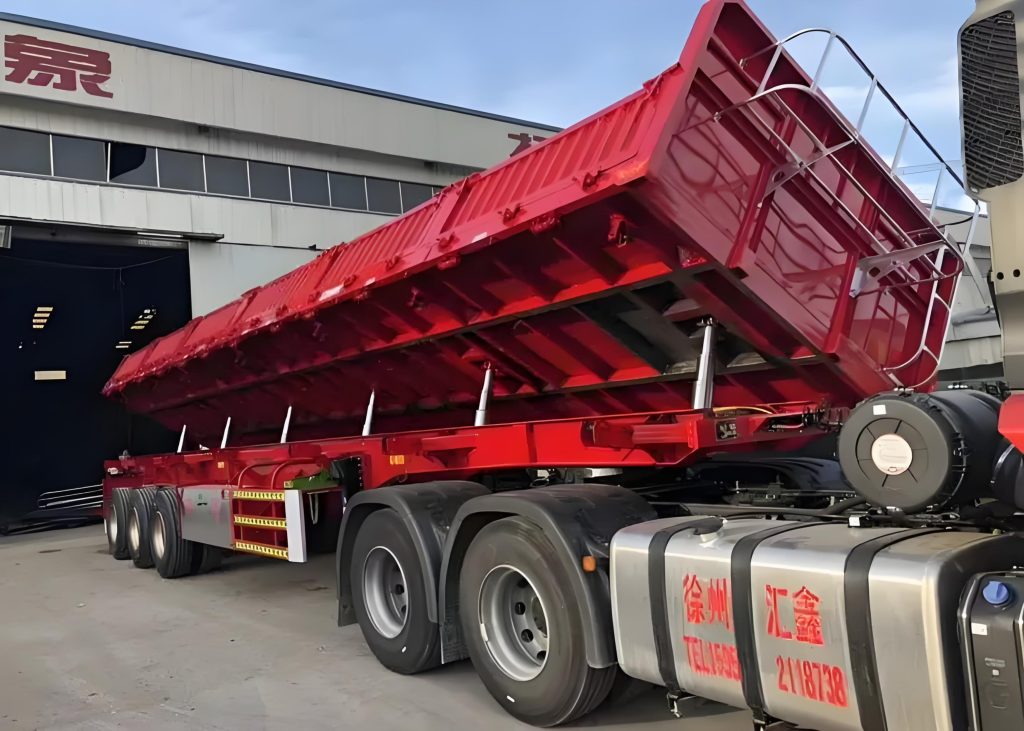
Crossmember connections often explain more than the centre section
Crossmember ends transfer load into the main rails. Therefore, weld toes, gussets, bolted brackets, and adjoining rail surfaces deserve close inspection. Fresh rust lines, polished areas, displaced paint, or hole elongation may show movement at a connection.
One damaged crossmember near a known impact point may remain a local problem. In contrast, several crossmembers showing similar rotation or connection movement can support a wider chassis concern.
Body mounts connect structural geometry with field behaviour
Corresponding body supports should be compared at the same longitudinal positions. One mount may show strong polishing while the opposite support retains paint. Likewise, one pad may appear compressed or struck repeatedly during body lowering.
These marks can explain why the body now settles unevenly. Nevertheless, missing hardware, worn pads, local mount damage, or trapped debris should be excluded before a broader frame conclusion is made.
A consistent front-to-rear inspection sequence reduces missed areas:
- Front frame and coupling region
- Landing gear support area
- Front body mounting points
- Intermediate crossmembers
- Central body supports
- Suspension transition area
- Suspension hangers and mounting brackets
- Axle-group frame region
- Rear crossmembers
- Hinge and rear body-support relationships
Avoid a universal pass-or-fail number
Frame designs, materials, weld details, body mounts, and previous repairs vary. Therefore, an unsupported generic tolerance should not determine whether structural straightening or replacement is required.
Check Tire Contact, Suspension Height and Gate Alignment
The chassis does not stand independently from the running gear. Consequently, apparent frame distortion should be compared with suspension and tire behaviour before a structural cause is assigned.
Suspension height can imitate a twisted frame
On an air-suspension configuration, ride-height control, air leakage, linkage problems, or another system fault can create persistent left-to-right differences. On mechanical suspension, spring condition, equalizers, bushings, hangers, or seized components can change how the empty trailer settles.
Suspension mounting brackets deserve particular attention because they transfer running-gear reactions into the frame. A damaged mount can affect chassis height, wheel alignment, tire loading, and local structural stress at the same time.
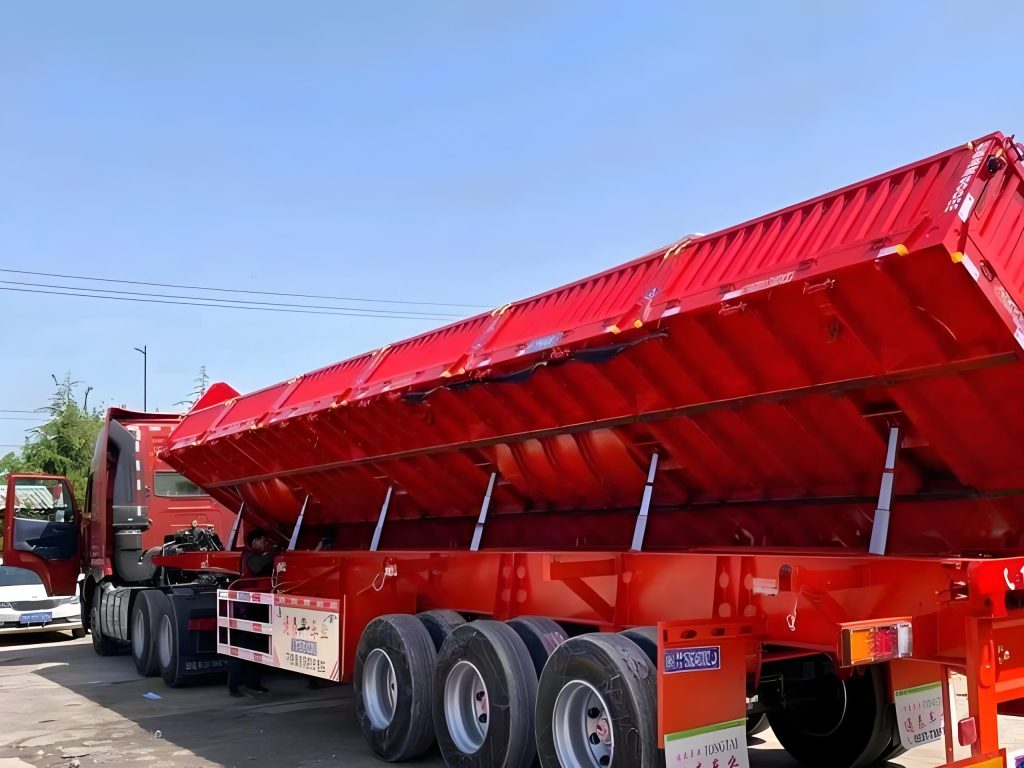
Tire wear provides history rather than a final answer
Repeated shoulder wear, unusual scrub, or recurring wear at one axle position can support further investigation. Similarly, alignment that repeatedly changes after appropriate servicing may justify deeper chassis measurement.
However, tire wear has many possible causes. Inflation, route conditions, axle alignment, wheel-end condition, suspension wear, and turning patterns all matter. For that reason, tire evidence should remain part of a wider diagnosis.
Gate alignment should be measured rather than described
Instead of recording that a gate simply looks uneven, measure the gap at repeatable upper and lower points. Hinge movement, latch engagement, contact marks, and closing position can then be compared during a future inspection.
Gate misalignment alone does not prove chassis deformation. However, when the gate, body supports, rail heights, and suspension relationship all change in the same direction, the combined evidence deserves greater weight.
The strongest evidence comes from agreement between systems
A frame-height difference becomes more meaningful when suspension height, body-support contact, tire behaviour, and gate alignment support the same direction. When those observations conflict, the inspection should continue before structural repair is considered.
Record Measurements Instead of Relying on Visual Judgment Alone
Visual inspection is useful, although perspective can create false impressions. Once frame twist becomes suspected, expectation can also influence what appears abnormal. Therefore, measurements provide an important check against subjective judgement.
A useful record does not need dozens of unrelated dimensions. Instead, it needs matching datum points, consistent trailer condition, clear units, photographs, and enough stations to reveal how geometry changes from front to rear.
Build left-right pairs instead of isolated readings
Each selected point on the left rail should correspond with the same longitudinal position on the right rail. Depending on accessible structure, the reference may sit near a crossmember intersection, body support, frame section, or suspension mounting area.
A photograph showing each datum improves repeatability. Later inspection then uses the same structural point instead of relying on memory or placing a tape at a slightly different location.
The shape of the measurement pattern matters
One height difference can result from local damage or measurement error. Several related readings create a stronger pattern. For example, a difference that increases gradually toward the rear suggests a different condition from one isolated low point near a suspension bracket.
Where reliable datum points are available, diagonal measurements can add another reference. Likewise, corresponding body clearances and gate gaps can be recorded. Each reading should answer a specific question instead of simply making the inspection sheet longer.
| Inspection Record | Information to Capture | What It Helps Determine |
|---|---|---|
| Setup condition | Empty condition, coupled status, suspension state, surface, and tire notes | Whether later readings are genuinely comparable |
| Frame geometry | Paired rail heights, crossmember relationships, and selected diagonals | Whether asymmetry appears local or distributed |
| Running gear | Suspension heights, tire contact, wear pattern, and mounting condition | Whether suspension condition can explain apparent frame lean |
| Body relationship | Mount contact, support gaps, hinge observations, and gate gaps | Whether body alignment supports the frame findings |
| Operating history | Dumping side, site conditions, repairs, impacts, and earlier measurements | Whether the condition is stable, recent, or progressing |
Photographs should show both location and detail
A close photograph of a crack or polished mount can be useful, but it should not stand alone. An additional wider image should show where that feature sits on the trailer. This makes later review much easier because the structural relationship remains visible.
Lighting and camera position should also remain reasonably consistent during repeat checks. Otherwise, a shadow or different perspective can make an unchanged component appear different several weeks later.
Earlier workshop records can create a valuable baseline
Previous axle-alignment sheets, structural photographs, repair records, or periodic measurements can show whether present geometry has actually changed. Without that history, the inspection has to distinguish service-induced deformation from original fabrication variation.
Trend information is particularly valuable for equipment that repeatedly operates on demanding quarry, construction, mining, or earthmoving sites. A stable difference and a growing difference do not carry the same maintenance implication.
For broader background on frame rails, crossmembers, suspension, periodic inspection, and long-term dump-trailer maintenance, the existing BOCA dump semi trailer guide provides additional context. The actual trailer measurements should still remain the basis of any structural decision.
When Distortion Needs Engineering Assessment
Not every left-right difference requires frame straightening. At the same time, some findings should move the trailer beyond ordinary maintenance adjustment and into qualified structural assessment.
Visible cracking changes the decision quickly
Cracks around main rails, suspension mounts, body supports, hinge brackets, crossmember connections, or other load-carrying areas require competent evaluation. Continued cyclic operation can extend structural cracking even when the empty trailer still appears usable.
Sharp buckling, a distinct rail kink, displaced structural brackets, or significant fastener-hole movement also deserve escalation. These findings indicate a structural change rather than routine cosmetic wear.
Repeatable geometry matters more than one observation
A measurement pattern that remains after repositioning on verified level ground deserves more attention than one reading from an unknown yard surface. When body supports, suspension observations, and gate position follow the same direction, surface error becomes less likely.
Progressive change matters even more. If a recorded height difference grows between scheduled inspections, the condition may still be developing. Therefore, that trend should not be treated as ordinary fabrication variation without technical review.
Past damage lowers the threshold for deeper inspection
A collision, severe site impact, recovery event, rollover, abnormal loading event, or earlier frame straightening changes the inspection context. Previous structural work should therefore remain visible in maintenance records whenever possible.
Repeated alignment correction can provide another clue. If axle or suspension geometry cannot remain stable after appropriate maintenance, the supporting structure may require more detailed measurement.
Useful evidence for structural review
- Trailer identification and approximate operating period
- Normal side used for unloading
- Description and photographs of unloading-ground conditions
- Overview photographs of both main frame rails
- Close photographs of cracks, mounts, and witness marks
- Tire contact and abnormal wear photographs
- Left-right suspension-height records
- Frame-height and selected diagonal measurements
- Gate-gap and body-support records
- Known repair, alignment, or impact history
Structural repair should follow the actual chassis condition
Structural repair should not rely on generic straightening values copied from unrelated trailers. Heating, pulling, cutting, welding, reinforcing, or replacing structural members can change the chassis load path. Therefore, repair scope should follow the actual frame design and qualified technical assessment.
In some cases, a local repair may be appropriate. In others, deformation across several structural zones can make a wider repair or replacement discussion more practical. The decision should consider measured condition, repair history, future duty, and the remaining structure rather than appearance alone.
The future unloading environment also matters. If the trailer will return to repeated work on rutted, sloped, soft, or poorly supported sites, correcting the chassis without addressing operating conditions may leave the same loading pattern in place.
Applicable roadworthiness requirements, workplace procedures, inspection rules, axle-load regulations, and repair standards in the destination country remain controlling. Where structural integrity is uncertain, competent engineering or technical personnel should determine whether operation can continue.
Inspection around a raised dump body also requires appropriate isolation and mechanical support. Hydraulic pressure alone should not protect personnel working beneath or beside a raised structure.
Side Dump Trailer Context
Keep structural inspection separate from trailer specification
Frame condition answers a maintenance question. Trailer configuration answers a project question. When existing equipment is being replaced or a different operating duty is planned, cargo type, route, unloading surface, axle requirements, suspension arrangement, and destination rules should be reviewed separately.
The broader BOCA dump semi trailer range provides the relevant product context without changing the structural diagnosis of an existing unit.
View Dump Semi Trailer RangeFAQ
Turn Small Symptoms Into a Repeatable Inspection Record
Repeated one-side dumping creates a consistent operating pattern, but the inspection should not jump from one low tire or uneven gate gap directly to a frame diagnosis. Instead, surface condition, chassis geometry, suspension height, body mounts, and tire behaviour should be checked as one connected system.
That process creates a clearer decision between continued monitoring, local maintenance, deeper structural measurement, and engineering assessment.
- Record the normal dumping side, unloading surface, tire condition, body seating, and visible structural symptoms before adjustment.
- Measure corresponding frame, suspension, body-support, and gate points on a verified level surface, then repeat the setup.
- Escalate cracking, progressive geometry changes, damaged structural mounts, or repeatable chassis distortion to qualified technical assessment.
Structural Condition Review
Prepare the Operating Evidence Before Discussing the Next Trailer Decision
Useful information includes the trailer’s operating period, normal unloading side, typical ground conditions, and known repair or impact history. Clear photographs of both frame rails, suspension mounting areas, tire contact, body supports, and gate position provide further context.
Measurement records add the detail needed for a meaningful review. Corresponding frame heights, suspension heights, body-support gaps, gate gaps, and selected diagonal readings help distinguish a local component problem from wider chassis deformation.
For equipment that has spent a long period unloading toward the same side, a documented side dump trailer frame twist inspection provides a stronger basis for deciding whether further structural assessment, repair planning, or replacement evaluation is appropriate.