
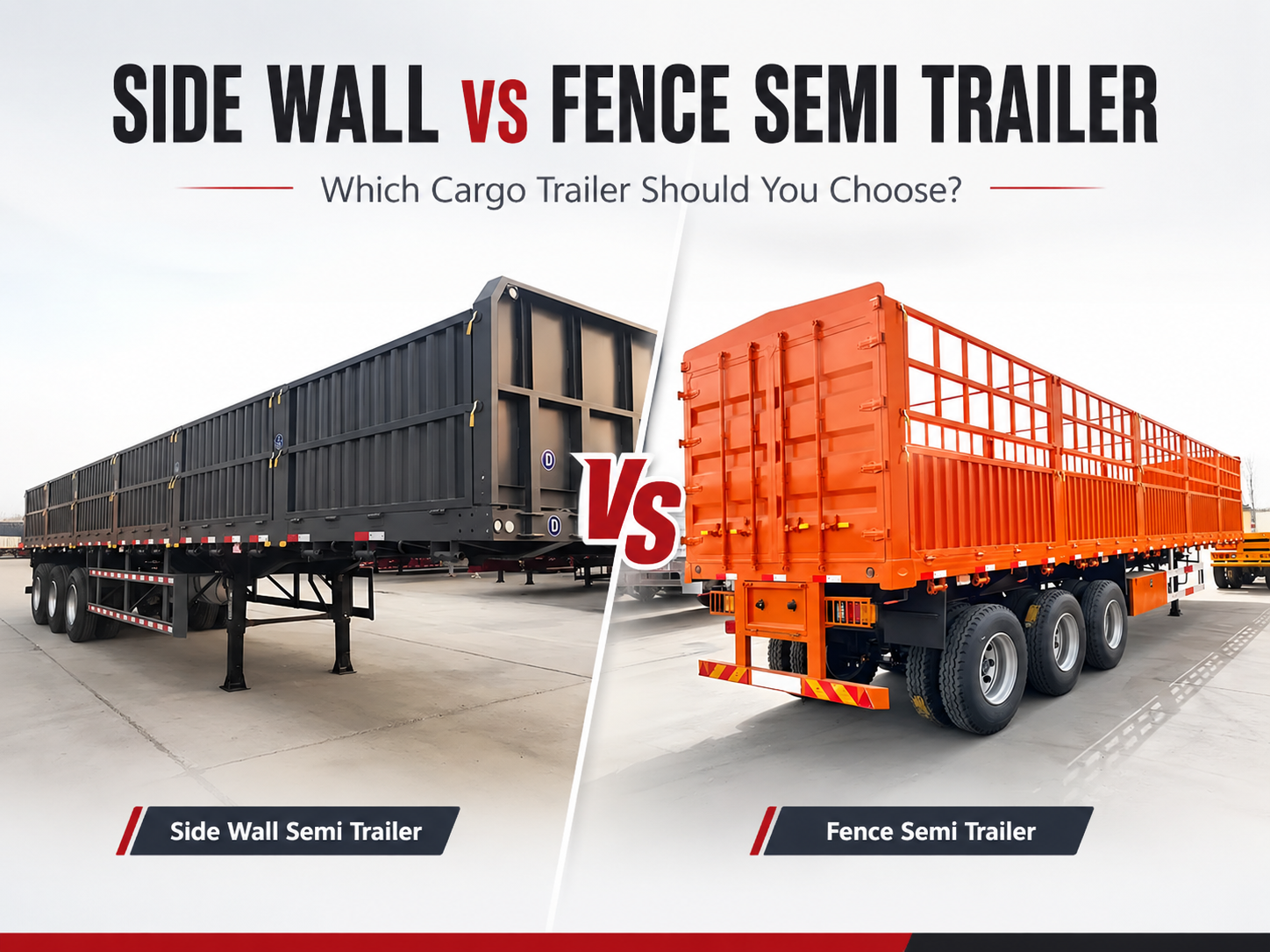
Side Wall vs Fence Semi Trailer: Which Cargo Trailer Should You Choose?
This guide compares side wall and fence semi trailers for cargo protection, ventilation, loading method, road condition, and export quotation needs.

A practical comparison of side wall and fence semi trailers for general freight, agricultural products, bagged cargo, building materials, palletized goods, timber, crates, and light bulky cargo.
For export freight planning, side wall semi trailer vs fence semi trailer is not only a body-structure comparison. The decision affects cargo containment, ventilation, loading access, removable-panel design, side height, cargo securing, road safety, and long-term maintenance. Both trailer types may transport bagged goods, farm products, cartons, pallets, building materials, timber, and light bulky cargo, but they do not perform the same job in the same way.
A side wall trailer generally provides stronger side containment for stacked, bagged, and palletized freight. A fence trailer provides more airflow, easier visual inspection, and a more open body for suitable agricultural or bulky cargo. Before choosing, the transport plan should confirm cargo shape, packaging, density, loading equipment, axle quantity, road condition, and destination-market requirements. BOCA Vehicle’s cargo semi trailer category provides a useful starting point for comparing side wall, fence, and related cargo-body structures.
Quick Selection Guide
| Choose a side wall trailer when | Bagged cargo, cartons, pallets, packaged building materials, or mixed freight needs stronger side support. |
| Choose a fence trailer when | Agricultural products, crates, hay, timber, or light bulky cargo benefits from airflow and easier inspection. |
| Confirm before quotation | Cargo type, packaging, payload, axle quantity, body height, loading method, road condition, destination country, and securing requirements. |
What Is a Side Wall Semi Trailer?
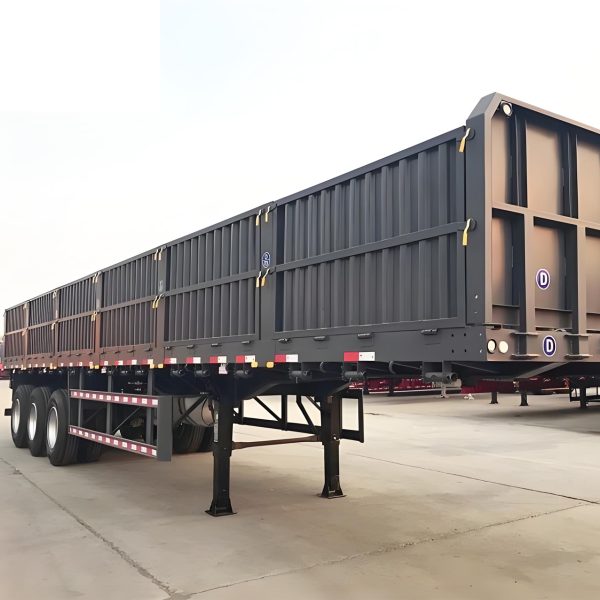
A side wall semi trailer uses solid side panels around an open loading platform. These panels provide a physical boundary that helps contain cargo during loading, braking, cornering, rough-road movement, and long-distance transport. The open top still allows crane loading, while removable or drop-side panels can provide access for forklifts and manual handling.
This structure is commonly selected for bagged cement, fertilizer, grain sacks, animal feed, cartons, bottled products, palletized freight, machinery accessories, packaged tiles, timber, steel pieces, and mixed building materials. When cargo type changes from one trip to another, removable side panels can make the trailer more flexible.
A side wall does not replace proper cargo securing. Straps, ropes, chains, lashing rings, rope hooks, tarpaulins, and correct loading balance may still be required. However, the solid panels provide more side support than an open fence structure, especially for stacked or smaller packaged goods.
What Is a Fence Semi Trailer?
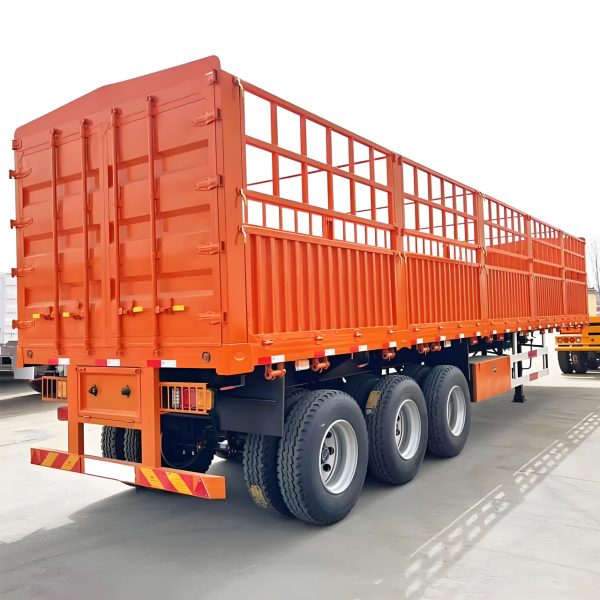
A fence semi trailer uses rail-style or fence-style side structures instead of fully solid side panels. The more open body improves airflow and allows faster visual inspection of cargo. This can be useful for agricultural products, farm crates, baskets, hay, timber, lightweight packaged goods, and other bulky freight.
The open structure also makes cargo packaging and securing more important. Ropes, straps, cargo nets, tarpaulins, lashing rings, rope hooks, and side restraints should match the cargo shape and road condition. Small loose goods should not be carried against wide fence gaps without suitable packaging or additional containment.
For general cargo-securement principles, the official FMCSA cargo securement rules provide a useful safety reference for preventing cargo movement during transport. Final operating requirements must still follow the road laws and transport standards of the destination country.
In agricultural and regional freight operations, fence bodies are often selected when cargo benefits from airflow during loading, waiting, or short-distance delivery. The open sides also make it easier to check crates, bundles, or large packed goods during scheduled stops.
Side Wall Semi Trailer vs Fence Semi Trailer: Main Differences
Cargo protection is the clearest difference. A side wall body provides stronger physical containment, while a fence body provides better ventilation and visibility. Loading access, packaging quality, cargo dimensions, and securing methods determine which advantage matters more.
| Comparison Point | Side Wall Semi Trailer | Fence Semi Trailer |
| Cargo containment | Stronger support for stacked, bagged, boxed, and palletized freight | Depends more heavily on packaging, straps, nets, and proper securing |
| Ventilation | Lower airflow because of solid panels | Better airflow for suitable agricultural and bulky cargo |
| Visual inspection | Cargo is less visible through the solid body | Cargo can be checked more easily through the open rails |
| Side loading access | Improved by drop-side or removable-panel sections | Improved by removable fence sections or openable gates |
| Best-fit cargo | Bagged goods, cartons, pallets, packaged building materials | Farm crates, hay, timber, baskets, and light bulky cargo |
| Important options | Side height, removable panels, steel floor, rope hooks, lashing rings | Fence height, rail spacing, removable sections, rope hooks, lashing rings |
Which Cargo Fits Each Trailer?
Bagged Cargo and General Freight
A side wall trailer is generally the better starting point for fertilizer bags, cement bags, grain sacks, animal feed, cartons, bottled products, and palletized general freight. Solid panels provide better support along the trailer edge and can reduce the risk of smaller packages leaning into open gaps.
Agricultural Products
The correct choice depends on packaging. Bagged grain or boxed produce may fit a side wall body. Crates, baskets, hay, and light farm cargo may fit a fence body better when airflow and easy visual checks are useful. Cargo quality, weather exposure, and waiting time should also be considered.
Building Materials
Bagged cement, packaged tiles, cartons, and smaller construction materials usually benefit from stronger side containment. Long timber, steel profiles, pipes, and oversized materials may require more open loading access. In these cases, a flatbed semi trailer should also be compared before the final body style is selected.
Light Bulky Cargo
A fence structure can suit large but relatively light cargo because it provides visibility and airflow without using fully solid high panels. However, the cargo should be large enough that it cannot pass through the rail gaps, and sufficient straps, nets, or side restraints should be included.
Best-Fit Guide for Project Planning
Side Wall Trailer Is Better For
| Fence Trailer Is Better For
|
For a broader overview of side wall, fence, drop side and curtain side options, read our cargo semi trailer buying guide.
Key Specifications to Confirm Before Ordering
The specification should start with the real transport task, not only the trailer name. Cargo type, packaging method, loading capacity, axle quantity, suspension, tire model, brake system, steel floor, body height, side opening, rope hooks, lashing rings, and frame reinforcement should be reviewed together.
Side Wall Height and Panel Design
Lower side panels can improve forklift access and reduce unnecessary body weight. Higher side walls provide more containment for tall stacks or bagged cargo, but they add tare weight and may make side loading slower. Removable or drop-side sections can help balance protection and loading efficiency.
Fence Height and Rail Spacing
Fence height and rail spacing should match the smallest cargo unit. Wide spacing may suit large crates, timber, hay, or bulky goods, but it may not suit smaller bags or loose packages. Removable sections can improve flexibility when cargo type changes.
Axles, Suspension, Tires, and Brakes
Axle quantity should match actual payload, local axle-load rules, and route condition. Mechanical suspension is often practical for rough roads and regions where simple maintenance is important. Air suspension may suit smoother highway routes or freight requiring better ride quality. Tire sizes and brake components should also match local replacement-part availability.
Avoid Mismatched Configuration Options
Standard side wall and fence trailers normally do not depend on hydraulic unloading systems. Twist locks are mainly used for container transport, while tank material belongs to tanker selection. These options should only be included when the actual cargo operation requires them. Keeping the specification relevant helps control purchase cost, tare weight, and future maintenance.
How Road Conditions Change the Specification
On rural roads, mining support routes, construction access roads, and uneven regional roads, frame strength is more important than appearance. Reinforced main beams, stable suspension, durable tires, reliable braking, and sufficient cargo-securing points can reduce operating risk.
On highway, port, warehouse, and industrial-park routes, loading speed and fleet efficiency may become more important. Removable panels, side-opening design, forklift access, and a lighter body can improve productivity when cargo density is moderate.
Destination-market rules may affect axle quantity, overall dimensions, braking, lighting, reflective markings, side protection, and legal loading practices. Exact requirements should be confirmed according to local road laws, import conditions, and registration procedures before production approval.
BOCA Vehicle Cargo Trailer Support
BOCA Vehicle supports export semi trailer projects with structure selection, configuration discussion, production-detail confirmation, and pre-shipment inspection support. Side wall height, fence height, removable sections, steel floor, rope hooks, lashing rings, axle quantity, suspension, tires, brake system, and frame reinforcement can be reviewed around the actual cargo task.
When several cargo types are involved, the cargo semi trailer category can help compare side wall, fence, and related body designs before one model is selected.
Before shipment, configuration drawings, product photos, axle and tire details, side-opening layout, lashing-point positions, paint finish, and inspection videos can help confirm that the completed trailer matches the agreed specification.
Information Needed Before Quotation
A clearer inquiry helps shorten configuration discussions and reduces repeated revisions. Prepare the following information before requesting a quotation:
- Cargo name, packaging method, unit dimensions, and estimated density.
- Normal payload and the heaviest expected cargo load.
- Preferred axle quantity or local axle-load requirement.
- Side wall or fence height and any removable-panel requirement.
- Loading method, including forklift, crane, manual loading, or side access.
- Highway, rural road, mining road, port road, or construction-site conditions.
- Destination country, destination port, and registration requirements.
- Order quantity and requirements for photos, video, or third-party inspection.
Related Trailer Options
| Related Trailer Category Flatbed Semi TrailerCompare flatbeds when cargo needs open loading access, steel transport, machinery movement, pipes, timber, or container handling. View Flatbed Options | Container Transport Container ChassisReview dedicated chassis options when the task mainly involves 20ft, 40ft, or 45ft containers between ports and warehouses. View Chassis Options | Fleet Matching Used Tractor TrucksCompare tractor units when a matching prime mover is needed for cargo, flatbed, chassis, lowbed, or tanker transport. View Tractor Options |
FAQ
Is a side wall trailer better for bagged cargo?
Generally, yes. A side wall trailer provides stronger side containment for cement bags, fertilizer bags, grain sacks, feed bags, cartons, and other packed freight. Correct stacking, lashing points, straps, and tarpaulin protection may still be needed.
When is a fence semi trailer more suitable?
A fence semi trailer is more suitable when cargo benefits from airflow or quick visual inspection. Typical examples include agricultural products, crates, baskets, hay, timber, and light bulky cargo. Proper packaging and securing remain necessary.
Can side wall height or fence height be customized?
Yes. Side wall height, fence height, removable panels, rail spacing, rope hooks, lashing rings, steel floor, and frame reinforcement can be discussed according to cargo size, loading method, road conditions, and destination requirements.
Which trailer works better on rough roads?
Rough roads require a strong chassis, stable suspension, durable tires, reliable brakes, and sufficient securing points. A side wall trailer may provide better containment, while a fence trailer can still work when packaging and lashing are suitable.
Are twist locks needed for side wall or fence trailers?
Twist locks are not normally core parts of standard side wall or fence trailers. They are mainly used for ISO container transport. When containers are the main cargo, a flatbed trailer or container chassis should be compared separately.
Request a Practical BOCA Vehicle Configuration
The choice between a side wall semi trailer and a fence semi trailer should follow cargo containment, ventilation, packaging, loading access, road conditions, and destination-market requirements. A side wall trailer generally suits bagged cargo, cartons, pallets, and packaged building materials. A fence trailer generally suits agricultural products, crates, hay, timber, and suitable light bulky cargo.
Send cargo type, packaging method, loading capacity, axle preference, road condition, destination country, order quantity, and inspection requirements. BOCA Vehicle can then recommend a more suitable body structure and prepare a clearer export quotation.
Contact Boca Vehicle for Quotation