
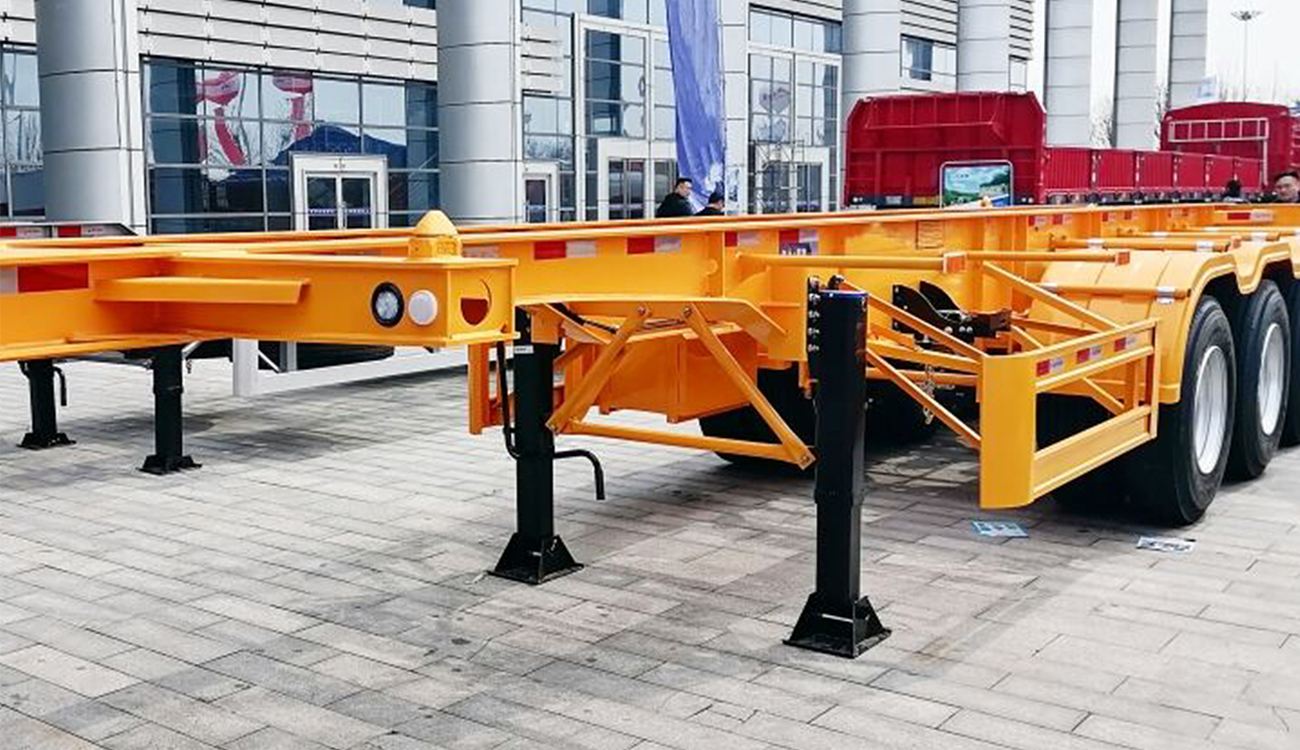
Skeleton Trailer Load Capacity and Technical Details

Overview
Skeleton trailer are the cornerstone of global container shipping. Their simple, robust, and durable structure, coupled with the ability to carry standardized containers, makes them indispensable in ports, logistics centers, and long-haul freight operations.
When selecting a skeleton semi trailer, two factors are crucial: load capacity and technical specifications. These parameters determine the trailer’s strength, stability, service life, and performance under high-load operating conditions. This article will explain how load capacity is determined, the engineering principles behind it, and the key technical details buyers should evaluate.
Skeleton Trailer Video
What Factors Affect the Load Capacity of Skeleton Trailer?
The loading capacity of a container skeleton trailer refers to its maximum safe load capacity, including the total weight of the container and cargo.
Several engineering factors can affect its loading capacity:
Steel Grade and Frame Strength
Skeleton trailer main beams are the foundation of load-bearing capacity.
Commonly Used Materials:
Q345B / Q355 – A balance of cost and strength
T700 / High-strength Steel – Superior, lighter, and stronger
Domex/Sab steel – Ultra-high strength European material
Higher steel grades = greater resistance to bending, torsion, and fatigue.
Frame Structure Design
The design of the cross-section directly affects the load distribution.
Typical Structures:
I-beam welded structure
Rectangular tubular chassis
Gooseneck reinforced frame for 40-foot containers
Good design can reduce stress concentration and prevent long-term cracking.
Number of Axles and Load Distribution
The number of axles determines the vehicle’s permissible driving weight.
Examples
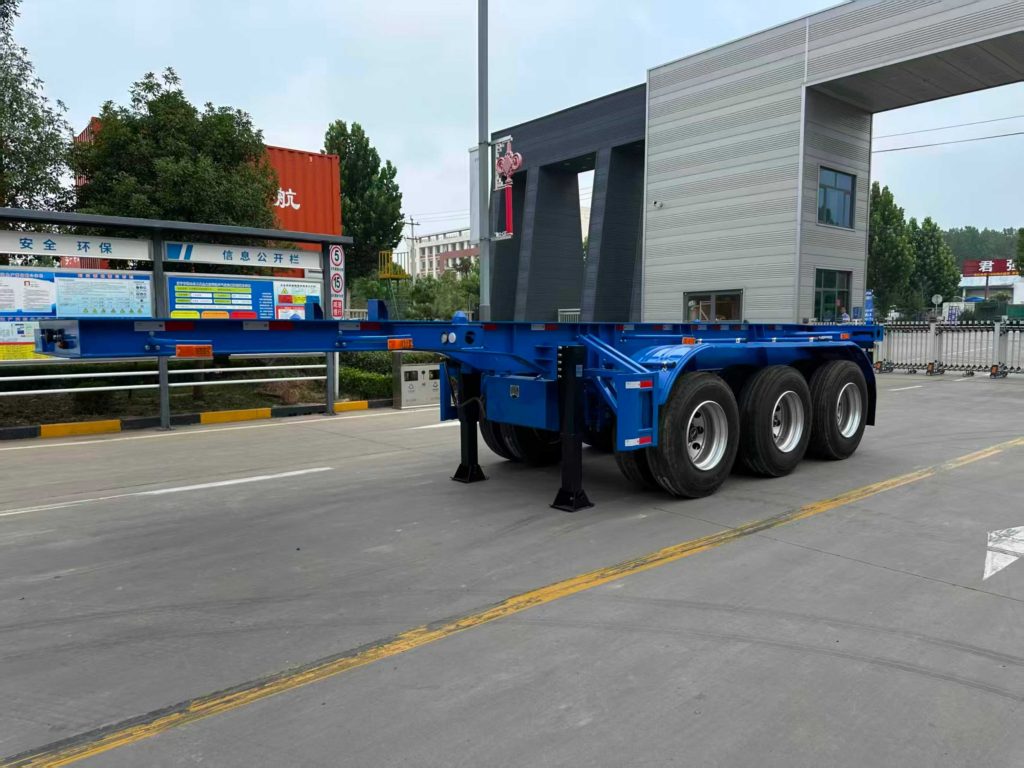
2 axles skeleton trailer → 20-35 tons
3 axles skeleton trailer → 40-60 tons
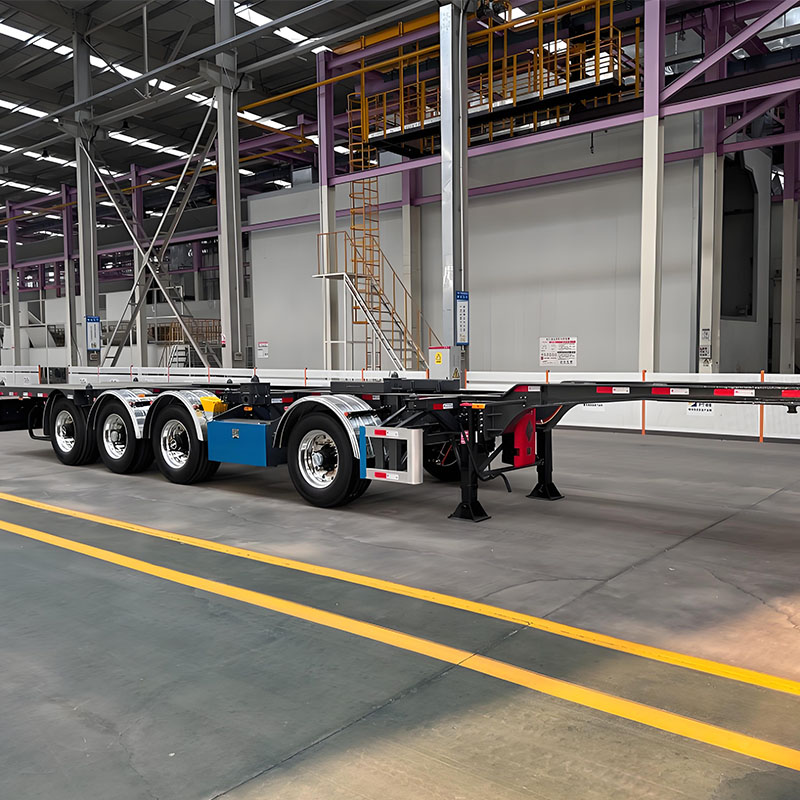
4 axles skeleton trailer → 70 tons (Heavy-duty markets in Africa and the Middle East)
Axle spacing also affects a vehicle’s eligibility for national road use permits.
Suspension Type
Mechanical Suspension → Strong, High Load Capacity
Air Suspension System → Smoother Ride, Protects Cargo and Tires
Heavy-duty container skeleton trailer typically use mechanical suspension to ensure durability.
Tire Specifications
Tires affect the contact area with the ground, braking performance, and axle load capacity.
Common Options:
11R22.5
12R22.5
315/80R22.5
Higher-grade tires can carry greater weight.
Advantages of Higher Load Capacity
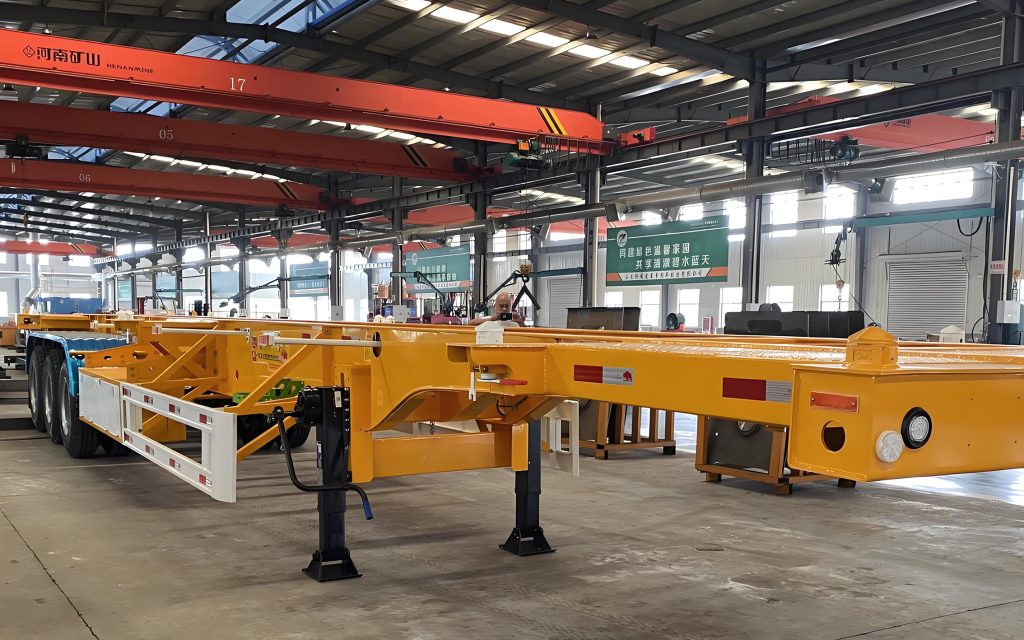
A robust skeleton container trailer offers several operational advantages:
Longer Service Life
Skeleton Trailers designed for increased load capacity experience significantly less stress during normal use.
Reduced Maintenance Costs
Reinforced beams and high-quality axles reduce welding repairs, frame deformation, and tire wear.
Greater Stability During High-Speed Transport
A more robust suspension system prevents container swaying and improves braking safety.
Higher Productivity
Transporting heavier goods can reduce the cost per shipment.
Different Types of Skeleton Trailer
The following is a common classification method used in the global market:
| Skeleton Trailer Type | Typical Load Capacity | Application |
| 20ft skeleton trailer | 20–35 tons | Short-distance port operations |
| 40ft skeleton trailer | 40–60 tons | Long-distance container transport |
| 40ft Gooseneck Skeleton semi trailer | 45–70 tons | Heavy-duty African & Middle East market |
| 45ft Skeleton Trailer | 45–55 tons | High-volume container logistics |
| Extendable Skeleton Semi Trailer | 45–70 tons | Oversize or multi-purpose transport |
| 2×20ft Combined Skeleton | 40–60 tons | Dual container transport |
Technical Specifications
The following is the standard technical specifications table for a 40ft skeleton trailer. You can then replace it with customized product parameters as needed.
Overall Dimensions
| Item | Specification |
| Overall Length | 12,500–13,000 mm |
| Overall Width | 2,480 mm |
| Overall Height | 1,450 mm |
| Tare Weight | 5,500–6,200 kg |
| Maximum Payload | 45–60 tons |
| Kingpin | 2″ or 3.5″ JOST |
| Landing Gear | 28T two-speed |
Frame and Material Specifications
| Component | Material / Description |
| Main Beam | Q355 / T700 high-tensile steel |
| Beam Structure | I-beam or rectangular-tube design |
| Gooseneck | Reinforced structure (for 40ft) |
| Cross Members | 80mm × 40mm rectangular tube |
| Surface Treatment | Sand-blasting + epoxy primer + polyurethane paint |
Axle, Suspension & Tire System
| Item | Specification |
| Axles | 2–4 pcs (FUWA / BPW / OEM) |
| Suspension | Mechanical/Air suspension |
| Leaf Springs | 90mm × 13mm × 10 pieces |
| Tire Size | 11R22.5 / 12R22.5 / 315/80R22.5 |
| Rim | 8.5–22.5 steel or aluminum |
Brake and Electrical System
| Item | Specification |
| Brake System | Dual-line pneumatic |
| ABS | Standard or optional |
| Brake Chamber | 30/30 double chamber |
| Electrical Voltage | 24V |
| Lighting | LED system with standard 7-pin connector |
Container Locking System
| Item | Details |
| Twist Locks | 4 or 12 locks |
| Certification | ISO 3874 compliant |
| Type | Manual or automatic |
| Container Options | 20ft / 40ft / 2×20ft |

Enhancing Cargo Loading Capacity
Robotic Welding
Ensures consistent fusion at weld joints and eliminates weak points caused by inconsistent manual handling.
Reinforced Gooseneck Structure
Prevents bending and deformation when handling containers weighing up to 40 feet.
Box-Type Rear Structure
Provides rigidity to reduce bending during high-speed cornering.
High-Strength Axle Bolts and Hub System
Reduces axle failure in rough terrain conditions.
Torsional Frame Design
Prevents vehicle rollover on uneven surfaces—crucial for regions like Africa and Southeast Asia.
Compliance with International Standards
Container skeleton trailers must comply with stringent regulations:
International Organization for Standardization (ISO) Standards
ISO 668 — Specifications for the dimensions of freight containers,ISO 3874 — Torque lock requirements,ISO 1726 — Specifications for truck-trailer connection interfaces
DOT / FMVSS (USA)
FMVSS 121 Braking Rules
DOT (US Department of Transportation) Lighting and Reflector Standards
European Engineering Council (ECE)
ECE R13 Braking Safety Standards
EN 13044 Marking and Labelling
Compliance ensures global transport compatibility.
How to Choose the Right Load Capacity
Your Transportation Needs
Ports → 20 foot and two axle skeleton trailer
Long-haul transport → 40 foot three axle skeleton trailer
Heavy industrial and mining areas → Reinforced 70-ton chassis
Road Regulations
Each country has axle load limits:
Africa: Higher loads are acceptable
EU: Strict axle weight controls
Southeast Asia: Complex and variable conditions
Tire and Suspension System Selection
Air suspension → Suitable for long-haul travel, higher safety
Mechanical structure → More robust for transporting heavy loads
Steel Grade and Welding Quality
High-strength steel and robotic welding processes are consistently used to ensure product durability.
Conclusion
Skeleton trailers occupy a central position in global container logistics. Their load capacity depends on numerous factors such as steel grade, chassis design, axle configuration, and suspension type. Understanding technical details such as beam structure, braking system, and torque lock configuration helps fleet owners select the appropriate vehicle type based on location and cargo type. A well-designed skeleton semi trailer improves safety, reduces maintenance costs, and maximizes transport efficiency, making it a worthwhile long-term investment for any logistics company or container fleet.
FAQ
1. What is the load capacity of a skeleton trailer?
2 axle: 20–30 tons
3 axle: 40–60 tons
4 axle: 60–70+ tons
2. What is a skeleton trailer used for?
20ft and 40ft shipping containers
3. What is the difference between a skeleton trailer and a flatbed trailer?
Skeleton trailer: designed only for containers, lightweight frame
Flatbed trailer: used for containers and general cargo
4. Can a skeleton trailer carry 40ft and 20ft containers?
Yes. Most skeleton trailers are designed to carry
5. What is the standard axle configuration for skeleton trailers?
Common configurations:
2 axle → light-duty container transport
3 axle → most popular for port logistics
4 axle → heavy-duty and long-distance transport