
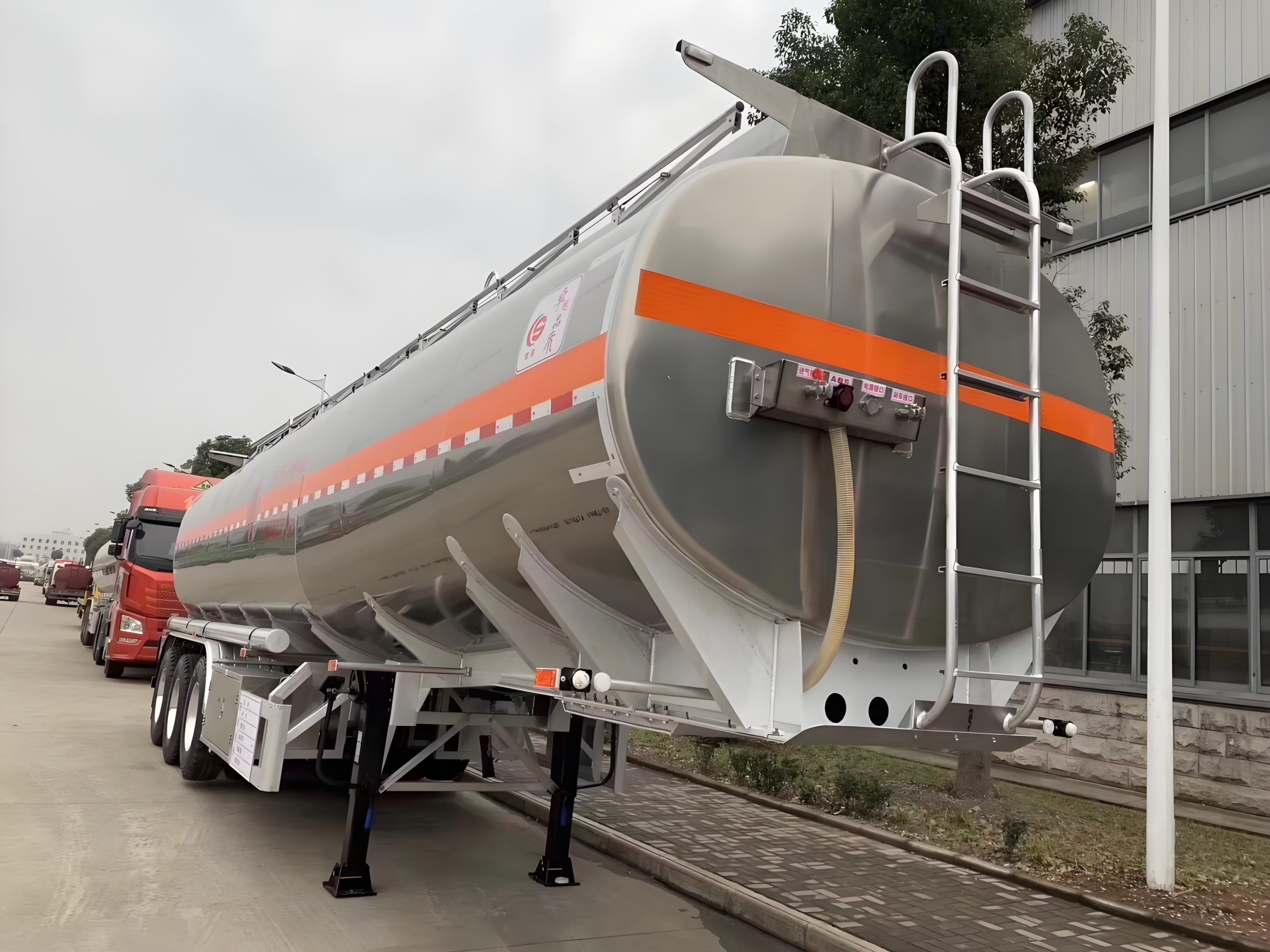
Stainless steel tanker trailer vs Aluminum:Which Is Better?

Overview
Choosing the right tank material is one of the most crucial decisions when purchasing tank semi trailer. In 2025, stainless steel tanker trailer and aluminum tanker trailer will remain the two primary materials used for transporting fuels, chemicals, and food-grade liquids. Each material has its unique advantages, performance characteristics, and cost implications. Choosing the wrong material can lead to unnecessary maintenance, operational limitations, and even cargo contamination.
This guide compares stainless steel tanker trailer with aluminum tank semi trailers to help fleet owners, fuel dealers, and chemical transport companies determine which type of vehicle best suits their needs.
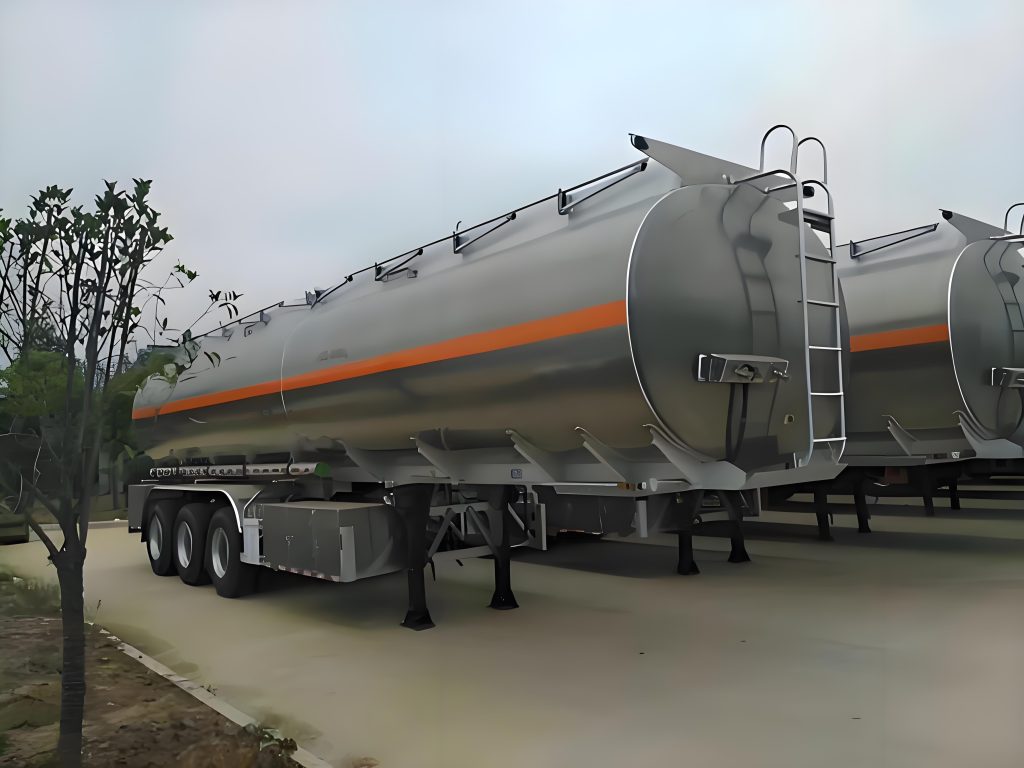
Understanding These Two Materials
1.1 Stainless steel tanker trailer
Stainless steel tanks—typically made from materials of grades such as 304L or 316L—offer excellent corrosion resistance and chemical stability, making them widely used for transporting corrosive liquids, food-grade products, and specialty fuels.
Common Applications:
Chemicals (acids, alkalis, ethanol, solvents)
Edible liquids (milk, palm oil, juice)
Pharmaceutical liquids
High-purity water
1.2 Aluminum tanker trailer
Aluminum tank trailer utilize lightweight alloys such as 5083 and 5454, designed for weight reduction and increased durability. Due to their excellent economy and strong oxidation resistance, these tank trucks dominate the fuel transportation sector.
Common Applications:
Gasoline
Diesel
Kerosene
Aviation Kerosene Type A-1
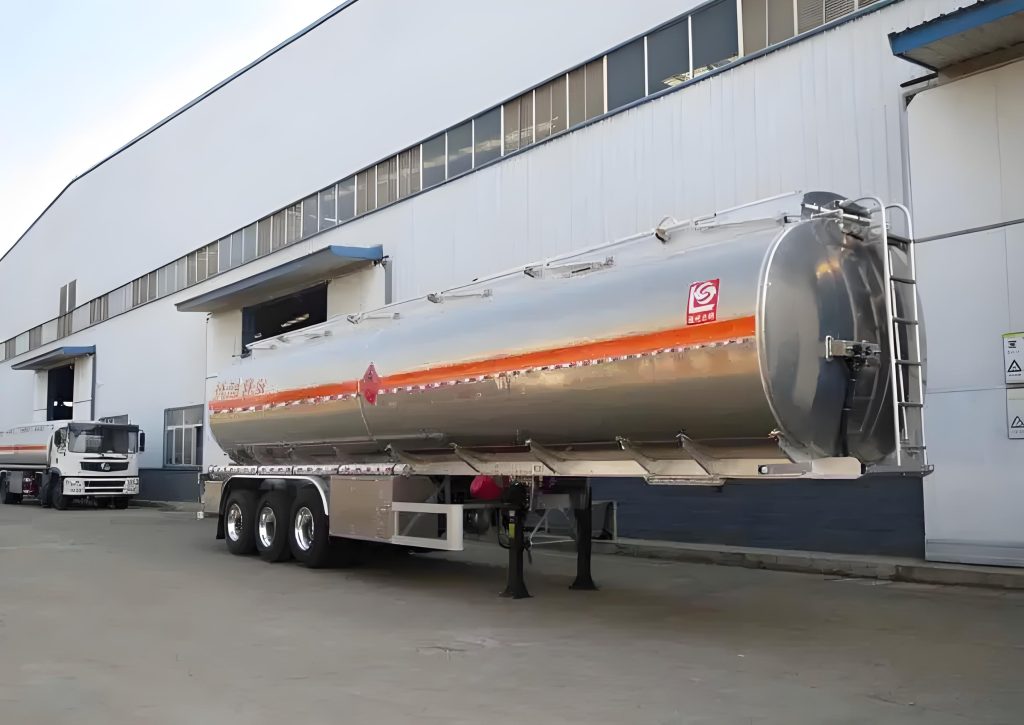
Weight and Fuel Efficiency Comparison
2000 to 3000 kg lighter than stainless steel
Reduced fuel consumption for tractor heads
Higher legal payload per trip
Improved profitability for long-haul fuel delivery
Stainless steel tanker trailer
Heavier due to their denser metal structure
Reduced load limits on regulated roads
Increased fuel consumption over long distances
Decision: Aluminum is superior in terms of fuel consumption and cost-effectiveness.
Corrosion Resistance and Chemical Compatibility
Stainless steel tanker semi trailer
Extremely resistant to acids, alkalis, and chemical solvents
Suitable for corrosive and temperature-sensitive liquids
Capable of transporting a wide variety of liquids
Easy to clean, ideal for the food industry
Tanker aluminum trailer
Not suitable for corrosive chemicals
Limited compatibility (primarily hydrocarbons)
May react with some industrial liquids
Resolution: Stainless steel is the better choice for transporting chemicals and a wide range of liquids.
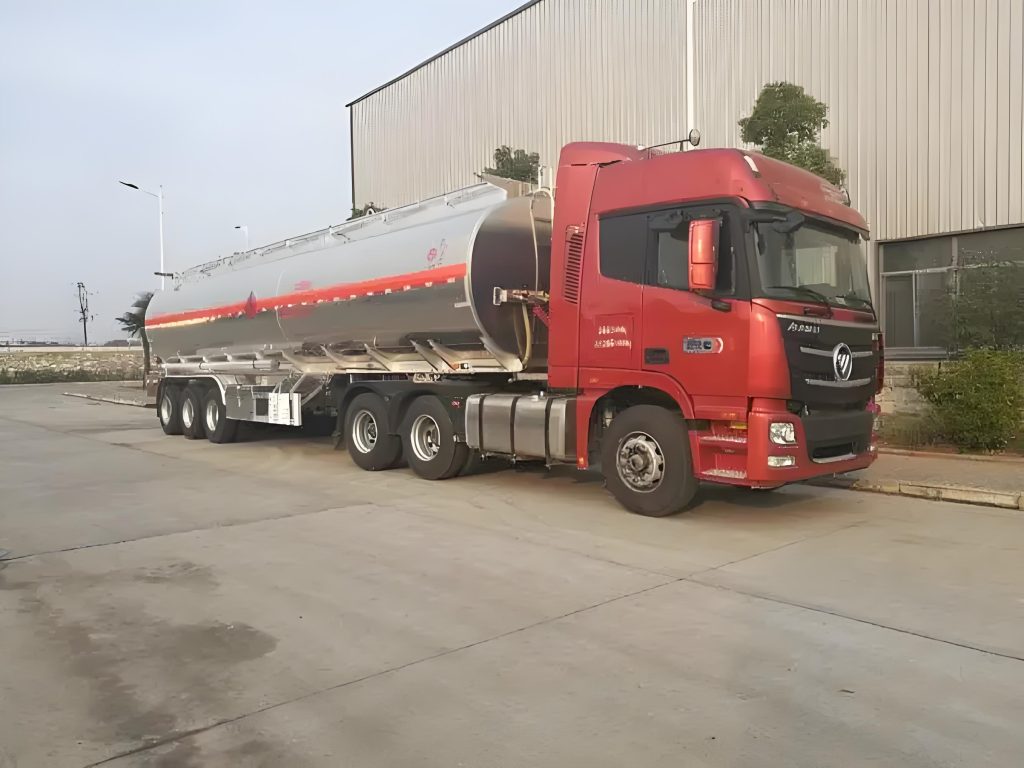
Strength, Durability, and Service Life
Higher structural strength
Stronger resistance to long-term deformation
Robust welded joints
Longer service life (12 to 18 years)
Aluminum tanker semi trailer
Strong but more prone to denting
Becomes brittle under extreme pressure
Average life: 10 to 15 years
Resolution: Stainless steel should be selected for optimal durability and structural longevity.
Stainless steel tanker trailer Maintenance Requirements
Stainless Steel tank trailer
Minimum corrosion maintenance
Easy to clean after chemical treatment
Suitable for polishing in food-grade products
Aluminum tank trailer
No rust, but the oxide layer must remain intact.
Regular structural fatigue checks are required.
Replacement of thin-walled components may be necessary.
Decision: Both are easy to maintain, but stainless steel performs better in harsh chemical environments.
Cost differences in 2025
| Material | Initial Cost | Maintenance Cost | Overall Economy |
| Stainless Steel | Higher | Low | Moderate |
| Aluminum | Medium | Low | Excellent for fuel transport |
Cost Data: Stainless steel tank trailer are 15% to 30% more expensive than aluminum tank trailer.
Aluminum saves costs by reducing operating expenses and increasing load capacity.
Temperature Performance stainless steel tanker trailer
Withstands extreme temperature changes. Suitable for heating liquids. Better suited for hot climates and industrial applications.
Good fuel economy. Not recommended for high-temperature or volatile chemical reactions.
Resolution: Stainless steel is safer for temperature-sensitive operations.
Safety Precautions Stainless Steel tank semi trailer
Strong tank reduces the risk of leaks. Suitable for hazardous chemicals. Less deformation in accidents.
Aluminum tanker trailer
Safer for fuels due to its spark-resistant properties.
Reducing the risk of static electricity buildup is widely recognized in petroleum regulations worldwide. The ruling states that both are safe, but each has its strengths: Fuels → Aluminum; Chemicals → Stainless Steel.
Stainless steel tanker trailer Market Trends in 2025
Global Trends:
Aluminum tank semi trailer dominate fuel transportation (due to their efficiency).
Stainless steel tank semi trailer are widely used in the chemical and food industries.
More fleets are equipping themselves with hybrid vehicles for different operating scenarios.
Regulatory compliance is increasingly focused on temperature, pressure, and chemical compatibility.
Practical Comparison Table
| Feature | stainless steel tanker trailer | aluminum tanker trailer |
| Weight | Heavy | Light |
| Fuel Efficiency | Medium | Excellent |
| Corrosion Resistance | Very high | Moderate |
| Chemical Compatibility | Very wide | Limited |
| Food-Grade Use | Excellent | Limited |
| Cost | Higher | Moderate |
| Durability | High | Medium |
| Payload | Lower (due to weight) | Higher |
| Typical Use | Chemicals, food | Fuel, aviation |
| Lifespan | 12–18 years | 10–15 years |
Which should you choose?
The choice between aluminum tanker trailer and aluminum tanker trailer depends on your cargo type, shipping routes, and business objectives.
Choose stainless steel tanker trailer If you are transporting:
Chemicals
Acids/Alkalis
Edible Liquids
Industrial Solvents
Temperature-Sensitive Materials
Suitable for: Chemical companies, food logistics industries, and hazardous liquid transport companies.
Choose aluminum tanker trailer If you are transporting:
Gasoline
Diesel
Aviation Fuel
Kerosene
Long-haul Road Fuel Delivery
Suitable for: Fuel distributors, oil companies, and gas station suppliers.
Stainless steel tanker trailer Conclusion
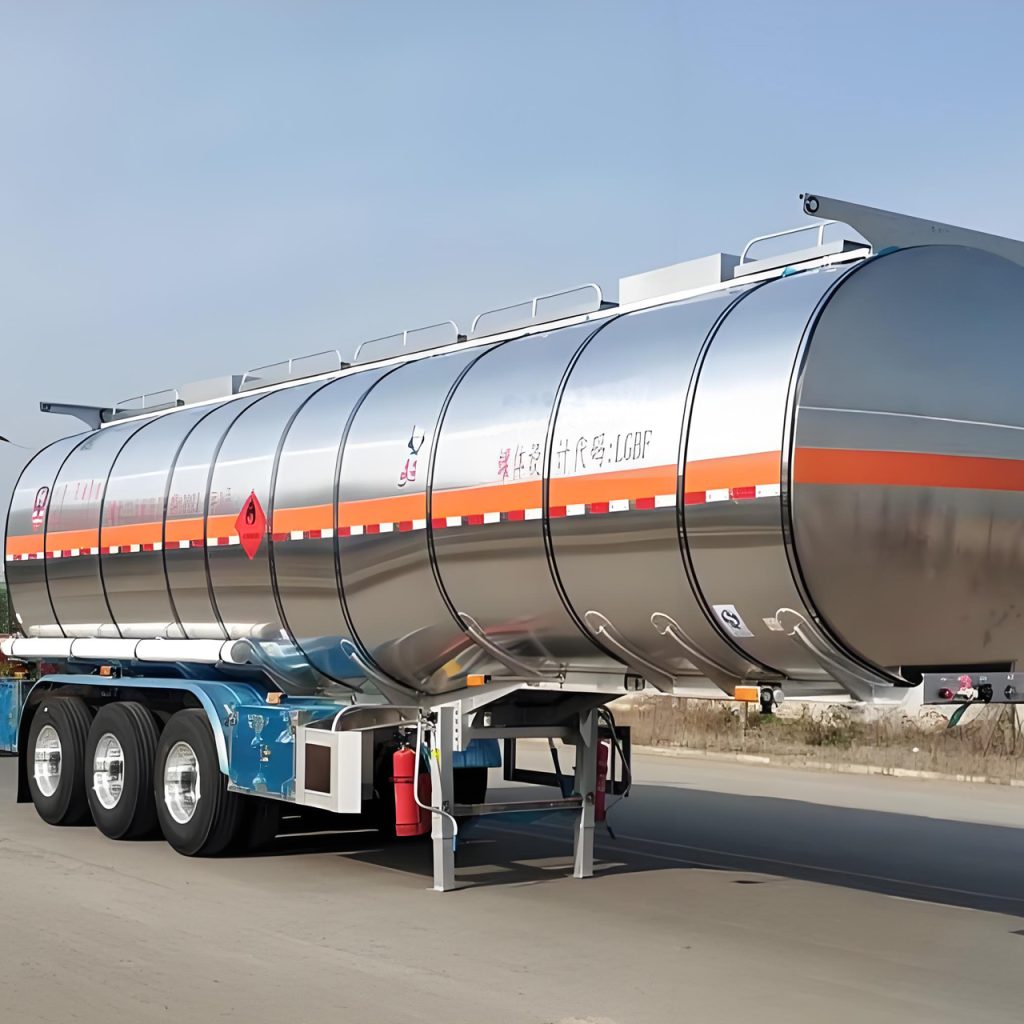
Both stainless steel tanker trailer and aluminum tanker trailer are good choices, but they meet different operational needs. Aluminum tankers offer unparalleled fuel efficiency and greater cargo capacity, making them ideal for the oil industry.stainless steel tanker trailer, on the other hand, offer excellent corrosion resistance, safety, and adaptability, essential for chemical and food-grade logistics.
Understanding your cargo and long-term operating environment is key to choosing the best tank material. By making the right choices, the fleet will be able to reduce costs, improve safety, and extend vehicle lifespan in 2025 and beyond.