
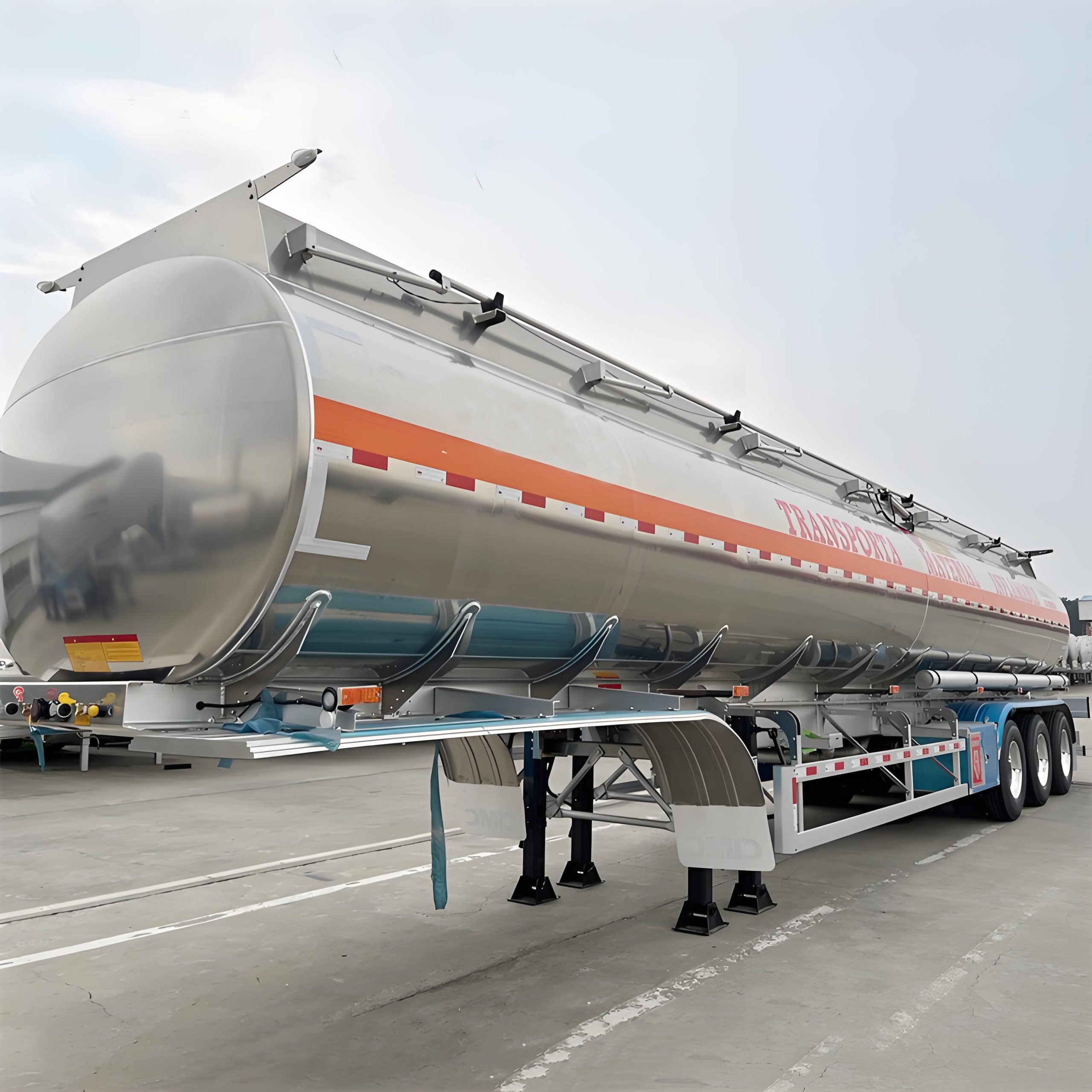
Top Tanker Trailer Manufacturers

Overview
In 2025, global demand for tanker semi trailers continued to grow, driven by expanding applications in fuel delivery, chemical logistics, agricultural liquid transport, and industrial fluid handling. Choosing a reliable tanker trailer manufacturers is crucial for ensuring safety, cargo purity, long-term durability, and cost-effectiveness.
This article provides readers with a comprehensive guide to understanding how stainless steel tank trailer manufacturers operate, the differences between top suppliers, and how buyers can assess product quality through technical standards, production capacity, certifications, and after-sales service.
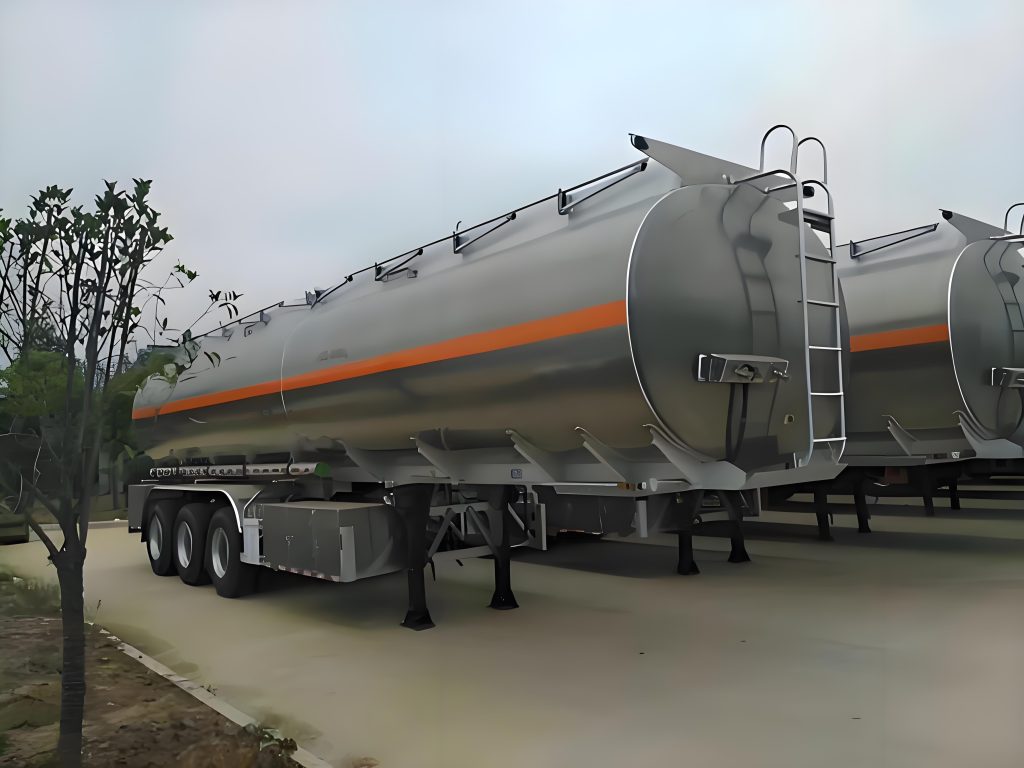
What exactly do tanker trailer manufacturers do?
A tanker semi trailer manufacturer is responsible for the engineering, manufacturing, assembly, testing, and certification of tankers used to transport substances such as liquids.
Gasoline, diesel, kerosene
Aviation fuel
Chemical liquids (acids, alkalis, ethanol)
Liquefied petroleum gas and liquefied natural gas
Edible oils and food-grade liquids
Milk and juice
Asphalt and petroleum asphalt
Major fuel tanker trailer manufacturers possess modern production facilities, including:
CNC laser cutting workshops
Automated welding production lines
Tank transport vehicles
Surface treatment and sandblasting workshops
Pressure testing equipment
Quality control laboratories
A professional fuel tanker trailer manufacturers not only produces tanks but also designs chassis, axle layouts, and piping systems to ensure safe and stable transportation.
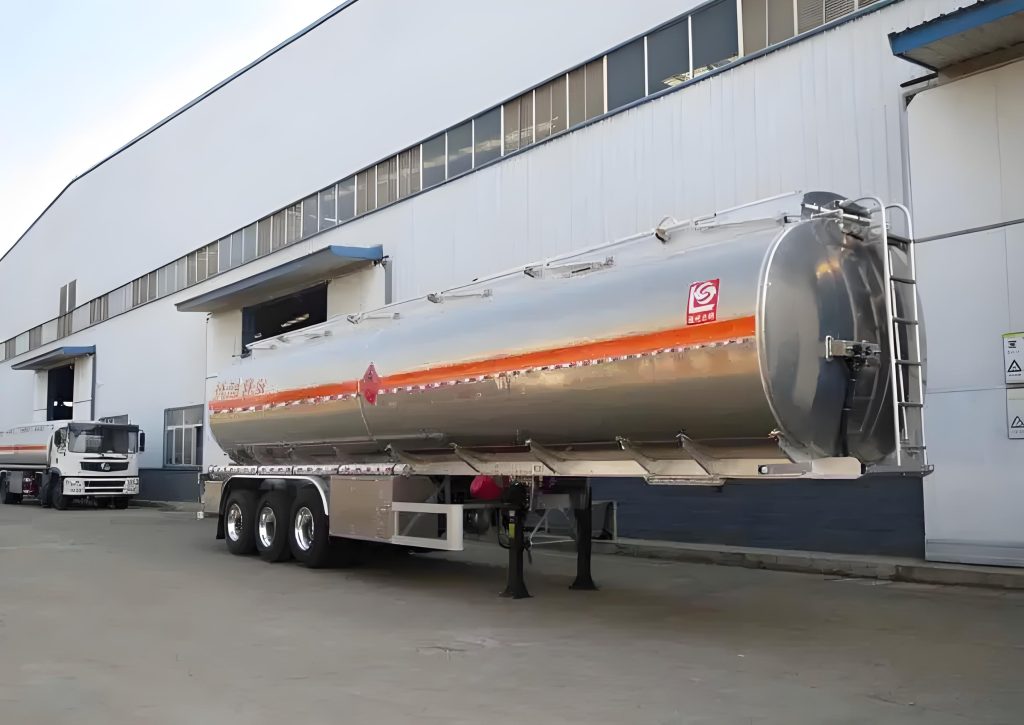
Tank Semi trailer Types for 2025 Production
Different liquids require different storage tank designs. Top manufacturers typically offer the following types of designs:
Transport diesel, gasoline, and aviation fuel.
Common materials: Carbon steel, aluminum alloy, stainless steel.
2.2 Chemical Tank semi trailer
Containers for corrosive or high-purity liquids.
Material requirements: 316L stainless steel or special coating.
2.3 LPG/LNG Tank semi trailer
Pressure vessels designed specifically for:
Liquefied Petroleum Gas (LPG)
Liquefied Natural Gas (LNG)
Equipped with safety relief valves and insulation.
2.4 Food-Grade Tanker semi trailer
Designed for transporting:
Milk
Edible Oil
Juice
Internal polishing meets hygiene standards.
Includes heating system:
Diesel burner
Hot oil coil
Insulation (100-150 mm rock wool)
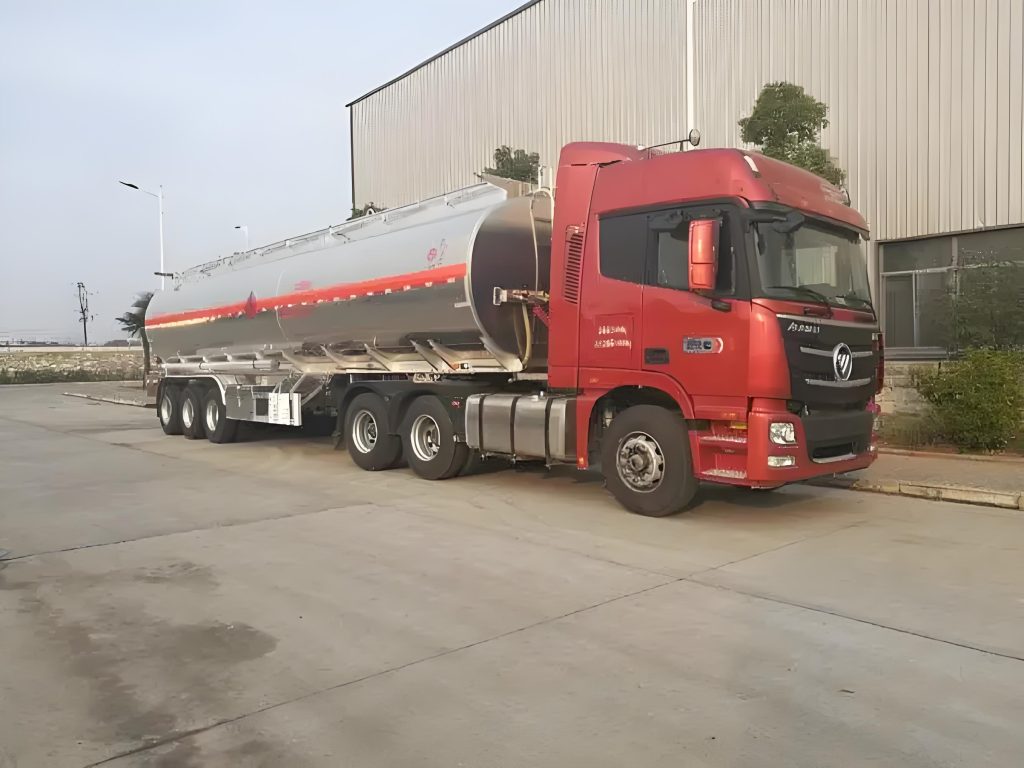
Key Differentiating Features of Top tanker trailer manufacturers
Choosing the right tank semi trailer manufacturers requires understanding which technical specifications reflect product quality.
3.1 Material Grades and Certifications
Top tank trailer manufacturers use internationally certified materials:
| Tank Type | Recommended Material | Advantages |
| Fuel tanker | Aluminum 5083/5454 | Lightweight, corrosion-resistant |
| Chemical tanker | Stainless steel 316L | High corrosion resistance |
| Food-grade tanker | Stainless steel 304 | Hygienic and durable |
| LPG tanker | Q345R / Q370R | High-pressure strength |
| Bitumen tanker | Carbon steel with insulation | High temperature resistance |
Fuel tanker trailer manufacturers should provide:
Material certification documents
Heat treatment records
Welding material certificates
3.2 Welding Technology
The robustness of a tank depends on the quality of its welds.
Top tanker trailer manufacturers employ:
Automated longitudinal seam welding
Circumferential seam welding
Tungsten inert gas welding of stainless steel
Non-destructive testing (NDT) of critical welds
3.3 Internal Baffle Engineering
Baffles reduce liquid impact by 60% to 70%, protecting occupants during sudden braking or cornering.
3.4 Integrated Chassis Design
High-end tanker trailer manufacturers design their own chassis rather than purchasing low-quality frames.
Features include:
Q550 high-strength steel beams
Robotic welding
Air suspension options
Electronic braking system
This ensures lower failure rates and longer service life.
3.5 Quality Control System
A reliable tanker semi trailer manufacturers will perform:
Hydraulic pressure testing
Pneumatic pressure testing
Welding X-ray inspection
Tank roundness measurement
Road simulation testing
Fuel tanker trailer manufacturers with ISO 9001, ADR, DOT, and ASME certifications are preferred.
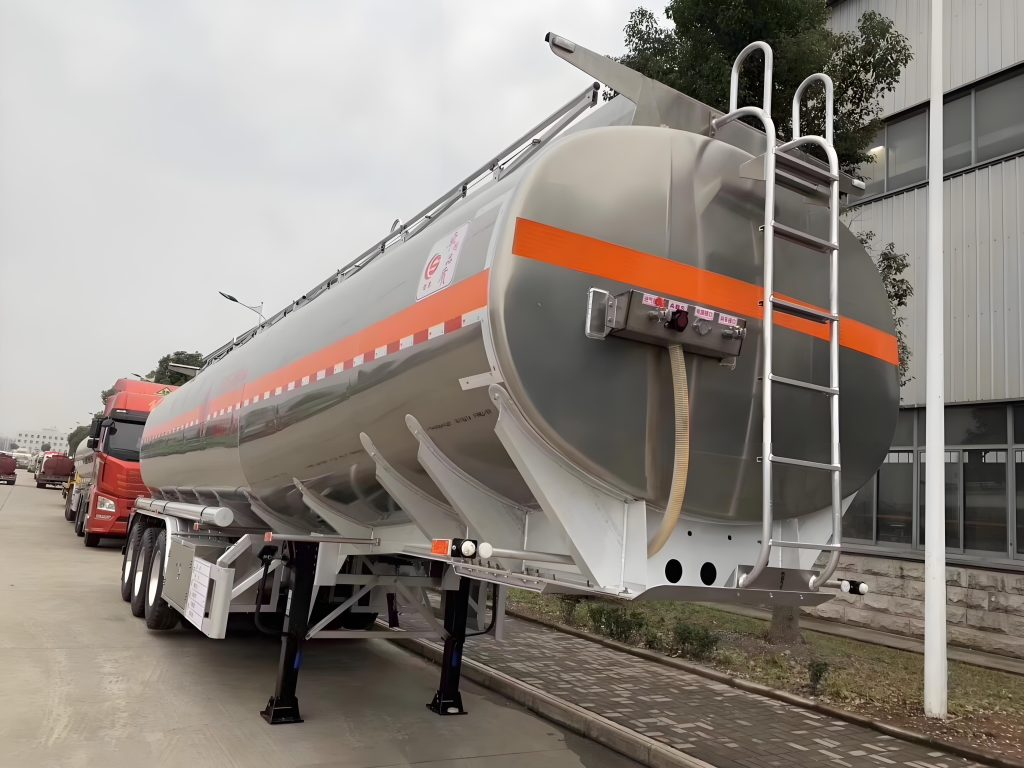
Comparison: Top-Quality vs. Low-Cost stainless steel tanker trailer manufacturers
Below is a brief comparison table to help buyers identify differences in product quality:
| Feature | Top Manufacturers | Low-Cost Manufacturers |
| Material Quality | Certified 5083/316L | Mixed or low-grade steel |
| Welding | Automatic & NDT-tested | Manual welding only |
| Surface Treatment | Sandblasting + epoxy coat | Basic spray paint |
| Safety Systems | ABS/EBS, emergency valves | Basic braking, minimal safety features |
| Chassis Strength | High-strength steel | Low carbon steel |
| After-sales | Global parts support | Little to no support |
| Service Life | 10–15 years | 4–7 years |
Production Processes Employed by Leading Tanker Trailer Manufacturers
Top fuel tanker trailer manufacturers follow a standardized and audited production process.
5.1 Step-by-Step Manufacturing Stages
1. Material Cutting
CNC Plasma/Laser Cutting
Precise Engineering Dimensions
2. “Tank Rolling”
Using hydraulic roll forming machines to create perfect cylinders.
3. Automated Welding
Ensuring consistent overall strength and leak-free seams.
4. Baffle Installation
Laser-cut internal baffles reduce liquid impact.
5. Chassis Manufacturing
Robotic welding of the I-beam structure.
6. Piping and Valve Installation
Including:
Inspection Wells
Bottom Valves
Drain Pipes
Vapor Recovery System
7. Surface Finishing
Sandblasting
Epoxy Primer
Polyurethane Topcoat
8. Testing and Inspection
Pressure Testing
Vacuum Testing
Road Testing
9. Final Assembly and Shipping
Using protective wax and sealed packaging.
Factors Buyers Should Consider When Selecting fuel tanker semi trailer manufacturers
To avoid choosing a supplier with poor quality, international buyers should conduct the following assessments:
6.1 Production Capacity
Questions to ask:
How many tanker semi trailer are produced per month?
What is the size of the factory? (At least 30,000 square meters recommended)
Do they have automated equipment?
6.2 Certification Level
Look for tanker trailer manufacturers that meet the following requirements:
ADR (Europe)
ASME/DOT (USA)
ISO 9001
CCC (Chinese domestic standard)
These reflect reliable production and safety standards.
6.3 Customization Features
A good tanker semi trailer manufacturers can personalize:
Tank Materials
Number of Cargo Boxes
“Valve” Brand
Braking System
Axle Brand
Capacity
Heating System
6.4 Global Export Experience
Experienced exporters understand:
Transportation Logistics
Container/Ro-Ro Ship Loading Operations
Export Documentation
Local Regulations of the Destination Country
6.5 After-Sales Service
Including:
Spare Parts Availability
Remote Technical Assistance
Operation and Maintenance Training
Fuel tanker trailer manufacturers offering comprehensive after-sales service are more reliable.
Specifications: Standard fuel tanker semi trailer (Sample)
| Item | Specification |
| Capacity | 30,000–60,000 liters |
| Material | Aluminum 5083 or Carbon Steel |
| Compartments | 3–7 |
| Manhole | 16 or 20 inch |
| Bottom Valve | API emergency shut-off |
| Suspension | Mechanical/Air |
| Axles | 2–4 axles, 13–16 tons each |
| Tires | 12R22.5 / 385/65R22.5 |
| Brake System | ABS or EBS |
| Testing | Pressure + X-ray |
| Standards | ADR / DOT / ISO |
Why Do Many Buyers Favor Chinese tanker semi trailer manufacturers?
In recent years, China has become a major supplier due to the following reasons:
1. Reduced Production Costs
A robust industrial chain reduces production costs by 25% to 40%.
2. Mature Welding and Manufacturing Technology
The factory utilizes advanced robotic welding systems.
3. Customization Flexibility
OEM/ODM services are available for fleets and dealers.
4. Fast Delivery Time
30 to 45-day production cycles.
5. Extensive Export Experience
Ships to Africa, Southeast Asia, the Middle East, Latin America, and Europe.
Tips for Buyers to Avoid Common Mistakes
Before placing an order:
Always request video materials and production qualification certificates from the factory.
Request material certificates for aluminum, steel, and welding rods.
Confirm the brand of accessories (BPW/FUWA axles, Waboka valves).
Review the warranty terms.
Do not choose tanker semi trailer suppliers with unrealistically low prices.
Tanker semi trailer are vehicles with a high degree of safety concern—their quality must be a primary consideration.
Conclusion
Choosing the right tanker trailer manufacturers has a significant impact on transport safety, fleet efficiency, and long-term operating costs. By evaluating material quality, manufacturing technology, production capacity, certifications, and after-sales service, buyers can identify reliable suppliers and avoid choosing inferior manufacturers.
Professional tanker semi trailer manufacturers guarantee:
Better weld quality
Stronger corrosion resistance
Safer liquid handling
More efficient logistics services
Longer service life
Whether you are purchasing tanker semi trailer, chemical tanker semi trailer, LPG tanker semi trailer, or food-grade transport vehicles, partnering with a reputable tank semi trailer manufacturer is key to long-term success in liquid logistics.