
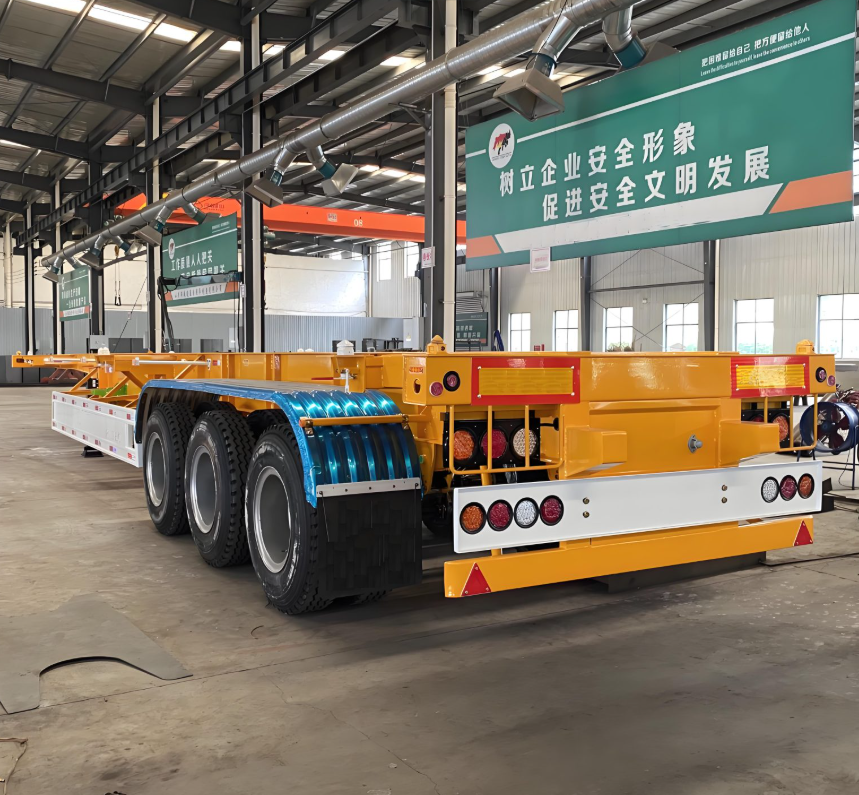
Tri Axle Container Chassis for Sale: How to Choose the Right Model

A long yard queue, a loaded box waiting at the gate, a wet access road, a driver watching the clock, and a transfer window that will not move—this is where trailer decisions stop feeling abstract. In that kind of day, the right container chassis is not just a steel frame under a box. It becomes part of the working rhythm. It affects how calm the road feels, how quickly loading teams move, how often maintenance interrupts the week, and how much confidence stays in the operation when conditions stop being ideal.
That is why the tri axle layout keeps coming up in serious freight discussions. It sits in a practical middle zone: stronger than a lighter setup, yet more focused than an overbuilt solution that adds cost without adding much real value on mainstream routes. Boca’s lineup makes comparison easier, with a dedicated 40-foot tri axle container chassis, a standard 3 axle container chassis, a 45 ft container chassis, and a broader container chassis range for route fit and model comparison.
Why this choice matters on a real working day
Transport equipment often looks simple from far away. A frame, a container, a tractor, a road. But real freight work is shaped by small frictions that add up: a trailer that feels too stiff over broken pavement, a lock layout that slows a loading team, or a frame that seems fine in the yard but less convincing over a long inland run.
Those details shape the emotional reality of an operation. They shape how quickly a transfer begins, how confidently a loaded box moves over mixed surfaces, and how often someone has to stop thinking about the route and start thinking about the trailer. In other words, the best chassis is not merely the one that can carry the load. It is the one that keeps the work feeling orderly under everyday pressure.
That is why a tri axle trailer becomes a decision about more than axle count. On some routes, a lighter setup is enough. On other routes, that lighter setup slowly reveals its limits. Stability matters more. Road behavior matters more. The loaded trailer may still move, but it no longer feels like a natural fit.

A well-chosen container chassis does not need to impress all day. It simply lets the route feel more controlled than the schedule already is.
That is the real buying question. Not only whether the trailer can do the job on paper, but whether it will still feel right after months of actual work.
What a tri axle container chassis does well
A tri axle container chassis remains popular because it solves a familiar transport problem. Many freight lanes are too serious for a light solution but too routine to justify an oversized one. The three-axle layout sits between those extremes. It offers better weight sharing, more settled road behavior, and a stronger sense of fit under regular container work.
Better road composure
On longer runs, the extra axle often helps the trailer feel less abrupt under a loaded box. The benefit is practical: less nervous movement, more believable balance, and a stronger sense that the frame matches the route.
More confidence under daily weight
Freight does not stay average in real life. A stronger layout feels better prepared when a day includes back-to-back loaded runs, rough transitions, or an access road worse than expected.
A useful middle ground
The tri axle format often avoids the compromises of a lighter option while also avoiding unnecessary over-specification for mainstream container work.
- Choose this layout when 40-foot work is frequent and loaded miles are not short.
- Choose it when port transfer and inland movement both matter in the same weekly pattern.
- Choose it when dense cargo makes stability feel more important than ultra-tight yard agility.
- Choose it when the road is good enough for regular haulage, but not forgiving enough for a weak setup.
There is another reason people return to this format: it is easier to trust. That matters because freight planners, importers, and fleet managers all work inside uncertainty. A trailer that looks, sits, and runs like it was built for real container work reduces that uncertainty in a practical way.
Read the route before reading the brochure
The fastest way to buy the wrong trailer is to start from the brochure and work backward. A better method is to start with the road. Describe the route honestly first. Then ask what kind of frame would feel at home there.
Port and terminal loops
Short-cycle work punishes awkward equipment quickly. A trailer for terminal and depot movement should feel easy to place, easy to lock, and durable enough for repetition.
Inland highway runs
Distance changes everything. A trailer that feels acceptable in short movements can begin to feel tiring over longer regional sectors. A three-axle frame often makes more sense here.
Coastal and humid corridors
Coastal lanes age equipment differently. Finish strategy, exposed hardware, and corrosion planning all become more important when the trailer works near salt air or standing water.
Rough inland export roads
Mixed surfaces and overloaded real-world working days reward structural honesty. In that setting, reinforcement, axle rating, and suspension choice begin to matter in a very ordinary and expensive way.
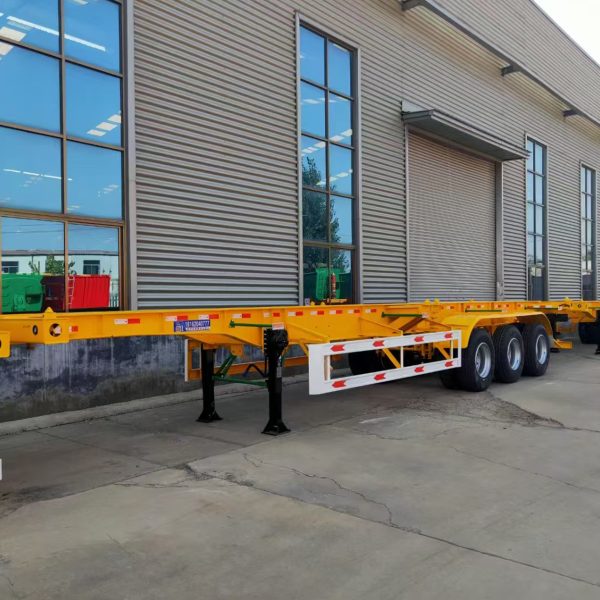
When the road leads the conversation, even price becomes easier to understand. A higher-spec frame may be excessive on one lane and completely sensible on another.
How to compare 3 axle, tri axle, and 45 ft container chassis models
The cleanest way to compare these options is to stop thinking in terms of bigger and smaller. Instead, treat each one as a different answer to a different route. The standard 3 axle version is often the flexible everyday solution. The 40-foot tri axle chassis tends to be the stronger mainstream choice when one 40-foot box dominates the work. The 45 ft frame makes sense when longer containers are not an occasional exception but a real part of the operating pattern.
Standard 3 axle
Best for mixed daily work
This is often the most balanced everyday choice. It suits mixed port and inland use, handles mainstream container work well, and is easier to justify when the weekly route pattern varies.
- Good for mixed 20 ft and 40 ft schedules
- Useful when the route is not always the same
- A practical fit for general fleets and importers
40-foot tri axle
Best for repeated 40-foot work
This is the choice that often feels most right when one 40-foot box is the center of the work and the road is serious enough to reward extra composure.
- Strong fit for repeated 40-foot transport
- Good for port-to-inland continuity
- Useful where daily heavy use makes balance important
45 ft frame
Best for dedicated longer-box work
This model makes sense when longer-box transport is already a meaningful part of the route pattern. It should be chosen because the route calls for it, not because it sounds more capable in theory.
- Better for consistent 45 ft container work
- Useful when longer-box efficiency matters
- Less ideal if that use case is only occasional
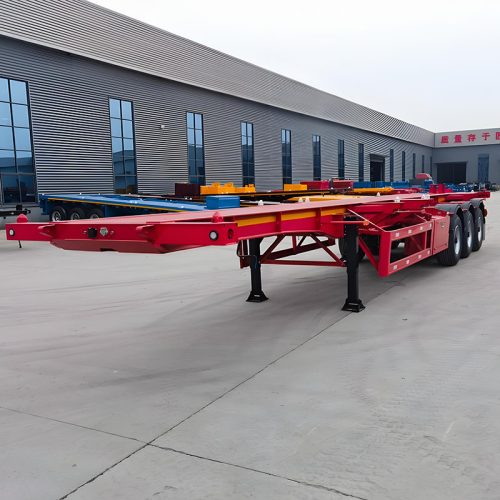
A simple comparison question helps here: what does the route ask for more often—flexibility, composure under a 40-foot load, or dedicated length for longer-box work? The answer usually points clearly to one of these models.
What to check before buying
Not every buying decision allows a long inspection. Sometimes the judgment has to happen quickly, using a handful of visible clues and a few disciplined questions.
-
Look at the frame posture first.
A good container chassis often looks settled even while standing still. The beam line feels clean, and the overall proportions suggest that the frame was designed around container work from the beginning.
-
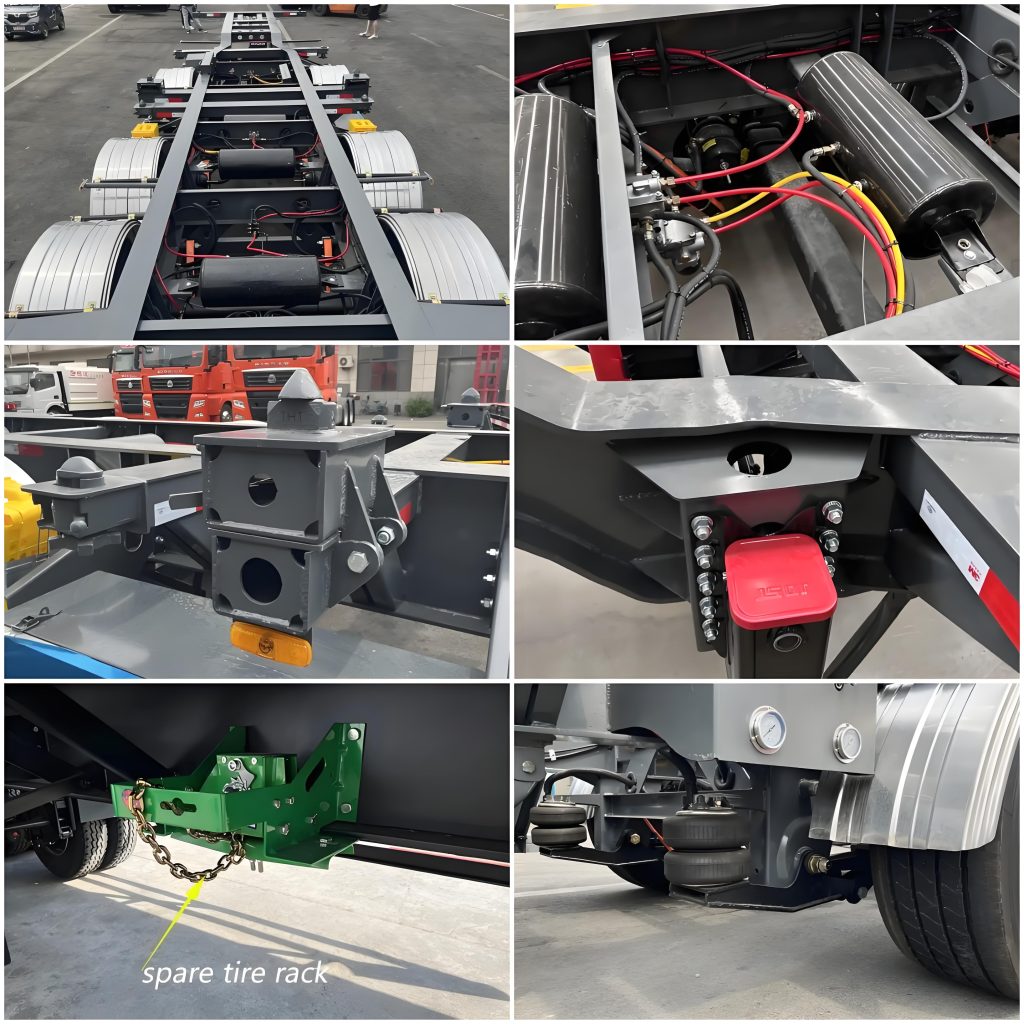
Read the lock layout like a route plan.
A trailer meant for one 40-foot box should feel direct in that task. A frame intended for mixed loading patterns should clearly support that flexibility.
-
Notice the running gear as a response to the road.
A rough-road trailer should not look lightly equipped underneath. A smoother regional-haul trailer may justify a cleaner, ride-focused setup.
-
Check the areas that age first.
Lock points, exposed corners, lamp zones, lower hardware, landing gear stance, and finish around high-contact surfaces all reveal whether the build was planned for work or for appearance only.
-
Ask whether the whole machine tells one story.
If the route is coastal, the finish should look ready for it. If the route is rough, the frame and suspension should look ready for it.
A simpler buying path for fleets and importers
When too many configurations start blending together, decision quality often drops. A simple buying path works better. It keeps the conversation tied to the route instead of drifting into endless option comparison.
-
Define the dominant box first.
If one 40-foot container drives most of the work, let that be the center of the decision. If longer-box transport is a real pattern, only then should the 45-foot discussion move forward.
-
Describe the road honestly.
Use plain language: smooth highway, mixed industrial road, coastal exposure, broken access, or heavy daily cycling.
-
Choose the structure before the accessories.
Frame logic, lock layout, axle choice, and suspension matter more than cosmetic additions.
-
Remove unnecessary upgrades.
A long option list can look reassuring, but irrelevant upgrades only make the quote less honest.
-
Request the quote with the route story attached.
The most useful inquiry includes the road type, climate, dominant box, and local market needs from the start.
- Main box type: 20 ft, 40 ft, mixed use, or 45 ft
- Route type: port loop, inland haul, mixed regional, coastal, or rough-road export
- Operating intensity: occasional work or repeated heavy cycles
- Preferred suspension direction: mechanical, air, or open to recommendation
- Any need for special lock layout, reinforcement, or compliance upgrades
FAQ
Is a tri axle container chassis better than a lighter setup?
Often yes, when the route includes regular loaded 40-foot work, mixed road quality, or longer inland movement. On easier short routes, a lighter setup may still be sensible.
When does a 45 ft container chassis make more sense?
It makes sense when longer containers are already a meaningful part of the operating pattern, not when they only appear occasionally.
What usually changes price the most?
Main beam logic, reinforcement, axle and tire choice, suspension, lock layout, and export configuration all influence the final quote.
Is mechanical or air suspension better?
Mechanical suspension often suits rough roads and simpler service planning. Air suspension often fits smoother longer sectors and operations where ride behavior matters more.
What should be prepared before sending an inquiry?
It helps to define the dominant box size, route type, climate exposure, preferred suspension logic, and any local compliance needs before asking for a quote.
Related reading
Final thought
A strong blog page should not end with vague advice. It should leave the reader with a clean next step. Start with the route, not the brochure. Let the road describe the frame. Then let the frame describe the correct options. That sequence usually prevents both under-buying and over-buying.
In the end, the best container chassis is the one that makes demanding transport feel a little less heavy than the work already is. It should support the load honestly, settle the route naturally, and stay serviceable in the climate and road conditions that define the job week after week.