

How Many Tons Can a heavy duty lowboy trailer Carry

Overview
Heavy duty lowboy trailer are one of the most crucial tools in heavy transportation. With their extremely low chassis height and sturdy structure, they are capable of carrying large equipment that standard trailers cannot transport.
This guide provides a detail explanation of the load capacity range, axle load capacity, international regulations, and the impact of different configurations on the total load capacity.
Lowboy Semi Trailer Video
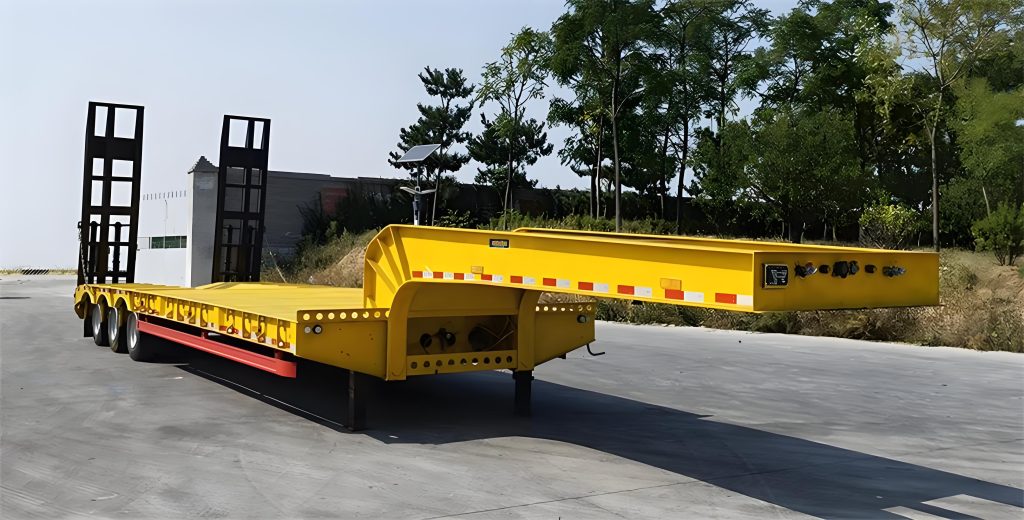
The factors determine the carrying capacity
Lowbed Trailer Load Capacity – Axle & Regional Standards
Several factors will affect the weight that a lowbed trailer can legally and safely carry. The most important factor is the number of axles and the load capacity of each axle.
Axle Configuration vs Application
| Axle Configuration | Description | Typical Application |
|---|---|---|
| 2 Axle Lowbed Trailer | Light to medium-duty capacity | Small equipment, light machinery |
| 3 Axle Lowbed Trailer | Most common configuration | Heavy machinery transport |
| 4–8 Axle Lowboy Trailer | Heavy-duty and ultra-heavy transport | Large equipment, mining, oversized cargo |
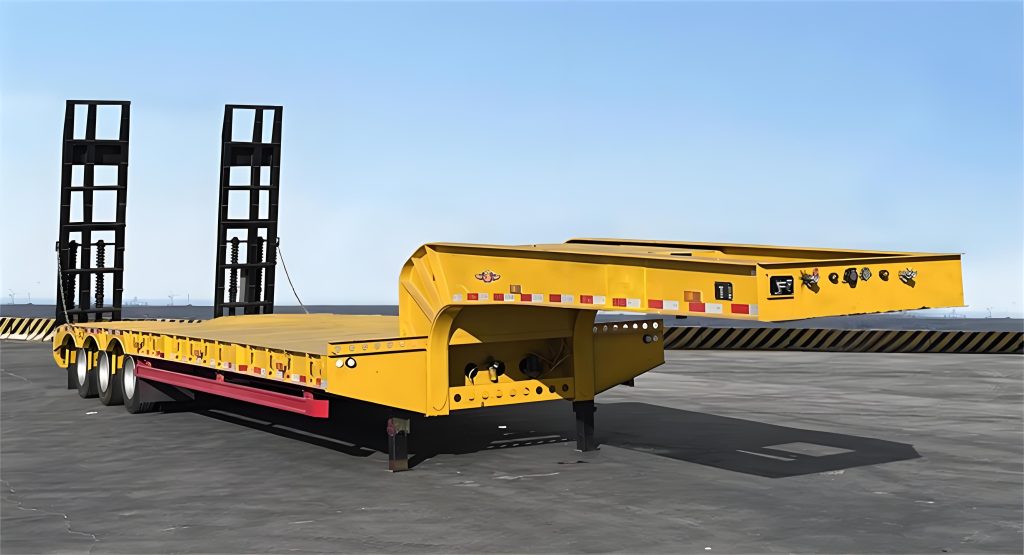
Typical Axle Load Capacity by Region
| Region | Axle Load Capacity | Notes |
|---|---|---|
| Asia & Africa | 13 – 20 Tons per axle | Higher tolerance, suitable for heavy transport |
| Europe | 9 – 12 Tons per axle | Strict legal weight limits |
| North America | 10 – 17 Tons per axle | Varies by state regulations |
Lowboy Trailer Capacity Factors – Material, Structure & Design
Apart from the configuration of the axle, there are several structural factors that can affect the carrying capacity and safety of heavy lowboy semi trailer.
Material Strength & Chassis Design
| Factor | Description | Impact on Load Capacity |
|---|---|---|
| High-Strength Steel | Use of Q345 / Q550 or similar materials | Increases structural strength and durability |
| Beam Height (Main Beam Height) | Height of the main longitudinal beam | Higher beams improve load-bearing capacity |
| Under-Deck Reinforcement | Reinforced cross members and bottom structure | Enhances resistance to bending and fatigue |
| Gooseneck Strength | Strength of detachable or fixed gooseneck | Critical for handling front load stress and heavy cargo |
These structural components determine the maximum safe carrying capacity and ensure that the trailer will not deform when performing heavy-load operations.
Suspension System
| Suspension Type | Features | Impact |
|---|---|---|
| Mechanical Suspension | Leaf spring structure, simple and durable | Higher load capacity, widely used in heavy-duty transport |
| Air Suspension | Airbag system with better shock absorption | Improved ride stability, but slightly lower load capacity |
Deck Length & Width
| Parameter | Description | Impact |
|---|---|---|
| Deck Length | Total usable loading platform length | Longer decks distribute weight more evenly |
| Deck Width | Width of the loading platform | Wider decks improve stability and cargo support |
Loading Capacity of lowboy trailer
The following is a general capacity guideline based on a globally applicable model.
| Trailer Type | Axles | Typical Payload (Tons) | Suitable Cargo |
| Light duty low bed semi-trailer | 2 axles | 20–35 tons | Small excavators, loaders |
| Standard china lowbed semi-trailer | 3 axles | 40–60 tons | Dozers, graders, rollers |
| heavy haul lowboy trailer | 4 axles | 60–90 tons | Large excavators, cranes |
| Multi axle lowboy semi trailer | 5–8 axles | 100–180+ tons | Mining equipment, oversized machinery |
| Hydraulic lowboy trailer | Custom | 200–1,000+ tons | Industrial components, transformers |
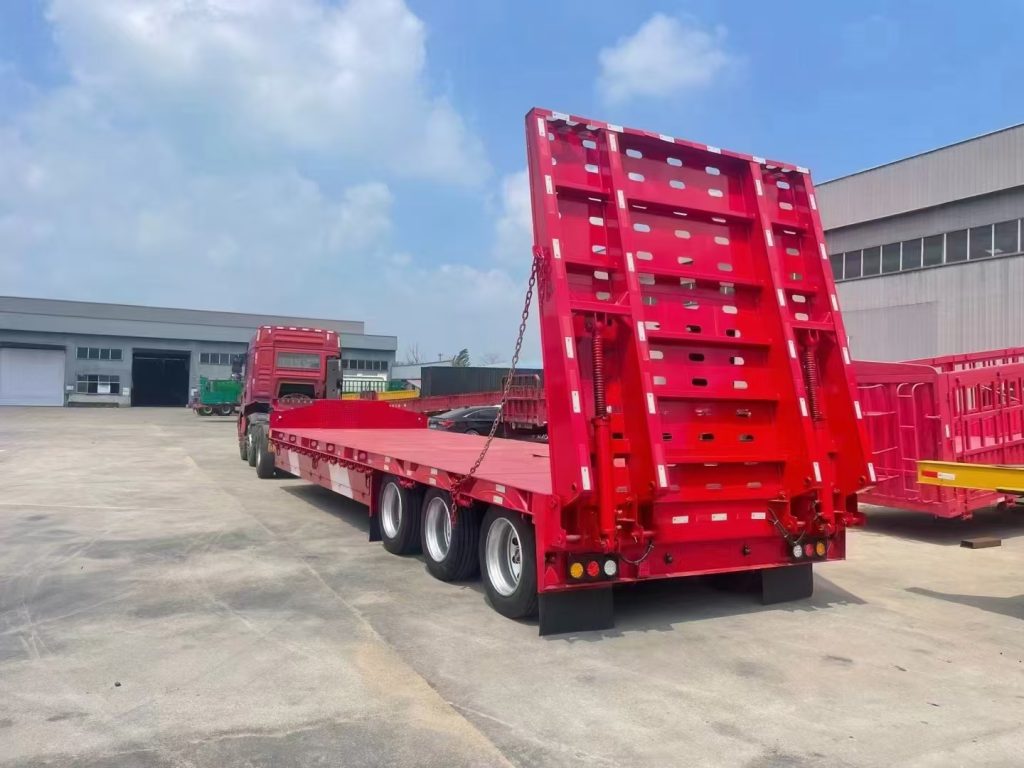
When to choose a heavy duty lowboy trailer?
Choosing a large-capacity lowbed truck trailer is crucial for ensuring long-term safety, efficiency and operational flexibility, especially in industries such as mining and construction where high standards are required.
| Scenario | Explanation | Recommendation |
|---|---|---|
| Increasing Equipment Weight | Your machinery weight continues to grow over time | Choose higher-capacity models to avoid frequent upgrades |
| Long-Distance Transport on Rough Roads | Uneven terrain increases stress on the trailer | Opt for reinforced structure and higher axle capacity |
| Higher Safety Requirements | Need to reduce risk during heavy transport | Select trailers with additional load margin |
| Heavy Equipment (40+ Tons) | Mining and construction machinery exceeds standard limits | Use multi-axle heavy-duty lowboy trailers |
| Future Fleet Expansion | Planning to handle larger or more diverse cargo | Invest in scalable, high-capacity configurations |
Conclusion
The load capacity of heavy duty lowbed semi trailer ranges from 20 tons to over 180 tons, by understanding the load range, you can select the ideal heavy duty lowboy trailer to maximize safety, efficiency, and long-term value.
FAQ
1. How many tons can a heavy duty lowboy trailer carry?
Between 20 tons and over 150 tons
2. What factors affect the load capacity of a lowboy trailer?
Number of axles ,Chassis material strength ,Deck length and structure design and so on
3. What type of cargo requires high-capacity lowboy trailers?
Mining equipment ,Excavators ,Industrial machinery ,Oversized construction equipment
4. Is it better to choose a higher capacity trailer?
Yes. Safer transport
5. Can lowboy trailers be customized for higher loads?
Yes.