
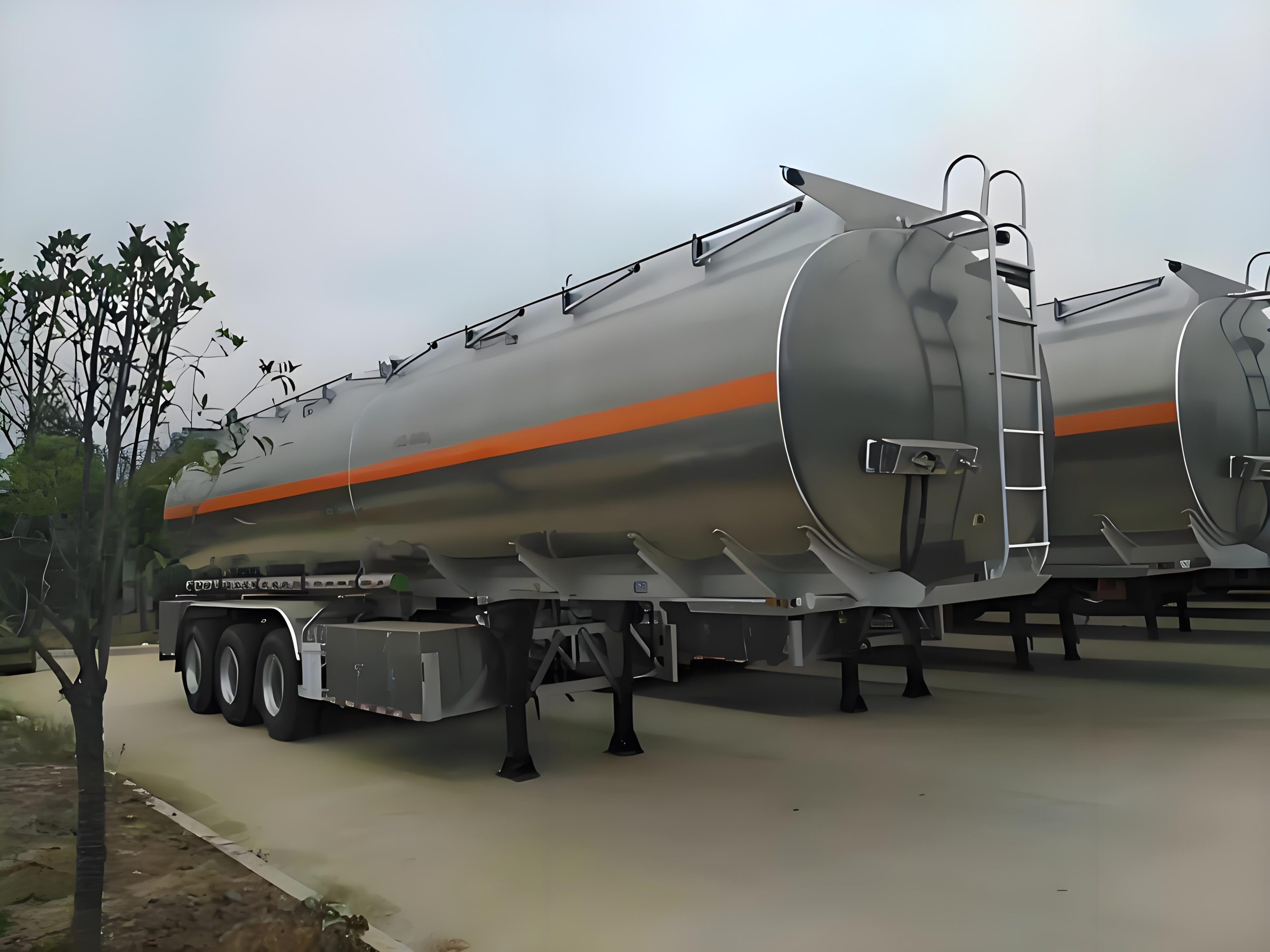
What Is a Tanker semi trailer? Structure,Types,and Applications

Overview
Tanker semi trailer is a heavy-duty transportation vehicle specifically designed for transporting liquids, gases or bulk materials and storing them in sealed tanks. Unlike ordinary cargo semi trailer, oil tanker semi-trailer rely on pressurization systems, corrosion-resistant materials and temperature control mechanisms to ensure the safe delivery of hazardous and non-hazardous liquids over long distances.
This detailed guide provides a comprehensive overview of the structure, main components, classification, technical specifications and key applications of tanker semi trailer.

What is a Tanker Semi Trailer?
The tank semi trailer consists of a tractor truck and a cylindrical or elliptical storage tank. This tank is used for storing and transporting liquid or gas goods. These tanker semi-trailer are designed to maintain the purity of the goods, ensure safety during transportation, and comply with hazardous goods transportation regulations of different countries.
Key Design Features
Tank semi trailers are engineered to ensure:
| Feature | Purpose |
|---|---|
| Sealed Tank Structure | Prevents leakage and contamination during transport |
| Cylindrical or Elliptical Tank Design | Improves stability and liquid flow control |
| Internal Baffles | Reduces liquid sloshing during braking and turning |
| Safety Systems | Includes pressure valves, anti-static devices, and emergency shut-off systems |
| Corrosion-Resistant Materials | Protects the tank when transporting chemicals or food-grade liquids |
Components of tanker truck trailer
The tanker trailer integrates the chassis, storage, structural support, safety protection and liquid transportation system into one, forming an integrated transportation solution. Each component plays a crucial role in ensuring the safe, efficient and reliable transportation of fuels, chemicals, edible oils and other liquid goods.
Main components of a tanker truck trailer:
| Component | Description | Function |
|---|---|---|
| Tank Body | Cylindrical or elliptical tank made of carbon steel, aluminum alloy, or stainless steel | Stores and transports liquid or gaseous cargo safely |
| Internal Baffles | Reinforced partitions installed inside the tank | Reduce liquid sloshing and improve driving stability |
| Manhole Cover | Located on the top of the tank | Used for inspection, maintenance, and cargo filling |
| Discharge Valve System | Installed at the bottom or rear of the tank | Controls unloading of liquids safely and efficiently |
| Pipeline System | Connects loading and unloading equipment | Ensures smooth liquid transfer operations |
| Safety Valves & Pressure Relief Devices | Prevent excessive internal pressure buildup | Improve operational safety during transport |
| Anti-Static System | Grounding devices and anti-static protection | Reduces fire and explosion risks when transporting fuel |
| Chassis Frame | Heavy-duty steel frame supporting the tank body | Provides structural strength and load-bearing capacity |
| Suspension System | Mechanical or air suspension | Improves stability and reduces road vibration impact |
| Axles and Tires | Typically 2 to 4 axles depending on capacity | Support cargo weight and ensure safe transportation |
| Landing Gear | Support legs located at the front of the trailer | Stabilizes the trailer when detached from the tractor |
| Brake System | Air brake system with ABS (optional) | Ensures safe braking under heavy loads |
| Ladder and Walkway | Installed along the tank body | Provides safe access for inspection and maintenance |
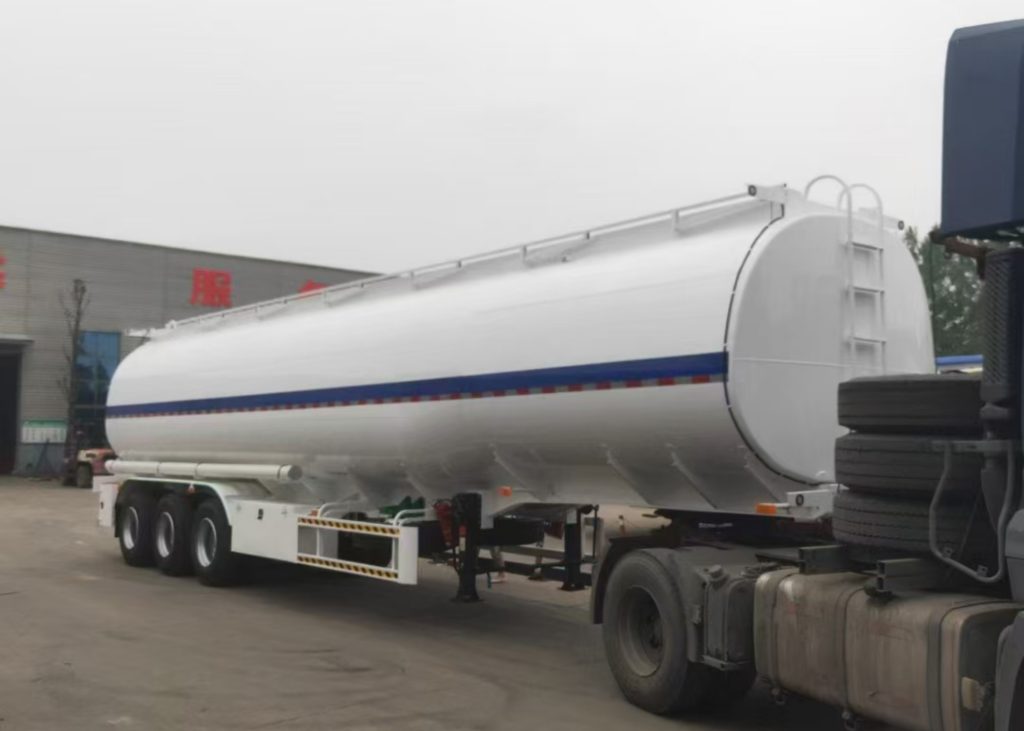
Types of Tank Semi-Trailer
Different industries have varying requirements for the structure and materials of tank semi trailer, which depend on the type of goods being transported. The following lists the most common types of tank trailer and their application scenarios.
Used for transporting gasoline, diesel, kerosene, aviation fuel, and other petroleum products.
Features:
| Feature | Description |
|---|---|
| Tank Material | Aluminum alloy or carbon steel |
| Compartments | Usually 3–7 compartments |
| Loading System | Bottom loading system for safer operation |
| Safety Design | Anti-static devices and overflow prevention system |
| Capacity | Commonly 30,000–60,000 liters |
Designed specifically for corrosive, toxic, or hazardous liquid transport.
Compatible Materials:304 or 316L Stainless Steel
Corrosion-Resistant Lining:ETFE,Rubber,Polyethylene coating
Applications:Acids,Ethanol,Chemical solvents,Liquid ammonia
Food grade tanker trailer
Food grade tanker semi trailer compliant with food safety standards, specifically designed for transporting:Milk,Edible oil,Water,Fruit juice, molasses, or sugar solutions
Design Features:
| Feature | Description |
|---|---|
| Tank Material | 316L food-grade stainless steel |
| Cleaning System | CIP (Clean-In-Place) system |
| Optional Function | Thermal insulation for temperature-sensitive cargo |
LPG Tank Semi Trailer
Application:LPG (Liquefied Petroleum Gas),Propane,Butane
Key Features:
Seamlessly welded high-pressure tank
Safety relief valve system
Cylindrical or spherical tank structure
High-pressure resistant design
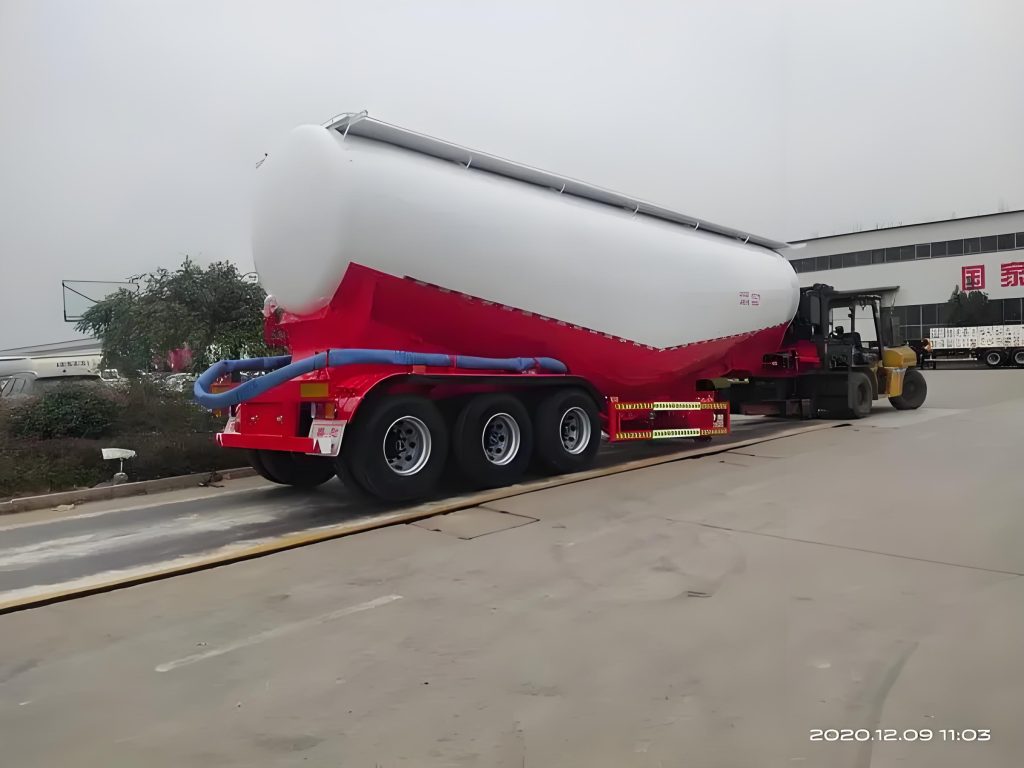
This pneumatic tank transport trailer was originally designed for transporting powder goods.like:Cement,Fly ash,Lime powder
Applications: Construction, mining, bulk material transport
Bitumen tank trailer for transporting hot asphalt, asphalt mixtures, and tar.
Features:
| Feature | Description |
|---|---|
| Insulation System | Maintains asphalt temperature |
| Heating System | Burner or diesel heating device |
| Heat Transfer System | Heat transfer oil circulation |
| Working Temperature | Approximately 150°C–250°C |

Technical Specifications
The following are typical specifications for a 45,000 liter fuel tanker semi trailer for sale.
| Parameter | Specification |
| Tank Material | Carbon steel / Aluminum alloy |
| Capacity | 45,000 L |
| Compartments | 1–7 |
| Axles | 2 / 3 / 4 axles |
| Suspension | Mechanical or Air |
| Brake System | ABS / EBS optional |
| Design Pressure | 0.3 MPa (fuel) |
| Manhole Cover | 16″ aluminum with emergency vent |
| Loading Method | Bottom / Top loading |
| Discharge Valve | API valve, 3–4 inch |
| Optional Features | Flow meter, vapor recovery, lift axle, GPS |
For cargo carriers carrying chemicals, liquefied petroleum gas, and asphalt, specifications vary depending on cargo density and relevant regulations.
Working Principle of Tanker Semi Trailer
Tanker semi trailer undergoes the entire process of loading, transportation and unloading. It is equipped with specialized systems to ensure that safety, accuracy and efficiency standards are met during the handling of liquids or bulk materials.
Loading Process
During loading , the liquid safely transport to the tank through the control system:
Whether the top loading system or the bottom loading system is used depends on the type of goods.
The flow meter can ensure accurate measurement of the loading volume.
Safety sensors and overflow protection devices can prevent overfilling.
The anti-static grounding system can reduce the fire risk during fuel loading.
Transportation process
Once the loading is completed, the oil tanker will operate under strict safety and stability control:
Internal partitions can reduce the flow of liquids
Pressure and temperature monitoring systems ensure the stability of the cargo
Suspension system can absorb road vibrations and enhance driving comfort
Brake system can provide safe control under heavy load conditions
These systems work together to maintain balance, especially during turns, braking, and uneven road conditions.
Unloading
Gravity discharge (fuel and food grade)
Pump-assisted discharge
Compressor-assisted unloading (powder tankers)
Heated unloading operation for asphalt tankers
Advantages of tanker semi trailer
Tank semi trailer widely use in the transportation of fuels and liquids due to their lightweight structure, corrosion resistance, and high transportation efficiency.
1. Efficient Transportation System
One tanker trailer can transport a large volume of liquid cargo in a single trip
Reduces the need for multiple transport vehicles
Improves logistics efficiency and lowers transportation time
2. High Safety
Modern aluminum tanker trailers equip with multiple safety systems to ensure secure transportation.
| Safety Feature | Function |
|---|---|
| Emergency Valves | Quickly stop liquid flow during emergencies |
| Anti-Tipping Structure | Improves stability during turning and braking |
| Rugged Welded Tank Body | Enhances structural strength and leak resistance |
| Anti-Static System | Reduces fire and explosion risks during loading/unloading |
Versatile Cargo Applications
Tank semi trailers can carry a wide range of liquids and gases:
Fuel (diesel, gasoline, kerosene)
Chemicals and industrial liquids
Edible oils and food-grade liquids
Liquefied gases (LPG, propane, butane)
Strong Structural Durability
Built with high-strength steel, aluminum, or stainless steel
Designed to withstand long-distance and heavy-duty transport
Resistant to corrosion and harsh working environments
How to choose the right tanker semi trailer
Choosing the appropriate tanker semi trailer depends on the type of goods, transportation conditions, and local regulations. An appropriately matched tanker trailer can enhance transportation safety, operational efficiency, and long-term economic benefits.
| Key Factor | What to Consider | Recommendation |
|---|---|---|
| Cargo Type | Fuel, chemicals, food-grade liquids, LPG, or powder materials | Different cargo requires different tank materials and safety systems |
| Tank Material | Carbon steel, aluminum alloy, or stainless steel | Fuel → carbon steel; Chemicals/Food → stainless steel |
| Capacity Requirement | Small distribution or large-volume bulk transport | 30,000–60,000L is the most common range |
| Axle Configuration | 2 axle, 3 axle, or 4 axle | 3 axle is the most popular and balanced option |
| Road Conditions | Highway, rough roads, mining areas | Reinforced chassis and mechanical suspension for rough terrain |
| Compartment Design | Single or multiple compartments | Multiple compartments allow transport of different liquids simultaneously |
| Safety Features | Anti-static devices, pressure valves, emergency shut-off systems | Essential for fuel and hazardous chemical transport |
| Temperature Requirements | Heated or insulated tank needed | Asphalt and food-grade cargo often require insulation or heating systems |
Conclusion
Tank semi trailers are indispensable transportation tools for industries such as petroleum, chemical engineering, food, construction and energy. Understanding their structure, materials, types of tanks and application scenarios, and choosing the appropriate tank semi-trailer. Whether you need a oil tank trailer, a chemical semi trailer, a cement tank trailer or an asphalt tank trailer, choosing a well-designed tanker trailer can ensure safety, efficiency and long-term profitability.