
The Ultimate Guide to cement tanker semi trailer

Overview
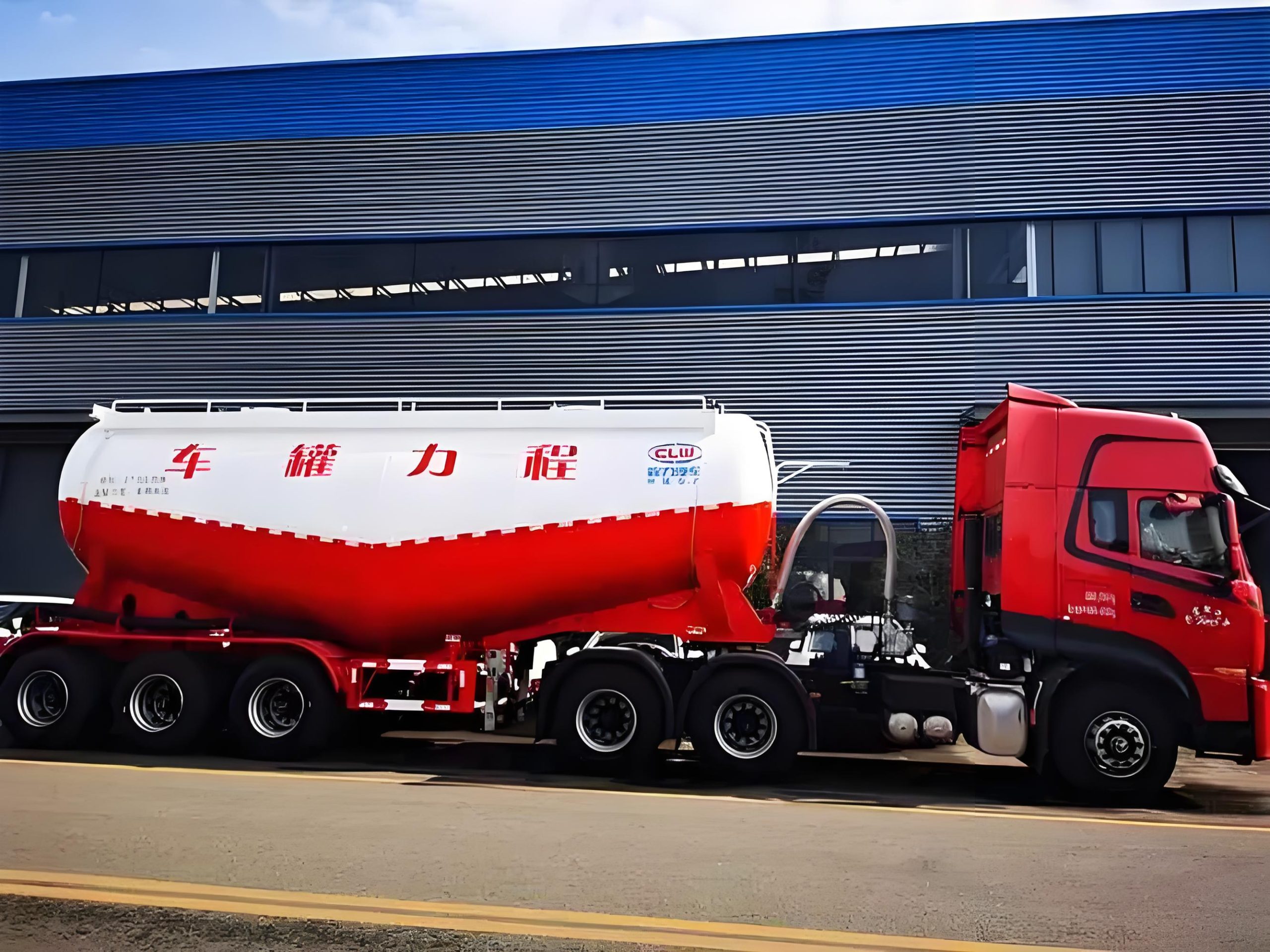
Bulk cement transport trailers—also known as cement tanker semi trailer, powder transport trailers, or dry bulk semi trailers—are indispensable equipment in building materials logistics. These cement tanker semi trailer are designed for transporting large quantities of powdery materials, ensuring that cement, fly ash, lime powder, and other dry granules remain dry, uncontaminated, and easy to unload.
In this ultimate guide, we’ll provide everything you need: how these cement tanker semi trailer work, their structure, features, technical specifications, loading systems, advantages, and how to choose the right model for your business.
What is a cement tanker semi trailer?
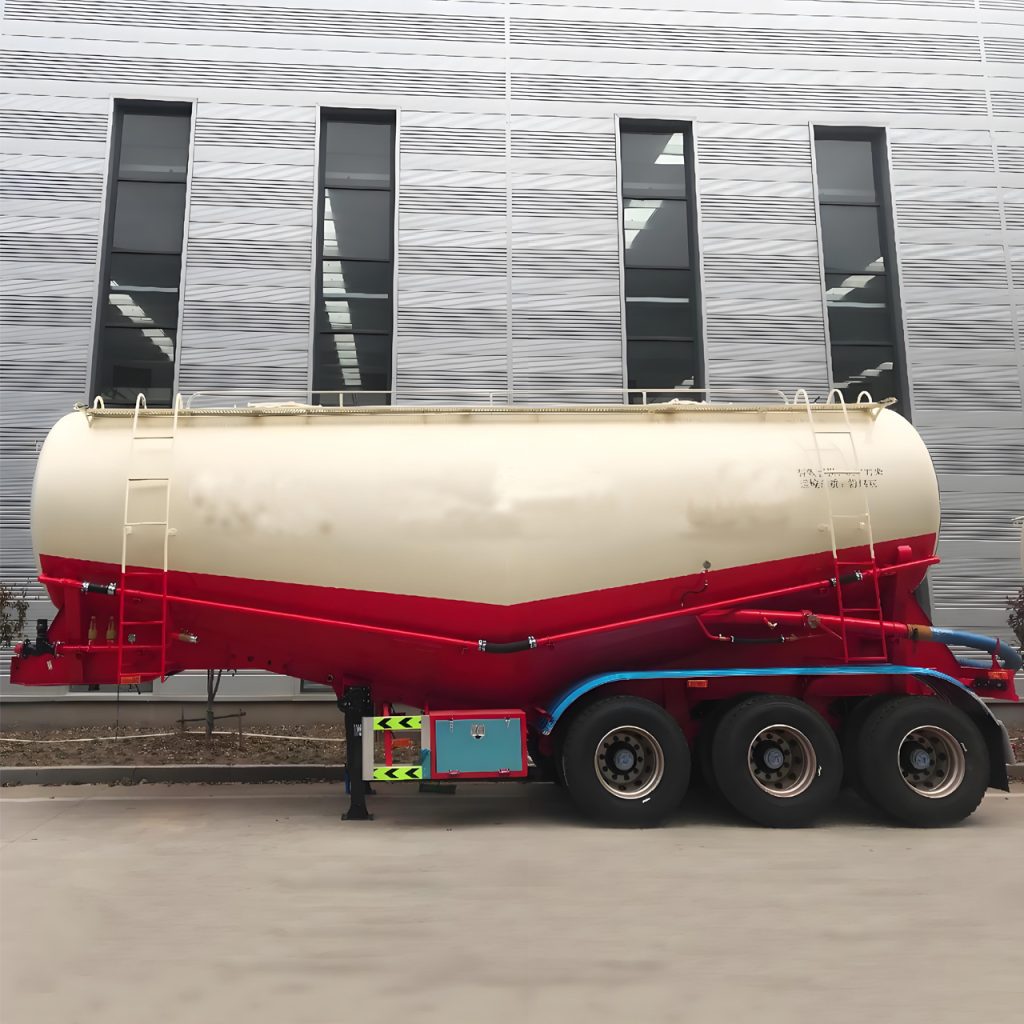
A cement tanker semi trailer is a specialized dry bulk semi trailer that transports dry, powdery materials using differential pressure unloading. Unlike liquid or solid cargo, this trailer is designed for fine, less fluid powdery materials.
The main functions of a cement tanker semi trailer are:
Preventing moisture from entering the material
Maintaining stable pressure during unloading
Achieving rapid discharge to storage bins
Improving transport efficiency by significantly increasing transport capacity
These trailers are commonly used in cement manufacturing plants, ready-mix concrete plants, and building materials distribution companies.
Main Components of a Bulk Cement Tanker Trailer
A cement tanker semi trailer comprises several integrated systems. Its main components include:
1. Tank Body
Made of carbon steel, aluminum, or stainless steel
V-type, W-type, or horizontal design
Features a high-strength welded structure capable of withstanding pressure.
2. Cement tanker semi trailer Air Compressor System
Provides compressed air for unloading operations
Common brands: Wulong, Bohai, Fuwa, Burket, or imported brands.
Determines unloading speed and efficiency.
3. Manhole Covers
Allows loading cement from the top of the tank
Equipped with rubber seals
Typically, there are 2 to 4 manholes, the exact number depending on the capacity.
4. Air Delivery Piping System
Includes butterfly valves, pressure gauges, and safety valves
Ensuring stable and safe control of air pressure
5. Cement tanker semi trailer Discharge System
Conical-bottomed storage compartment
Heavy-duty piping for rapid discharge
Direct unloading into storage silos or tanks
6. Running Gear
Axles: 2, 3, or 4 axles
Suspension Type: Air suspension or mechanical leaf spring suspension
Tires: 12R22.5, 385/65R22.5, or durable tubeless tire options

Bulk Cement Tanker Trailer Specifications
The following is a standard parameter table applicable to bulk cement semi trailer ranging from 30 to 100 tons.
Table 1: Bulk Cement Tanker Trailer Specifications
| Item | Specification |
| Tank Volume | 30–80 m³ (customizable up to 100 m³) |
| Payload Capacity | 30–100 tons |
| Tank Material | Q345 carbon steel / Aluminum alloy / Stainless steel |
| Tank Shape | V-type, W-type, or horizontal |
| Axles | 2–4 axles (Fuwa/BPW) |
| Suspension | Mechanical or air suspension |
| Air Compressor | 10–12 m³/min |
| Discharge Speed | 1.3 tons/min – 2 tons/min |
| Working Pressure | 0.2–0.4 Mpa |
| Engine (for compressor) | Weichai, Yuchai, Sinotruk auxiliary diesel engine |
| Manholes | 2–4 sets |
| Discharge Pipe Diameter | 89–102 mm |
| Tires | 12R22.5 / 385/65R22.5 |
Types of cement tanker semi trailer
Different applications require different trailer designs. The main types include:
1. V-Type cement tanker semi trailer
The most popular design. A larger discharge angle ensures rapid unloading. Suitable for capacities ranging from 30 to 60 cubic meters. Applications: Ready-mixed concrete plants, medium-distance transport.
2. W-Type bulk cement trailer
Larger capacity than V-type. Optimal material flow for ultrafine powders. Applications: Long-distance, high-capacity transport.
3. Horizontal bulk cement tank semi trailer
Lower center of gravity ensures stability. Easier to clean and maintain. Applications: Suitable for storage and frequent loading/unloading operations.
4. Aluminum cement tanker semi trailer
Lightweight and with higher load capacity. Corrosion resistant.
Reduced fuel consumption. Applications: Companies focused on fuel efficiency or long-distance transport.
Working Principle of cement tanker semi trailer
The operation process can be simplified into four steps.
Step 1: Loading Cement
The cement is pumped out through the wellhead.
Dust-free loading prevents contamination.
Step 2: Applying Pressure
An air compressor pressurizes the inside of the storage tank.
A pressure differential begins to form.
Step 3: Fluidization
Air flows into the chamber.
The powdery material becomes liquid-like.
It moves easily towards the discharge pipe.
Step 4: Discharge into the Storage Bin
The powder flows out through the discharge pipe.
High-pressure air enters the storage bin.
The entire unloading process takes 30 to 60 minutes.
Key Features to Consider When Selecting cement tanker semi trailer
To choose a reliable model for your business, prioritize the following:
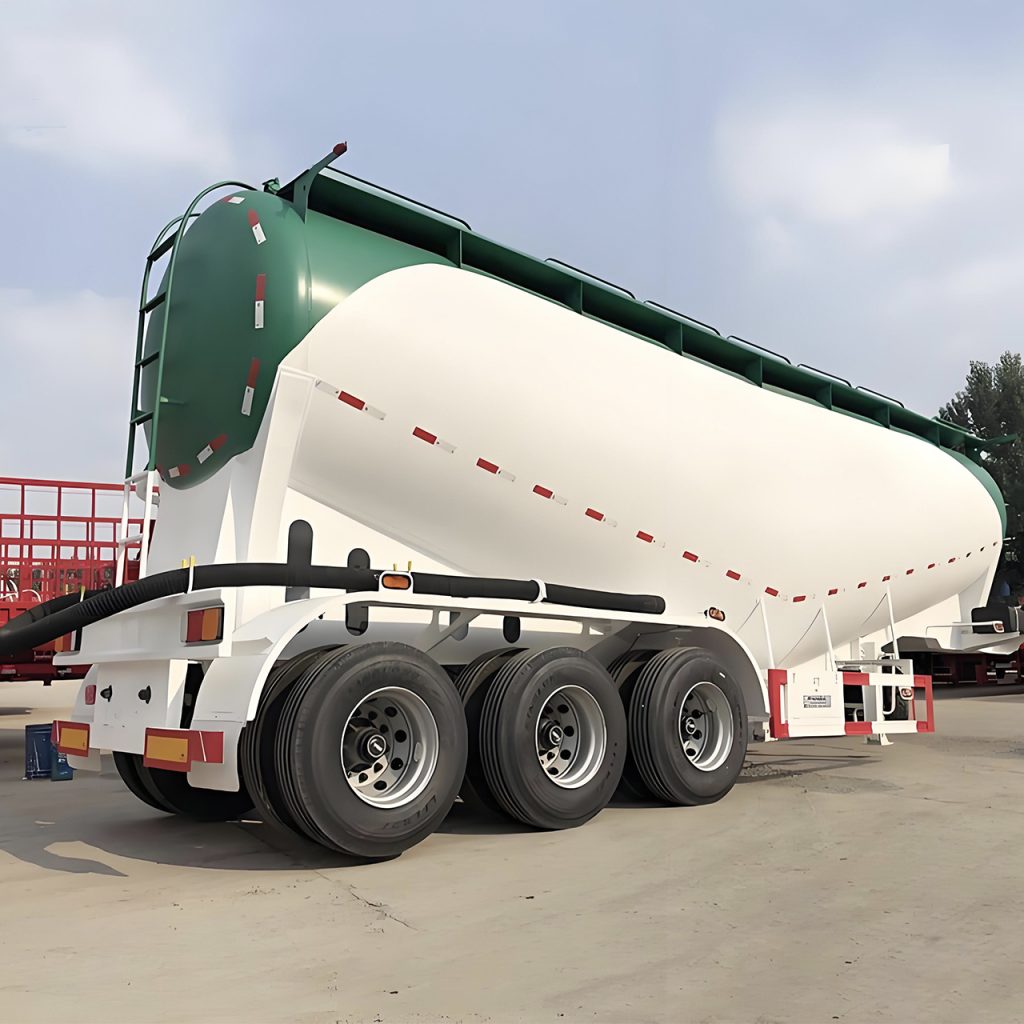
1. High-Quality Steel or Aluminum Materials
Q345 Steel (for increased durability)
Aluminum for weight reduction and increased load capacity
2. High-Strength Welding and Leak-Proof Technology
Submerged Arc Welding
One-Piece Molded Tank
Excellent Sealing Performance
3. Bulk cement semi trailer Fast and Clean Unloading Operation
Smooth Fluidized Bed
High-Voltage Discharge System
Optimized Piping Layout
4. Reliable Air Compression System
10-12 m³/min Output
Low Energy Consumption
Durable Valve Components
5. Safety Devices
Safety Valves
Pressure Gauges
Emergency Shut-Off Valves
Applications of bulk cement tank semi trailer
Bulk cement tank semi trailer play a vital role in multiple industries:
Cement Plants
Ready-Mixed Concrete Batching Plants
Road Construction Projects
Precast Concrete Plants
Fly Ash Recycling Plants
Mining and Industrial Powder Materials

Benefits of Using dry bulk cement trailer
Bulk material transport trucks offer numerous advantages in terms of increased efficiency and reduced costs.
1. Moisture Protection
Cement remains dry and ready for immediate use, improving construction quality.
2. Higher Transport Efficiency
A single truck can carry up to 80 tons of powdery material, reducing the frequency of transport.
3. Cleaner and Safer Unloading
Enclosed systems reduce dust pollution and improve worker safety.
4. Reduced Costs
Reduced operating costs
Fewer personnel
Higher fuel efficiency (especially with aluminum tank trucks)
5. Less Material Loss
Enclosed pneumatic unloading systems eliminate waste caused by manual handling.
6. Long Service Life
Rugged tank construction with rust-resistant coating extends service life.
How to Choose the Right bulk cement trailer
When selecting a trailer, consider the following:
1. Payload Requirements
Short-distance transport → Steel tanks
Long-distance transport → Aluminum tanks
2. Material Type
Cement → Standard V-type cement tanker semi trailer
Fly ash → W-type bulk cement tank semi trailer
Lime powder → Horizontal design bulk cement trailer
3. Road Conditions
Rough roads → Mechanical suspension
Highways → Air suspension system
4. Budget and Brand
Choose reputable axle, tire, and compressor manufacturers
Ensure convenient spare parts supply
5. Factory Reputation
Look for:
ISO Certification
CE Compliant
100% Pressure Test Report
Good Export Record
Conclusion
Large cement tanker semi trailer are an indispensable part of modern construction logistics. By employing appropriate tank design, unloading systems, and related materials, these cement tanker semi trailer can significantly improve efficiency, reduce costs, and ensure cleanliness and moisture-free transport.
By understanding the structure, characteristics, working principle, and technical parameters, you can confidently choose the most suitable model to support your cement delivery, concrete production, or infrastructure construction business.