
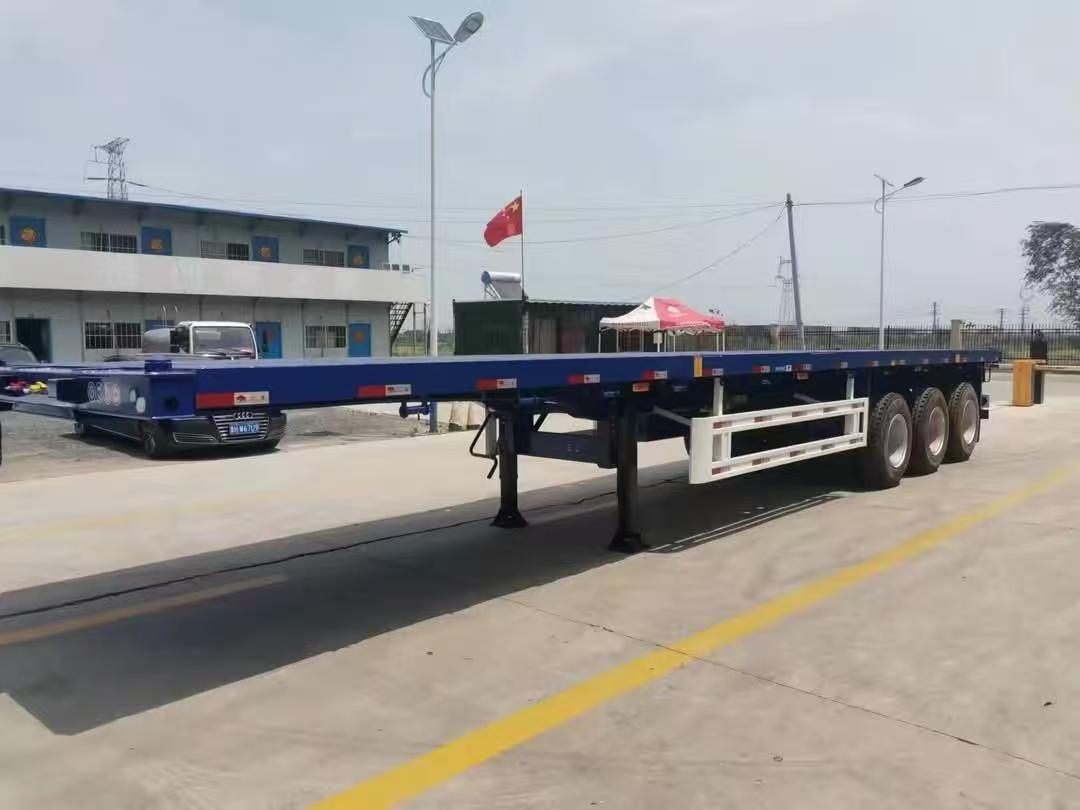
How to Load a flatbed trailer semi truck Safely?

Introduction
Loading cargo onto a flatbed trailer semi truck may look simple, but in real transport operations, it is one of the most critical steps.Many accidents, cargo damage, and trailer failures do not happen on the road—they happen during loading or improper securing.
For operators in Africa, West Asia, Southeast Asia, and South America, where cargo is often heavy and road conditions are challenging, safe loading is not optional. It is essential for efficiency, safety, and long-term equipment life.
This guide explains how to load a flatbed semi trailer safely, based on real transport experience rather than textbook theory.
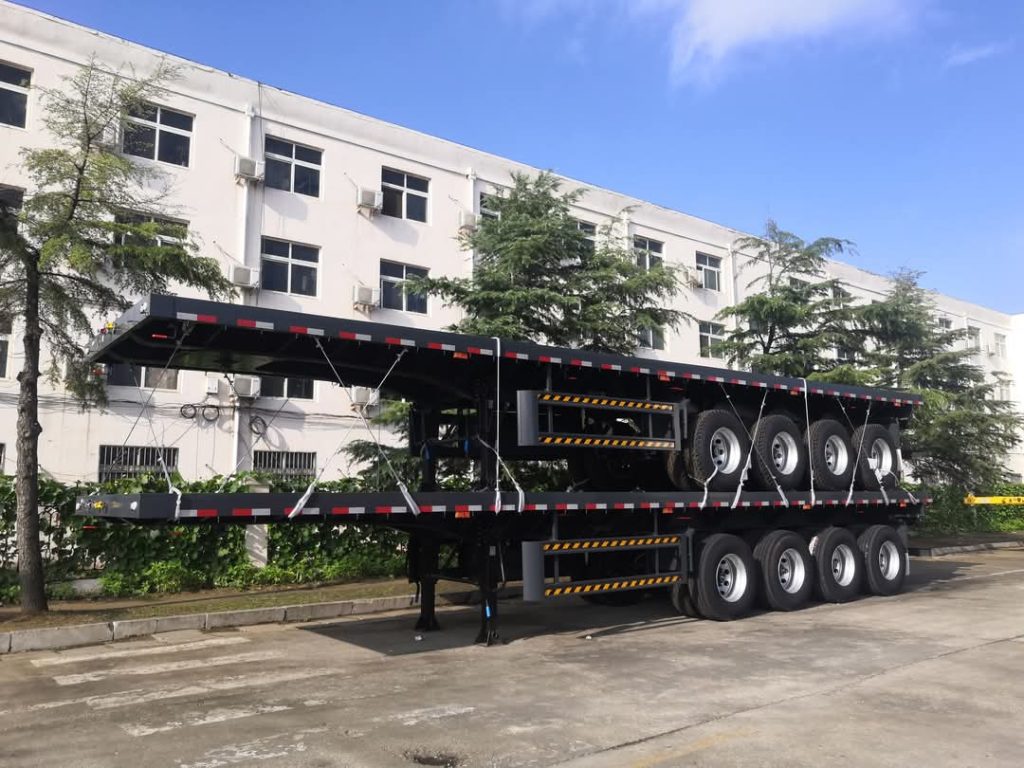
Why Safe Loading important for flatbed trailer?
Heavy-duty flatbed semi trailer can transport a wide range of cargo, including machinery, steel products, containers, and construction materials. However, its open-deck design requires proper loading and securing to ensure safe transportation.
Incorrect loading may cause:
Cargo movement or shifting during transit
Uneven load distribution and excessive stress on the trailer frame
Premature wear of axles, tires, and suspension components
Higher accident risks, especially on rough or uneven roads
Whether using a 3 axle flatbed semi trailer or a 4 axle flatbed trailer, proper weight distribution and secure cargo fastening are essential for safe operation, longer trailer life, and efficient transportation.
Inspect the flatbed trailer semi Before Loading
Check the flatbed trailer Structure
Before any cargo touches the deck, take a few minutes to inspect:
Main beam condition
Deck surface and welds
Lashing points and twist locks
A damaged or overloaded trailer should never be loaded again until repaired.
Confirm flatbed trailer specifications
Different flatbed trailer semi truck have different load limits. Always confirm:
Rated payload
Axle configuration
Deck length and width
For example, a 3 axle flatbed semi trailer is commonly rated for heavier loads than a two axle model, but overloading is still a common mistake.
Safe Loading Tips for Flatbed Trailers
Plan Cargo Placement Before Loading
Keep the load centered over the main beam.
Distribute weight evenly across all axles.
Avoid excessive front or rear loading.
For 40 ft flatbed semi trailers, balanced loading helps reduce frame stress and improves stability during long-distance transport.
Consider Cargo Size and Center of Gravity
Before loading, evaluate:
Cargo height, width, and length
Weight distribution
Center of gravity position
High or irregular cargo may require additional securing methods to prevent tipping or shifting.
Inspect Trailer Structure
Before loading, check:
Main beams and cross members
Deck condition
Tie-down points
Kingpin and landing gear
Any cracks, deformation, or damage should be repaired before operation.
Check Axles, Tires, and Suspension
Ensure:
Proper tire pressure and tire condition
No suspension damage
Correct axle alignment
Good brake lines and air hoses
A well-maintained flatbed trailer semi truck provides better load stability, safer operation, and longer service life.

Use Proper Loading Equipment
Crane or Forklift Loading
When loading with a crane:
Lift cargo vertically
Avoid dragging cargo across the deck
Lower slowly to prevent impact damage
When using a forklift:
Ensure fork length matches cargo size
Avoid sudden movements
Keep the load level at all times
This helps protect both the cargo and the flatbed semi trailer deck.
Avoid Deck Impact Damage
Repeated heavy impact during loading can damage the trailer deck and weaken welds. Over time, this reduces the service life of the trailer.
Experienced operators treat loading as part of trailer maintenance
Secure the Load Correctly
Use the Right Securing Tools
Common securing equipment includes:
Steel chains
Ratchet straps
Wire ropes
Corner protectors
All securing devices must be rated for the cargo weight.
Apply Proper Lashing Techniques
Good lashing should:
Prevent forward, backward, and lateral movement
Apply tension evenly
Avoid sharp edges cutting straps
On a china flatbed semi trailer or any export model, lashing points are designed for heavy-duty securing—use them properly.
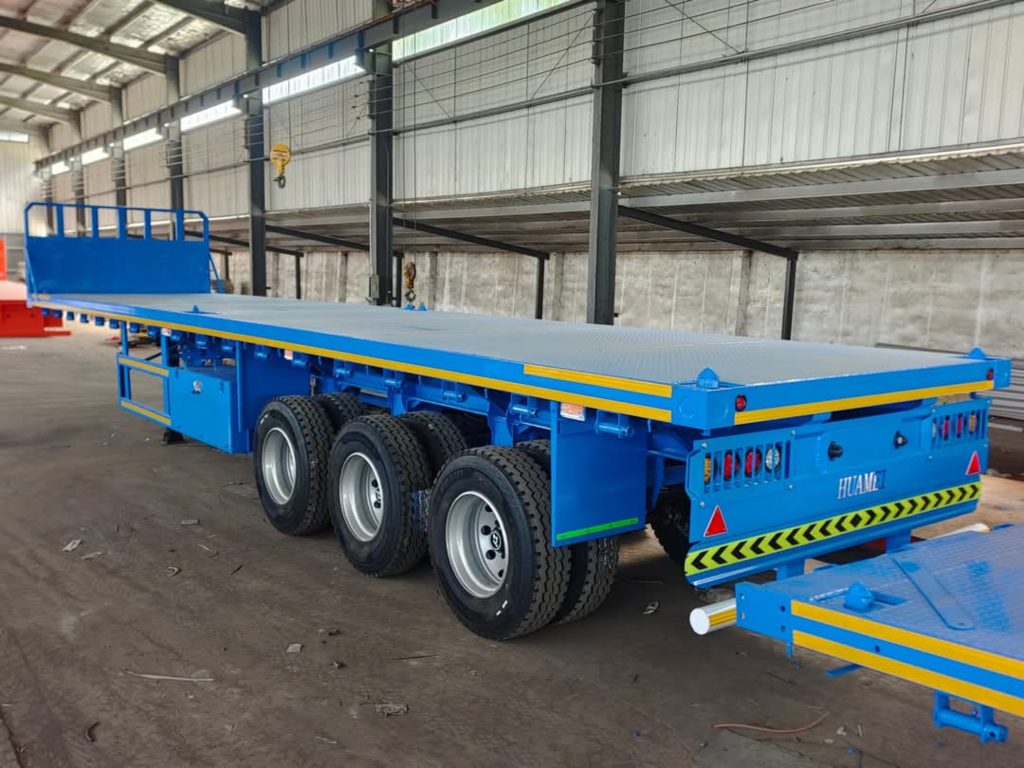
Flatbed trailer semi truck Specifications
Common Specification
| Item | Common Specification |
| Trailer Type | Flatbed Semi Trailer |
| Length | 40 ft / 45 ft / 48 ft |
| Axles | 2 or 3 |
| Payload Capacity | 30–60 tons |
| Deck Height | 1,500–1,550 mm |
| Main Beam | High-strength steel |
| Tire Size | 12R22.5 / 315/80R22.5 |
These specifications are widely used for china flatbed semi trailer exports to Africa, West Asia, Southeast Asia, and South America.
Flatbed trailer Common Loading Mistakes to Avoid
Overloading beyond rated capacity
Uneven weight distribution
Insufficient lashing
Ignoring center of gravity
Skipping post-loading inspections
Avoiding these mistakes significantly improves safety and trailer lifespan.
Why flatbed trailer Loading Requires Experience
Unlike box cargo semi trailers, a flatbed trailer semi truck exposes the cargo to movement and environmental forces. Safe loading is a skill developed through experience, not just rules.
Operators who invest time in proper loading procedures:
Reduce cargo claims
Protect their equipment
Improve overall transport efficiency
Understanding Weight Distribution Before Loading
Safe loading is not only about securing cargo—it starts with understanding how weight affects the trailer.
Why Weight Distribution Matters
Improper weight distribution can lead to:
Excessive stress on one axle
Poor braking performance
Trailer instability during turns
Increased risk of rollover
When loading a flatbed trailer semi truck, the goal is to distribute weight evenly across all axles while keeping the center of gravity as low as possible.
Positioning Heavy Cargo Correctly
As a general rule:
Heavier cargo should be placed over or slightly ahead of the trailer axles
Avoid concentrating weight at the rear or extreme front
Keep cargo centered along the trailer’s longitudinal axis
This principle is especially important when transporting machinery, steel coils, or containers.
Special Considerations for Oversized Cargo
Handling Oversized Loads
Oversized cargo requires careful planning before transportation.
Key steps include:
Measure cargo dimensions accurately
Check height and width limitations
Determine the correct loading position
Prepare required permits or escort vehicles when necessary
Proper planning helps ensure safe transport and compliance with road regulations.
Weather and Environmental Factors
Weather conditions can affect loading and cargo security.
Consider the impact of:
Rain – Reduces friction between cargo and deck
Strong Wind – Increases the risk of cargo instability
Extreme Heat – May affect tie-down tension and equipment performance
Adjust loading methods and securing systems according to weather conditions to improve safety during transportation.
FAQ
What is the safest way to load a flatbed trailer?
The safest way is to evenly distribute weight, keep the center of gravity low, and secure cargo using proper tie-down equipment.
How many straps are required to secure cargo?
At least 4 tie-down points are recommended for heavy loads, but more may be required depending on cargo size and weight.
Can you overload a flatbed trailer?
Yes, and it is dangerous. Overloading can damage the trailer, cause accidents, and violate transport regulations.
Why is weight distribution important?
Improper weight distribution can lead to trailer instability, tire failure, or loss of control while driving.
How often should you check the load during transport?
You should check the load after the first 50 km and periodically during long-distance trips.
Get Professional Trailer Solutions
If you need a flatbed trailer designed for safe and efficient cargo transport, contact us for:
Heavy-duty configurations
Customized load solutions
Export-ready trailers