
How to Choose the Right Trailer Type for Cargo (Fence, Side Wall, or Flatbed)

Choosing a trailer body is an operations decision before it becomes a purchasing decision. In the field, the correct match reduces rework at loading bays, limits load shift on broken pavement, and protects packaging across changing weather. Therefore, the selection should start with cargo behavior and handling method, then move to route realities and compliance details. Within the cargo semi trailer category, fence, side wall, and flatbed structures solve different problems first, so a structured comparison prevents costly misfits.
How Trailer Architecture Changes Risk, Speed, and Total Cost
A trailer’s structure shapes daily efficiency, not just payload rating. For example, a high-capacity platform still underperforms if loading tools cannot reach the cargo safely. Meanwhile, a well-matched body can reduce dwell time even with similar axle capacity.
Operational risk also changes with side protection and anchor layout. Consequently, the same load can travel safely on one design and shift dangerously on another. Wind, braking, and cornering forces remain constant, but the restraint system differs.
Packaging integrity often decides profitability on routine lanes. Therefore, side containment and splash protection can matter more than theoretical volume. In addition, predictable stacking reduces damage from vibration and strap pressure.
Compliance is another structural outcome. Axle spacing, deck height, and overall width influence permits and route options. As a result, a trailer body choice can either simplify dispatch or create recurring paperwork friction.
Finally, long-term durability depends on how loads interact with the frame. Point loads, uneven stacking, and repeated torsion fatigue different structures in different ways. Accordingly, selection should treat the trailer as a load-control system, not only a carrier.
A Practical Decision Map: Fence vs Side Wall vs Flatbed
A decision map keeps selection consistent across loads and routes. First, confirm whether the cargo needs physical containment. Next, confirm loading direction and equipment access. Then, factor weather exposure and site constraints.
Step 1: Does the cargo require containment to prevent spread?
Loose, compressible, or deformable packaging benefits from walls. Accordingly, side wall and curtain side designs often score higher for bagged or cartonized bulk. By contrast, rigid freight that blocks well needs fewer side barriers.
- High spill or slump risk: side wall or curtain side
- Moderate risk with airflow needs: fence
- Low risk with rigid geometry: flatbed
Step 2: How will loading happen most of the time?
Handling method is a dominant variable. Therefore, forklift side-loading favors drop sides or curtains, while crane lifting favors open decks. In practice, the fastest trailer is the one that matches the dominant tool.
- Forklift from the side: drop side or curtain side
- Crane from above: flatbed or fence
- Rear dock loading: curtain side or rear-access layouts
Step 3: How sensitive is the cargo to rain, dust, and road spray?
Weather sensitivity changes packaging requirements and claims risk. Consequently, side protection and cover systems become critical on long mixed-climate lanes. Even so, partial shielding can be sufficient when combined with proper wrap and tarps.
- High sensitivity: curtain side system + top coverage
- Medium sensitivity: side wall + tarp or roof kit
- Low sensitivity: flatbed or fence + optional tarp
Step 4: Is the load oversize, tall, or irregular?
Oversize geometry often decides the body style quickly. Therefore, flatbeds dominate for tall or wide units, while side walls dominate for consistent pallet blocks. Meanwhile, fence designs bridge mixed irregular loads when ventilation and visibility matter.
- Long steel, timber, pipe: flatbed with stakes or bolsters
- Machinery skids and modules: flatbed with chains and edge protection
- Bagged bulk on pallets: side wall or fence depending on airflow needs
Build a Cargo Profile Before Selecting Any Body Type
A cargo profile prevents selection based on one feature. First, document physical dimensions and mass distribution. Next, define handling equipment and lifting points. Then, record packaging sensitivity and exposure limits.
Define dimensions, footprint, and center of gravity
Length, width, and height set the boundary conditions. Consequently, clearance planning and stacking limits become predictable. Additionally, a higher center of gravity increases rollover sensitivity in roundabouts and ramps.
Footprint and point loads matter as much as gross weight. For example, steel coils and machine skids concentrate force on small areas. Therefore, crossmember spacing, deck material, and reinforcement deserve attention.
Deck height also affects stability. A lower platform reduces lateral leverage in turns. Accordingly, stability improves without changing payload capacity.
Map packaging behavior and deformation risk
Packaging strength determines restraint strategy. Consequently, soft sacks and thin cartons can deform under straps. In that case, edge protectors and correct strap angles prevent crush damage.
Spill pathways should be identified early. For example, bag seams can fail under vibration and corner pressure. Therefore, walls, liners, and netting can prevent losses and cleanup delays.
Moisture sensitivity must be explicit. Paper products, food packaging, and cement bags react quickly to spray. As a result, splash shielding and top coverage often pay back fast.
Confirm handling tools and site geometry
Handling tools shape loading speed and safety. Forklifts require clean side access and predictable entry points. Therefore, drop sides, curtains, or low obstacles improve productivity.
Cranes and forklifts also demand different clearance. Crane lifting needs vertical space for slings and spreader bars. Consequently, an open deck often reduces loading risk.
Site geometry matters on distribution lanes. Tight yards punish wide turns and long wheelbases. Accordingly, axle configuration and kingpin placement affect daily maneuvering.
Record route exposure and security context
Route exposure includes weather, road quality, and wind zones. Therefore, open designs may require stronger restraint and cover discipline on crosswind corridors. Meanwhile, poor pavement increases strap loosening and packaging abrasion.
Security context changes the cost of exposure. Open decks display cargo and hardware. Consequently, sealed curtains and higher barriers can reduce opportunistic loss.
Fence Trailers: Ventilation, Visibility, and Configurable Restraint
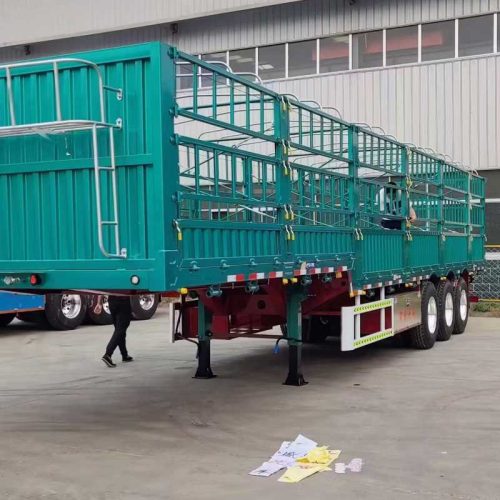
Fence structures rely on rails rather than solid side panels. Therefore, airflow stays high and inspection becomes easy. Additionally, removable sections can support mixed freight strategies across seasons.
What fence designs do best in daily operations
Ventilation is a primary advantage. Livestock, produce crates, and agricultural loads benefit from airflow that reduces condensation. Consequently, fence designs often improve cargo condition on humid routes.
Visibility supports faster checks. Strap tension, corner guards, and pallet alignment remain visible through rails. Therefore, inspection time drops and problems get corrected earlier.
Multi-direction loading is also easier. Forklifts can approach where rails open, and cranes can lift from above. As a result, fence layouts adapt to varied yards.
Cargo types that frequently match fence platforms
Fence trailers fit cargo that is bulky, mixed, or ventilation-sensitive. Moreover, the rails act as guidance for stacking and restraint. Common matches include:
- Livestock transport with controlled side barriers
- Bagged agricultural inputs when tarp systems are used
- Timber bundles, bamboo, and light construction materials
- Palletized bricks and masonry products with moderate exposure tolerance
- Drums and rigid containers when inspection access is valuable
Fence-specific strengths that reduce total friction
Removable rails increase flexibility. Consequently, one chassis can serve multiple peak seasons with simple reconfiguration. That flexibility often reduces fleet complexity.
Tarping workflows can be efficient with rails. Tarp edges anchor cleanly to rail height. Therefore, wind-lift risk can be managed with consistent rope patterns.
Rails also increase usable lashing geometry. Higher anchor lines improve strap angles on tall stacks. Accordingly, restraint becomes more stable without over-tightening.
Limitations and practical mitigations
Weather protection is limited without covers. Road spray can reach the load base. Therefore, tarps, waterproof pallet sheets, and shrink wrap become standard.
Small loose items can drift toward openings. Bagged goods with weak stitching may deform. Consequently, liners, nets, or taller lower panels reduce outward movement.
Aerodynamics can be less favorable with high stacks. Crosswinds may increase sway. Accordingly, height planning and consistent load blocking remain important.
Useful options for fence applications
Fence height selection matters. Lower rails support pallet blocks, while higher rails support tall stacks. Therefore, the rail height should match typical cargo geometry.
A reinforced front headboard reduces forward shift. Consequently, braking events cause less damage. Extra lashing rings and rub rails increase securement flexibility, which also improves safety.
Side Wall Trailers: Containment, Splash Protection, and Cleaner Stacking
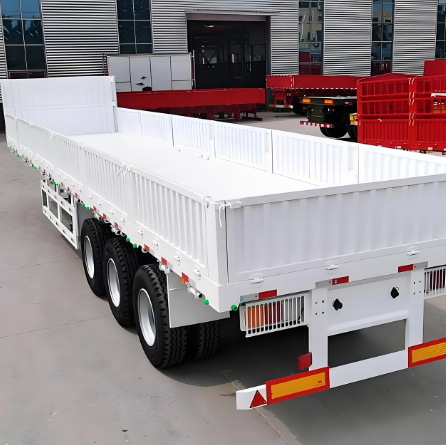
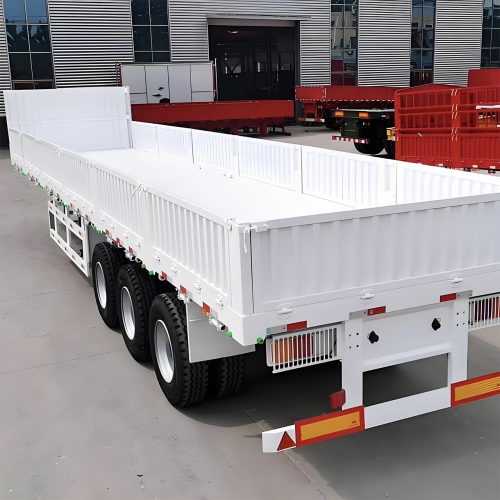
Side wall bodies add solid panels that define the cargo envelope. Therefore, bagged and cartonized freight stays aligned under braking and cornering. Additionally, side panels reduce splash and debris impact.
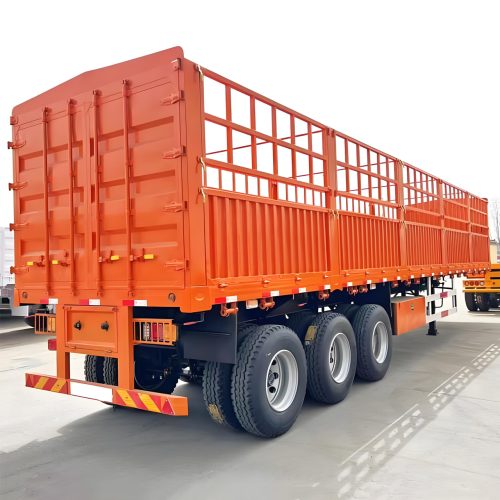
What side wall designs solve immediately
Containment is the core benefit. Sacks and cartons resist outward slump against a solid boundary. Consequently, load shape remains stable across uneven pavement.
Side panels also reduce minor packaging damage. Road spray and gravel strike the panels rather than the cargo. Therefore, delivered appearance and packaging integrity improve.
Loading remains flexible when panels open. Drop sides allow forklift entry without full enclosure. As a result, side walls often fit mixed pickup and delivery sites.
Common cargo that fits side wall structures
Side wall trailers commonly carry deformable packaging and mixed general freight. Additionally, they handle many “bulk-in-bags” lanes effectively. Typical matches include:
- Bagged grain, sugar, flour, and feed inputs
- Palletized cement bags and construction consumables
- Cartonized general cargo and crate shipments
- Drums and sealed chemical packaging with correct compliance planning
- Packaged industrial parts needing splash shielding
Drop side vs fixed side wall: practical differences
Drop sides fold down to simplify side loading. Consequently, forklifts can place pallets quickly and safely. Drop side designs often fit warehouses with limited rear-dock access.
Fixed side walls add torsional stiffness. Therefore, the body resists racking under lateral forces. That stiffness supports repeated highway runs with consistent loading patterns.
Panel height changes stacking strategy. Taller walls support higher stacks without bulge. Meanwhile, lower walls reduce weight and improve manual access.
Side wall strengths that matter for cost control
Containment reduces cleanup and minor loss. Consequently, fewer trips get disrupted by fallen bags or collapsed cartons. Packaging claims often decline with improved alignment.
Side panels support more consistent strap angles. Straps can run over the top with stable edge protection. Therefore, restraint becomes repeatable across loads.
Wind exposure is also reduced versus open rails. Consequently, packaging flutter and abrasion decline. That protection often extends tarp life as well.
Limitations and practical workarounds
Side walls add tare weight. Therefore, net payload can decrease on weight-limited corridors. Material selection and axle planning become important to maintain efficiency.
Irregular oversize cargo may conflict with wall geometry. Machinery outriggers and tall frames can exceed safe envelope. Consequently, flatbeds often become the safer option for those loads.
Moisture protection remains partial without roof systems. Rain can enter from above. Therefore, top covers, tarps, or curtain systems complete the protection package.
Options that improve side wall productivity
Reinforced headboards improve safety during braking. Consequently, forward shift risk declines. Higher panels increase containment for sacks, while extra lashing rings improve securement patterns.
Toolboxes and spare carriers reduce downtime on long corridors. Additionally, ABS or EBS compatibility improves braking consistency, which also protects cargo.
Flatbed Trailers: Maximum Access for Oversize, Rigid, and Crane-Loaded Freight
Flatbeds provide an open deck without side barriers. Therefore, cranes and forklifts can approach from any direction. Additionally, oversize geometry faces fewer interference points during placement.
What flatbeds do better than other body types
Top-loading efficiency is a primary advantage. Heavy equipment and fabricated steel can be positioned quickly with cranes. Consequently, loading windows shorten on project sites.
Long cargo fits naturally. Beams, pipes, and timber can extend with controlled overhang. Therefore, route planning focuses on marking and permits rather than side clearance conflicts.
Securement can be customized. Chains, binders, straps, and blocking can be combined. As a result, irregular loads can be stabilized with tailored restraint layouts.
Typical flatbed use scenarios
Flatbeds serve construction, industrial projects, and port logistics. Moreover, many loads are rigid and blockable, which suits open decks. Common scenarios include:
- Construction equipment, generators, and machine skids
- Rebar bundles, plate steel, and long fabricated components
- Industrial modules with lifting eyes and frames
- Container transfer with twist locks and chassis options
- Timber and long building components with stakes or bolsters
Tradeoffs that require disciplined planning
Exposure is total. Rain, dust, and spray hit cargo directly. Therefore, tarps, wraps, and waterproof covers become standard equipment.
Securement quality becomes the dominant safety factor. Poor strap angles and insufficient anchors increase shift risk. Consequently, anchor layout and hardware selection matter more than body branding.
Security exposure can rise at unsecured stops. Open decks display cargo. Therefore, staging discipline and route planning help reduce risk.
Flatbed accessories that improve safety and speed
Winch systems can speed restraint. Sliding winches improve strap placement on varied loads. Consequently, load control becomes quicker and more repeatable.
Chain trays and binders support heavy steel and machinery. Coil racks and cradles prevent roll, which also protects straps. Stake pockets and removable stakes add temporary side constraint when needed.
Rub rails and lashing rings increase anchor options. Therefore, restraint patterns can adapt to different cargo footprints.
When flatbed clearly outperforms fence and side wall
Tall cargo often forces the decision. Walls become obstacles for crane access and sling clearance. Consequently, open decks reduce placement risk.
Irregular oversize cargo also favors flatbeds. Side barriers do not add value when geometry cannot be contained. Therefore, flatbeds provide simpler, safer clearance.
Rigid blockable loads are another strong match. Steel frames and machine skids can be braced. As a result, side walls become unnecessary weight.
Match the Body Type With Configuration Choices That Affect Daily Performance
Body type defines the envelope, but configuration defines durability and compliance. Therefore, selection should include axles, suspension, frame structure, and corrosion strategy. In practice, these choices influence uptime more than minor styling differences.
Axle count, spacing, and brake systems
Axle count spreads weight across the road. Consequently, heavy loads can remain compliant with local limits. Three-axle layouts often balance capacity and maneuverability.
Spacing influences turning and tire scrub. Therefore, urban or tight-yard lanes benefit from geometry that reduces scrub stress. Reliable hubs and brake systems also reduce roadside failures.
Brake compatibility matters for stability. ABS and EBS improve consistency under varying traction. Consequently, cargo experiences fewer shock loads during braking.
Suspension choices: mechanical vs air
Mechanical suspension is durable and simple. Therefore, it fits harsh roads and basic maintenance environments. Air suspension improves ride quality, which benefits fragile packaging.
Air systems also support leveling at docks. Consequently, forklift entry can become smoother. However, system protection and service planning remain important on remote lanes.
Frame materials, reinforcement, and fatigue strategy
High-strength steel supports heavy duty with controlled flex. Therefore, weld quality and crossmember layout remain decisive. Reinforcement can reduce fatigue where point loads repeat.
Flooring should match cargo behavior. Steel floors handle point loads well. Meanwhile, hardwood or composite options can improve friction and noise control for pallets.
Corrosion protection and long-life finishing
Corrosion planning extends service life. Coastal humidity and road salt accelerate rust. Therefore, primers, coatings, and sealed cavities protect geometry over time.
Hardware protection matters too. Hinges, latches, and lashing rings face abrasion and moisture. Consequently, quality finishing reduces recurring replacements.
Deck height and clearance planning
Deck height affects stability and clearance. A lower deck reduces rollover sensitivity. Therefore, lower profiles often suit winding routes with tall cargo.
Clearance also matters on ramps and ferry crossings. Low decks can scrape on steep transitions. Consequently, approach angle planning must be included in route evaluation.
Securement Strategy: The Real Differentiator Across All Three Types
Securement is where safety and productivity intersect. Therefore, restraint planning should be designed with the trailer selection, not after it. A strong restraint system reduces load shift and packaging damage across real roads.
Core principles that apply across fence, side wall, and flatbed
Forward restraint is essential. Braking events produce high inertia forces. Therefore, headboards, blocking, and correct strap angles control forward shift.
Lateral restraint also matters in turns. Friction mats and side bracing reduce slide. Consequently, stable loads travel quieter and require fewer mid-route corrections.
Vertical bounce loosens straps over time. Therefore, quality ratchets and periodic checks protect against slack. Vibration control also preserves packaging.
Tarping and cover systems
Tarps perform better with structure beneath. Fence rails provide clean edges for tension lines. Therefore, tarping can be fast and repeatable.
Side walls reduce flap zones. Less flap means less abrasion on packaging. Consequently, tarps and covers last longer.
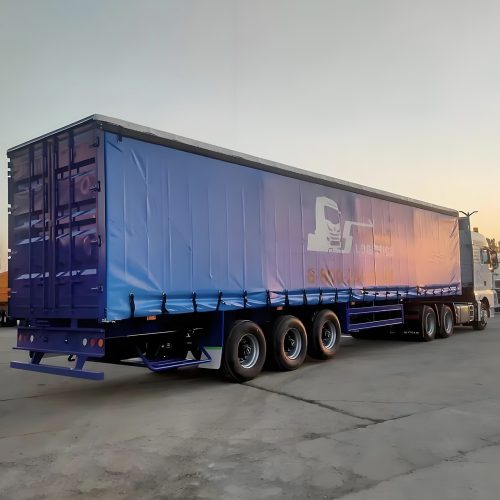
Curtain systems add fast lateral protection. They reduce spray and dust while keeping side access. Therefore, curtains often improve turnaround time on multi-drop routes.
Blocking, bracing, and dunnage
Blocking prevents base slide. Wooden blocks, steel chocks, and dedicated fixtures control movement. Therefore, heavy machinery and coils often require purpose-built supports.
Dunnage spreads point loads. It protects decks and cargo bases. Consequently, timber runners and rubber pads are common for steel and skids.
Edge protection prevents strap cutting. Sharp corners can slice webbing. Therefore, corner guards reduce both damage and safety risk.
Industry-Matched Recommendations With Practical Notes
Industry patterns help narrow the choice. Therefore, sector workflows and cargo traits can guide selection quickly. Still, route style and loading tools remain the final filters.
Agriculture and seasonal bulk
Agriculture often needs ventilation and flexible loading. Fence structures support livestock and produce crates. Consequently, airflow and inspection access improve cargo condition.
Bagged fertilizer and feed benefit from containment. Side walls limit slumping and reduce losses. Therefore, drop sides can support farm loading points with forklifts.
Seasonal weather variability increases exposure risk. Consequently, tarps, rope hooks, and waterproof pallet sheets become standard kit.
Construction and infrastructure supply
Construction moves long and heavy materials. Flatbeds fit beams, rebar, and machinery. Therefore, stakes, chains, and binders become daily tools.
Cement bags and consumables fit side walls. Panels protect against spray and debris. Consequently, packaging integrity improves at delivery.
Mixed cargo is common on projects. Fence designs can bridge irregular loads when ventilation is useful. Therefore, modular rails can reduce fleet specialization.
Distribution and general freight
Distribution values speed and packaging condition. Side walls and curtains reduce dust and spray. Consequently, they fit multi-stop lanes with mixed sites.
Forklift access dominates many distribution workflows. Drop sides reduce loading friction. Therefore, turnaround improves at small warehouses without rear docks.
Security considerations also rise with staging. Curtains and sealable systems can reduce exposure. Consequently, loss risk declines in busy corridors.
Industrial projects and energy logistics
Project cargo is often irregular and crane-loaded. Flatbeds support modules and skids. Therefore, custom securement patterns become normal practice.
Some industrial shipments need partial containment. Side walls protect boxed components. Consequently, side access remains possible while splash risk drops.
Permits often shape project routes. Therefore, deck height, axle spacing, and overhang planning must be aligned with compliance strategy.
Selection Checklists That Prevent Costly Misfits
Checklists make selection repeatable. Therefore, decisions remain consistent across lanes and seasons. Each checklist should be scored against typical cargo, handling tools, and route exposure.
Fence trailer checklist
- Ventilation improves cargo condition or reduces condensation risk
- Visual inspection access is valuable during transit
- Mixed cargo and seasonal variability are common
- Tarping is acceptable for top coverage when needed
- Rail height matches stack height and stability requirements
Side wall trailer checklist
- Cargo slumps, spreads, or deforms under lateral forces
- Packaging benefits from splash shielding and side containment
- Forklift side-loading occurs frequently across sites
- Panel height aligns with stacking plans and pallet geometry
- Top cover strategy exists for moisture-sensitive packaging
Flatbed trailer checklist
- Cargo is oversize, tall, rigid, or crane-loaded regularly
- Blocking and bracing are feasible for the cargo footprint
- Securement hardware and anchor layout support custom patterns
- Weather exposure is manageable with wraps and tarps
- Route planning covers permits and clearance constraints
FAQ: Fence, Side Wall, and Flatbed Selection Questions
1) Which trailer structure fits bagged grain and fertilizer best?
Side wall structures usually control slumping and outward bulge. Consequently, stacks remain aligned during braking and turns. Drop side access can also reduce loading time.
2) When does a fence structure outperform a side wall structure?
Fence designs perform well when airflow and inspection visibility matter. Therefore, livestock, produce crates, and mixed agricultural loads often match fence platforms.
3) Is a flatbed the default choice for steel shipments?
Flatbeds commonly fit beams, pipes, and long bundles. However, steel coils need cradles and anti-roll control. Consequently, coil racks and correct chain patterns are decisive.
4) How can splash protection improve without switching to a closed van?
Side walls reduce spray at the load base. Additionally, tarps and top covers reduce moisture entry. Curtain systems can also provide fast lateral shielding.
5) Which features reduce load shift on rough roads?
Friction mats, strong anchor points, and correct strap angles reduce movement. Meanwhile, air suspension can reduce vibration for fragile packaging. Periodic tension checks also matter.
6) How does side wall height change performance?
Higher walls support taller stacks and reduce outward bulge. However, higher panels add weight. Therefore, height should match typical pallet geometry and route limits.
7) What is the biggest planning mistake with flatbeds?
Securement is often under-planned. Poor anchor layout and strap angles increase shift risk. Therefore, rub rails, winches, chains, and edge protection should be specified early.
8) Can one platform cover several industries safely?
A single platform can serve multiple lanes with the right options. Fence rails that remove quickly increase flexibility. Side walls with drop sides also support mixed workflows.
9) How should moisture-sensitive packaging be handled on open structures?
Waterproof wrapping, top covers, and clean tarp tension reduce exposure. Additionally, pallets should be protected from spray at the base. Consistent staging discipline reduces damage.
10) What anchor layout is most useful across different cargo types?
Distributed lashing rings, rub rails, and compatible winch zones increase flexibility. Consequently, securement patterns can adapt to varying footprints and strap angles.
Summary and Practical Next Steps
Selection becomes easier when the process follows the same order each time. First, define cargo behavior and handling method. Next, match that profile to fence, side wall, or flatbed structure. Then, finalize configuration choices that control compliance, durability, and restraint quality. Overall, the best result is a stable load, faster loading cycles, and fewer exposure-related issues across real routes.
Three actionable recommendations:
- First, document a one-page cargo profile covering geometry, handling tools, and moisture sensitivity.
- Next, build a securement plan that lists anchors, straps, chains, and protection accessories.
- Finally, standardize option packages around the chosen cargo semi trailer platform for consistent dispatch and maintenance.