
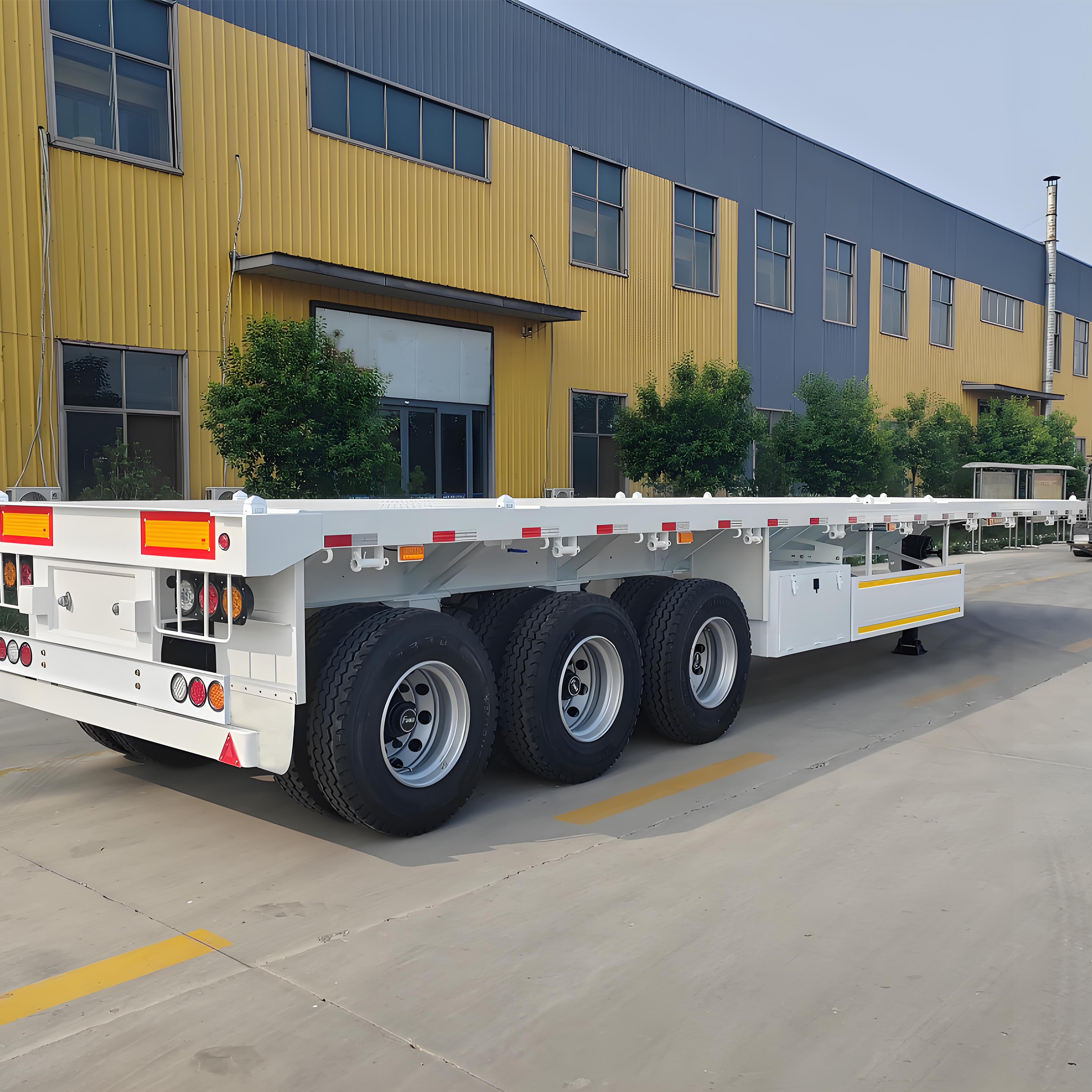
45 Foot Flatbed Trailer for Sale: Best Uses and Key Options

Most teams start looking at a 45 foot flatbed trailer for sale for one simple reason: the 40ft deck keeps coming up just short.
Not useless. Not wrong. Just short enough to create extra work.
A standard 40ft platform can still carry the outbound load. The problem usually shows up around the edges. There is less room than expected for tie-down spacing. Long steel fits, but not comfortably. A container move is easy enough, then the return load turns into a puzzle because the deck no longer feels flexible. That is usually when the trailer stops feeling like a routine purchase and starts becoming a real fleet decision. That is exactly the kind of work a 45ft flatbed is meant to handle: a 13.5 m platform, container-ready layout, and enough usable deck space for container moves, long materials, and mixed freight without turning every loading job into a compromise.
45ft gets attention because it is not a jump into a different trailer category. It is simply a better working deck for operations that have moved beyond neat, predictable loads. When the cargo mix keeps changing, a little more platform starts to matter more than many people expect.
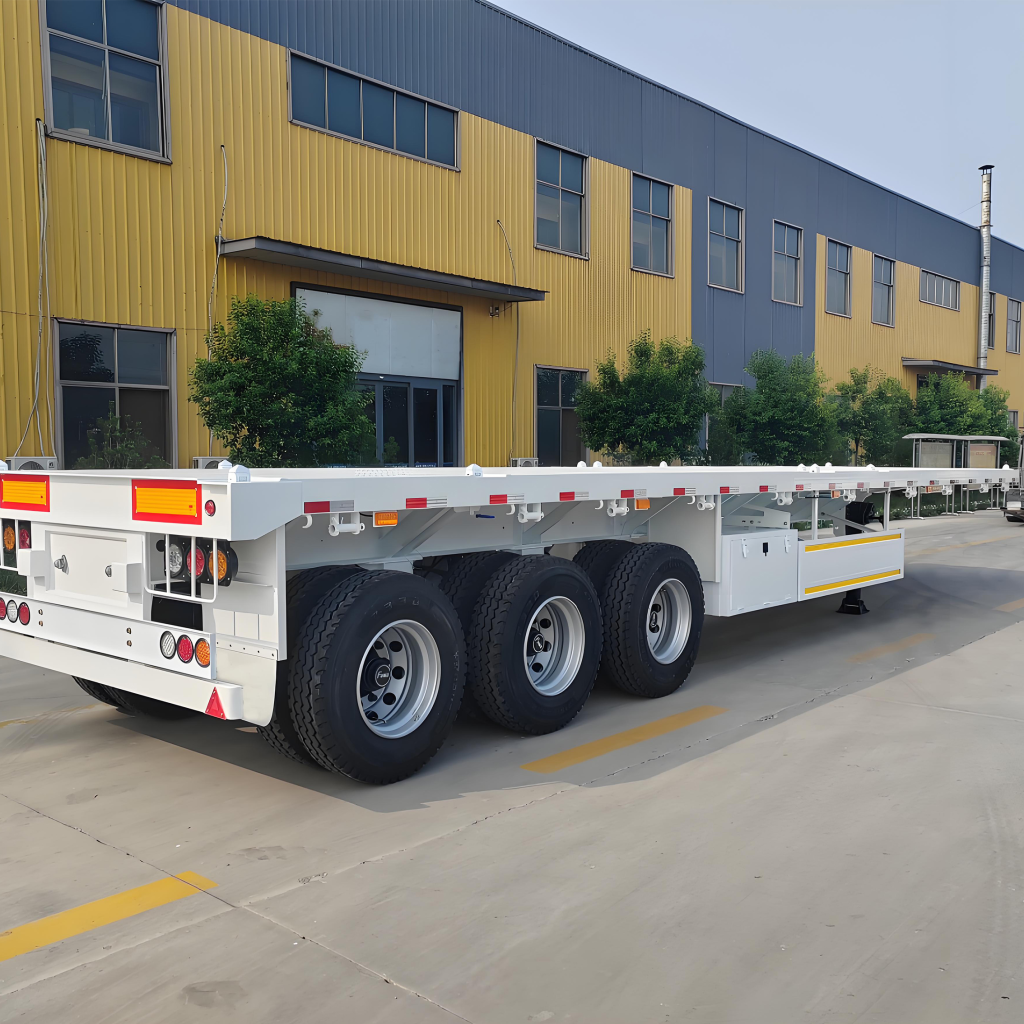
Where a 45ft flatbed actually makes sense
The strongest use case for a 45ft platform is not “general transport” in the broadest sense. It is mixed transport.
That usually means container work on some runs, open freight on others, and a load list that changes often enough to make a shorter deck feel tight. Construction supply is a good example. Steel sections, scaffolding, timber packs, pipes, palletized materials, prefab parts — none of that is unusual for an open-deck trailer. The difference is how cleanly it sits on the deck. A 40ft unit can still move a lot of those loads, but it often does so with less room than anyone really wants.
The same thing happens in project freight. A lot of project cargo is not tall enough for a lowbed and not extreme enough for something specialized. It is just long, awkward, mixed, or hard to place neatly on a shorter platform. That is exactly the sort of load a 45 foot flatbed semi trailer handles well. It gives enough space to keep the freight straightforward without making the trailer itself complicated.
Container-plus-general-freight work is another clear fit. Some operations are not split neatly between “container trailer” and “general cargo trailer.” A box goes out, steel or palletized material comes back, then the next dispatch changes again. In that kind of rotation, a 45ft deck feels more useful than a 40ft one because it gives the trailer more than one good job to do. Our 45-foot model is designed around that middle ground, with a layout that can be configured for two 20ft containers, one 40ft container, or one 45ft container while still working as an open platform.
A good test is to look at the week as a whole, not at one single load. A 40ft trailer may work perfectly on Monday when the job is a routine container move, then start to feel tight on Wednesday when the same unit is asked to carry steel sections, timber packs, or scaffolding, and feel tighter again on Friday when the return load is palletized freight with a different footprint. That is where 45ft starts to make sense. It does not change the kind of freight the fleet handles. It simply gives the operation more room to deal with changing loads without turning each dispatch into another loading compromise.
A simple way to read the fit:
- 45ft works best for mixed cargo, project freight, construction supply, and container work that is not fully standardized.
- 40ft still makes sense for routine 20ft and 40ft container transport.
- A different trailer type makes more sense when the freight is very tall, unusually concentrated, or clearly outside normal flatbed work.
One point is worth keeping in mind here: return loads often tell the truth faster than outbound loads. Outbound freight is usually planned cleanly. Return freight is where deck length starts to matter. If the return side of the work keeps getting messy, that is often the first real sign that 40ft is no longer the best fit.
45ft vs 40ft: Which One Fits the Work Better?
This is the part most procurement teams care about, and the answer is usually more practical than technical.
If the work is mostly standard container transport, regular port runs, or predictable freight with familiar dimensions, 40ft is still the safer answer. It is simpler, more familiar, and easier to keep in routine service. That is exactly where a standard 40ft tri axle flatbed still makes a lot of sense. It remains a proven layout for container work, machinery moves, and regular heavy-duty transport where a standard deck already covers the job.
The 45ft version becomes the better choice when the work keeps exposing the same small limits.
Not major failures. Just repeated friction.
The load fits, but only just.
Tie-down room feels tighter than it should.
The container move is fine, but the return freight sits awkwardly.
Long materials can be carried, yet the loading crew has to think too hard about placement every time.
That is the point where 45ft stops looking like extra trailer and starts looking like the more usable deck.
The difference usually becomes clearer when the transport pattern repeats over time. If one trailer mainly stays in regular container duty, runs familiar routes, and comes back with predictable return work, 40ft usually remains the cleaner choice. If the same trailer is expected to move a box on one trip, take steel or palletized freight on the next, and handle less predictable return loads after that, 45ft usually pays back its extra length quickly. In that kind of work, the gain is not just capacity. It is less friction in everyday loading.
The quickest way to separate the two:
Stay with 40ft if:
- most of the work is standard container duty
- the freight list is stable week to week
- return loads are usually predictable
- the trailer does not need to switch roles often
Move to 45ft if:
- the operation keeps mixing containers with open freight
- long building materials appear often
- return loads regularly feel awkward on 40ft
- the trailer is expected to cover project cargo as well as routine work
This is why the 45ft option is often more attractive in export markets and mixed-duty fleets than in fully standardized transport programs. It is not simply bigger. It is more forgiving.
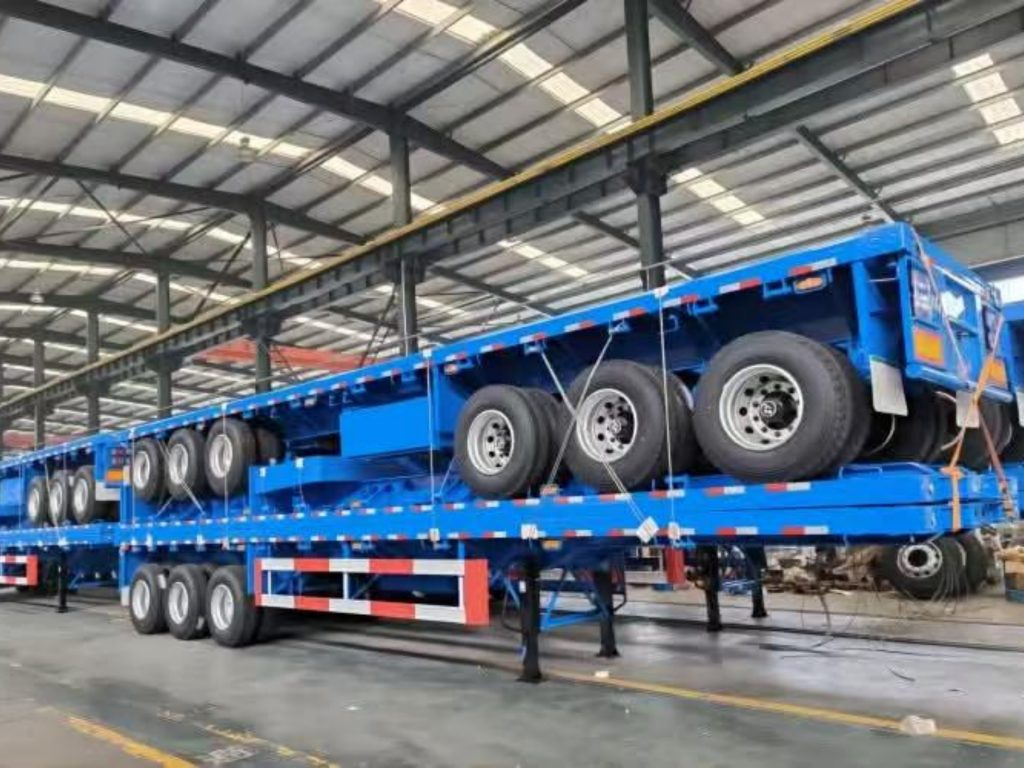
The options that actually change the trailer
Once the deck length is clear, only a few choices really shape how a 45ft platform feels in daily work.
3 axle or 4 axle?
For most 45ft flatbed applications, 3 axle is the place to start. That is usually the right layout when the reason for choosing 45ft is flexibility. It works well for mixed freight, container-plus-general-cargo use, construction supply, and the kind of export transport where the trailer has to handle more than one type of load without becoming overly specific.
A 4 axle setup starts to make sense when the trailer is being chosen for heavier, denser work rather than for flexibility. If the load profile is consistently more demanding and axle distribution is a bigger concern, 4 axle deserves a look. If not, it can easily become more trailer than the operation really needs.
The useful distinction is simple:
- if the 45ft trailer is being selected to make the work more flexible, 3 axle is usually the better starting point
- if it is being selected because the freight is consistently heavier and more demanding, 4 axle becomes more relevant
Mechanical suspension or air suspension?
This choice is mostly about road conditions.
Mechanical suspension still makes the most sense for a lot of 45ft export flatbed work. It suits rougher roads, repeated heavy loading, and service environments where simplicity matters. There is a reason it remains common.
Air suspension becomes more attractive when the route is cleaner, more road-focused, and less punishing. It can be the better fit when smoother running matters to the freight or when the operation is more highway-based than yard-based.
Container-ready first, or open-deck first?
This is one of the most important questions on a 45ft platform, because the whole point of moving to 45ft is often that the trailer needs to do more than one job.
If container work is still the core business and general freight is occasional, then the layout should lean toward container use first. If the reason for going to 45ft is mixed freight, then the deck still has to feel like a useful open platform and not just a longer container trailer.
That is where a lot of 45ft decisions go right or wrong. The spec may look flexible on paper, but the trailer still needs a clear center of gravity in real work. Container duty can be built in without letting it dominate the entire deck layout. That is why our 45-foot model works well for teams that still need container capability but do not want to give up open-deck usefulness.
Why customization matters more on 45ft
A standard 40ft platform is often easy to keep simple. A 45ft trailer usually is not.
Once a fleet starts looking seriously at 45ft, it is often because the work has become less standard in the first place. That is why axle layout, suspension choice, and deck setup matter more here than they do on a more routine platform. This is also where working with a manufacturer that builds for export markets becomes more useful than simply comparing stock listings. The real value is not just availability. It is the ability to match deck length, axle layout, and suspension to the cargo mix, road conditions, and container requirements.
This is also why quote discussions on 45ft trailers work better when the real job is described clearly. Cargo mix matters. Road conditions matter. So does the balance between container work and open freight. A 45ft trailer meant for flexible mixed-duty work should not be configured the same way as one that spends most of its time under denser, more demanding loads. The more clearly that operating pattern is defined early, the easier it is to match the right axle layout, suspension, and deck arrangement.
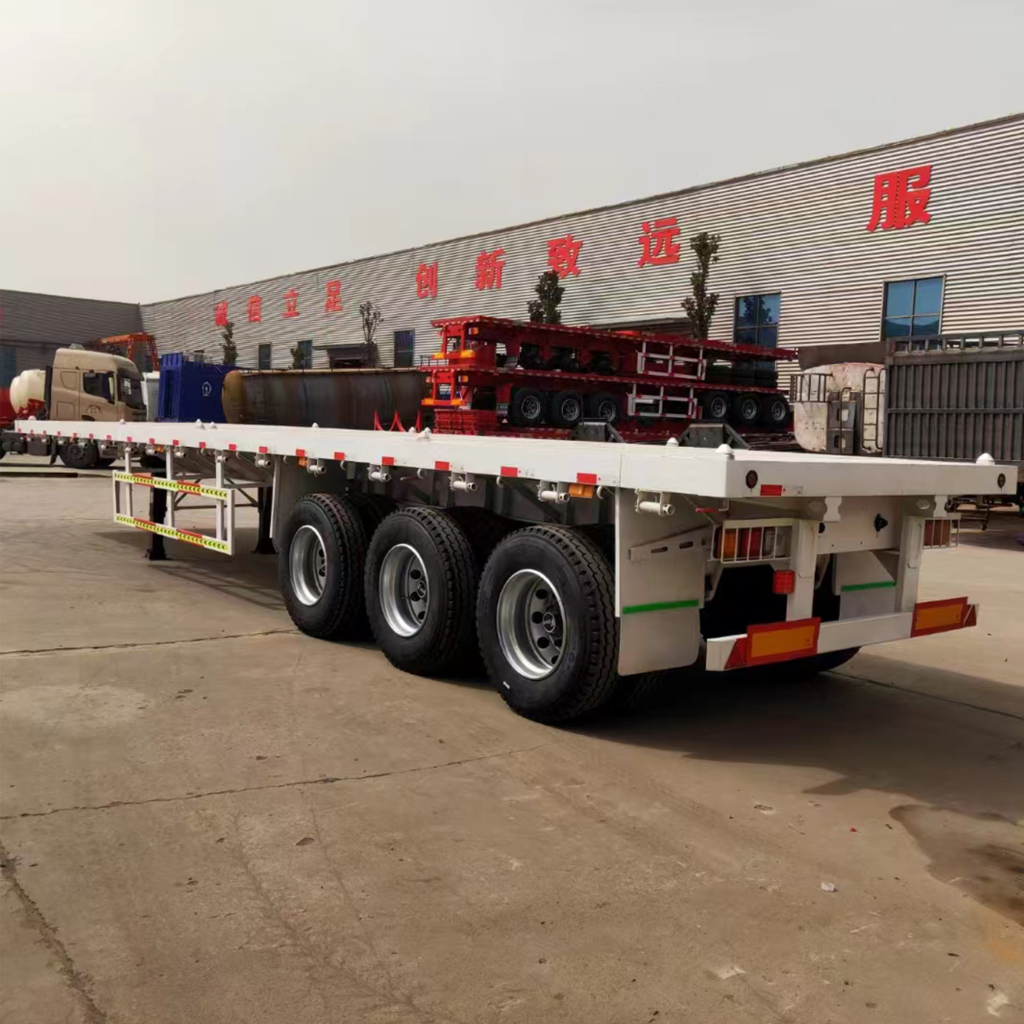
How to make the 45ft decision faster
A lot of teams already know the answer before they start comparing specs. The real question is whether they trust that answer yet.
A quick filter helps:
1) Is 40ft only tight once in a while, or is it becoming a pattern?
If it is occasional, 40ft may still be fine. If it keeps happening, that usually means the operation has already moved past the shorter deck.
2) Is the move to 45ft about flexibility, or just about going bigger?
That matters. Buying 45ft just because it sounds safer is not a strong reason. Buying 45ft because the trailer has to handle containers, long materials, and return freight without constant compromise is a strong reason.
3) Is the real pressure on deck space, or on weight distribution?
If the issue is mainly usable space and mixed cargo, 45ft with 3 axle often makes sense. If the issue is denser freight and more demanding axle loading, the discussion changes.
4) What does the return load keep revealing?
This question is easy to overlook, but it is one of the most useful. Outbound freight may look fine on 40ft. Return freight is where poor fit usually shows up first. If the return side of the work keeps getting awkward, 45ft is worth taking seriously.
That is often enough to make the decision much clearer than another long spec comparison.
A short note on daily use
A good 45ft trailer should feel easy to load. If the deck is being bought for mixed freight, there should be enough room for clean placement and sensible tie-down work. If it is mainly for container duty, that layout still should not make every non-container load awkward. The best 45ft setups feel straightforward in the yard.
Final thoughts
The best reason to choose a 45 foot flatbed trailer for sale is simple: it solves the problem of a 40ft platform being almost enough too often.
For mixed cargo, construction supply, project freight, and container-plus-general-freight work, that extra deck length is not just about capacity. It makes the trailer easier to use and easier to keep productive. For routine container programs, a 40ft tri axle platform may still be the smarter fit. That is exactly why the range includes both, rather than pushing every operation toward one deck length.
A few practical takeaways are enough:
- if the return load keeps exposing the limits of 40ft, pay attention to 45ft
- if the main goal is flexibility, 3 axle is usually the right place to start
- if the roads are rough and the service environment is basic, keep the suspension choice simple
For buyers comparing a flatbed trailer with a 45-foot container-ready platform, the smartest next step is to request a configuration-based quote instead of asking for a general price. BOCA provides WhatsApp support at +86-17274039217 and email support at info@bocaautomobile.com, allowing buyers to confirm deck layout, axle configuration, export packing, and factory customization requirements in one message.