
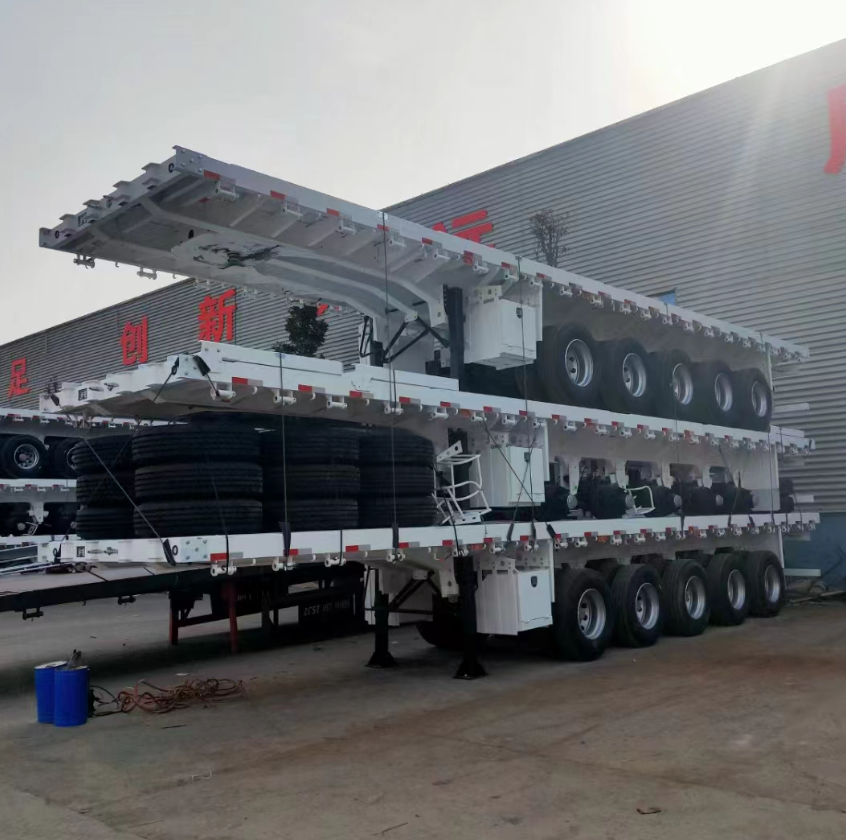
Heavy Duty Flatbed Semi Trailer: How to Choose for Real Export Work

Buying a flatbed semi trailer often looks easier than it really is.
On a product page, the choices can seem straightforward. The deck is open, the structure appears strong, and the description usually says the trailer is suitable for steel, machinery, construction materials, containers, or general freight. At first glance, several models may look close enough. A buyer compares a few dimensions, glances at the axle layout, checks the price range, and feels that the decision is mostly under control.
That confidence usually fades once the trailer starts doing real work.
The first few months reveal far more than the first quotation ever can. A steel load that sounded routine in the buying stage turns out to be awkward to position and secure. A machinery shipment feels acceptable on smooth roads, then much less reassuring once it enters rough plant access roads or broken site entrances. A trailer that looked versatile online begins to show small, repeating weaknesses: loading is slower than expected, securing takes more effort than it should, and mixed cargo always seems to expose some compromise in deck layout or working space.
That is why flatbed trailer selection should never be reduced to headline specifications alone. The better trailer is usually not the one with the most impressive product description. It is the one that suits the cargo you move most often, the roads you actually drive, the loading methods your team uses every week, and the maintenance reality your operation will have to live with after delivery.
This matters even more in export work.
Export buyers rarely operate in perfect conditions. Routes may change. Loading environments may be rougher and less controlled. Maintenance standards vary from market to market. Weather and storage conditions can be harder on equipment. One trailer may need to cover steel shipments, project materials, machinery movement, and general industrial freight within the same business cycle. Under those conditions, choosing a flatbed is not just a purchasing decision. It is a long-term operating decision.
A truly useful flatbed trailer is not the one that sounds heavy duty in a brochure. It is the one that still feels right when the job is late, the yard is crowded, the cargo is irregular, and the road is worse than anyone described at the quotation stage.
That is the standard that matters.
Why flatbed trailers still matter in modern transport
For all the changes in logistics, open-deck transport remains essential for one basic reason: a huge amount of real cargo still does not fit neatly into closed equipment.
Steel sections, pipes, plates, timber, equipment skids, machine frames, palletized construction materials, modular components, and project cargo all create situations where an open platform makes the work easier. Sometimes the issue is length. Sometimes it is height. Sometimes the cargo is neither oversized nor unusually heavy, but simply inconvenient to load into an enclosed body. In each case, the value of a flatbed trailer comes from the same place: it gives the operation more freedom.
That freedom matters more than many buyers first realize.
A crane can place cargo from above without fighting sidewalls or roof limits. A forklift can approach from the side in a steel yard or industrial loading zone. Long cargo can be positioned with less wasted motion. Mixed freight can be arranged more logically. Unloading at a project site is often quicker because the trailer does not force one rigid handling method onto every shipment.
That is why flatbeds continue to play an important role in several sectors at once:
- steel and metal distribution
- fabrication and plant supply
- construction and infrastructure projects
- machinery and equipment transfer
- timber and agricultural logistics
- port support and intermodal work
- project cargo with changing shapes and loading needs
In theory, all of this sounds obvious. In practice, it becomes clear in ordinary working situations.
A steel service center wants fast crane loading and straightforward securement. A construction supplier wants a trailer that can move palletized materials, packs of scaffold, and long site cargo without constant compromise. A machinery operator wants the deck to feel reassuring when the load sits on concentrated support points. A port-side movement may require quick turnaround more than anything else. These jobs are different, but they all reward the same quality: usable flexibility.
That is the real strength of a flatbed semi trailer. It is not simply that the deck is open. It is that the open deck reduces friction in loading, securing, unloading, and adapting to the next job.
And in transport, reducing friction is never a small advantage.
The real test begins after delivery
Most trailer buying mistakes do not look like mistakes in the beginning.
That is one of the reasons flatbed purchasing can be deceptive. During the quotation stage, a model may look entirely reasonable. The overall dimensions seem correct. The build sounds robust. The axle arrangement appears familiar. The supplier describes it as suitable for general cargo, steel, machinery, and project use. The price is competitive enough to stay in the running. From a distance, nothing looks clearly wrong.
The problem appears later, once the trailer enters normal service.
That is when practical differences become visible. One trailer feels easy to work with. The deck layout makes sense, cargo positioning is straightforward, and securing does not become a repeated irritation. Another trailer may also “do the job,” but it never feels fully comfortable. The load fits, but not elegantly. The securement points are usable, but not where crews naturally need them. The structure carries the freight, yet the whole trailer feels less composed on rough access roads than the buyer expected.
This is how disappointment usually begins in this market. Not with one dramatic failure, but with a long sequence of ordinary frustrations.
The steel load can be moved, but it takes too long to secure.
The machinery shipment works, but everyone becomes more cautious than they should have to be.
The project cargo fits, but the deck never seems to offer working space exactly where it is needed.
The trailer performs, but never in a way that feels naturally matched to the operation.
That kind of mismatch is more common than many buyers admit. It comes from a very familiar problem: the trailer was chosen from the outside in, not from the work outward.
In other words, the buying process focused too much on what looked convincing in a quote and not enough on how the trailer would actually behave in daily operations.
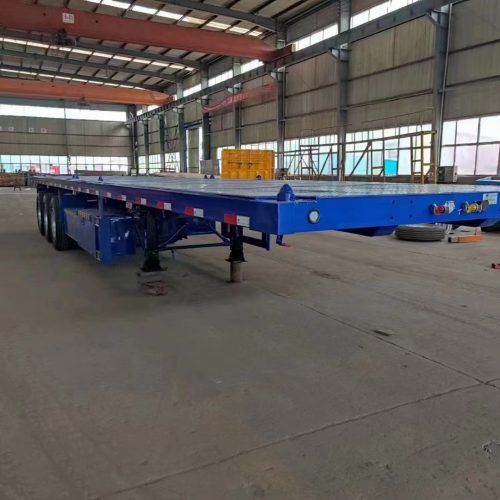
Real selection starts with the work, not the brochure
A better buying process begins with a much less glamorous question: what kind of day will this trailer repeat most often?
That question is more useful than asking about the biggest possible load. It is more useful than comparing headline capacities too early. And it is certainly more useful than letting one unusual shipment dictate the entire purchase.
The hardest normal job matters more than the most dramatic rare one.
That principle is worth holding onto because many weak purchases begin with exactly the opposite logic. A buyer remembers one very long fabricated section, one unusually heavy machine, or one oversized project move, and then builds the whole specification around that exception. The result is often a trailer that looks powerful in theory but feels less practical in everyday use.
A flatbed should usually be chosen around the recurring workload:
What cargo moves every week?
What loads are most awkward to load?
Which shipments take the longest to secure?
What kind of cargo creates concentrated stress or support points?
Which routes include the roughest yards or site entrances?
How often does the operation switch between cargo types?
These questions are not technical in appearance, but they lead to better technical decisions than a parameter-first comparison ever will.
For example, a fleet that mostly handles steel products, palletized construction materials, pipe bundles, and general industrial cargo often benefits more from a practical, broad-use flatbed than from a trailer optimized around rare extremes. A business that regularly moves equipment skids or compact machinery needs a unit that feels confident under concentrated weight and imperfect loading, not merely one that sounds strong in a specification sheet. A mixed cargo operation needs adaptability more than it needs the most aggressive version of “heavy duty” language.
This is why smart selection starts with workflow.
It asks what the trailer will live through, not just what it can claim on paper.
Cargo category matters, but cargo behavior matters more
Two companies may both say they transport industrial cargo and still need very different trailers.
That is because cargo category by itself is often too broad to guide the real decision. Steel, machinery, building materials, pipe, containers, or project freight may all sit within the same general business description, but they behave differently during loading and transport. And that behavior is what the trailer has to work with.
Take steel as an example.
A load of bundled sections placed by crane has one kind of logic. It rewards clean top access, predictable deck space, and straightforward securement. The issue is not simply weight. It is how the load occupies the deck and how efficiently the crew can position and restrain it.
Now compare that to machinery.
A compact machine, generator skid, or industrial base may not look like a complicated load at first. But if the support points are concentrated, or the access roads are uneven, or the loading space is limited, then the trailer needs to inspire confidence in a very different way. Here the question is not only whether the structure can carry the load. It is whether the trailer feels stable and reassuring when the job is done under real conditions rather than ideal ones.
Then there is mixed project cargo.
This is one of the hardest categories to describe neatly and one of the easiest to recognize in the field. A week may include palletized materials, steel packs, tool containers, compact equipment, and irregular assemblies. No single load is especially dramatic, but together they reveal whether a trailer can adapt without making every job feel like a workaround.
That is why good buyers look beyond cargo labels and ask more specific questions:
Is the freight usually uniform or irregular?
Is it loaded by crane, forklift, or ramp?
Does it create wheel loads, skid contact, or blocked support points?
Does the same trailer need to serve several kinds of loading environments?
Will the cargo often change shape from one week to the next?
These questions lead closer to the truth. They move the decision away from generic categories and toward real operating fit.
Loading style often tells the real story
In trailer buying, loading style is frequently underestimated.
Many buyers focus on the cargo itself, which makes sense at first, but the loading method often tells you more about how suitable a trailer will feel in practice. A load placed by overhead crane creates one set of demands. A machine rolled or lifted onto the deck creates another. A project-site delivery that depends on quick forklift access creates a third.
All three may involve open-deck freight. All three may fit the same broad product description. But they do not ask the same things from the trailer.
For crane-loaded steel work, a clear, usable deck matters immediately. The crew wants space that feels open rather than interrupted. Placement should feel predictable. Securement should follow naturally instead of becoming awkward because the trailer works against the load shape.
For forklift-based operations, side access becomes far more important than it may sound during the quotation stage. A trailer can be technically large enough and still feel inconvenient if the working space around the load is poor. When yards are crowded or loading windows are short, these small frustrations become repeated costs.
For machinery transport, handling style can make or break the experience. A trailer that looks suitable in a static image may feel much less convincing once the machine is placed on the deck, the support points become obvious, and the route includes broken surfaces or imperfect site entrances.
This is why flatbed selection should always include loading questions such as:
How is the freight most often placed on the deck?
How much repositioning happens during loading?
Does the load need side access for forklifts?
How often does the team work in tight or rushed loading conditions?
Are the jobs repetitive and controlled, or mixed and unpredictable?
Once those answers become clear, a surprising number of “acceptable” trailers stop looking so acceptable.
The road, the yard, and the site entrance all matter
One of the most common mistakes in trailer buying is to think mostly about the highway and not enough about everything around it.
For many operations, the highway is the least complicated part of the route. The harder reality lies before and after it: broken pavement in industrial parks, uneven steel yards, muddy project entrances, plant loading zones with poor maneuvering space, and remote access roads that quietly punish equipment over time.
These conditions matter because they reveal the difference between theoretical suitability and lived suitability.
A trailer can look excellent on a clean page. It can even feel acceptable on smooth roads. But once it begins working through rough yards, frequent starts and stops, rushed loading, and uneven access surfaces, the operation starts noticing what the quotation stage never showed clearly. Some trailers stay composed. Some do not. Some continue to feel confidence-inspiring. Some begin to feel like the wrong tool, even if they technically remain serviceable.
This matters especially in export work.
Export buyers often face a wider spread of operating conditions than local fleets do. A trailer may spend time in ports, coastal storage areas, inland corridors, industrial routes, remote sites, and mixed service environments where road quality changes dramatically. In these markets, durability is not just about how much weight a trailer can carry. It is also about how well it lives with rougher and less predictable reality.
That is why an honest route assessment matters so much.
If the trailer will spend time in construction zones, plant yards, loading areas with poor surfaces, or routes where maintenance may be less consistent, then the structure, running gear, and overall layout need to be judged through that lens. Not because the trailer must be overbuilt for the sake of image, but because it has to remain dependable when conditions are ordinary in the worst possible sense: rough, repetitive, and not especially forgiving.
Why “heavy duty” means different things in different operations
The term heavy duty appears on countless trailer pages, but it can become almost meaningless if it is not tied to an actual use case.
For one operation, heavy duty may mean the trailer regularly carries dense steel products and faces rough yard handling. For another, it may mean the unit needs to tolerate changing cargo shapes, inconsistent loading habits, and harder export service. In another business, the phrase may simply mean that the trailer must survive a long working life without feeling fragile every time the road turns poor.
In other words, heavy duty is not one thing. It is a relationship between the trailer and the work.
That relationship is why buyers should be cautious about broad language. A trailer does not become practical just because the description says it is rugged. The real question is whether the design choices behind that claim actually match the pressures of the job.
Does the structure feel honest under the loads you move most often?
Does the layout support repeated securing without frustration?
Does the trailer feel composed on rough access roads and plant surfaces?
Does the configuration make sense for export use, not just local demonstration?
These are more useful questions than asking whether the brochure sounds strong enough.
A trailer that genuinely fits hard use often reveals it in a simple way: it reduces anxiety in daily work. It feels less like something the team has to manage carefully and more like something they can rely on even when conditions are not especially tidy.
That feeling is not easy to capture in one specification line, but experienced operators know it immediately.
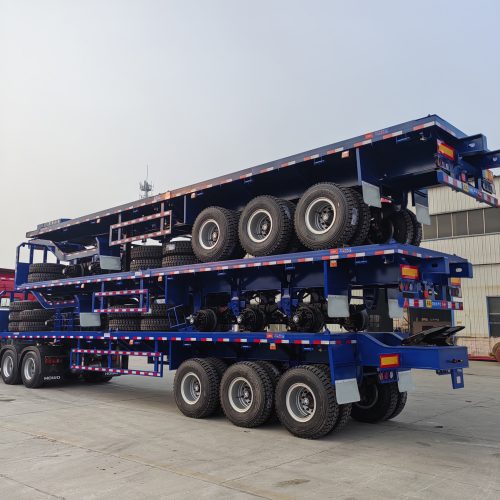
Where deck length really matters
Deck length is one of the first things buyers compare, but its real importance is often misunderstood.
Length matters, of course. A trailer that is too short becomes limiting quickly. But a trailer does not become better simply because it is longer. The right deck length is the one that matches the cargo profile, loading pattern, and day-to-day use of the operation.
This is why 40 ft flatbeds remain such a common choice in many export markets. They often sit in the most practical middle ground. Long enough for a wide range of steel products, pipe, machinery, palletized materials, and general industrial freight, yet still familiar and manageable in ordinary operations.
That popularity does not come from a magic number. It comes from working balance.
For many buyers, a 40 ft layout covers the greatest percentage of recurring jobs without making the trailer unnecessarily specialized. That is especially valuable when one unit has to serve more than one kind of freight. It gives enough room to handle mainstream industrial cargo while staying within a format that operators, drivers, and loading crews already understand well.
By contrast, longer or more specialized layouts make sense when the operation truly needs them. Long fabricated members, project cargo with changing dimensions, or repeated shipments that exceed the comfort zone of mainstream deck lengths can justify a different configuration. But those cases should be chosen because the work demands them, not because a longer trailer automatically feels like a stronger one.
This is a recurring theme in flatbed buying: a useful feature becomes a good choice only when it matches the work.
Why tri-axle layouts remain so common
The same logic applies to axle arrangement.
A tri-axle flatbed is popular in many export applications not because it is the most dramatic choice, but because it often feels like the most broadly usable one. It tends to offer a practical middle ground between support, familiarity, and everyday serviceability. For a large number of operations, that combination matters more than theoretical extremes.
That does not mean every buyer should choose the same axle layout. It means the decision should come from the work.
If the trailer is expected to handle regular industrial freight, mixed cargo, steel products, and route conditions that are demanding but not highly specialized, then a three-axle format often feels sensible. It gives buyers a structure they can understand, loading crews a format they recognize, and operators a layout that remains practical across a wide set of daily jobs.
Again, the point is not the number itself. The point is what kind of working life that number supports.
When buyers forget that, axle discussions become too abstract. They start sounding like product ranking instead of operational reasoning. The smarter view is simpler: choose the axle layout that best fits the cargo pattern, the route reality, and the level of adaptability the business needs.
Mechanical or air suspension? Ask the road first
Suspension is another area where buyers can get drawn into theory instead of reality.
Mechanical suspension continues to appeal in many hard-working export environments because it matches practical service conditions. It is familiar, robust, and easier to support in many markets. For operations that deal with rougher roads, uneven yards, long service cycles, or simpler maintenance structures, that practicality is often more valuable than a more refined system on paper.
Air suspension has its place, and in the right conditions it can bring clear benefits. Smoother ride behavior, more refined response, and better suitability for certain kinds of freight may all matter in some operations. But that decision only becomes correct when the actual route, service environment, and maintenance reality support it.
In a brochure, air suspension can look like an automatic upgrade. In the field, it is only an upgrade if it improves the work you actually do.
That is the broader lesson here. No feature should be judged in isolation. The right suspension is the one that continues to make sense after the trailer has been working for months in the conditions that define the business.
Not the conditions shown in the marketing image. The real ones.
Price only makes sense when paired with use
One of the most misleading ways to compare flatbeds is to compare prices too early.
A lower price can be attractive, and sometimes it is entirely appropriate for the job. A more expensive trailer may also be entirely justified if the work is harder, more varied, or more demanding in the long term. The mistake is to treat price as meaningful before the use case is properly understood.
This is where many buyers create problems for themselves. They compare quotations before they have defined the working reality clearly enough. The result is that trailers with different operating intentions get evaluated as if they were simple substitutes.
They usually are not.
A trailer intended for broad-use industrial freight may look similar to one meant for heavier or rougher conditions, but long-term value depends on how closely the trailer matches the work. A cheaper option may remain a good buy if it truly fits the cargo, roads, and loading style. A more expensive unit may still be poor value if the extra complexity adds little to the actual operation.
That is why price should come later in the decision process. First identify what the trailer needs to do. Then compare what each option is really offering in terms of working fit. Only after that does price begin to mean something useful.
In practice, the better question is rarely “Which trailer is cheaper?” It is “Which trailer is more likely to feel right after a year of normal use?”
That question usually produces better financial judgment as well.
Export work changes what “practical” really means
A trailer intended for export service often has to meet a different standard from one used in a tightly controlled local operation.
Local fleets can sometimes hide weaknesses for a while. Routes are familiar. Maintenance systems are closer. Loading practices are more consistent. The business may know exactly what kind of work the trailer will see each week. Export operations are often less forgiving. The trailer may be shipped over long distances, stored outdoors, exposed to humidity or coastal conditions, paired with varying tractors, and operated by teams with different habits or service routines.
Under those conditions, practicality becomes more demanding.
A practical export trailer is not simply a basic one. It is a trailer that remains dependable under uncertainty. It can tolerate a wider range of operating realities without feeling out of place. It is understandable to maintain. It feels structurally honest rather than decorative. It can handle rougher treatment without quickly becoming an operational frustration.
That is why export buyers often benefit from keeping their thinking clear and disciplined.
The goal is not to add every feature available.
The goal is not to chase the most impressive description.
The goal is to build a trailer that still makes sense when the working environment becomes less controlled than expected.
This is where a lot of “professional-looking” buying logic breaks down. It confuses added complexity with added suitability. In reality, export work often rewards clarity. A trailer that is well matched to the operation, durable in ordinary abuse, and serviceable in the real destination market will usually outperform a more glamorous but less grounded choice.
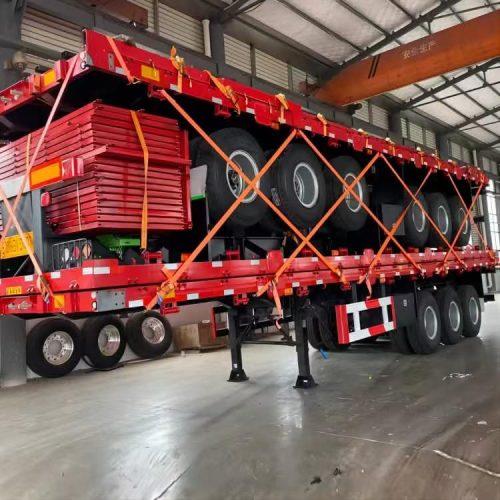
What experienced buyers usually notice too late
By the time a trailer starts feeling wrong, the purchase is already behind you.
That is why experienced buyers often focus on details that newer buyers overlook. Not because those details are exciting, but because they shape long-term satisfaction more than most people think.
Experienced buyers notice whether loading feels natural or awkward.
They notice whether securement takes longer than expected.
They notice whether the trailer stays composed on rough ground.
They notice whether the layout still works when the cargo changes.
They notice whether the trailer inspires confidence on a rushed day, in an imperfect yard, with an imperfect load.
These observations are not glamorous, but they are exactly what separate a trailer that simply exists in the fleet from one that genuinely supports the work.
A good flatbed usually does not win people over through one dramatic feature. It wins by reducing friction in dozens of ordinary moments. The crane operator has fewer positioning problems. The loading crew secures freight more naturally. The driver feels more comfortable when the road gets worse. Dispatch deals with fewer recurring complaints. The trailer does not become a topic because it does not keep forcing people to work around it.
That is what practical value looks like in transport.
And that is why the best trailer choice often feels less like buying equipment and more like understanding a workflow honestly enough to support it.
The difference between a general-purpose flatbed and a specialized one
A lot of buyers spend time asking which flatbed is best, when the better question is whether they need a general-purpose trailer or a more specialized one.
A general-purpose flatbed is the right answer more often than people think. It works well when the operation handles a broad mix of open cargo: steel one week, pallets the next, equipment after that. In that environment, the trailer needs to be adaptable, easy to live with, and not too narrowly optimized around one kind of load.
A more specialized flatbed becomes the better choice when the work repeatedly pushes in one direction. That may mean very long cargo, changing load lengths, denser equipment, or operating conditions that make a more specific configuration worthwhile. But specialization should be earned by repeated operational need, not assumed because it sounds better.
This matters because over-specialization can create its own problems. A trailer built around one narrow type of work may be impressive in that one area and less satisfying in ordinary mixed service. If most of the fleet’s revenue comes from mainstream industrial or project cargo, then a broad-use trailer may actually be the stronger business choice.
Again, the goal is not to identify the “highest” trailer. It is to identify the trailer that fits the greatest share of real work without creating repeated compromise.
A practical shortlist method that actually works
By the time a buyer has narrowed the field to two or three options, the decision often improves if the comparison becomes simpler.
Instead of asking which trailer sounds strongest, ask which one best matches the most common working day.
Not the rarest job.
Not the most dramatic shipment.
The day that repeats.
Then ask which trailer is most likely to reduce friction in loading, securing, and unloading. Because those are the points where small inconveniences become permanent costs.
Finally, ask which trailer is most likely to still feel right after a year of real service. That question cuts through a great deal of marketing language. It forces the decision back toward route reality, loading habits, cargo pattern, and export conditions.
When buyers use these filters, the strongest option often becomes clearer. Not because it has the most aggressive description, but because it fits the operation with less strain.
That is usually the trailer worth buying.
Conclusion
A heavy duty flatbed semi trailer should never be judged like a poster product. It should be judged like a working asset.
That means looking beyond the first impression of a product page and focusing instead on the things that actually determine long-term value: recurring cargo, loading behavior, route conditions, site access, maintenance reality, and the wider uncertainty that export work adds to every decision.
The right trailer is usually not the one with the loudest headline or the most crowded feature list. It is the one that fits the operation closely enough that normal work becomes smoother, more predictable, and less compromised. It is the one that feels right not only in the quotation stage, but in the steel yard, on the rough site road, at the crowded plant entrance, and six months into service when the crew no longer wants surprises from the equipment.
That is what buyers remember after delivery.
Not the sales language.
Not the brochure phrasing.
The fit.
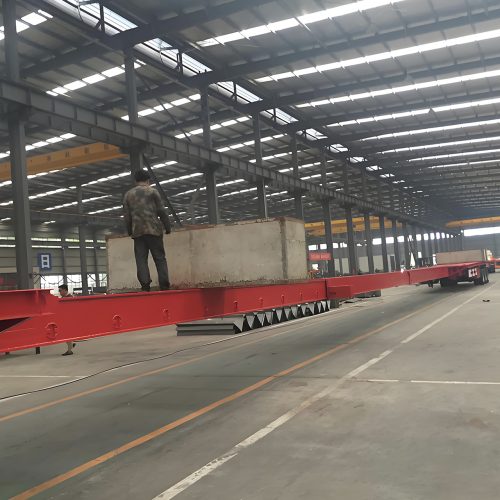
For more model options, visit the China flatbed trailer collection. For factory background and customization direction, see the semi trailer manufacturer page.
FAQ
What makes a flatbed semi trailer a practical choice for export work?
Its main advantage is flexibility. It handles open cargo that would be inconvenient in enclosed equipment, supports different loading methods such as crane and forklift handling, and adapts more easily to changing freight types. In export work, that flexibility becomes especially valuable because one trailer often needs to cover several kinds of jobs rather than one fixed task.
Is a bigger flatbed always the better choice?
No. A bigger trailer can help in some situations, but it is not automatically the better business decision. The right size is the one that matches the loads you move most often. If the purchase is driven too heavily by rare extreme jobs, the trailer may feel less practical in ordinary service.
Why do flatbed trailers that look similar online perform so differently in real work?
Because real performance depends on more than general dimensions and product language. Cargo behavior, loading style, yard conditions, road quality, route difficulty, and long-term maintenance realities all shape how suitable a trailer actually feels once it starts working.
When does a 40 ft flatbed make sense?
A 40 ft flatbed often makes sense when the buyer needs a broad-use trailer for steel, palletized materials, machinery, and general industrial freight. It remains popular because it covers a large share of ordinary work without becoming too specialized.
Why is a tri-axle layout so common?
Because in many operations it offers a practical middle ground. It can suit general export work, regular steel transport, and mixed industrial freight while remaining familiar and workable for drivers, loading crews, and maintenance teams.
Should buyers focus more on specs or on operating fit?
Operating fit matters more. Specifications are important, but they only become useful when they match the actual cargo, route conditions, loading habits, and service environment of the business. A trailer that fits the work well will usually deliver better long-term value than one chosen mainly for headline numbers.
Is mechanical suspension still a good choice for export markets?
In many cases, yes. Mechanical suspension often remains attractive because it fits harder-working routes, simpler service structures, and markets where durability and maintainability matter more than refinement for its own sake. The right answer still depends on the actual operating environment.
When does an extendable flatbed make sense?
An extendable flatbed makes sense when long cargo appears often enough to justify a more specialized solution. If those loads are only occasional, a simpler fixed-deck trailer may still be the better everyday choice. The value of an extendable trailer comes from repeated use, not from its image as a premium option.