
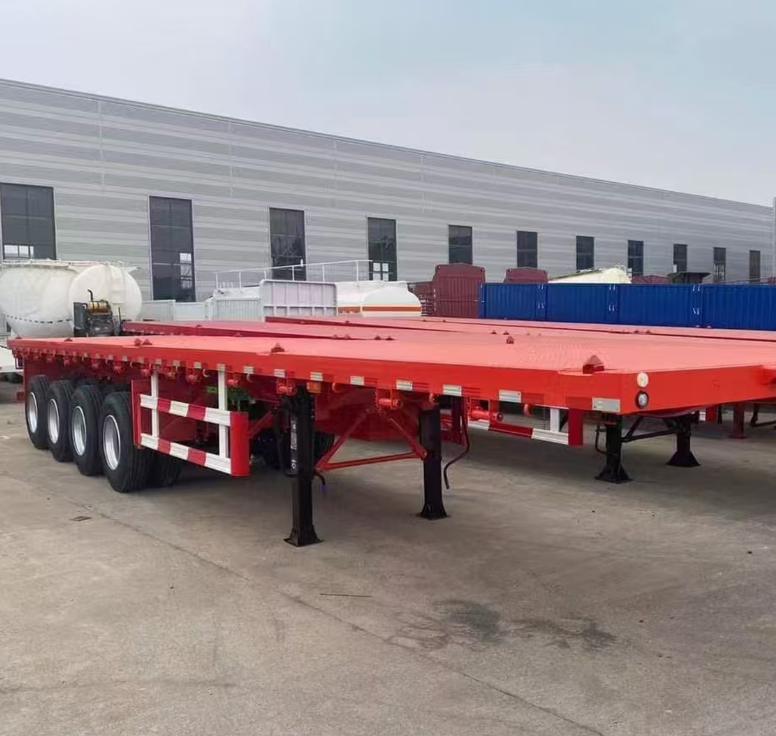
Flatbed Semi Trailer Price Breakdown: What Affects Factory Cost?

A flatbed semi trailer is one of those products that looks simple until you start comparing prices. On the surface, many models seem similar. In real use, the differences can be much bigger than buyers expect. Two trailers can look almost the same in a quote, yet feel completely different once the loading starts, the weight shifts, or the road gets rough. That is why flatbed semi trailer price is never only about size or axle count. It also reflects how the trailer is built, how it handles pressure in daily use, and whether the structure actually suits the cargo, route, and loading routine.
Most buyers are not looking for specifications alone. They also want to know what really affects factory cost, which trailer suits which kind of work, and what details are worth checking before ordering. Those are usually the points that matter most once the trailer is actually in service.
There is also a practical side that numbers alone do not show. A good trailer does more than carry cargo. It makes loading easier, reduces hesitation in the yard, and feels more predictable on the road. In many cases, that difference is what separates a cheap quote from the right one.
Why a flatbed semi trailer still matters in real transport work
Flatbed trailers are still widely used because so much cargo simply does not move well in an enclosed body. Some loads are long. Some are wide. Some need to be lowered by crane instead of pushed through a rear door. Others are mixed, uneven, or hard to secure inside a closed trailer. In that kind of work, a flatbed semi trailer is often the most practical tool for the job.
Think about an ordinary day at a busy material yard. In the morning, the trailer may carry steel sections loaded from above. Later, it may take palletized building materials from the side. By the afternoon, the same deck may be moving a generator frame or industrial equipment that does not fit neatly into a box body. That kind of flexibility is exactly why open-deck trailers are still used so often in construction, industrial transport, and export work.
The real advantage is access. Forklifts can work from the side. Cranes can lift from above. Crews can place straps and chains where they actually need them. That means less wasted motion, fewer awkward loading angles, and a smoother job overall.
If you are comparing layouts, it helps to look at shorter models, standard 3 axle units, heavier quad-axle versions, and extendable trailers side by side. The full flatbed semi trailer product category makes that easier because it shows the main types together instead of treating every trailer as if it serves the same job.
What buyers actually care about before flatbed semi trailer price
Most buyers do not begin with steel thickness or suspension brand. They start with a simpler question: will this trailer make daily work easier or harder? A low quote may look attractive at the start, but if the trailer is awkward to load, unstable under common cargo, or too light for the route, the early savings disappear quickly.
In real buying decisions, people pay attention to how the trailer feels in use. Does the deck stay calm when a forklift moves onto it? Does the structure look right for the kind of work it claims to do? Will the trailer still make sense when one week brings containers and the next week brings machinery or steel? Can the team secure cargo naturally, or does the trailer keep forcing small workarounds? These are usually the questions that matter most once the trailer is actually in service.
- Will it carry the common loads without creating extra tension in the yard?
- Will side loading and top loading feel natural in everyday work?
- Will the frame still feel stable on rough roads or uneven loading points?
- Will the trailer still make sense after months of hard daily use?
- Are you paying for real working value, or just for a better-looking quotation?
That is why price alone is never enough. Buyers also want to know how the trailer performs in real loading conditions and which setup makes more sense for the work they do every day. Those practical answers are often what turn a simple quotation into a confident buying decision.
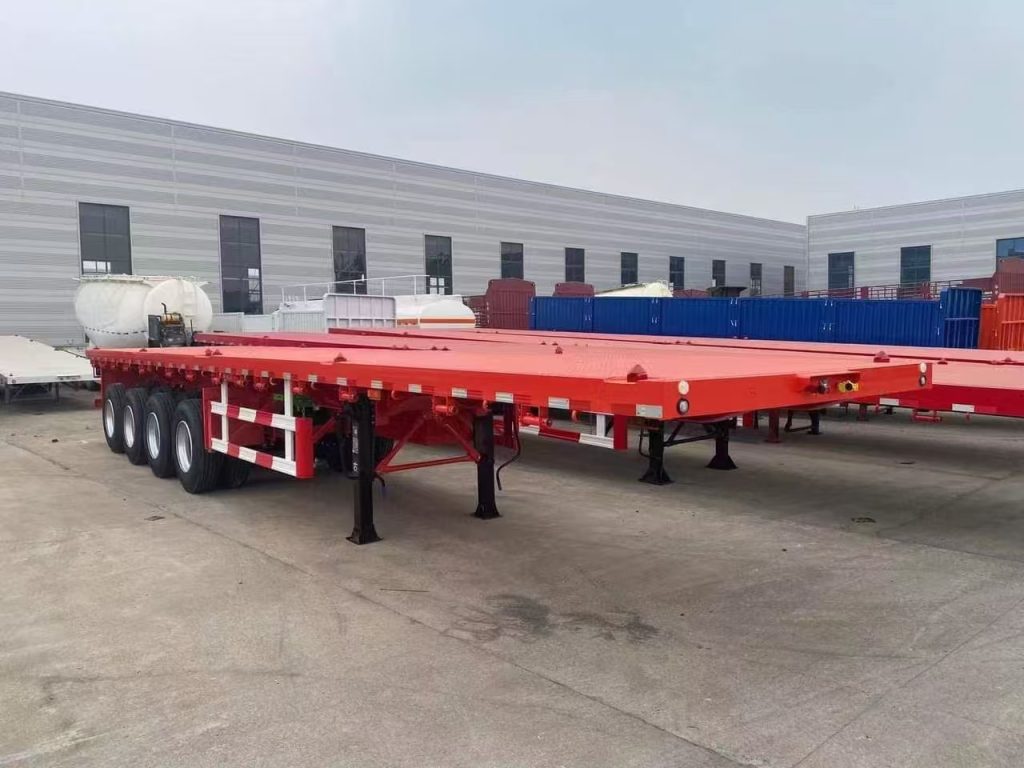
Flatbed semi trailer use scenes that shape the right buying choice
A good buying decision usually starts with the actual job, not a specification table. Once the transport scene is clear, the right trailer type becomes easier to identify, and the price usually makes more sense too.
Flatbed semi trailer for construction materials and site delivery
Construction freight is one of the most natural jobs for a flatbed semi trailer. Steel bars, scaffolding, bagged materials, timber, pipe, palletized goods, and site equipment all benefit from easier loading angles and open deck space. On these routes, the trailer needs to do more than carry weight. It needs to support a fast and repeatable workflow.
That is why practical value often begins with workflow instead of maximum headline capacity. A trailer that saves time every day can create more value than one that only looks cheaper in a quote. In real site work, deck stability, tie-down logic, and suspension suited to rough roads usually matter more than decorative extras.
Flatbed semi trailer for machinery and industrial equipment transport
Machinery movement quickly shows whether a trailer is honestly matched to its job. The challenge is not always the total weight. Often, it is how the weight sits. Equipment may create concentrated load points or require slower, more controlled loading. A trailer built for this kind of work should feel solid and composed when the cargo settles onto the deck.
Buyers who have worked in real yards can usually tell the difference right away. Some trailers feel steady. Others feel light in the wrong places. That reaction is practical, not emotional. It often says a lot about how comfortable the trailer will be in daily use. For routes like this, a 20 foot flatbed trailer can sometimes be a better fit than a larger general-purpose deck.

Flatbed semi trailer for containers and mixed industrial cargo
For many buyers, the real need is not a highly specialized trailer, but a versatile one. One week may involve container movement. The next week may involve steel, timber, project cargo, or machine parts. That is why a 3 axle flatbed semi trailer remains such a practical choice. It supports standard cargo patterns well while still offering enough flexibility for mixed freight when schedules change.
That is one reason some configurations remain popular year after year. They remain useful because they fit everyday transport work. They also reduce the risk of buying a trailer that looks good at the start but becomes too narrow in use later on.
Heavy-duty flatbed semi trailer for higher payload and rough roads
Some routes are simply harder. Payloads are denser, roads are rougher, and the working rhythm is more punishing. In those situations, a stronger structure and a different axle layout are not optional. They are part of staying productive. A trailer that looks acceptable for light highway work may feel underbuilt once it is asked to carry industrial cargo repeatedly over poor surfaces.
This is where a quad axle flatbed trailer starts making more sense. The extra support is not only about payload numbers. It changes the feel of the trailer under real strain. If the route is already known to be demanding, paying more for a stronger layout usually makes sense.

Extendable flatbed semi trailer for long cargo and project freight
Not every operation needs an extendable flatbed semi trailer. But when the work regularly involves long steel, pipes, structural sections, or project cargo, a fixed deck can stop being practical very quickly. In those cases, extension is not a gimmick. It is the feature that makes the route workable without compromise.
This also shows why factory cost cannot be judged by price alone. A more specialized trailer costs more because it solves a more specialized problem. If that kind of load appears regularly, the higher price usually makes more sense. Buyers facing this kind of work should compare a standard unit with an extendable flatbed trailer before deciding on price alone.
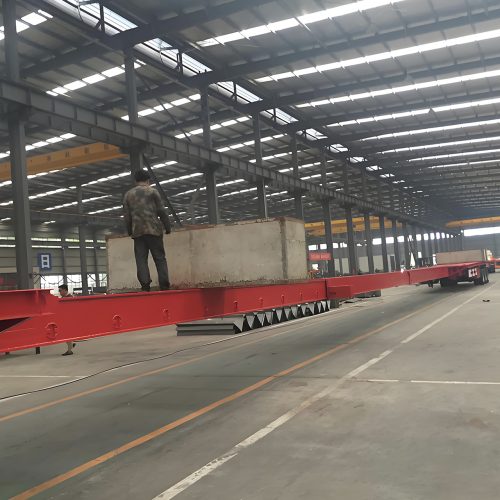
How to judge a flatbed semi trailer before you buy
Not every buyer wants to get lost in engineering detail, and in most cases that is not necessary. A few practical checks can make the decision much easier. The simplest rule is this: judge the trailer by the hardest normal day, not by the easiest one. Plenty of units will look fine under perfect conditions. The real question is what happens on an ordinary difficult day when the cargo is mixed, the loading is rushed, or the road is unforgiving.
Another useful check is whether the trailer looks honest for the job it claims to do. A heavy-duty flatbed semi trailer should not visually feel too light for heavy-duty service. A mixed-freight trailer should have enough securement logic to cope with real cargo variety. This is less about appearance and more about whether the build really suits the job it is meant for.
- Think about the hardest regular load, not the rare exception.
- Look for a frame and deck that feel appropriate for the claimed use.
- Check whether tie-down positions appear practical for different cargo types.
- Choose suspension based on road reality, not on what sounds more premium.
- Judge ease of loading as part of value, not as a minor detail.
Ease of loading matters more than it first seems. A trailer that is easy to position, easy to secure, and easy to load usually becomes more productive in daily work. It may not stand out in a quotation, but it makes a real difference in daily use.
What affects flatbed semi trailer factory cost the most
Once the actual job is clear, the price usually makes more sense too. The difference between two flatbed semi trailers normally comes from a few core choices, and those choices are directly tied to how the trailer is expected to work.
Frame strength and flatbed semi trailer chassis structure
The frame is the foundation of the trailer. More reinforcement, stronger beam design, thicker material in key areas, and better support under the deck all increase manufacturing demand. Naturally, they also increase cost. In practice, this is often the difference between a trailer that only looks acceptable on paper and one that holds up better over time.
This is why a lower-priced trailer can still become the more expensive choice in service. If the structure is not well matched to the route and cargo pattern, maintenance, downtime, and loading frustration can erase the early savings surprisingly fast.
Axle count and running gear on a flatbed semi trailer
Axle count changes more than payload support. It also changes braking hardware, tire count, suspension components, and the overall way the trailer behaves under strain. That is why moving from a simpler layout to a 3 axle flatbed semi trailer or a quad axle flatbed trailer changes the quote so noticeably. The extra cost is tied to stability, stress distribution, and durability.
Flatbed semi trailer suspension choice
Mechanical suspension remains popular because it is durable, straightforward, and often better suited to rougher roads and easier maintenance. More refined setups can be useful in other conditions, but they usually add cost. The important thing is not which option sounds better in theory. It is which one matches the road the trailer will actually live on most of the time.
Deck construction and working surface durability
The deck is not just where cargo sits. It is where forklifts roll, chains tighten, machinery rests, and repeated wear begins. A stronger deck usually costs more, but it also changes the way the trailer feels during loading. Buyers who have spent time around busy yards understand quickly that the deck is part of the working experience, not just a surface.
Functional options that change real trailer value
Some features are worth paying for because they clearly improve daily work. Container twist locks matter when container handling is part of the route. Ramps matter when equipment loading is frequent. Reinforced tie-down points matter when cargo is irregular. These options should be judged by whether they solve repeat problems, not by whether they only make the specification list longer.
In simple terms, flatbed semi trailer factory price is the cost of a chosen working setup. Once the route and cargo are clear, the price is usually much easier to understand.
How to use a flatbed semi trailer better after purchase
How the trailer is used after delivery affects its long-term value just as much as the original purchase choice. One of the simplest habits is to load for balance, not just for fit. A trailer may physically hold the cargo, but that does not mean the placement is ideal for axle distribution, deck stress, or securement logic. Poor loading habits usually show up later as wear, repairs, or unnecessary downtime.
It also helps to stay honest about role fit. A shorter compact trailer should not be forced into jobs that really need a longer, heavier platform. In the same way, a specialized extendable trailer should not become the default answer for every ordinary load. The best fleet results usually come when each unit is used for the kind of work it was chosen for.
- Spread concentrated loads whenever the cargo allows it.
- Do not treat securement casually on familiar short routes.
- Watch common loading points for early signs of wear.
- Match the trailer to the job instead of forcing one trailer to do everything badly.
- Fix small issues early before they become operating interruptions.
There is another practical point here. Drivers and loading crews tend to trust equipment that behaves predictably. A stable, easy-to-use flatbed semi trailer often gets treated with more care than one that always feels awkward or uncertain. Over time, that difference matters more than many buyers expect.
How to ask for a flatbed semi trailer quote that actually helps
A vague inquiry usually leads to a vague quotation. If the first message only says “send best price,” the reply will probably be broad and generic. It may look acceptable at first, but it does not make comparison much easier. A stronger quote request describes the job clearly enough that the factory can recommend a flatbed semi trailer that genuinely fits the work.
The most useful RFQs usually include deck length, main cargo type, target payload range, destination market, road condition, axle preference, suspension preference, and any special loading needs. Even a short inquiry becomes more useful when it clearly describes the actual job. That way, the quote is based on real transport work instead of guesswork.
Better RFQ example
40 ft, 3 axle, mixed construction materials and machinery, rough regional roads, East Africa, mechanical suspension, twist locks preferred.
Weak RFQ example
Please send your best price for flatbed semi trailer.
Buyers who want to check factory background before asking for pricing can also review the semi trailer manufacturer and customization guide. It is a useful page to read before sending a final inquiry.
Final flatbed semi trailer buying takeaway
A good flatbed semi trailer is not judged by one number alone. It is judged by how well the structure, deck, axle layout, and options match the actual work. When that match is right, the trailer is easier to load, easier to secure, and more stable on rough roads. After the excitement of the purchase is gone, it still makes sense in daily operations.
That is why factory cost should be seen as more than the price of the trailer itself. It is also the price of the stability, durability, and usability built into it. A stronger frame costs more because it is asked to carry a harder life. A more practical deck costs more because it becomes part of the loading process every day. A mainstream 3 axle flatbed semi trailer stays popular because it fits so many real transport scenes without becoming awkward or too narrow in use.
The next step is to match the trailer to the route, cargo, and loading method as clearly as possible. Once those points are clear, the right build becomes easier to choose and the right quote becomes easier to recognize. For buyers still comparing layouts, it makes sense to review the full flatbed semi trailer range, then check the flatbed semi trailer price guide, and finally learn more about the semi trailer manufacturer before sending an inquiry.
Get a flatbed semi trailer quote matched to the real job
For a more accurate recommendation, send the intended cargo, destination, route condition, and preferred trailer length. That makes the quote more useful and helps avoid overbuying or underbuying.
- Browse products: Shop flatbed semi trailer models
- Price guide: Check flatbed semi trailer price details
- Factory background: Learn about trailer manufacturing and customization
- WhatsApp: +86-17274039217
- Email: info@bocaautomobile.com
Flatbed Semi Trailer FAQ
What affects flatbed semi trailer price the most?
The biggest factors are usually frame strength, axle count, suspension type, deck construction, and job-specific options. Flatbed semi trailer price rises when the build is designed for harder work, rougher roads, or more specialized cargo.
Is a 40ft 3 axle flatbed semi trailer still the most practical choice for mixed work?
In many cases, yes. A 40ft 3 axle flatbed semi trailer stays popular because it balances container transport, industrial freight flexibility, and everyday usability without becoming too specialized.
When does a 4 axle flatbed semi trailer make more sense?
A 4 axle flatbed semi trailer is more suitable when the route includes heavier loads, rougher road conditions, or more demanding industrial cargo. In those cases, comparing a standard platform with a quad axle flatbed trailer is usually worthwhile.
Is an extendable flatbed semi trailer worth the extra cost?
It is worth it when long cargo is part of the normal operation. If pipes, long steel, or project components appear regularly, the extendable flatbed trailer design solves a real working problem that a fixed deck cannot handle comfortably.
What should be included in a flatbed semi trailer quote request?
Start with trailer length, cargo type, target payload, destination, road condition, suspension preference, axle preference, and special loading requirements. A clearer inquiry leads to a more useful and more accurate flatbed semi trailer quote.
How can buyers tell if a flatbed semi trailer price is too low?
If the structure looks light for the claimed job, the product description stays vague on real use, or the build feels under-explained for a heavy-duty claim, it is worth comparing more carefully before making a decision. Checking the flatbed semi trailer price guide alongside actual product pages usually helps.
This version is designed for direct paste into a WordPress Custom HTML block. It keeps the layout clean, the internal links natural, and the product buttons directly below each image for better conversion without making the article feel overly sales-heavy.