
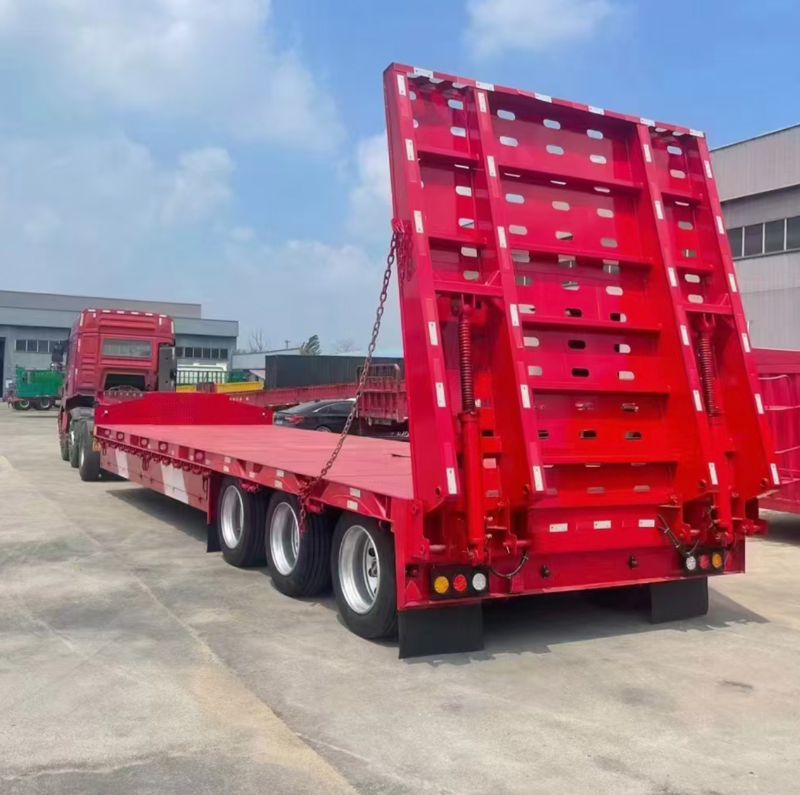
3 Axle Lowbed Semi Trailer for Sale: Specs, Ramps, and Options

A good trailer article should not feel like a cold parts list. In real transport work, the better choice often becomes clear at the loading area, on a rough project road, or beside a machine that has to roll on safely before the trip even begins.
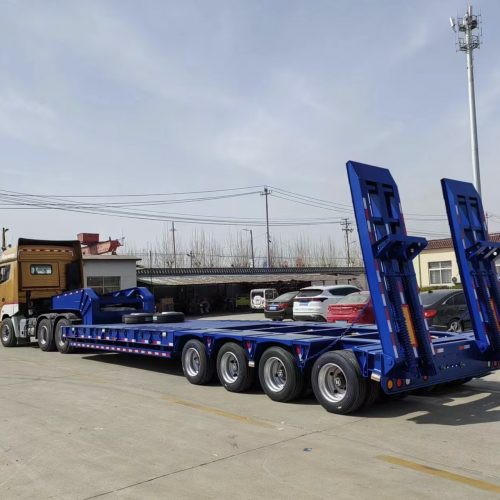
That is where a lowbed semi trailer proves its value. It keeps heavy equipment lower, loading calmer, and the whole transport process more controlled. Among the current BOCA range, the three-axle layout stands out because it feels strong, practical, and easier to live with week after week.
Why it feels right
Lower deck height, steadier loading posture, and a better balance between carrying power and everyday usability.
Where it fits best
Excavators, loaders, compactors, bulldozers, and mixed heavy equipment moving between active job sites.
What to judge first
Deck height, ramp angle, machine clearance, route conditions, and how often loading really happens.
Why this trailer works so well in everyday heavy equipment transport
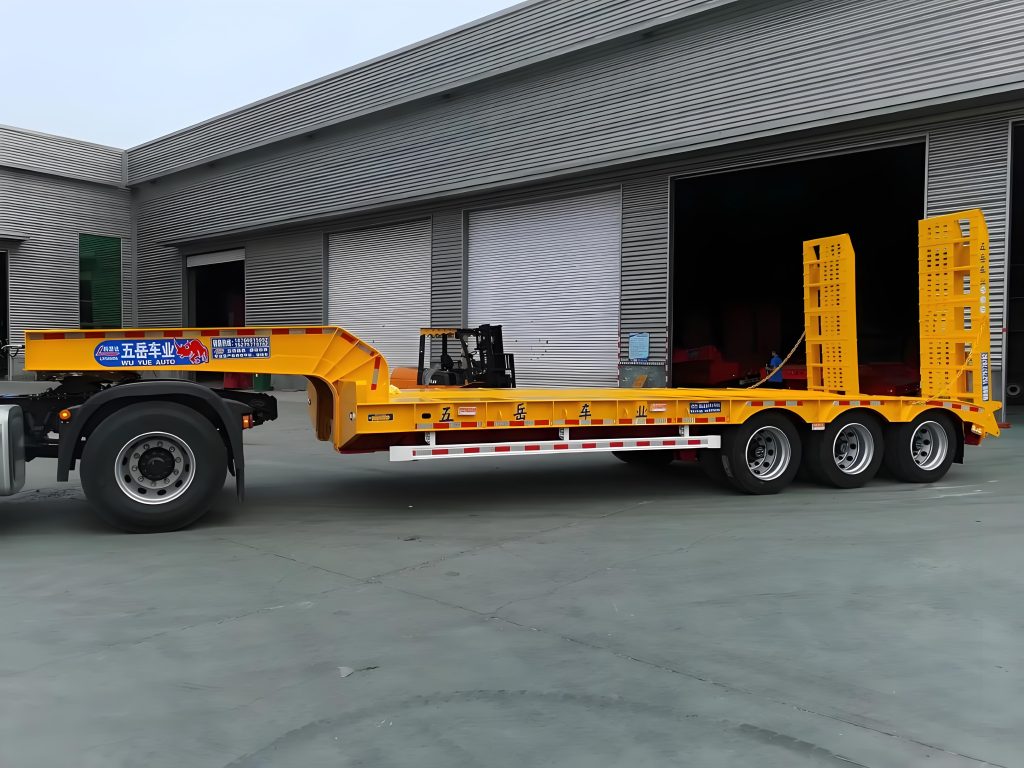
First, the three-axle lowbed solves a simple problem that standard trailers often struggle with. Heavy machinery usually sits too high on a conventional platform. Once the load climbs, route pressure climbs with it. Bridge clearance becomes tighter. Tunnel margin feels smaller. Project entries look rougher. Meanwhile, loading tends to feel more abrupt because the machine has to climb higher before it ever settles.
A lower deck changes that whole mood. The machine approaches with a better angle. The body sits lower once loaded. The combination looks calmer on the road, and usually behaves more calmly as well. In practice, that is one reason a three-axle lowbed often feels more dependable than a taller trailer with similar headline strength.
It also suits the kind of work that repeats all year, not just the kind of load that appears once in a brochure photo. This is where the format feels strongest:
- excavators moving between active construction sites,
- wheel loaders serving quarry or yard operations,
- compactors and bulldozers working on infrastructure jobs,
- industrial equipment moving from port to inland projects,
- mixed fleets that do not want to overbuy for one rare load.
Just as importantly, the three-axle format usually avoids two common mistakes. It is stronger and more planted than a lighter entry-level platform, yet it does not jump straight into the cost and complexity of a much heavier multi-axle specialist trailer. That middle position is exactly why it remains such a practical choice.
A quick reading tip before comparing specs
The best trailer is rarely the one with the longest spec list. The better trailer is the one that makes loading easier, keeps the machine settled on the road, and still feels right after months of real use.
Therefore, every specification should be read through actual work. Deck height affects route confidence. Ramp angle affects loading stress. Axle and suspension choices affect service rhythm. Beam structure affects how calmly the trailer handles repeated heavy-duty cycles.
Specs that matter in real use, not just on paper
Next, it helps to judge the key specifications through the lens of use rather than catalog language. A trailer does not perform well just because it includes enough numbers. It performs well when those numbers match the machine set, the route, and the loading rhythm.
For a three-axle lowbed, the most practical checkpoints usually include:
- deck length and width against the regular machine footprint,
- ramp style and ramp angle against machine clearance,
- axle and suspension setup against route conditions,
- beam strength against repeated point-load pressure,
- tractor matching at the king pin and deck attitude level.
Capacity is about weight, but also about shape
Capacity matters, of course. Even so, weight alone never tells the full story. A tracked machine does not load the deck like a wheeled machine. A shorter machine can still create a demanding point-load pattern. A taller machine may change road feel even when its gross weight stays within a normal band.
Therefore, the better question is not simply “How many tons can it carry?” The better question is “How will this specific machine sit, climb, and behave on this specific trailer?” That is why frame strength, crossmember support, and platform geometry deserve just as much attention as raw carrying figures.
Deck dimensions should follow regular jobs
A longer deck can look more impressive. Still, length should have a reason. If the regular machine set is shorter and stable, extra platform can simply add dead weight and make daily use less efficient. Width works in the same way. It should support the normal footprint comfortably, not just look generous in a sales image.
In practical selection, the strongest dimensions are usually the ones that feel obvious after a few months of work. The trailer loads cleanly. Tie-down space makes sense. Yard handling still feels manageable. Nothing about it feels oversized just for appearance.
Suspension and running gear change the mood on the road
Axles, tires, brakes, and suspension are not background details. They shape how the trailer settles under load, how it behaves over mixed road surfaces, and how easy it is to support over time. Mechanical suspension often suits rugged, direct-use work where simplicity matters most. Air suspension becomes more attractive when smoother ride control or more refined on-road behavior matters more.
The right answer depends on where the trailer actually works. A quarry edge, a rough project road, and a long highway route do not ask for exactly the same setup. That is why running gear should always be matched to the environment, not chosen in isolation.
Ramps, loading rhythm, and the details that make work easier
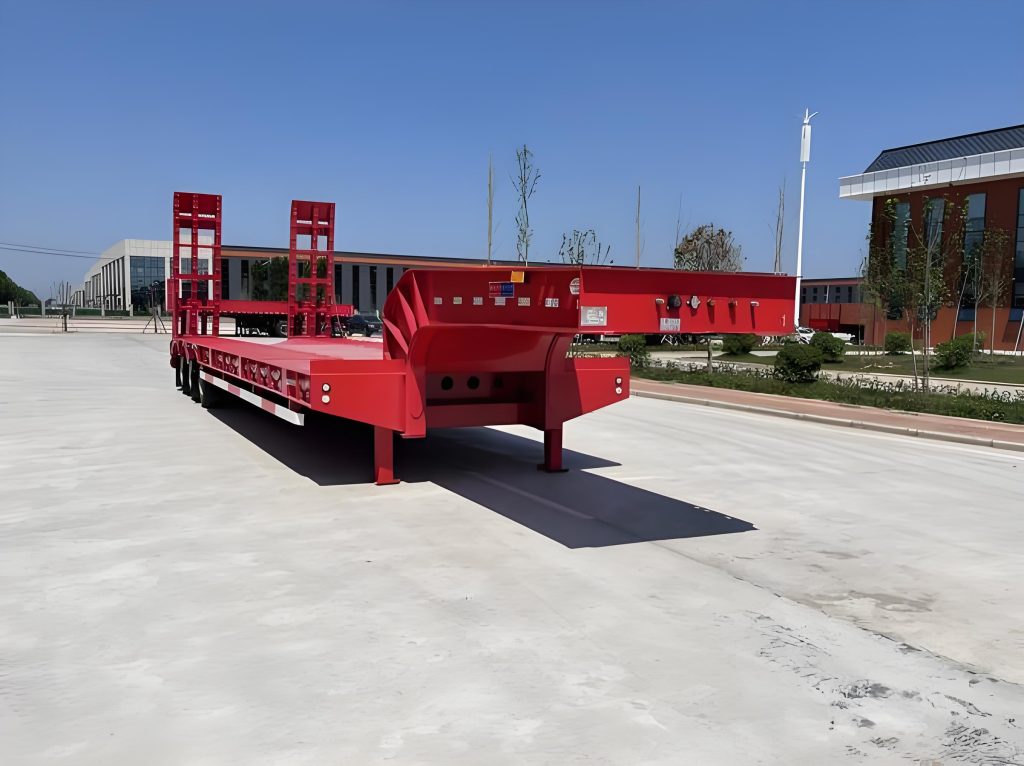
This is the point many basic product articles miss. They mention ramps, then move on. In real work, ramps often decide whether a trailer feels efficient or tiring. A platform may be structurally strong and still waste time every week if loading is awkward.
Picture a machine approaching in a dusty yard or on an uneven project surface. The operator wants a clean climb, not hesitation. In that moment, deck height, ramp length, transition shape, and traction surface all matter more than polished brochure language. A better loading angle creates calmer movement. The machine settles sooner. Spotting becomes easier. Tie-down work begins from a better position.
The real issue is often the deck transition
Surprisingly, the hardest part of loading is not always the start of the climb. Often, the difficult point is where the machine moves from the ramp onto the deck. That is where low-clearance equipment can scrape, hesitate, or feel unstable if the geometry is too sharp.
For that reason, a ramp review should always include:
- ramp length,
- surface grip and traction,
- hinge strength and stability,
- belly clearance at the transition point,
- working space behind the trailer.
Once those points are checked honestly, the right loading style usually becomes clearer very quickly. The strongest trailer is not the one that sounds most dramatic. Usually, it is the one that makes every load feel routine instead of tense.
Rear ramps versus front loading
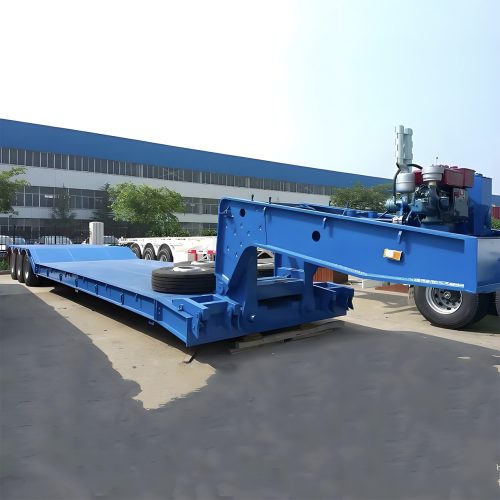
Rear ramps remain a very practical answer for many operations. They are familiar, direct, and well suited to many wheeled machines and mixed fleet routines. However, some equipment patterns ask for a different rhythm. Tracked machinery, lower-clearance loads, and frequent loading cycles can make front loading feel more natural.
That is where detachable gooseneck design becomes more attractive. It is not about complexity for its own sake. It is about making the loading path flatter, cleaner, and easier for the regular machine set.
How to judge whether a three-axle layout is truly the right fit
A good selection process should feel calm and logical. It should not begin with the biggest number. Instead, it should begin with the regular work. Once the routine machine set, loading pattern, and route conditions are clear, the trailer class often becomes much easier to judge.
Start with the routine machine set
First, define the machines that move most often. The correct trailer is rarely selected around the rarest exception. It is selected around the actual center of the workload. If most regular jobs fall into a strong mid-heavy band, the three-axle layout often remains the smartest answer.
A simple review should record:
- the heaviest regular machine,
- the longest regular footprint,
- the lowest-clearance machine,
- how often loading happens each month,
- whether the difficult load is routine or rare.
Then judge the route and the loading area
Next, look beyond the yard. A trailer can seem perfect in a clean loading area and still feel wrong on real roads. Bridge clearance, rough entries, broken surfaces, slope transitions, and tight project space all change what the trailer should be. That is why route conditions deserve as much weight as machine size.
Useful route questions include:
- Are overhead restrictions common?
- Are site entries steep or uneven?
- Is there enough room behind the trailer for rear loading?
- Is the route mostly highway or mixed project access?
- Will the trailer live on paved roads, rough surfaces, or both?
Know when to stay with three axles, and when to move up
A three-axle trailer is enough when the regular work sits comfortably within its natural range. The machinery is heavy, but manageable. The sites are active, but not extreme. The trailer feels solid rather than stretched. In that case, going much bigger can simply add cost and unnecessary weight.
By contrast, stepping up becomes sensible when point loads become harsher, machine size repeatedly pushes toward the edge, or route demands require stronger axle distribution and a heavier frame. The smartest equipment plan is not the one that forces one trailer to do every job. It is the one that puts each trailer in the band where it performs naturally.
For broader lineup comparison, a second look at the lowbed semi trailer range often makes the next step easier because it shows where the 3 axle model sits between lighter entry layouts and heavier specialist options.
Maintenance, service life, and what keeps the trailer feeling strong
A well-chosen trailer should still feel good after months of work. That depends partly on design and partly on routine care. In practice, service life is shaped by the same places that carry movement and stress: ramps, hinges, hydraulics, axles, brakes, tires, deck contact zones, landing gear, and coupling points.
A useful maintenance routine usually focuses on:
- ramp hinges and locking points,
- hydraulic lines and response,
- axle alignment and tire wear pattern,
- brake condition and air system performance,
- deck wear where tracks or concentrated loads make contact,
- king pin fit and front-end stability.
Just as importantly, loading discipline protects the trailer as much as maintenance does. Good alignment before the climb, stable ground under the ramps, and correct tie-down placement after loading all reduce the repeated stress that quietly shortens service life.
In that sense, the best-maintained trailer is often the one that was matched honestly from the start. It does not spend its life doing work that really belongs to a different class of platform.
Final selection summary
A three-axle lowbed works best when the job needs serious machinery transport without drifting into extreme heavy-haul complexity. It brings together lower deck posture, practical loading behavior, stable road presence, and enough flexibility for several machine types.
Three useful next steps:
- list the routine machines by weight, footprint, and clearance,
- decide whether rear-ramp loading or front-loading logic suits the work better,
- match frame strength, suspension, and running gear to the real route and service environment.
Get a quote
For a wider model view, visit the lowbed semi trailer category, explore the factory and customization page, or return to the BOCA Vehicle homepage.
For current pricing, configuration discussion, or export support, contact BOCA on WhatsApp at +86-17274039217 or by email at trade@bocaautomobile.com.
FAQ
Is a 40ft three-axle lowbed a good fit for excavators and loaders?
In many cases, yes. The better test is not the 40ft label by itself, but whether deck length, tie-down room, and loading angle all suit the regular machine footprint. If the platform supports the common load comfortably without feeling excessive, the trailer will usually feel more balanced in everyday work.
What usually matters more, capacity or loading geometry?
Both matter, but loading geometry often decides whether the trailer feels easy to use. A machine can be within the stated capacity and still create stress if the ramp angle is too steep or the transition is too sharp. That is why capacity should always be judged together with machine shape and clearance.
Are hydraulic ramps worth choosing on a three-axle model?
They often are, especially when loading happens frequently or when site conditions are less than perfect. Hydraulic ramps help create a more repeatable setup, which usually improves daily rhythm and reduces effort during regular equipment movement.
When does a detachable gooseneck become the better choice?
It becomes more attractive when tracked machinery, lower-clearance loads, or frequent loading cycles make front loading more natural than rear-ramp loading. If the machine set regularly dislikes steep rear transitions, a detachable front-loading layout can solve a very practical problem.
What usually changes the price most?
Price usually shifts with axle count, frame strength, ramp type, suspension choice, steel level, and whether the design stays fixed-neck or moves into a more specialized detachable layout. The better value normally comes from matching the trailer to the real job instead of buying too small or too large.
What are the first maintenance points to watch after delivery?
Start with ramp hinges, hydraulic response, axle alignment, tire wear, brake behavior, and deck wear at the main contact zones. Good loading discipline matters too. A well-matched trailer that is loaded smoothly and checked consistently usually keeps its condition much better over time.