
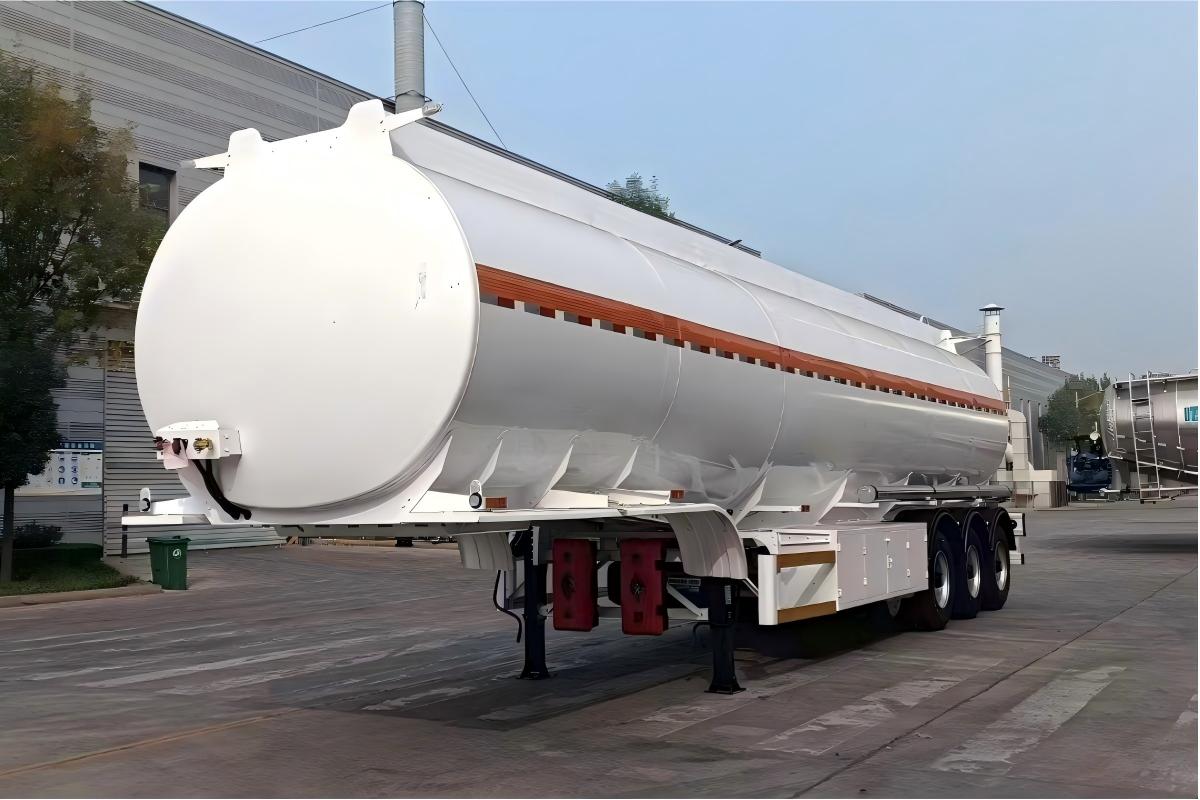
Fuel Tanker Trailer Capacity and Compartment Layout Guide

A reliable fuel tanker trailer capacity decision affects much more than how many liters can be carried in one trip. It influences cargo mass, compartment planning, axle reactions, unloading speed, valve layout, tractor matching, and destination approval. A larger tank may reduce trip frequency, but it can also create unused volume, difficult partial-load conditions, or excessive axle loading.
A reliable specification begins with the liquid medium and real delivery cycle. The next decisions are usable loading volume, section size, internal structure, material compatibility, safety controls, discharge interface, and tractor matching. This order keeps the project connected to actual transport work instead of a generic capacity request.
This guide explains how buyers can choose fuel tanker trailer capacity by product density, route demand, receiving facilities, compartment layout, discharge method, axle load, and export requirements. It is written for fleets that need a practical quotation, not just a larger tank on paper.
The Capacity Decision Starts Here
Do not choose a fuel tanker trailer only by nominal liters. Start with the liquid density, normal delivery quantity, receiving-tank size, compartment plan, route limits, axle reactions, unloading method, and destination approval requirements. A larger tank is useful only when the cargo mass, partial-load behavior, tractor match, and receiving facility still work safely and efficiently.
Fuel and Oil Tanker Series
Compare Tanker Configurations Before Finalizing Capacity
The same nominal capacity can perform differently when the transported medium, compartment arrangement, tank material, unloading system, and route conditions change. Use the three directions below to start the specification discussion from the real transport task.
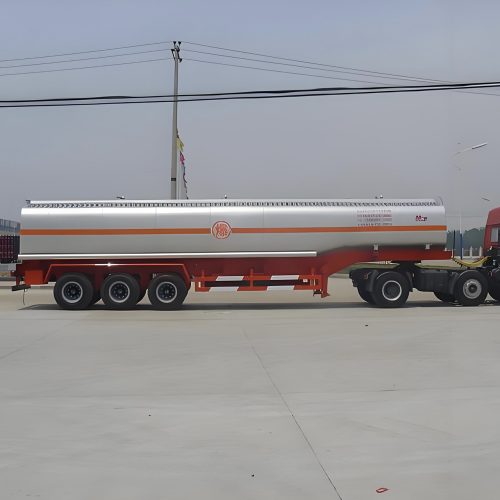
Fuel Distribution
Fuel Tanker Trailer
A practical starting point for gasoline, diesel, or similar fuel distribution. Capacity review should connect usable volume, compartment count, anti-static measures, valves, and terminal interfaces.
View Fuel Tanker Trailer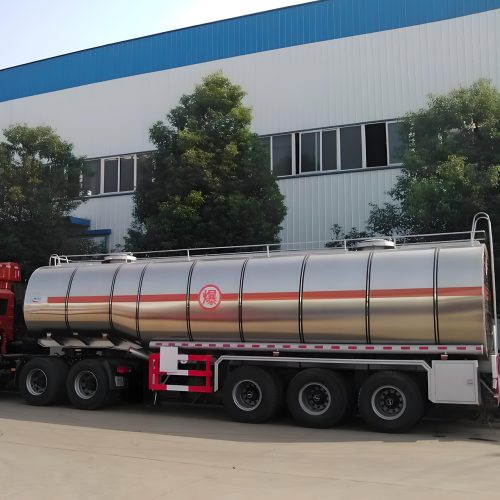
Mixed Batch Planning
Fuel and Oil Tanker Semi Trailer
A broader direction for projects with several delivery batches or approved liquid grades. Compartment isolation, product paths, cleaning, and unloading sequence need closer coordination.
View Oil Tanker Trailer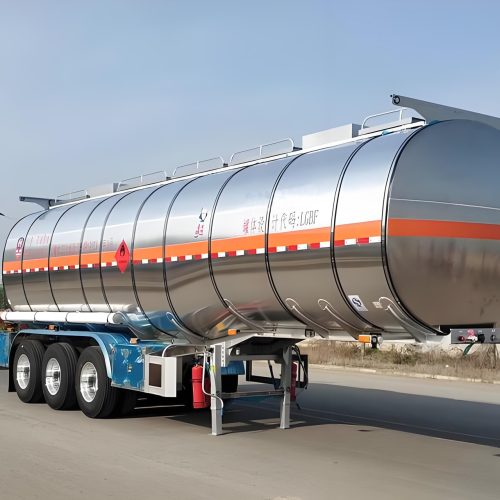
Material and Payload
Aluminum Tanker Trailer
A material-focused option where lower tare mass or corrosion considerations matter. Cargo compatibility, road conditions, repair capability, and written specifications still control suitability.
View Aluminum Tanker TrailerProduct images help start the comparison. Final compartment, material, valve, and unloading details still need a written project specification.
Start with Cargo Medium and Required Usable Capacity
Capacity planning should begin with a precise cargo definition. General labels such as fuel, oil, or petroleum product do not provide enough information for a complete configuration. Density, temperature, additives, water content, contamination risk, and cleaning method can influence tank material, seals, valves, piping, and practical loading mass.
Two liquids may occupy the same internal volume while creating different cargo weights. A denser medium places more mass through the tractor fifth wheel and trailer axle group. As a result, a nominal volume that appears suitable on paper may exceed a road or axle limit during normal operation.
The delivery cycle is equally important. A route serving one large depot usually needs a different layout from a route serving several smaller stations. Meanwhile, remote construction or mining support may place greater value on simple discharge, repair access, road clearance, and stable batch quantities.
How Capacity Changes with Cargo and Route Conditions
A mixed-product route should list every liquid expected during normal service. One representative product cannot confirm compatibility for the entire operating program. In addition, different product grades may require separate loading, labeling, cleaning, or hose-control procedures.
Available product data should include density or a realistic density range. Loading and unloading temperatures are also useful because temperature can affect volume, viscosity, and transfer behavior. Where exact data remains pending, the specification should clearly mark the affected component selection as subject to confirmation.
Cleaning agents belong in the same review. A material may tolerate the cargo but react poorly to an unsuitable washing chemical. Therefore, transported media and planned cleaning fluids should be considered together before product-contact materials are finalized.
Separate Normal Demand from Occasional Peak Demand
Normal route demand should control most of the tank configuration. A rare peak order may not justify a permanently larger tank when the added volume remains unused during most trips. Instead, trip frequency, route distance, terminal time, and receiving capacity should be compared before volume is increased.
Seasonal changes deserve a separate calculation. During a busy period, the route may carry larger batches or complete more daily cycles. At other times, the same trailer may operate with several partly filled sections. Both conditions should remain manageable without creating an unfavorable weight pattern.
An annual average can hide these daily differences. The more useful planning figures are the normal quantity loaded at the terminal and the quantity discharged at each stop. Those numbers show whether one large section, equal sections, or route-based unequal sections will support the operation.
Map the Complete Delivery Route
Each delivery point should be listed in order. The route record should show product type, normal quantity, receiving-tank capacity, connection position, access conditions, and expected unloading method. Once this information is clear, section sizes can follow actual batches rather than an arbitrary division.
The stop sequence matters because some compartments remain loaded longer than others. A section intended for the final destination stays full while earlier sections become empty. Consequently, the center of mass and the distribution between kingpin and trailer axles can change throughout the trip.
Receiving storage may set a lower limit than road capacity. A large compartment can exceed the available free volume at a station or project tank. In that case, the transport combination may carry enough liquid for the route but still be unable to complete a controlled single discharge.
Cargo profile
List each liquid, density range, temperature, additives, cleaning fluid, and compatibility concerns.
Route profile
Record each stop, batch size, distance, road condition, gradients, and access restrictions.
Facility profile
Confirm loading arms, receiving storage, hose reach, connection type, and available transfer equipment.
Nominal Capacity vs Practical Loading Conditions
Nominal capacity describes the stated internal tank volume under an agreed design definition. Practical loading volume is the quantity that can be carried under real operating conditions. The difference may come from liquid expansion, filling procedure, product density, road limits, axle limits, or destination-specific transport rules.
A quotation should not present nominal volume as guaranteed cargo payload. Instead, the technical proposal should separate tank volume, expected filling level, product density, and calculated cargo mass. This distinction also makes competing configurations easier to compare.
Volume and Cargo Mass Are Different Values
Cargo mass depends on both volume and density. When density rises, the same liquid volume creates a heavier load. Consequently, an axle or gross combination limit may become the controlling factor before the tank reaches its nominal volume.
The calculation should use realistic information for every planned product. Where density changes by grade or operating temperature, the expected range should be recorded. This prevents the design review from relying on one convenient figure that does not represent daily service.
Mixed-product routes may require several loading calculations. Each section can contain a liquid with a different density. Therefore, total cargo mass and axle reactions should follow the planned section allocation rather than one average density across the whole tank.
Allow for the Required Free Space
Liquid volume can increase as temperature rises. Controlled free space may therefore be required above the cargo under the applicable loading procedure. However, the correct allowance depends on the medium, temperature range, route climate, terminal process, and destination rules.
A universal free-space percentage should not be copied into every project. Instead, the specification should reference cargo information and the applicable operating requirement. Where a terminal or authority defines a particular limit, that source should form part of the final review.
Overfilling can create more than a weight issue. It may interfere with expansion management, venting, and controlled transfer. At the same time, excessive unused volume reduces transport efficiency. The target loading condition must balance these concerns without claiming one global standard.
Calculate Full, Partial, and Uneven Loading
A full departure condition is only the first stage of a multi-stop route. After the first delivery, one or more sections may be empty while the remaining sections stay loaded. This change can move the center of mass and alter the weight carried by the tractor and trailer axles.
The most uneven likely condition deserves particular attention. An empty front section with a loaded rear section can produce a different result from the reverse arrangement. Both conditions may occur during normal operation, depending on the order of the delivery points.
Return conditions should also be recorded. Some routes return empty, while others may retain an undelivered batch or measurable residue. Consequently, the written operating profile should cover any regular return load before the compartment positions are finalized.
Practical loading decision
Compare nominal volume with product density, agreed filling level, tractor ratings, trailer axle limits, route restrictions, and expected partial-load conditions. A change to any one factor may require a different compartment or running-gear arrangement.
Single-Compartment and Multi-Compartment Layouts
A single-compartment tank carries one approved medium or one undivided batch during the trip. Its product path can be comparatively simple. Fewer internal boundaries, outlets, manholes, and labels may also reduce routine cleaning and inspection complexity.
However, one large liquid space offers limited flexibility on a multi-stop route. After a partial delivery, the remaining cargo stays within the same compartment. As the level falls, liquid movement may become more noticeable during braking, acceleration, and cornering.
A multi compartment fuel tanker divides the tank into isolated sections. Each section can carry a separate approved batch or grade, subject to product compatibility and operating control. This layout supports several deliveries during one trip without placing all cargo in one undivided space.
When a Single Compartment Fits the Operation
One section can suit stable work involving one product, one principal receiving point, and predictable batch quantities. It may also fit a dedicated route where product changeover is rare and the receiving tank can accept the intended quantity in one controlled operation.
Operational simplicity can be useful on remote routes. Fewer separate product paths may reduce the number of controls requiring inspection, identification, and repair. Nevertheless, road behavior and partial loading still need review because one compartment does not remove liquid-surge risk.
When Several Compartments Create Practical Value
Several sections can support separate deliveries or approved product grades. One route may include a large primary batch and two smaller secondary batches. In that situation, unequal section sizes may follow demand better than an equal division.
Multi-stop fuel distribution is another strong use case. Each station or project location can be assigned a known section. This arrangement improves batch control, although the compartment order must still support acceptable axle reactions during every stage of unloading.
Equal Sections Versus Route-Based Section Sizes
Equal compartment sizes
Equal sections can simplify the initial drawing and repeat the same basic operating sequence across the tank.
However, real delivery quantities may not divide evenly. Unused space or split orders can reduce route efficiency.
Route-based compartment sizes
Unequal sections can match actual batch quantities and reduce unnecessary unused volume.
At the same time, section order and partial-load axle reactions require closer checking.
Single-product depot delivery
A single section may fit one stable medium, one main unloading point, and consistent batch quantities.
Multi-stop distribution
Several sections can separate the quantities assigned to different stations or storage points.
Mixed-grade delivery
Isolated sections and clearly controlled product paths may support approved grades within one route.
Remote project supply
Simple operation, repair access, road clearance, and predictable discharge may receive higher priority.
The most useful layout is not always the one with the highest compartment count. A practical tank uses the fewest sections needed to support route quantities and product separation. This approach limits unnecessary components while preserving useful operating flexibility.
A compartment schedule should identify product, volume, position, outlet path, and delivery stop. Once this schedule is complete, the technical proposal can evaluate internal structure, manholes, piping, valve control, drainage, and axle balance as one system.
Partitions, Baffles, Manholes and Internal Layout
Partitions and baffles perform different functions. A partition separates one compartment from another. A baffle helps manage liquid movement within the available internal space. Treating the two components as interchangeable can create an unclear internal specification.
Internal arrangement affects product isolation, surge control, cleaning, inspection, drainage, manhole placement, and maintenance access. Therefore, the internal drawing should be reviewed together with the cargo plan and delivery sequence.
Partitions Define Compartment Boundaries
A complete partition supports separation between approved products or batches. However, the wall alone does not guarantee operating isolation. Piping, valves, drains, vents, and unloading connections must also prevent unintended transfer between the sections.
Where adjacent compartments carry different liquids, the entire product-contact system needs review. Seal materials, shared lines, outlet routing, hose handling, and cleaning procedure can influence contamination risk. As a result, the specification should describe physical separation and product-path isolation together.
Baffles Support Liquid-Movement Control
Liquid moves inside a partly filled section during braking, acceleration, cornering, and uneven road travel. Baffles can help manage that movement within the intended design. Their arrangement depends on tank geometry, section length, liquid behavior, and applicable technical requirements.
No universal baffle spacing should be inserted into every inquiry. Instead, the proposed internal arrangement should form part of the engineering drawing. Exact dimensions, openings, and positions should remain subject to the mutually confirmed specification.
Manholes, Drainage, and Cleaning Should Work Together
Manholes may support loading, cleaning, inspection, maintenance, or several of these tasks. Their quantity and position should correspond with the internal sections. At the same time, the top arrangement must leave suitable working space around covers, vents, walkways, and protective components.
The tank should support the agreed unloading and drainage procedure. Liquid trapped in unintended low points can complicate cleaning or affect a later batch. Consequently, tank slope, section shape, outlet position, and piping route should be evaluated as one drainage system.
- Partition position: match section volume, product allocation, and expected axle reactions.
- Baffle arrangement: reflect tank geometry and likely partial loading.
- Manhole placement: support loading, inspection, cleaning, and practical access.
- Drainage path: reduce unintended residue and support the agreed cleaning method.
- Product isolation: cover partitions, valves, piping, drains, hoses, and labels.
Match Tank Material to the Transported Medium
Tanker trailer tank material should be selected from product compatibility, structural requirements, tare-weight priorities, cleaning practice, repair capability, and destination rules. Common material families may include carbon steel, stainless steel, and aluminum-based construction. However, suitability requires confirmation for the exact project.
A familiar cargo name does not provide a complete compatibility decision. Water content, additives, impurities, operating temperature, storage time, and cleaning chemicals may change material behavior. Available cargo information should therefore be reviewed before the shell and product-contact components are confirmed.
Review the Complete Product-Contact System
The tank shell is only one part of the wetted system. Piping, valves, seals, gaskets, fittings, couplings, hoses, and sampling components can also contact the liquid. A compatible shell paired with unsuitable seals can still create leakage, swelling, contamination, or maintenance problems.
The material review should follow the entire flow path. It begins at the loading connection, continues through each section and valve, and ends at the unloading interface. Cleaning fluid should be included wherever it contacts the same surfaces and components.
Compatibility
Review cargo, additives, water content, temperature, and cleaning fluids.
Practical payload
Compare tank tare mass with cargo density and destination weight limits.
Maintenance
Check local repair skills, tooling, spare parts, and cleaning practice.
Operating environment
Include rough roads, humidity, coastal exposure, and regional support capability.
Anti-Static Measures, Valves and Discharge Methods
An anti-static tanker trailer arrangement may include grounding provisions, conductive paths, suitable hoses, and controlled transfer procedures. However, the required measures depend on the liquid, terminal equipment, transfer method, and destination rules. One visible grounding point should not be treated as a complete universal safety package.
A tanker discharge valve should match the liquid, transfer method, connection format, and control arrangement. Seal compatibility is especially important because the valve may remain in contact with the medium. Maintenance access and physical protection also affect the final position.
Valve Selection Begins with the Product Path
Multi-compartment layouts require clear isolation. Each section should have an understandable relationship between its outlet, control, hose connection, and label. Where several sections connect to a shared line, product-mixing and cleaning risks need closer review.
A compact valve cabinet can improve external protection. However, an overcrowded cabinet may restrict visual inspection or tool access. The proposed layout should leave enough space for routine checks, seal replacement, connection handling, and emergency control.
Discharge Method Should Follow the Receiving Site
A fuel tanker unloading system may use gravity, an onboard pump, external receiving equipment, or a combined arrangement. Each method changes the required piping, valves, power source, controls, hose system, and maintenance plan. The receiving site should therefore guide the discharge choice.
A preferred catalog option may not fit an existing terminal. Connection height, hose length, receiving-tank position, available power, permitted flow, and liquid behavior can change the suitable configuration. Facility photographs and interface drawings often provide useful clarification.
A high headline flow does not guarantee a faster complete cycle. Hose restrictions, receiving limits, product behavior, valve sequence, and connection time may control actual performance. The project should instead define a realistic operating objective and the conditions used to assess it.
Discharge information to prepare
Provide the receiving-tank position, connection format, preferred transfer method, available power, hose arrangement, vapor requirement, operating-cycle target, and normal drainage procedure. These details allow the unloading configuration to follow the actual site.
Axle Load Distribution and Tractor Matching
Tank volume must work with the complete tractor-trailer combination. Axle count, axle spacing, suspension, kingpin position, tank geometry, compartment order, and tractor fifth-wheel position all influence load distribution. Total cargo mass alone does not show whether every axle group remains within the applicable limit.
The technical review should examine kingpin load and trailer axle reactions under expected conditions. These include full departure, normal partial deliveries, the most uneven likely section loading, and any regular return load. Each case may produce a different balance.
Compartment Position Changes Axle Reactions
A large front section may place more cargo mass through the kingpin. A large rear section can place a greater share on the trailer axle group. Therefore, section volume and position should be checked together.
The unloading sequence can change the combination during the route. If the front sections empty first, kingpin load may fall while rear cargo remains. The opposite sequence can create a different loading pattern later in the trip.
Tractor Power Is Only One Matching Factor
Engine output matters on gradients, long routes, rough roads, and heavy combination operation. However, power alone does not confirm suitability. Transmission ratios, cooling condition, drive-axle layout, braking performance, tire ratings, and permitted combination mass also influence the result.
Fifth-wheel height affects trailer attitude. A mismatch can make the trailer run nose-high or nose-low. This condition may influence axle distribution, landing-gear clearance, ground clearance, and the position of lower piping.
Tractor matching remains a supporting decision
When an existing or planned used tractor truck will pull the tanker, review fifth-wheel height, axle ratings, braking interfaces, tire condition, permitted combination mass, and route gradients. The tanker series remains the primary product choice, while the tractor link supports combination matching.
Export Safety and Market-Specific Requirements
Export tanker projects require destination-specific review. Lighting, braking, electrical interfaces, protective structures, markings, labels, inspection procedures, and registration documents can vary between markets. No general tanker configuration should be presented as automatically compliant everywhere.
For one official reference point, buyers can review the UNECE ADR agreement for dangerous goods by road. This does not replace local approval. Final tanker design, documents, markings, inspections, and operating procedures must still follow the destination country, terminal, and project requirements.
Separate Mandatory Rules from Operating Preferences
A configuration list often combines legal obligations with internal fleet preferences. Both categories can influence the finished trailer, but they have different approval consequences. Separating them creates a clearer technical and commercial review.
A mandatory destination item should identify the responsible authority or applicable process. A terminal preference should identify the facility or operating organization. Meanwhile, an optional convenience feature should state the operational reason behind it.
Agree the Inspection Scope Early
Inspection may cover dimensions, compartment arrangement, valve operation, piping, lights, brakes, markings, accessories, and documents. However, the exact scope should be written before production is complete.
Photographs and video records can support confirmation of visible items. They do not replace every formal inspection or local authority process. Routine production records and independent inspection should therefore remain separate activities.
Information Buyers Should Send for a Quotation
A good quotation request should make the capacity problem visible. Instead of asking only for a 40,000-liter, 45,000-liter, or 50,000-liter tanker, the inquiry should show the liquid, route, unloading site, and combination details that decide whether the volume is usable.
Cargo and Capacity Data
- Liquid name and grade.
- Density or density range.
- Normal loading quantity.
- Peak quantity and seasonal demand.
- Cleaning fluid and contamination concerns.
Route and Facility Data
- Delivery stops and sequence.
- Receiving-tank capacity.
- Road limits and gradients.
- Loading and unloading connection type.
- Gravity or pump-assisted discharge need.
Tractor and Export Data
- Tractor model and fifth-wheel height.
- Axle limits and registration region.
- Destination country and port.
- Required inspection or document scope.
- Local terminal or authority requirements.
BOCA Vehicle configuration and export support
BOCA Vehicle can review submitted configuration details, inspection expectations, shipping information, and documentation requirements within the agreed project scope. The semi trailer export service provides the relevant support reference. Final destination acceptance remains subject to local requirements and mutually confirmed documents.
FAQ
How should fuel tanker trailer capacity be chosen?
Choose capacity by product density, normal trip quantity, receiving storage, route distance, destination weight limits, required free space, partial-load conditions, and compartment plan. Nominal liters alone cannot confirm practical payload.
Is a larger fuel tanker trailer always more efficient?
No. A larger tank may reduce trip frequency, but it can also create unused volume, axle-load problems, difficult partial loading, or unloading mismatch at smaller receiving tanks. The best size is the usable size for the route.
When does a multi-compartment fuel tanker make sense?
A multi-compartment tanker makes sense when one route needs several delivery batches, separate approved grades, or different stop quantities. Section size and section order should follow the real route instead of a fixed catalog layout.
Why does product density matter when selecting tanker capacity?
The same volume can create different cargo weights when product density changes. A dense liquid may reach axle or gross combination limits before the tank reaches nominal capacity.
Should the tanker material be selected before capacity?
The material and capacity should be reviewed together. Material affects tare weight, compatibility, repair capability, corrosion behavior, and practical payload. Cargo data and destination requirements should guide both decisions.
What information helps BOCA Vehicle prepare a tanker quotation?
Send the liquid type, density, normal loading quantity, route, receiving-tank size, compartment preference, discharge method, tractor details, destination country, inspection needs, and any terminal or authority requirements.
Fuel Tanker Capacity Inquiry
Prepare the Liquid, Route, and Compartment Data Before Requesting a Quotation
A useful inquiry should include the transported liquid, density range, normal batch quantity, delivery stops, receiving-tank size, expected unloading method, tractor information, destination country, and inspection or document requirements.
With that information, fuel tanker trailer capacity, compartment size, internal layout, valve arrangement, discharge method, material selection, and axle-load balance can be discussed against real operating conditions instead of a generic nominal volume.
Contact BOCA Vehicle for Quotation