
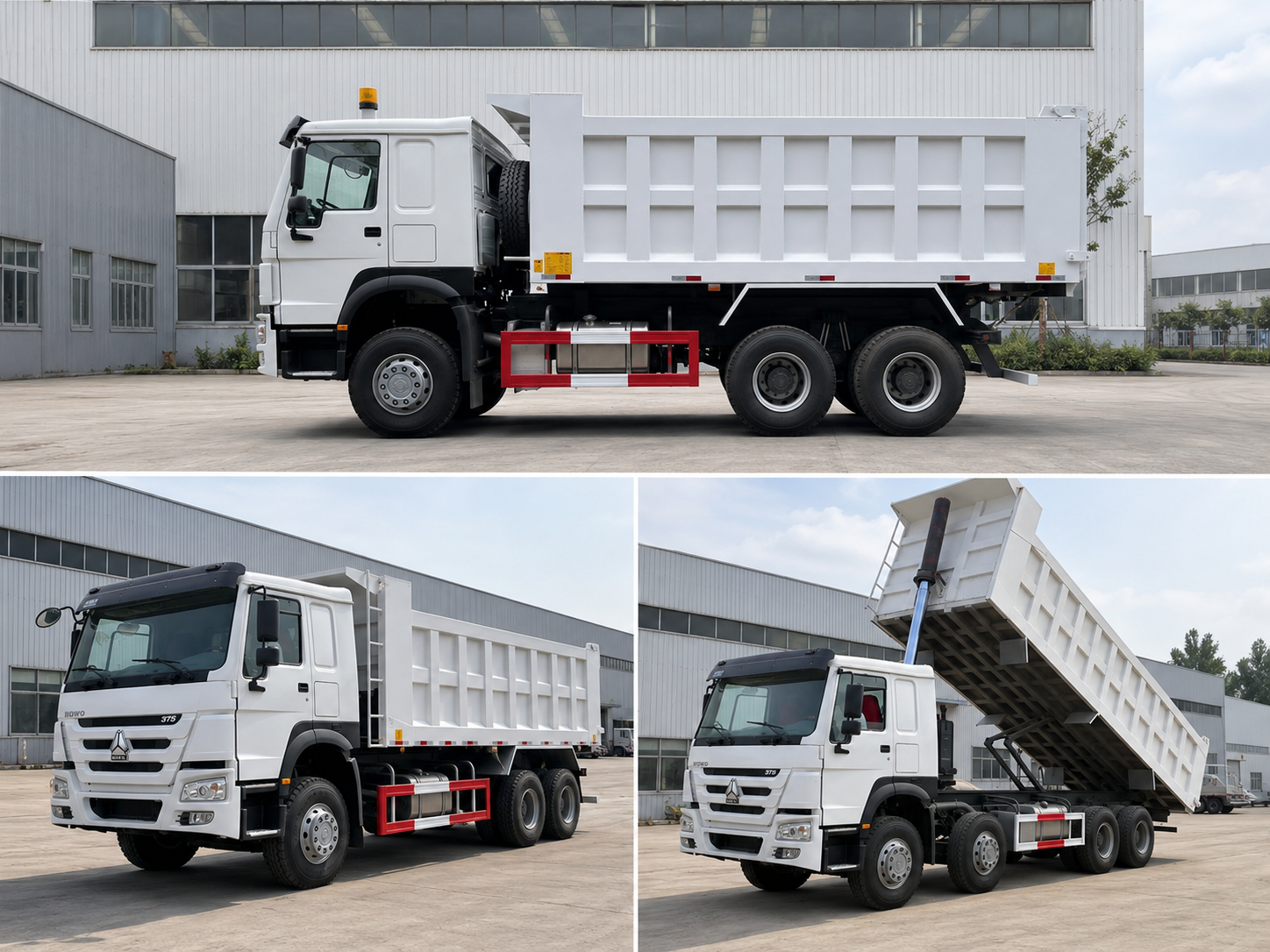
Used HOWO Dump Truck Refurbishment Grades: Original, Repainted and Reconditioned Options

Used HOWO Dump Truck Refurbishment: Original, Repainted or Reconditioned?
A practical comparison of refurbishment definitions, visible evidence, configuration risks, quotation boundaries, and final acceptance requirements for second-hand HOWO dump trucks.
Two second-hand dump trucks can look almost identical after cleaning and paint, yet their preparation history may be completely different. One unit may retain an original cab, visible working marks, and unchanged mechanical parts. Another may receive a complete exterior repaint but no functional repair. A third may include selected work on the cabin, hydraulic system, tires, wiring, or other agreed areas.
That difference matters when quotations are compared across several available vehicles. Terms such as original, repainted, restored, renewed, or reconditioned do not follow one universal grading standard. Without a written definition, a grade may describe appearance, workshop activity, final operating condition, or a mixture of all three.
A reliable decision should begin with intended cargo, road conditions, gradients, daily tipping cycles, workshop access, destination requirements, and the acceptable amount of work after arrival. The quotation should then connect the grade name with a vehicle identity, current-condition record, included work, replacement items, exclusions, operating evidence, tire requirements, and delivery condition.
For this reason, used HOWO dump truck refurbishment should never rely on exterior shine alone. Original, repainted, and reconditioned options become useful only when each description can be checked against photographs, videos, work records, and a unit-specific quotation.
The decision in one minute
Original condition
Keeps more visible service history. It may suit operations with local workshop capacity and tolerance for cosmetic wear.
Repainted
Improves exterior presentation. It does not confirm engine, chassis, hydraulic, brake, electrical, or tire condition.
Reconditioned
Adds selected workshop work. Every included component, action, replacement item, test, and exclusion still needs written confirmation.
A clearer way to compare refurbishment grades
①
Vehicle identity
Confirm the exact truck before comparing grade names, photos, or quoted work.
②
Grade definition
Write what original, repainted, or reconditioned means for that unit.
③
Evidence package
Use before-work, during-work, final, operating, and loading records.
④
Acceptance scope
List what is included, optional, unchanged, excluded, and still limited.
Why Used Truck Refurbishment Labels Need Written Definitions
A refurbishment label is a commercial description, not a complete technical report. The same word can cover different preparation levels across workshops, quotations, and individual vehicles. One “reconditioned” unit may include paint, tires, cabin trim, and selected hydraulic work. Another may receive cleaning, minor repairs, and an operating video.
As a result, the label has limited value until its scope is written. A useful definition states what remained unchanged, what received cosmetic preparation, what received functional work, and how the final condition will be verified. It should also state which claims cannot be confirmed from the available records.
This written boundary improves both risk control and quotation comparison. It prevents a lower-priced cosmetic package from appearing equal to a broader preparation scope. It also prevents a long repair list from creating the impression that every system received rebuilding.
1. Define the received condition
Record visible wear, paint condition, known repairs, cabin condition, tire status, leakage signs, and operating limitations before work begins.
2. Define the work
List each cleaning, paint, repair, replacement, service, adjustment, or test action by vehicle area.
3. Define the evidence
Match important claims with identity-linked photographs, continuous videos, work records, or another agreed acceptance method.
4. Define the exclusions
State which components remain used and unchanged. Unlisted work should never be assumed to form part of the grade.
Avoid unsupported condition percentages
Descriptions such as “90 percent new,” “95 percent condition,” or “almost new” do not explain the vehicle’s actual condition. A percentage cannot show whether the cab received new paint, whether tires were replaced, whether a hydraulic leak was corrected, or whether an older repair remains on the frame.
A component-based description is more useful. It can state that the cab retains original paint, that selected panels received local repair, that the chassis was cleaned but not recoated, and that listed hoses received replacement. Each statement can then connect to evidence.
The same principle applies to mileage, year, service history, and previous ownership. Cosmetic preparation does not prove those claims. Available documents, readable identity markings, unit records, and stated evidence limitations should remain separate from the grade.
Use acceptance criteria instead of general promises
A useful grade also explains how completion will be accepted. Paint work can use matching before-and-after photographs. A replacement item can use an installation record. Hydraulic work can use close photographs and an agreed lifting video. Cabin work can use interior images from consistent angles.
Acceptance should remain realistic for second-hand equipment. Normal age-related marks, previous service wear, non-original parts, and repaired areas may remain. The quotation should disclose those limitations instead of describing the vehicle as equivalent to a new truck.
The objective is a traceable commercial agreement. Every important statement should connect to a vehicle identity, an action, a visible record, a final test, or a clearly stated limitation.
What an Original-Condition Listing Should and Should Not Mean
An original-condition listing usually indicates that major visible areas have received limited recent cosmetic alteration. The cab may retain its existing paint, decals, scratches, faded surfaces, and local repair marks. Interior trim, seats, controls, and floor surfaces may also show normal use.
That visible history can be valuable. It allows frame markings, panel differences, corrosion areas, welds, dents, and old paint repairs to remain easier to review. However, original appearance does not prove low wear or acceptable mechanical condition.
What “original condition” can reasonably describe
A clear listing may state that the cab has not received a complete repaint. It can also disclose local touch-up, older repair paint, faded areas, small dents, damaged trim, and surface corrosion. This wording provides more value than a simple claim that the entire truck is untouched.
Routine preparation may still occur. Cleaning, battery charging, fluid checks, selected service items, lamp replacement, or correction of a clearly identified fault does not automatically change the overall cosmetic grade. Even so, each completed action belongs in the work record.
The cab, chassis, and dump body should be described separately. A cab may retain original paint while the body has older welding or local coating. A chassis section may have received corrosion treatment while the cabin remains unchanged.
This separation prevents one visible area from defining the entire vehicle. It also helps an operation decide which work can remain acceptable and which work should be completed before shipment.
Original condition can show
- Existing cab and body finish
- Visible service wear
- Old panel and paint repairs
- Corrosion and coating differences
- Cabin trim and control wear
- Vehicle markings before repainting
Original condition cannot prove
- Accident-free history
- Internal engine condition
- Complete mileage accuracy
- Hydraulic lifting performance
- Brake and electrical operation
- Acceptable remaining tire condition
Original paint does not confirm structural history
An unchanged exterior cannot prove that the frame has never received welding, straightening, reinforcement, bracket replacement, or local repair. Important structural areas still need clear images. These may include frame rails, crossmembers, suspension mounts, body hinges, the hydraulic subframe, and mounting points.
Likewise, an untouched engine exterior does not show internal wear. Old stains can remain after a past repair, while a recently cleaned surface can hide a developing leak. Operating evidence and work records should remain independent from the paint grade.
The same rule applies inside the cab. An original dashboard does not mean every switch, gauge, light, wiper, window, lock, or ventilation control operates correctly. The quotation should state which functions were tested and which remain unchanged.
Tires need a separate requirement as well. An original truck may carry mixed brands, uneven tread, repaired casings, sidewall marks, or different production dates. A general grade cannot replace a written tire standard.
When an original-condition option can fit
Original condition may fit a fleet with reliable workshop capacity, familiar mechanics, suitable parts access, and enough preparation time after arrival. Local teams can select repair priorities, apply fleet colors, source preferred tires, and retain control over final presentation.
This option may also avoid paying for cosmetic work that adds little operational value. A quarry or construction project may accept faded paint while placing greater emphasis on tires, hydraulic readiness, body condition, and essential controls.
However, the full cost should include local labor, parts transport, workshop availability, painting, tire replacement, and lost deployment time. A project with a fixed starting date may face greater schedule risk from a vehicle requiring extensive work after import.
A useful original-condition quotation should therefore state the visible condition, any limited work included before shipment, and the work expected to remain after arrival.
What Repainting Changes—and What It Does Not Prove
A repainted used dump truck usually receives surface preparation and a new visible finish within agreed areas. The work can improve presentation, support a fleet color, remove old branding, and protect surfaces that received proper treatment.
Repainting remains cosmetic unless the quotation lists additional work. A fresh cab or chassis finish does not confirm the condition of the engine, gearbox, axles, brakes, hydraulic equipment, tires, electrical system, or dump-body structure.
Define exactly which areas receive paint
A complete cab repaint differs from local touch-up. Cab work also differs from chassis coating, dump-body painting, wheel finishing, or interior preparation. The scope should list each covered area so that a clean cabin does not create assumptions about the body or underside.
Preparation method matters as well. Coating over oil, dirt, loose rust, or unstable old paint may create a good short-term appearance, yet the finish can peel or bubble later. A useful scope may therefore identify cleaning, sanding, rust treatment, local dent correction, primer, masking, and finish coating where required.
The expected finish should remain realistic for working equipment. A practical fleet coating differs from extensive panel restoration and a high-detail display finish. Quotation language should describe the agreed preparation level without implying an unsupported result.
Color should also be confirmed in writing. Photographs and phone screens can show shades differently. A color reference, code, or approved sample can reduce disagreement, especially when several vehicles require a consistent appearance.
Areas that may need separate paint lines
- Cab exterior
- Cab roof and rear panel
- Chassis rails and crossmembers
- Dump-body exterior
- Dump-body interior
- Hydraulic tank and brackets
- Fuel tank and battery box
- Steps, bumpers, and wheels
- Removal of old decals
- Application of agreed branding
Pre-paint photographs protect useful evidence
Fresh paint can cover scratches, surface corrosion, older repair edges, weld marks, and coating differences. Pre-paint photographs are therefore an important part of the evidence package. They show the vehicle before cosmetic preparation changes the visible surface.
Frame rails, crossmembers, suspension mounts, body hinges, cylinder mounting points, and the tipping subframe deserve particular attention. A wider image should show the location, while a close image can record the detail.
Neutral lighting is generally more useful than highly polished presentation images. Reflections, shadows, wet surfaces, distance, and heavy image processing can hide surface variation. Final beauty images may support presentation, but they should not replace working-condition evidence.
Identity markings should also be recorded before coating. A new finish can reduce the visibility of old labels, numbers, and other identifying details. The same vehicle identity should remain traceable throughout preparation and final acceptance.
State what repainting excludes
A repainting package may exclude engine repair, gearbox work, differential service, brake rebuilding, wiring replacement, tire renewal, hydraulic cylinder work, cabin restoration, or body reconstruction. These exclusions should appear clearly beside the included paint scope.
Cabin cleaning should also remain separate from cabin renewal. Washing, vacuuming, and surface treatment do not equal replacement of seats, dashboard parts, switches, floor covering, door trim, mirrors, or seals.
Wheel painting does not change tire condition or prove the condition of wheel-end components. Likewise, coating a hydraulic tank does not show whether hoses, valves, pumps, controls, or the lifting cylinder received work.
Clear exclusions make price comparison more accurate. Two repainted trucks may look similar after preparation, although one received corrosion treatment and panel repair while the other received only cleaning and a finish coat.
How to Define the Scope of a Reconditioned Truck
A reconditioned truck should have a written schedule covering selected cosmetic and functional preparation. The word does not mean that every assembly received rebuilding. Instead, it should identify the areas included, the actions completed, the replacement items used, and the limitations that remain.
The clearest sequence begins with received condition, moves through agreed work, and ends with final evidence. This structure shows what changed and prevents the grade name from becoming broader than the actual scope.
Use system-specific action language
General phrases such as “engine renewed,” “hydraulic system serviced,” or “chassis restored” are difficult to verify. The work record should name the observed issue and the completed action. For example, it may identify a replaced hose, repaired lamp, corrected seat mount, treated corrosion area, or selected service item.
The word “inspected” also needs a method. A visual review differs from an operating test, measurement, partial disassembly, or independent assessment. The selected method should match the importance of the component and the intended duty.
Similarly, “repaired” should state the fault and response. A local wiring correction differs from complete harness replacement. Correction of one hose connection differs from renewal of an entire hydraulic hose set.
Precise language does not require a long technical report for every minor item. It requires enough detail to show what the quoted work includes and what remains outside the scope.
Reconditioned is not the same as fully rebuilt
A full rebuild normally involves extensive disassembly, measurement, parts replacement, machining where required, reassembly, and controlled testing. A normal export reconditioning scope may be much narrower.
Major assemblies may remain original and serviceable. Selected used, remanufactured, reconditioned, or new parts may also be installed. The condition and origin of important replacement items should appear when they affect cost, maintenance, or acceptance.
A prepared vehicle can contain components of several ages. An older chassis may carry a new battery, selected replacement tires, a repaired hose, renewed lights, and original cabin trim. The grade should reflect that mixed condition rather than presenting the complete truck as new.
Reconditioning cannot remove previous service history. Wiring insulation, seals, rubber parts, fasteners, interior plastics, and hidden surfaces still reflect age and operating conditions. The scope should describe completed readiness work without promising a fixed remaining life.
Define replacement quality and quantity
Replacement terms should be specific. “New tires” should state whether all positions or only selected positions receive replacement. “New battery” should state the quantity and agreed requirement. “New hydraulic hoses” should explain whether the complete set or only identified hoses receives renewal.
The same rule applies to cabin work. A “new cab” may refer to a different complete cabin, selected replacement panels, renewed trim, or a repainted existing structure. These options carry different identity, fit, cost, and evidence implications.
Substitution control is also important. When an agreed part becomes unavailable, the alternative should be documented before installation. Condition, specification, cost effect, and schedule effect may need approval.
Where brand, model, material, or destination compliance matters, the exact requirement belongs in the written quotation. Unconfirmed specifications should not be added as assumptions.
Define the final condition, not only the work list
A work list shows workshop activity. An acceptance statement explains the resulting condition. Both are necessary. A record may state that a damaged hose was replaced, the system completed an agreed lifting cycle, and no active leakage was visible during the recorded test.
That evidence confirms behavior during the test period. It does not guarantee future performance under every load, road, climate, maintenance schedule, or operating method.
The final statement should also record remaining cosmetic marks, repaired areas, mixed components, non-original parts, or deferred work. Transparent limitations are more useful than broad claims of perfect condition.
Work planned after arrival should be identified as well. This may include local branding, destination-specific equipment, final tire changes, registration items, or another agreed local task.
Available Vehicle Paths
Compare Used HOWO Dump Truck Options by Actual Condition
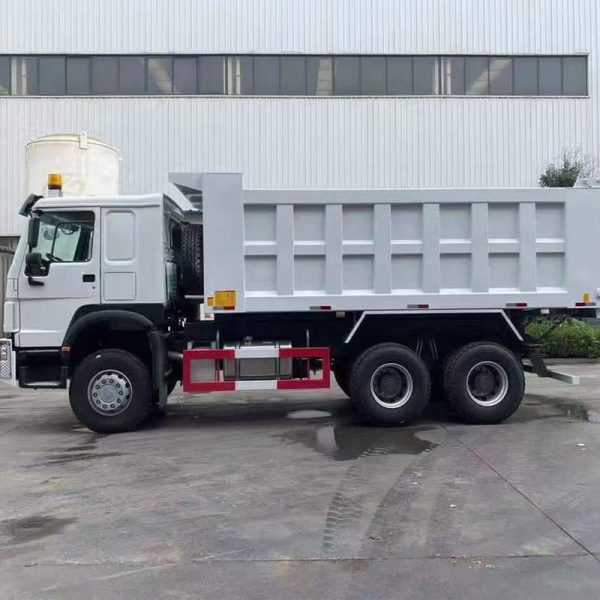
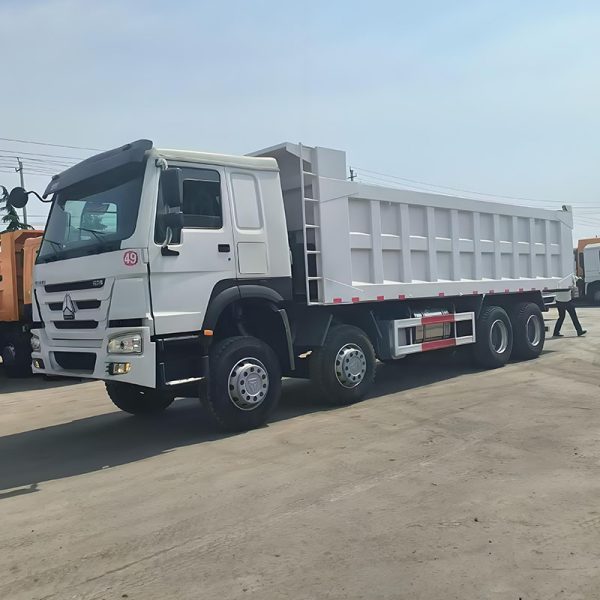
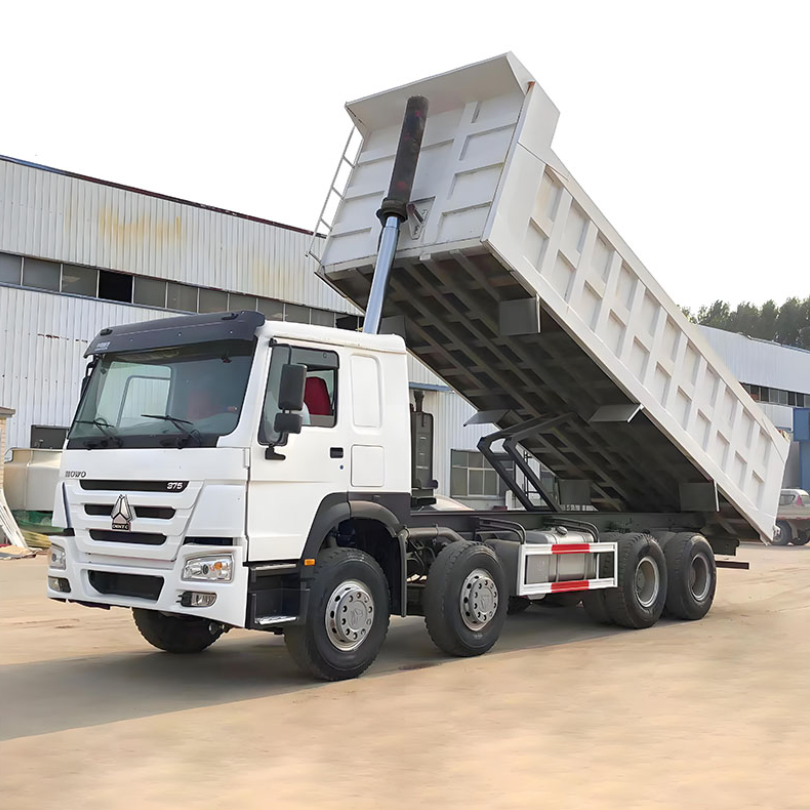
The images below show real vehicle and tipping configurations from Boca Vehicle pages. Each image and its button open the confirmed used dump truck category. Final grade, configuration, dimensions, evidence, and preparation scope must be confirmed for the specific available unit.
Comparing Cab, Chassis, Powertrain, Hydraulic System and Tires
The clearest comparison uses the same vehicle areas for all three grades. This approach prevents paint condition from dominating the discussion and keeps the quotation connected to operating needs.
The comparison below describes scope boundaries rather than fixed industry definitions. Each available unit still needs an individual condition record and final quotation.
Cab and interior
Original: Existing paint, trim, controls, seats, and visible wear remain.
Repainted: Stated exterior surfaces receive preparation and coating.
Reconditioned: Paint may combine with listed panel, mirror, seal, seat, trim, light, or control work.
Chassis and dump body
Original: Existing coating, corrosion, repairs, and working marks remain visible.
Repainted: Cleaning, local treatment, and coating may be included.
Reconditioned: Documented body, bracket, hinge, crossmember, mounting, or structural work may be added.
Powertrain
Original: No broad overhaul should be assumed.
Repainted: Exterior finish adds no mechanical proof.
Reconditioned: Selected service, adjustment, repair, or replacement actions must be named by component.
Hydraulic system
Original: Existing system remains apart from stated service work.
Repainted: Painted tanks or cylinders do not confirm operation.
Reconditioned: Listed hose, oil, seal, valve, pump, cylinder, control, hinge, or mounting work may be included.
Tires and wheels
Original: Existing sets remain unless the quotation states otherwise.
Repainted: Wheel paint does not alter tire condition.
Reconditioned: Replacement positions, matching rules, tread expectations, and rim work must be listed.
Evidence level
Original: Received-condition photographs and current operating evidence.
Repainted: Before-paint, preparation, and final photographs.
Reconditioned: Received condition, work records, replacement evidence, and final operating records.
Cab condition involves more than exterior finish
The cab includes panels, roof, glazing, mirrors, doors, steps, seals, seats, floor covering, dashboard, switches, gauges, lighting, ventilation equipment, and storage areas. A quotation should identify which of these areas receive attention.
A repainted cabin may retain worn seats, damaged trim, weak seals, missing controls, or non-working accessories. A reconditioned cabin may include selected interior work, but complete renewal should not be assumed.
Replacement cabins and larger exterior accessories can also affect shipping dimensions or local configuration requirements. Any dimensional concern should be checked against the actual offered vehicle and selected transport method.
Chassis descriptions need exact repair locations
The chassis supports the cab, powertrain, axles, suspension, hydraulic mounting structure, and dump body. Cosmetic coating alone should not be described as structural reconditioning.
Any straightening, welding, reinforcement, bracket replacement, crossmember work, or mounting repair should identify its location. Before-work and final photographs are particularly important because fresh coating can reduce visibility.
The dump-body subframe should remain separate from the main chassis rails. Repair to a hinge, cylinder bracket, or lifting frame does not mean the complete chassis received structural work.
Powertrain scope should avoid broad promises
The powertrain normally includes the engine, clutch, gearbox, driveshaft, and differentials. A reconditioned grade may involve only one or two areas. The record should identify each completed service, repair, adjustment, or replacement.
Routine servicing should not be described as an overhaul. Fluid and filter changes can form part of preparation, but they do not prove internal rebuilding. Cleaning an old stain also differs from correcting an active leak.
Operating videos can confirm behavior during the recorded test. They cannot provide a complete internal history or guarantee future operation under every duty cycle.
Hydraulic preparation should match the tipping cycle
The hydraulic system controls body lifting and lowering, so general phrases such as “hydraulic renewed” are not sufficient. One scope may replace a damaged hose. Another may include selected work on oil, seals, valves, controls, pumps, hinges, mounting points, or the lifting cylinder.
The required preparation depends on the intended operation. Repeated quarry cycles, construction-site movement, occasional earthwork, and longer material routes create different priorities. Cargo characteristics, loading method, tipping frequency, road condition, and maintenance access should guide the scope.
Hydraulic oil replacement should remain separate from component repair. Likewise, cleaning a cylinder exterior does not confirm seal replacement or internal work.
Tire standards should be written independently
Tires can materially change the delivered cost and readiness of a used vehicle. An original option may retain mixed brands and wear levels. A repainted option may keep the same set. A reconditioned option may replace only selected positions.
The phrase “good tires” does not provide enough detail. A useful line can state the required quantity, size, tread expectation, matching rule, casing condition, sidewall acceptance, and spare requirement.
Road rules, operating speeds, route surfaces, axle loading, climate, and maintenance practices may affect the final standard. These conditions should be reflected in the signed requirement rather than assumed from the grade.
Evidence Buyers Should Request: Photos, Video and Work Records
A useful evidence package should answer three questions: which vehicle appears in the file, when the record was created, and what condition or work it confirms. A large collection of images can still be weak when identity remains unclear or photographs from several units become mixed.
The strongest record follows the truck from received condition through workshop preparation, final acceptance, and loading. This sequence separates existing wear from agreed work and transport condition.
For one official reference point on commercial vehicle record discipline, FMCSA inspection, repair and maintenance guidance under Part 396 explains the importance of inspection, repair, maintenance, and related records for commercial motor vehicles. This article does not replace local compliance review, but the same logic is useful for export buyers: a used truck quotation should separate appearance, work performed, inspection evidence, and remaining limitations.
Stage 1
Identity
Connect the quotation, image folder, video folder, and work record to one listed vehicle.
Stage 2
Before work
Record paint, corrosion, repairs, cabin wear, tires, leakage signs, and current operating condition.
Stage 3
During work
Show important preparation, repairs, replacements, and approved changes.
Stage 4
Final condition
Repeat important angles, record operating tests, and disclose remaining limitations.
Stage 5
Loading
Record the accepted unit, removed items, protective measures, and shipment condition.
Begin with consistent overview photographs
Full exterior images should show the vehicle from consistent front-left, front-right, rear-left, and rear-right angles. These views help compare the condition before and after work.
The evidence package should also include the cabin interior, engine area, chassis sides, frame rails, dump body, hydraulic equipment, suspension, axles, wheels, tires, and readable identity markings.
Close photographs should focus on disclosed damage, leakage, repairs, corrosion, replacement items, and remaining defects. A wider image should show where the close detail sits on the vehicle.
Timestamps can support the record, but they do not prove identity on their own. A visible unit number, inspection board, readable marking, or continuous video sequence can provide stronger context.
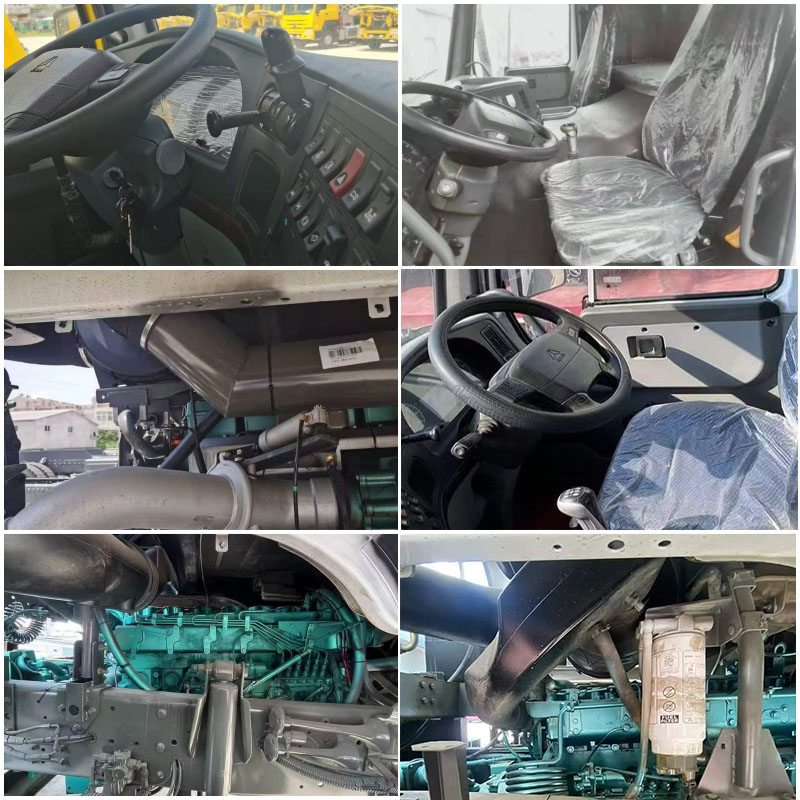
Use matching before-work and final angles
Before-work photographs protect transparency. They record original paint, dents, corrosion, welding, leaks, damaged trim, tire wear, and general condition before preparation changes the surface.
During-work photographs should relate to listed actions. They may show surface preparation, local panel repair, hose replacement, electrical correction, cabin work, rust treatment, or another agreed task.
Final photographs should repeat the important first-stage angles. Matching views make changes easier to identify and reduce confusion when several units have similar colors and configurations.
One photograph should not be used to support an overly broad claim. An open engine cover does not prove rebuilding. A package label does not prove installation. A clean chassis does not confirm structural repair.
Continuous videos provide stronger context
Short edited clips can omit transitions or temporary faults. A continuous video preserves more of the operating sequence. The test should remain safe, relevant, and agreed in advance.
Depending on site conditions, the sequence may include a walkaround, starting, idling, basic forward and reverse movement, steering, braking, gear engagement, dump-body lifting, controlled lowering, and selected cabin controls.
The vehicle identity should appear near the beginning of each video. This step is important when several similar units form one order. Original audio can also preserve useful operating context.
A lifting video should show the body movement, cylinder area, vehicle stance, and lowering sequence where safely possible. Stable ground, site rules, operating limits, and safe distances must control the test.
Work records should describe actions in plain language
A line such as “checked and repaired as needed” does not show what happened. A stronger entry identifies the area, observed issue, completed action, replacement item, final status, and evidence reference.
For example, one line may record an identified damaged hose, the replacement action, a final leak observation, and related photographs. Another may record a repaired mirror, replaced light, corrected seat mounting, or treated corrosion area.
Unchanged items should remain visible. When a system received an operating review but no repair, the record can state “inspected, no listed work completed.” That wording prevents assumptions.
For replacement parts, evidence should connect the item to the vehicle. Packaging alone is not enough. Installation photographs, quantity confirmation, labels where relevant, and final views create a stronger record.
Choosing a Grade by Budget, Duty Cycle and Risk Tolerance
The lowest vehicle figure does not always create the lowest deployment cost. At the same time, the broadest workshop package does not always deliver the strongest value. The suitable grade depends on the base truck, intended operation, local service capacity, schedule, and tolerance for post-arrival work.
A practical decision begins with the transport task. Cargo type, material density, loading equipment, route distance, gradients, road surface, daily cycles, climate, tipping area, and maintenance access can change which preparation items deserve priority.
Confirm the basic configuration before selecting a grade
Refurbishment cannot correct an unsuitable configuration. Drive arrangement, axle layout, wheelbase, overall length, turning space, body proportions, tipping structure, and cab arrangement should fit the intended route and worksite before cosmetic preparation receives approval.
A tighter construction site may place greater value on maneuverability and a shorter overall combination. A longer vehicle may need more turning space and a larger unloading area. The final choice should follow actual access roads, loading equipment, dumping space, and local limits.
Body dimensions also need cargo-based review. A larger body is not automatically the better option. Material density, axle distribution, stability, loading method, and route condition can affect the suitable body volume and structure.
Shipping dimensions require separate confirmation as well. Mirrors, exhaust parts, roof equipment, tires, body position, and the selected transport method may affect loading preparation. Final dimensions should come from the specific vehicle.
Choose original condition when
- Visible history has high value
- Local workshop capacity is strong
- Parts access is reliable
- Cosmetic wear is acceptable
- The schedule allows local preparation
Choose repainting when
- Fleet color matters
- Exterior presentation affects resale
- The base condition is already acceptable
- Mechanical work remains separately controlled
- Before-paint evidence is available
Choose reconditioning when
- Selected work is needed before shipment
- Local service access is limited
- Deployment timing is important
- Evidence and acceptance can be defined
- The scope follows actual operating risks
Original condition supports local control
An original option may suit an operation with experienced mechanics, suitable workshop equipment, reliable parts channels, and time for preparation after arrival. Local teams can select repair priorities and apply preferred paint, branding, cabin, and tire standards.
The apparent saving should still include local labor, parts transport, workshop delays, painting, tire sourcing, and lost operating time. A vehicle that needs several weeks of preparation may create a higher project cost than a more expensive but better-defined option.
Parts lead time deserves particular attention. A truck can arrive before required seals, controls, tires, batteries, lights, mirrors, or cabin parts become available. Local readiness should be assessed before selecting a lower-preparation grade.
Repainting supports presentation, not mechanical readiness
A repainted vehicle may fit dealership stock, fleet-color requirements, company branding, or projects that need a cleaner exterior at delivery. It can improve consistency without adding unnecessary mechanical work.
Technical risk still follows the base vehicle unless separate repair items appear in writing. Cosmetic cost and functional preparation should therefore remain different lines in the quotation.
Repainting usually delivers better value when the underlying truck already has acceptable condition evidence. Painting a poorly documented unit can shift attention away from tires, chassis repairs, hydraulic condition, or another more important risk.
Reconditioning should follow duty priorities
A reconditioned option can reduce local preparation when the included work matches the planned operation. The scope may prioritize starting reliability, hydraulic operation, lighting, batteries, tires, cabin controls, leakage correction, or other agreed areas.
The strongest package is not necessarily the package with the longest work list. It is the package that addresses the risks most likely to delay deployment or interrupt the expected duty cycle.
A remote quarry may value tires, hoses, batteries, hydraulic readiness, essential controls, and selected spares more than detailed cosmetic renewal. Dealership stock may place greater value on exterior consistency, cabin presentation, and complete visual evidence.
The scope should follow the operating model rather than a generic refurbishment menu.
Duty cycle changes the acceptable uncertainty
Occasional construction support creates a different risk profile from repeated quarry hauling. Short site movements differ from long material routes. Flat access roads differ from steep, uneven, or muddy roads.
Higher cycle frequency generally increases the value of stronger evidence and selected preventive preparation. Remote operation also increases the impact of parts delays, workshop limitations, and recovery distance.
Cargo characteristics matter as well. Wet soil, sand, aggregate, demolition material, coal, and rock place different demands on the body and tipping cycle. The condition and preparation scope should reflect the intended material.
A fixed project start date may justify a broader pre-shipment scope. Schedule pressure should appear in the inquiry before vehicle selection rather than after an order is confirmed.
Rigid dump truck or tipping trailer combination
A rigid dump truck combines the cab, power unit, chassis, and tipping body in one vehicle. This arrangement may fit site movement, shorter transport cycles, and work requiring an integrated unit.
By contrast, a dump semi trailer separates the tractor from the tipping unit. That configuration may support different route patterns, tractor utilization, and fleet flexibility where road geometry, unloading space, and local requirements allow.
The choice should follow tractor availability, turning space, route distance, gradient, tipping stability, loading equipment, axle requirements, and the intended operating model.
A higher refurbishment grade cannot correct a mismatch between vehicle type and transport task. Configuration should be confirmed before appearance and workshop scope are compared.
How to Build a Refurbishment Scope into the Quotation
A strong quotation converts broad expectations into unit-specific line items. It identifies the truck, defines the grade, records current condition, separates included and optional work, states exclusions, assigns evidence, and explains final acceptance.
The document does not need complicated language. Short descriptions and exact actions often provide better control. Every major statement should remain easy to compare with photographs, videos, work records, and the final vehicle.
Begin with vehicle identity and base condition
Each unit should connect to available identity information. The record may include the listed model, drive layout, stated year, mileage evidence status, chassis identity, engine identity where available, visible configuration, and dimensions relevant to transport or site access.
The received condition should then appear in a short summary. This description can cover exterior wear, cabin condition, tire status, visible leakage, known repair areas, body condition, and basic operating status.
Unsupported claims should remain outside the document. Where complete year, mileage, service, or ownership evidence is unavailable, the limitation should be stated before preparation begins.
Identity should remain consistent across the quotation, photo folder, video folder, work schedule, commercial documents, acceptance record, and loading file.
Define the grade in one clear paragraph
An original-condition definition may state that no complete repaint is included, while selected safety, service, or repair actions appear separately. A repainting definition may cover stated surface preparation and coating while excluding mechanical work unless listed.
A reconditioned definition may include selected cosmetic and functional preparation described in the following schedule. It should also state that components not listed remain in used condition.
This paragraph should avoid unsupported percentages and phrases such as “perfect condition” or “equivalent to new.” One accurate definition prevents the grade name from expanding beyond the signed scope.
Separate included, optional, unchanged, and excluded items
Included work belongs in the base quotation. Optional work should appear as separate choices. Unchanged components and exclusions should remain visible beside related systems.
Optional lines may cover selected tire replacement, cabin trim, paint color, lighting, spare parts, extra evidence, independent inspection coordination, or special shipping preparation. Each option should define its own scope and possible schedule effect.
A single optional price for “complete refurbishment” creates the same uncertainty as a vague grade label. Likewise, a base quotation should not silently assume replacement of all tires, complete engine work, full cabin renewal, or complete hydraulic rebuilding.
A simple status system makes comparison easier: included, optional, acceptable unchanged, or excluded.
Recommended quotation scope
- Vehicle identity and listed configuration
- Received-condition summary
- Written grade definition
- Cab exterior preparation
- Cabin interior preparation
- Chassis cleaning, treatment, or repair
- Dump-body cosmetic or structural work
- Powertrain service or repair items
- Hydraulic service or repair items
- Electrical and lighting work
- Brake and suspension work
- Tire and wheel requirements
- Battery, fluid, filter, belt, seal, or hose work
- Photo, video, and work-record package
- Loading and shipment preparation
- Excluded work and known limitations
- Final acceptance method
- Change and substitution approval process
Attach evidence to important work lines
A work item without evidence can remain difficult to verify. Cosmetic work may use matching before-and-after images. Functional work may use close photographs and continuous operation videos. Replacement items may use installation images, quantity records, and final views.
Evidence should remain proportional to risk. Minor cleaning does not need an extensive file. Structural repairs, hydraulic work, high-value replacement parts, and major cosmetic preparation deserve stronger records.
Simple file references can connect the quotation line with specific photographs or videos. This structure makes review faster and reduces the risk of mixing evidence between vehicles.
Control changes after approval
Second-hand vehicles can reveal additional issues during preparation. A change process should record the new finding, proposed action, evidence, cost effect, and schedule effect before additional work begins.
This process prevents silent substitutions and unexpected charges. It also explains why the final scope differs from the original quotation.
A reduction should be documented in the same way. When an optional part is no longer required, or an included action is removed, the change should remain visible.
A substituted vehicle needs a new identity file, condition record, preparation scope, evidence package, and approval. A similar model, color, or appearance should not be treated as automatic acceptance.
State the final acceptance method
Final acceptance may use photo review, video review, document review, live video, independent inspection, or another agreed method. The selected process should be confirmed before work begins.
The acceptance record can list completed work, approved changes, remaining limitations, evidence references, and shipment status. This structure is particularly useful for a multi-unit order.
Acceptance should focus on the agreed condition and scope. It should not create an unconditional promise against every future repair. Load, route, maintenance, climate, operating practice, and parts quality continue to affect performance after delivery.
Boca Vehicle Used Truck Support
Boca Vehicle can discuss used truck selection, available condition evidence, preparation priorities, quotation structure, inspection coordination, and shipment requirements. The discussion should begin with the intended operation rather than a general request for the highest refurbishment grade.
Relevant information includes cargo type, road surface, gradients, daily cycles, preferred drive layout, body requirement, available budget, quantity, destination, local workshop capacity, and required deployment date. Tire expectations, year and mileage evidence, hydraulic records, and acceptable cosmetic condition should also be stated.
Requirement confirmation before vehicle selection
A quarry project may prioritize chassis condition, tipping readiness, tires, and repeated-cycle evidence. A construction fleet may place greater weight on maneuverability, local service access, body condition, and project timing. Dealer stock may prioritize consistent paint, cabin presentation, and complete visual records.
Local workshop capability also affects the decision. Strong service and parts access may support an original or repainted option. Limited local access may justify selected work before shipment.
The final grade still depends on the base vehicle. Extensive cosmetic work cannot turn an unsuitable or poorly evidenced truck into the correct configuration. In some cases, a stronger original-condition unit may offer better value than a weaker vehicle with broader cosmetic preparation.
Evidence, inspection, and delivery planning
The semi trailer export service page introduces Boca Vehicle support areas related to requirement communication, inspection, shipment planning, and delivery preparation. The exact service and vehicle preparation scope should remain confirmed in the quotation.
A practical evidence plan can include identity photographs, received-condition images, workshop records, final operating videos, accepted limitations, and loading photographs. Clear file organization becomes especially important when several similar units form one shipment.
Destination requirements may affect documents, inspection timing, shipping preparation, lighting, markings, tires, dimensions, or registration-related items. These points should follow the destination country, port, local process, and signed commercial terms.
When an independent inspection is required, the timing, access, scope, responsibility, and handling of identified issues should be discussed before shipment planning.
Every listed truck needs an individual record
A grade describes an intended preparation level. It does not prove that every truck in the same category has the same history or condition. Two original units may show different wear. Two repainted units may have different underlying surfaces. Two reconditioned units may receive different work.
Each vehicle should therefore have its own identity, condition summary, work schedule, evidence folder, limitation record, and acceptance status. A batch order can use one standard format, while preserving individual records.
This structure also supports arrival inspection and internal handover. Operations, maintenance, finance, logistics, and project teams can review the same file before deployment.
FAQ
Turn the grade into a verifiable scope
Original condition preserves more visible history. Repainting improves presentation. Reconditioning adds selected preparation. None of these labels can replace unit identity, written actions, evidence, exclusions, and final acceptance.
A controlled used HOWO dump truck refurbishment quotation should connect the intended duty with the available vehicle. Configuration, dimensions, cargo, route, budget, tire standard, chassis and hydraulic evidence, year and mileage evidence, quantity, destination, and expected delivery condition should all be stated.
- Define the selected grade in one paragraph and list every included action.
- Require identity-linked before-work, during-work, final, and loading evidence.
- Separate optional work, unchanged items, exclusions, substitutions, and acceptance terms.
Request a Unit-Specific Quotation
Confirm the Vehicle, Preparation Scope, Evidence, and Delivery Condition
The inquiry should state the intended cargo, road conditions, operating cycle, preferred configuration, body requirement, budget range, quantity, year and mileage evidence requirements, chassis and hydraulic records, tire standard, destination country, and expected preparation level. Each quoted vehicle can then be reviewed against a written scope rather than a general grade name.
contact Boca Vehicle