
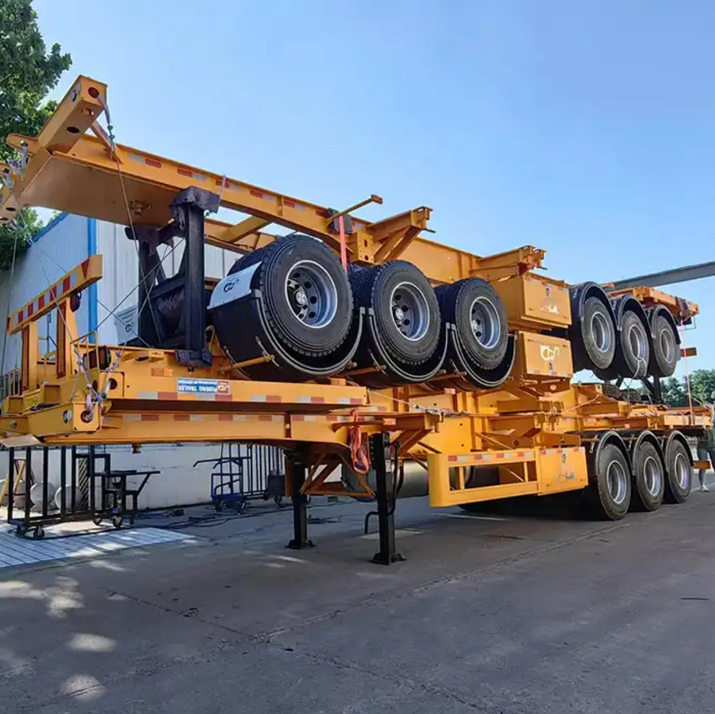
Container Chassis Guide: 20/40ft Types, Twist Locks, and Specs (Decision-First)

A container chassis trailer is built for one outcome: predictable container moves under real schedules. In port lanes and inland depots, predictability protects uptime. So, this page stays practical and narrow, even when details get deep.
Importantly, this guide skips long detours into every chassis variant. Instead, it focuses on 20/40 decisions, twist lock reliability, and spec checkpoints that prevent costly delays. For a broader overview of chassis styles and configurations, see the chassis types guide here: Different Types of Container Chassis Trailer Explained.
Fixed 20ft Container Chassis: Best Fit, Trade-Offs, and “Gate-Day” Reality
Where a fixed 20ft layout works best
In tight depots, a fixed 20ft container chassis often runs cleaner. Because the wheelbase is compact, yard turns stay controlled. Also, short staging lanes and narrow ramps become easier to manage.
On older industrial streets, compact geometry reduces contact risk. For example, curb cuts and uneven transitions often catch longer rear overhangs. As a result, daily movement stays smoother around crowded gates.
Even so, the biggest advantage is rhythm. Short chassis typically couple fast and stage fast. In peak windows, that speed matters more than small spec differences.
Specs to prioritize on 20ft lanes
For 20ft drayage, impact cycles are the main enemy. So, beam stiffness and crossmember support deserve priority. In addition, lock pedestal reinforcement helps when containers are set down hard.
Next, service access should be treated as a spec item. Grease points that are awkward will be ignored during peak weeks. Consequently, simple access often lowers downtime more than premium options.
Also, landing gear stability matters more than most expect. On uneven ground, weak landing gear can twist the front structure. Over time, that twist shows up as alignment drift and uneven tire wear.
Common field problems that show up first on 20ft work
On busy terminals, small errors repeat fast. Mis-seated corner castings and dirty lock pockets are common. So, corner guides and lock seating visibility matter more than polished paint.
Another issue is “one-corner noise.” When a single corner rattles more than the others, it often points to a guide or lock pocket problem. That sound is rarely “normal trailer noise,” especially when it is new.
Finally, short chassis can bounce sharply when empty. Therefore, suspension choice should match road roughness and tractor pairing. A tough road with a light empty chassis can punish hangers and bushings.
Fixed 40ft Container Chassis: Tandem vs Tri-Axle, and the Checks That Prevent Rework
Why 40ft stays the workhorse choice
Across regional distribution, 40ft container moves dominate the schedule. So, a fixed 40ft container chassis remains the standard workhorse. With a longer footprint, highway tracking feels calmer. In crosswinds, that calm often protects both tires and driver workload.
In addition, longer frames can smooth road undulations. That smoothing reduces “porpoising” in certain speed ranges. Over time, fewer harsh oscillations protect the frame and suspension joints.
Still, the real value is dispatch clarity. A dedicated 40ft platform removes daily “almost fits” decisions. In peak windows, fewer decisions can be a measurable gain.
Tandem vs tri-axle: a decision based on enforcement and pavement
Tandem setups often reduce tare weight and parts complexity. They also simplify tire inventory. So, tandem can be efficient when axle limits allow it.
Tri-axle setups spread load and often feel more stable on rough pavement. In strict enforcement lanes, tri-axle can protect compliance. Also, on broken surfaces, load distribution can reduce shock concentration.
However, more axles mean more wear points. Brakes, tires, bearings, and bushings increase in count. Therefore, tri-axle should be chosen with maintenance capacity in mind.
Pre-quote checks that prevent a “spec mismatch” delivery
Before any build is finalized, lock position accuracy should be confirmed. A few millimeters of drift can slow every lift. In real yards, slow lifts become missed gate slots.
Next, kingpin standardization matters. Mixing 2-inch and 3.5-inch standards complicates tractor rotation. So, the kingpin choice should match the tractor fleet and the region’s common practice.
Also, axle spacing and legal formulas should be verified early. Bridge constraints and enforcement patterns decide whether a configuration is usable. For that reason, route details belong in the quote stage, not after production.
Extendable 20/40 Chassis: Flexibility vs Maintenance, With No Illusions
When an extendable chassis earns its place
In inland depots, container mix can swing weekly. One week brings mostly 40ft, then 20ft dominates. In that setting, an extendable 20/40 chassis reduces idle equipment. Dispatch stays smoother, and deadhead moves often drop.
Seasonal shipping patterns also favor flexibility. When volumes spike unpredictably, mixed capability keeps equipment usable. During peak congestion, that flexibility can be the difference between running and parking.
Another benefit is network resilience. When a lane changes quickly due to rail schedule shifts, a flexible platform protects utilization. In operations terms, it reduces “equipment mismatch” risk.
The maintenance cost is real, because interfaces move
Extendable designs introduce sliding rails, locking pins, and alignment stops. Those interfaces must stay tight. Once play develops, twist lock alignment begins to drift.
On rough roads, vibration works every joint. So, looseness can appear earlier than expected. In practice, the first sign is usually slower container seating and more “reposition attempts.”
A jammed extension rarely announces itself early. Instead, it shows up on the worst day, during a tight dispatch window. That is why inspection cadence matters more than spec sheet optimism.
Specs that keep extension tight and predictable
Rail thickness and wear pad strategy are key. If wear pads are thin or poorly placed, play develops quickly. So, pad design should be treated as a core spec.
Locking pin geometry also matters. Pins should seat positively and indicate clearly. When indicators are vague, crews will assume “close enough,” and drift will grow.
Finally, alignment stops should be robust. Stops prevent repeat impact into lock pockets during extension changes. Over months, that protection can mean fewer bent housings and fewer lift delays.
2×20 Pairing Method: Rules, Weight Spread, and Loading Order That Prevent Damage
Why 2×20 pairing exists in real networks
Some lanes move two 20ft containers together. When it fits the flow, pairing reduces tractor runs and yard shuffles. It can also simplify depot planning when containers arrive as a bundle.
Still, pairing only works when weight spread is managed. Uneven loads create uneven axle stress. Over time, that stress shows up in tires, bushings, and lock pockets.
In daily operations, the risk is not theoretical. A lopsided pair can heat one side’s tires faster. That heat gap is an early warning sign, not a minor detail.
Pairing rules that reduce tire heat gaps
A simple rule helps: limit weight difference between the two 20s. Many fleets cap the spread to avoid side-to-side temperature gaps and steering pull. That cap also reduces uneven brake work during hard stops.
Next, cargo type matters as much as weight. Dense cargo in one box and light cargo in the other creates imbalance. So, pairing should consider both gross weight and cargo behavior.
Also, internal loading inside each container plays a role. Heavy pallets placed near one end shift center-of-gravity. For that reason, consistent loading patterns can protect axle weights across the lane.
Loading order and yard handling that protects lock pockets
Loading should start with a straight chassis on level ground. Then, the first container should seat fully into guides. After that, the second container should be lowered slowly, not “dropped into place.”
Rushed placement often bends housings. Once a housing is bent, rotation feels stiff and indicators become unreliable. So, slow lowering is a structural protection habit.
Finally, post-placement checks should be consistent. A quick walk-around to confirm lock seating prevents gate surprises. In peak hours, that short check is often the cheapest delay prevention.
Twist Locks: Manual vs Semi-Auto, Failure Diagnosis, and Gate-Out Checks
Twist locks are small parts with large consequences. They resist lift, slide, and rotation by engaging corner castings. In real lanes, twist locks do not fail politely—they fail when schedules are already tight.
Manual twist locks: simple parts and predictable servicing
Manual locks rely on direct lever rotation and visual confirmation. Their strength is serviceability. Parts are common, and replacements are straightforward.
They also tolerate dust and grit when cleaned routinely. In harsh yards, that tolerance matters. Still, manual systems demand discipline in checking true seating.
The most dangerous case is false confidence. A lever can look “down” while the head is not seated. So, seating checks should remain part of the routine.
Semi-automatic twist locks: speed with stricter upkeep
Semi-auto systems reduce climbing and speed up turns. In high-volume yards, that time can matter. However, linkages and actuation points add failure paths.
On wet concrete, grit becomes paste. That paste jams indicators and slows rotation. Therefore, cleaning becomes a performance requirement, not a cosmetic one.
In addition, semi-auto systems benefit from consistent lubrication. Skipped lubrication often creates stiff rotation first. Later, it creates partial engagement and false indicators.
Twist lock diagnosis table (symptom → cause → field action)
| Symptom seen in yard work | Likely cause | Field action that usually works |
|---|---|---|
| Head will not rotate | Corrosion or packed grit | Clean, lubricate, then re-test rotation |
| Indicator shows locked, but head is not seated | Detent wear or debris | Re-seat container, inspect detent, replace worn parts |
| Head rotates, then backs off | Spring fatigue or loose housing | Check spring and pocket fit, confirm positive stop |
| One corner rattles more than the rest | Guide wear or pocket looseness | Inspect guides first, then check lock pocket alignment |
| Pocket looks oval or cracked | Side-load during placement | Stop use, repair pocket, review placement procedure |
| Seating is slow on one end | Misalignment or extension play | Measure alignment, correct rail play before reuse |
Gate-out checks that catch most issues quickly
A simple three-point check catches most problems. First, confirm indicator status matches real lock position. Next, confirm the head is squarely seated in the casting. Finally, confirm levers and detents return positively, not loosely.
Noise is also a clue. A new rattle at one corner often points to a guide or pocket issue. Treating it early prevents bigger repairs later.
Airline and brake checks should not be skipped. In stop-and-go terminals, brake symmetry matters. On slick surfaces, uneven braking can pull the unit sideways.
Specs That Decide Uptime: Not Brochure Numbers
Specs matter because they shape fatigue life, alignment stability, and service speed. A long spec sheet can distract. So, the focus here is the small set of numbers and build choices that decide uptime.
Core specs to compare first
Start with container positions supported: fixed 20ft, fixed 40ft, extendable 20/40, and 2×20 capability. Next, confirm axle count and spacing. Then, lock system type and lock placement accuracy should be verified.
After that, look at structural priorities. Main beam steel grade and reinforcement zones should match road roughness. Crossmember spacing should match impact cycles at the terminal.
Finally, review running gear and service access. Suspension type, bushing strategy, brake system, and wiring protection decide daily downtime risk. In practice, these items cause more delays than headline payload numbers.
Frame structure: stress zones that deserve attention
Most fatigue starts near transitions. Gooseneck zones see high bending under braking. Suspension hanger regions see repeated impact cycles. Lock pedestals see localized forces during placement and road shock.
Therefore, reinforcement strategy matters more than “thicker everywhere.” Targeted reinforcement at stress zones often yields better life. It can also avoid unnecessary tare weight.
Weld consistency is another factor. Clean weld toes and controlled heat input reduce crack initiation. Over time, small improvements here can save major repair events.
Running gear geometry and tire discipline
Alignment stability is a cost multiplier. When geometry drifts, tires scrub shoulders and build heat. That heat increases blowout risk and rolling resistance.
Bushings and hangers control geometry. So, bushing quality and hanger stiffness matter. In rough corridors, robust hangers often protect both alignment and frame life.
Tire spec should match climate and gross weight. In hot markets, heat resistance becomes a core need. In wet markets, tread choice affects traction on yard concrete.
Brakes, airlines, and wiring: uptime items in disguise
Brake performance is not only about stopping distance. In wet terminals, brake symmetry affects directional stability. ABS can help reduce lock-up on slick concrete, when supported by good components.
Airline sealing also matters. Leaks cause slow response and inconsistent brake feel. In stop-and-go gates, that inconsistency becomes fatigue and risk.
Wiring harness routing is often underestimated. Exposed routing fails early in spray zones. Sealed connectors and protected paths reduce nighttime downtime and inspection failures.
Corrosion protection by environment
Coastal lanes demand better corrosion strategy. Salt air creeps into joints and connectors. So, surface preparation and primer quality matter more than paint color.
Drain paths also matter. Trapped moisture accelerates hidden corrosion. Therefore, design details like open channels and sealed cavities can extend life.
In inland lanes, corrosion risk is lower but still present. Dust and moisture still work on hardware. For that reason, routine cleaning and touch-up remain valuable.
Quick Comparison: Fixed 20ft vs Fixed 40ft vs Extendable 20/40 vs 2×20
This table helps keep decisions clean during quoting. It also prevents “default to common” thinking when lanes are not common.
| Type | Best for | Pros | Cons | What to confirm before ordering |
|---|---|---|---|---|
| Fixed 20ft container chassis | Tight depots and dense drayage | Maneuverable, fast staging | High impact cycles, sharper empty bounce | Crossmember stiffness, lock access, hanger strength |
| Fixed 40ft container chassis | Regional corridors and long-haul | Stable tracking, clear dispatch | Less flexible for mixed lengths | Axle spacing, kingpin standard, lock position accuracy |
| Extendable 20/40 chassis | Mixed container flow | One unit covers 20 and 40 | More interfaces, higher inspection demand | Rail play, pin integrity, alignment stops, clear indicators |
| 2×20 capability | Bundled 20ft moves | Fewer tractor runs | Pairing rules required, uneven wear risk | Lock spacing, weight spread rules, guide condition |
Maintenance Schedule: Daily, Weekly, Monthly, Quarterly (Built for Reality)
A maintenance schedule only works if it fits operations. So, the goal is short checks that catch early drift. Over time, early drift prevention protects uptime and resale value.
Maintenance table for common operating intensity
| Interval | Focus | What to do |
|---|---|---|
| Daily | Safety and seating | Check lock indicators, verify seating, listen for corner rattle |
| Weekly | Lock health and basic wear | Clean and lubricate locks, inspect guides, verify tire pressure |
| Monthly | Geometry and running gear | Check alignment cues, inspect bushings, review brakes and air leaks |
| Quarterly | Structural and corrosion control | Inspect stress zones, refresh corrosion protection, replace worn guides |
Daily: the fast checks that prevent gate surprises
Start with lock indicator truth. Then confirm lock head seating is square. After that, check for abnormal corner noise and loose pockets.
Air leaks should be caught early. A small leak becomes response lag. In terminals, lag becomes repeated hard stops and uneven wear.
Lights and connectors should be checked quickly. In many markets, lighting issues trigger inspection delays. That delay is pure downtime with no operational benefit.
Weekly: cleaning and lubrication that keeps performance predictable
Locks should be cleaned before lubrication. Lubricating over grit creates paste. That paste increases stiffness and false engagement risk.
Corner guides should be inspected for deformation. Worn guides cause misplacement and side-load damage. In busy yards, guide wear accelerates quickly.
Tire pressure should be verified and recorded. Pressure drift creates heat. Heat is often the first signal of geometry and loading problems.
Monthly: alignment cues and wear trend control
Alignment is easiest to manage before tires are destroyed. Uneven shoulder wear and side-to-side differences are strong clues. So, monthly checks should include wear pattern review.
Bushings and hangers should be inspected for play. Play leads to drift. Drift leads to scrub. That chain is predictable and costly.
Brakes should be inspected for symmetry. Uneven lining wear often signals response imbalance. In wet terminals, imbalance increases instability risk.
Quarterly: structural review and corrosion strategy
Quarterly checks should target stress zones. Gooseneck transitions and hanger areas deserve attention. Lock pedestals should also be inspected for cracks and deformation.
Corrosion touch-up should not be delayed. Early touch-up protects weld toes and edges. Over time, that protection can add years in coastal lanes.
Spare parts planning should be reviewed. Locks, springs, guides, and bushings are common needs. Stocking them prevents long downtime events.
Quote-Ready Checklist: The Details That Produce the Right Build
A clean quote needs lane data. Without lane data, specs drift and comparisons become unfair. So, this checklist is designed to be copied directly into an inquiry.
Operating profile
- Primary routes and road condition (smooth highway, mixed pavement, rough corridor)
- Terminal intensity (lifts per day, congestion pattern, dwell time)
- Container mix (% 20ft / % 40ft / need extendable / need 2×20)
- Cargo profile (dry, reefer, tank container, dense cargo, wind-sensitive loads)
Compliance and tractor interface
- Axle limit enforcement pattern and known bridge constraints
- Preferred axle count and spacing requirement
- Kingpin standard (2-inch or 3.5-inch) and tractor compatibility
- Target deck height and common clearance limits
Build preferences that affect uptime
- Suspension preference (mechanical vs air) matched to maintenance capacity
- Brake option preference (ABS where relevant, chamber sizing expectations)
- Tire size and rating preference matched to climate and gross weight
- Corrosion strategy needed (coastal exposure, seasonal salt, heavy rain lanes)
Twist lock system details
- Lock type (manual vs semi-auto) matched to terminal intensity
- Number of lock positions needed (20ft, 40ft, 2×20, special patterns)
- Corner guide design preference and replaceability
- Indicator clarity requirement and service access expectations
Delivery and documentation
- Lead time target and shipping method preference
- Spare kit expectation (locks, guides, bushings, air valves, hoses)
- Documentation needs (spec sheet, drawings, parts list)
- Inspection expectations at delivery (alignment check points, lock seating tests)
This checklist improves accuracy and reduces rework. It also makes quotes comparable across suppliers. In practice, clarity here saves time later.
Practical Build Recommendations for Common 20/40 Operations (With Clear Product Landing Paths)
This section stays restrained. It links scenarios to configurations, then points to matching product pages. The goal is simple: reduce mismatch between operating reality and ordered specs.
Scenario A: Port drayage, tight depots, and high lift cycles
In tight yard work, compact geometry and fast checks matter. So, a dedicated 20ft layout often runs clean. Strong crossmember support and accessible locks protect the daily rhythm.
Service access should stay simple here. When access is awkward, checks get skipped. Over time, skipped checks become lock damage and gate delays.
If operations are mostly 20ft drayage, a dedicated 20ft chassis is usually the cleanest fit: 20 ft container chassis.
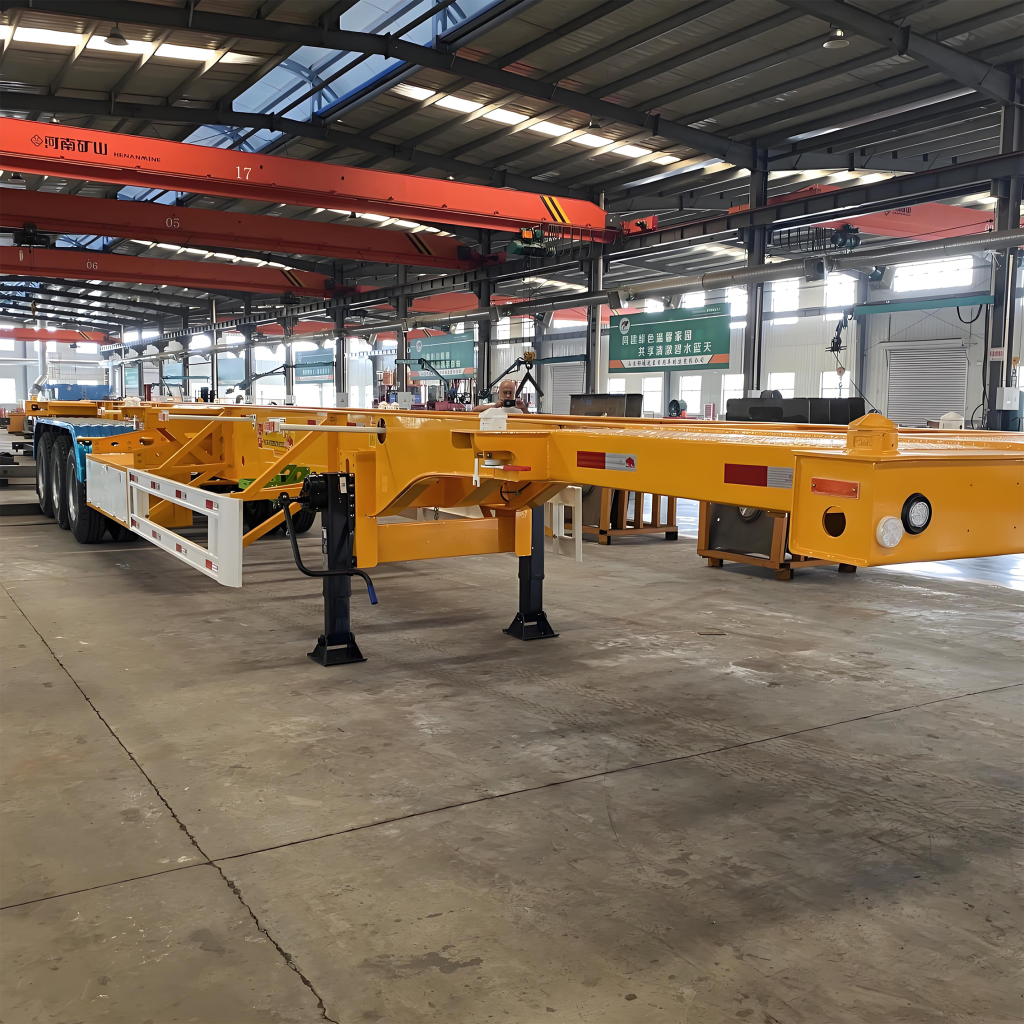
Scenario B: Mainstream 40ft flow, regional corridors, and stable scheduling
For steady 40ft volume, a fixed 40ft layout remains the workhorse. Highway stability and dispatch clarity tend to improve. In addition, consistent geometry often improves tire life over time.
Axle selection should follow enforcement and pavement. Tandem can be efficient when legal. Tri-axle can protect compliance in stricter lanes.
For mainstream 40ft operations, a fixed 40ft chassis is the standard choice: 40 ft container chassis.
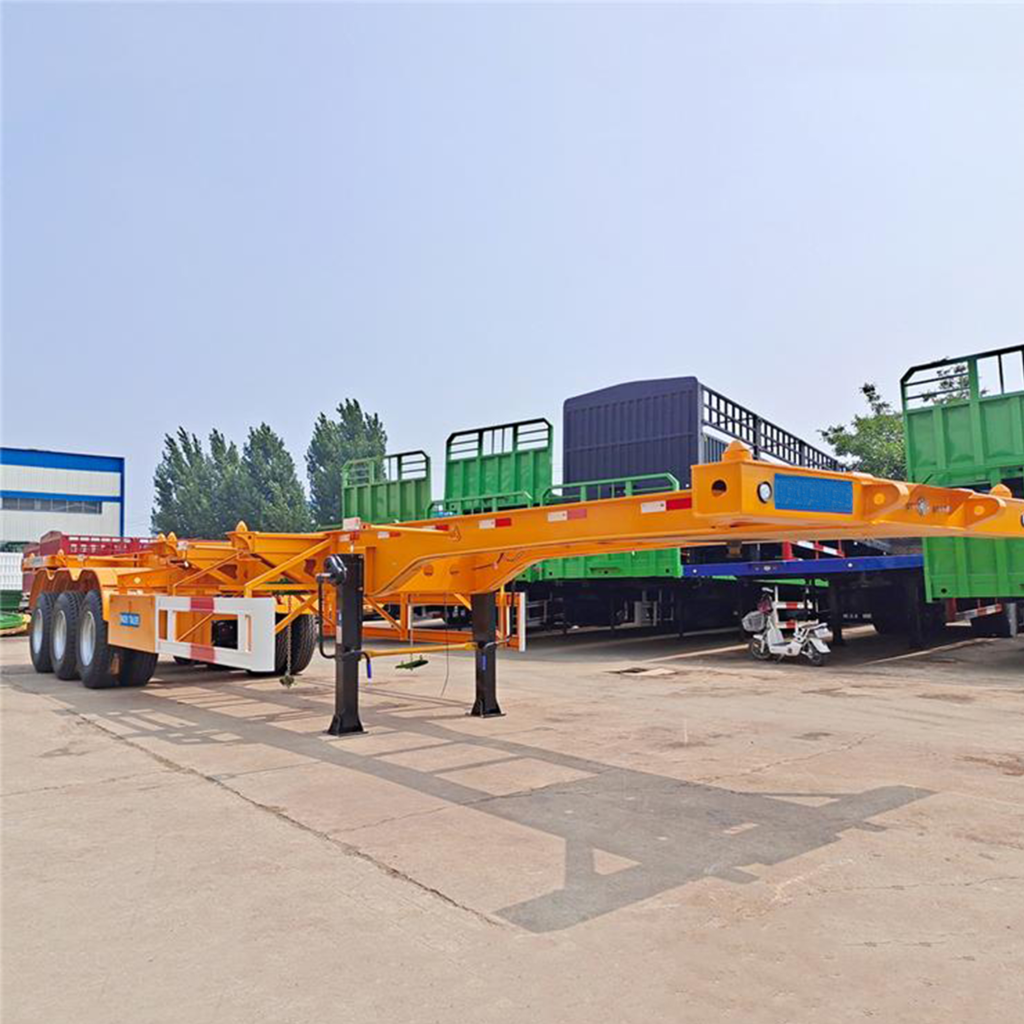
Scenario C: Mixed container lengths with frequent switching
When 20ft and 40ft appear unpredictably, extendable builds can reduce idle equipment. Still, extension interfaces must be treated as wear zones. So, rail play control and clear locking indicators matter.
Inspection cadence should be realistic. A flexible chassis without inspection discipline can become a downtime magnet. Therefore, the maintenance plan should be set before ordering.
In mixed lanes, the best configuration is often the one that matches service capacity. That reality is more important than theoretical flexibility.
Scenario D: Rough roads, higher payload markets, and stricter axle needs
On harsh roads, durability becomes the priority. Strong hangers, robust bushings, and reinforced stress zones protect life. In addition, more axles can help distribute load where enforcement is strict.
Heat management matters here as well. Tires and brakes run hotter under heavy loads and rough surfaces. So, component quality often pays back quickly.
For harsher roads or higher payload markets, multi-axle builds can protect compliance and durability: 4 axle container chassis.
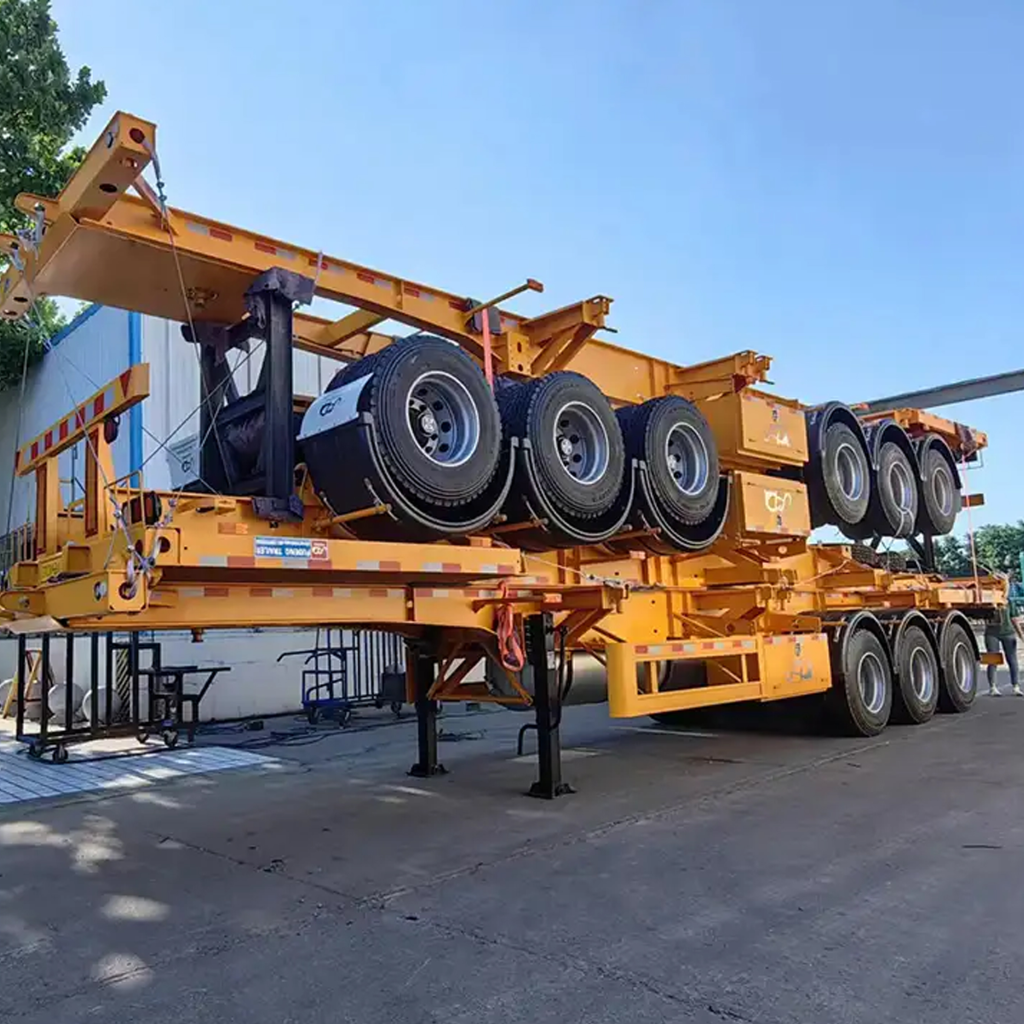
Buying Mistakes and Delivery Verification: The “Avoid Regret” Checklist
Mistakes around chassis selection are predictable. They usually come from missing lane details or ignoring small hardware. So, this section turns common regret into quick checks.
Mistake 1: treating twist locks as minor hardware
Locks decide restraint. Yet lock systems are often specified casually. That casual approach leads to stiff rotation, false indicators, and slow lifts.
At delivery, lock rotation should be tested under realistic conditions. Indicators should also be checked for truth. A lying indicator is more dangerous than an obvious failure.
Guide integrity should be verified as well. Worn or weak guides cause misplacement. Misplacement bends pockets and creates recurring lock trouble.
Mistake 2: ignoring alignment stability because the frame looks straight
A chassis can look straight and still drift under load. Small hanger issues create tire scrub quickly. That scrub becomes heat, then wear, then downtime.
At delivery, basic alignment checkpoints should be measured. Tire wear patterns should also be monitored early. Early wear asymmetry is usually a geometry or loading problem.
Bushing play should not be accepted as “normal.” Play becomes drift. Drift becomes cost. That chain is consistent across lanes.
Mistake 3: comparing price without freezing specs
Price comparisons fail when specs are not frozen. A lower price can hide axle brand changes, thinner coatings, or weaker wiring. Those hidden cuts show up as downtime later.
Therefore, quote comparisons should be made only after a baseline is fixed. Axle count, spacing, steel grade, lock type, and corrosion strategy should be identical. Without that baseline, comparisons are not meaningful.
Also, lead time should be clarified. Short lead times can be real. Still, documentation and inspection steps should not be skipped.
Mistake 4: underestimating corrosion and electrical failure paths
Coastal exposure changes service life. Salt attacks joints, hardware, and connectors. Therefore, surface prep and sealing deserve priority.
At delivery, coating quality should be checked at edges and weld toes. Those zones fail first. Connector sealing and routing should also be reviewed in spray zones.
Water and grit are relentless. In practice, protected wiring is an uptime feature, not a luxury. Small routing changes can prevent repeated failures.
FAQ: Common Questions About 20/40 Chassis Decisions, Twist Locks, and Specs
What separates a skeletal chassis from a deck-style platform?
A skeletal layout focuses on container-only work and reduces tare weight. A deck-style platform adds surface area and supports mixed cargo with lashing points. The best choice depends on utilization patterns across the week.
Do high-cube containers require a special chassis type?
High-cube containers add height rather than length. The main concern is legal overall height with tractor and route clearance. Stability and lock integrity still matter the most.
How many twist locks are needed for a standard container position?
A standard container position uses four locks, one per corner. Multi-position layouts add more lock sets for flexibility. More lock sets also mean more service points, so maintenance should match.
Why does one corner rattle more than the others?
One-corner rattle often points to guide wear, pocket looseness, or poor seating. It can also indicate a detent issue in the lock. Treating it early prevents bent housings and repeated delays.
What causes a lock indicator to show “locked” when it is not?
Detent wear, debris, and partial seating can create false indicators. Wet grit makes this more common. Seating checks should always accompany indicator checks.
Which suspension works best on harsh roads?
Mechanical suspension is durable and service-friendly in many markets. Air suspension improves isolation but requires stricter upkeep. The best option is the one that matches service reality.
Why does uneven tire wear appear so quickly on some units?
Misalignment, bushing play, and uneven loading are common causes. Overloaded axles also accelerate wear. Monthly wear reviews can catch drift before tires are destroyed.
What specs matter most when quotes look similar?
Lock placement accuracy, axle spacing, hanger strength, coating prep, and wiring protection matter early. These items decide uptime more than headline payload figures. Consistency across builds also helps resale value.
How often should twist locks be serviced?
Frequency depends on terminal intensity and weather. In busy yards, daily checks and weekly cleaning are common. Regular lubrication keeps rotation predictable and reduces false engagement.
What should be verified on delivery to reduce early downtime?
Lock rotation and seating truth should be tested. Hanger zones and weld areas should be inspected. Wiring protection and connector sealing should also be verified, especially for coastal lanes.
Summary: The Decision Path That Protects Uptime
Fixed 20ft layouts fit tight depots and high-cycle drayage. Fixed 40ft layouts fit mainstream corridors and steady volume. Extendable 20/40 layouts add flexibility, yet demand inspection discipline. Finally, 2×20 pairing works best when weight spread rules are clear.
Three actionable recommendations
- First, document routes, enforcement patterns, and container mix before quoting.
- Next, standardize lock checks and cleaning cadence around terminal intensity.
- Finally, track tire wear monthly to catch alignment drift early.
In closing, a container chassis trailer delivers real value when specs, twist locks, and lane reality line up. With disciplined checks and clear pairing rules, operations gain steadier turns and fewer surprises.