
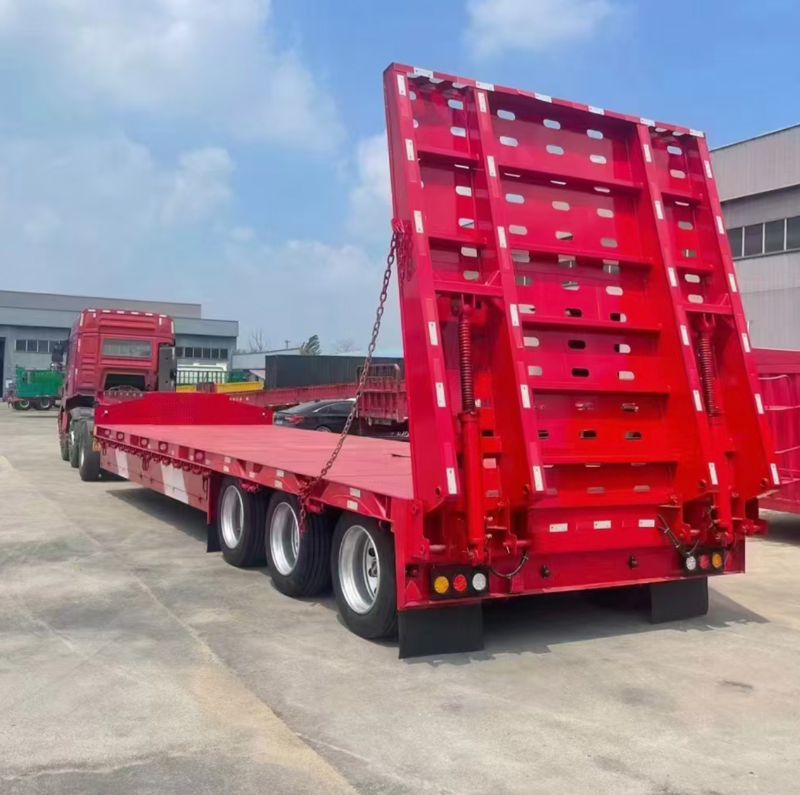
How to Pick a 60 Ton Lowbed Trailer: Axle Layout & Safety

A trailer purchase is rarely decided by specs alone. For most buyers, the real question is much simpler: will this trailer make heavy equipment transport easier, safer, and more reliable in daily work? This guide explains why a lowbed trailer is often the right choice for 60-ton machinery, what jobs it fits best, how to judge whether it is worth buying, and what mistakes often lead to expensive regret later.
In heavy transport, the most stressful moment often comes before the road journey even begins. The ramps touch the ground, the machine starts climbing, the trailer settles under the weight, and every design choice suddenly becomes real. A trailer that looked acceptable in a product catalog can feel too steep, too high, too short, or too awkward as soon as loading starts. By contrast, the right trailer feels calm from the first minute. The machine climbs with less hesitation, the deck stays more balanced, and the whole transport process becomes easier to control.
That is exactly where a lowbed trailer makes its value clear. It is not simply a platform for carrying weight. It is a hauling solution designed for heavy, tall, and awkward machinery that needs a lower cargo posture, better balance, and safer loading behavior. For many contractors, machinery dealers, project operators, and equipment importers, that difference matters far more than a simple capacity number.
In the 60-ton range, this becomes especially important. This class is often heavy enough to expose poor buying decisions, yet practical enough to be used across construction transport, road-building equipment transfer, machinery rental operations, industrial delivery, and export programs. It sits in the middle ground where buyers want serious carrying ability without moving all the way into overly complex ultra-heavy haul solutions.
Too many articles focus only on parameters, while buyers usually care about something else: why choose it, what work it suits, how to tell if it is the right investment, and how to avoid buying the wrong model. That is what this version is built to answer.
Why Buyers Choose This Type of Trailer
The strongest reason is simple: it solves real transport problems that a standard platform often does not solve well. Heavy machinery is not only heavy. It is often tall, uneven in weight distribution, and difficult to load without the right deck height and structure. A lower cargo platform helps reduce transport height, improves the machine’s visual posture on the road, and often makes loading feel more controlled.
Buyers also choose this type because it usually brings more confidence into daily work. A better loading angle, a more settled center of gravity, and a more suitable deck shape do not just improve the look of the setup. They change how the whole operation feels. The operator feels less stress while climbing the ramps. The transport team spends less time correcting position. The machine sits in a way that feels more natural and less top-heavy.
Another major reason is versatility. In many real businesses, one trailer must handle more than one exact machine. Today it may carry an excavator. Next week it may move a roller, a bulldozer, or industrial equipment. That is why many buyers prefer a trailer that fits a broader working range instead of a model that is only perfect for one narrow use case.
There is also a business reason behind the choice. A trailer that loads more smoothly, works across more projects, and creates fewer day-to-day frustrations usually brings better long-term value. Inquiries for this category often come from buyers who already know that transport efficiency is not just about moving weight. It is about keeping projects moving, protecting equipment, and reducing operating friction over time.
- Helps control cargo height for tall machinery
- Improves load posture and road stability
- Makes loading feel calmer and easier to manage
- Works well for repeated project-based transport
- Fits many construction and industrial transport jobs
- Often creates better long-term value than a less suitable trailer type
For buyers who are still comparing product directions, the most practical first step is to review the available low bed semi trailer models and narrow the shortlist by equipment type, loading method, and expected route conditions.

What Scenarios It Is Best Suited For
The best trailer choice becomes much easier once the real transport scene is clear. This type performs best when the machine is heavy, tall, hard to balance, or simply uncomfortable to load on a normal flat platform. In those situations, the difference is not theoretical. It becomes visible as soon as the machine approaches the trailer.
One of the most common scenarios is construction equipment transfer. A crawler excavator finishes one site and must move to another with little downtime. In that situation, the lower deck and more suitable loading profile reduce stress immediately. The machine sits more naturally, the loading angle feels less aggressive, and the overall setup looks more stable before the road section even begins.
Road-building machinery is another strong fit. Rollers, graders, pavers, and similar equipment may move more often than buyers initially expect. When loading happens repeatedly, the trailer becomes part of the project rhythm. The right model saves time, lowers operator tension, and keeps the movement of machinery more consistent.
Industrial relocation is also a very suitable use case. Tanks, steel modules, machine skids, and other large equipment can be difficult because of height, shape, or securement requirements. In those situations, a lower and steadier transport posture often makes the whole move easier to plan and easier to execute.
This type also makes sense for export and cross-market transport programs. When buyers need a practical configuration for heavy machinery that may face mixed road conditions or recurring height concerns, a more settled cargo profile often becomes one of the most useful advantages.
Typical applications
- Excavators, bulldozers, and wheel loaders
- Road rollers, graders, and paving equipment
- Construction fleet transfers between projects
- Industrial equipment and steel module transport
- Export-oriented machinery hauling
- Mixed equipment businesses that need one versatile solution
There is also a visual reason buyers trust this format. Heavy machinery simply looks more composed when it sits lower and more naturally on the trailer. In transport, that visual calm often reflects real operational confidence.
How to Judge Whether You Should Buy One
Many weak buying decisions begin with one narrow question: what is the price? Price matters, but it is rarely the real reason buyers regret a trailer later. More often, regret comes from daily mismatch. A trailer feels slightly too tall, slightly too awkward, slightly too narrow in use, or slightly too stressful every time loading begins. Those small problems repeat until they become expensive.
A stronger buying test is this: does the trailer fit the real work, or only the specification list? That shift leads to better decisions immediately. Buyers stop focusing only on rated capacity and start judging the full transport cycle instead.
The first thing to judge is the machinery you actually plan to move. Not just one machine, but the broader working range. If the trailer is chosen too narrowly around today’s exact equipment, it may become limiting very quickly when the fleet changes, attachments change, or future projects require more flexibility.
The second thing is load behavior. Two machines can have similar total weight but create very different hauling realities. One may distribute weight calmly and evenly. Another may put much more pressure on a short track contact area or carry more weight in one section. That difference often matters more than the headline tonnage.
The third thing is how often loading happens. If equipment is moving regularly, then loading comfort and efficiency are not optional details. They become part of the operating value of the trailer.
The fourth thing is the actual working environment. A product that looks excellent in a clean sales photo may not be the most practical solution for rough site access, uneven yards, or recurring route height concerns. Buyers should always judge the trailer in the context of the roads, machines, and workflows it will really face.
A Good Fit When
- The machine is heavy, tall, or awkward to load
- Equipment transport happens regularly
- Project work demands safer, calmer loading
- Route height and stability matter
- You need one trailer to support several jobs
- You care about long-term value, not only entry price
A Poor Fit When
- The cargo is usually light and easy to haul
- The trailer would only serve a rare one-off task
- Loading method has not been considered at all
- Maintenance support is unclear
- The buying decision is based only on a catalog number
Practical buying signals to watch
- Picture the first loading moment. If it already feels awkward in theory, it is likely worse in practice.
- Think beyond one machine. A useful trailer should still feel right when your equipment mix changes.
- Judge repeated use, not one ideal day. Daily efficiency matters more than initial excitement.
- Look for calm behavior. The best trailer setups usually feel composed rather than dramatic.
- Ask what the trailer saves. Time, stress, loading trouble, and poor route fit all have a cost.
Buyers who already know their machine weight, dimensions, and preferred loading style can move much faster by comparing real product options directly. That is usually far more effective than choosing based on price alone.
Common Buying Mistakes and Misunderstandings
The most common mistake is assuming that rated capacity tells the whole story. It does not. A trailer may appear sufficient on paper and still feel wrong in real operation if the load is concentrated, the deck transition is awkward, or the overall layout is not well matched to the machine.
Another common misunderstanding is thinking that lower automatically means better. A lower platform is often helpful, but only when the rest of the setup supports it properly. Ground conditions, site access, route transitions, and trailer structure all still matter.
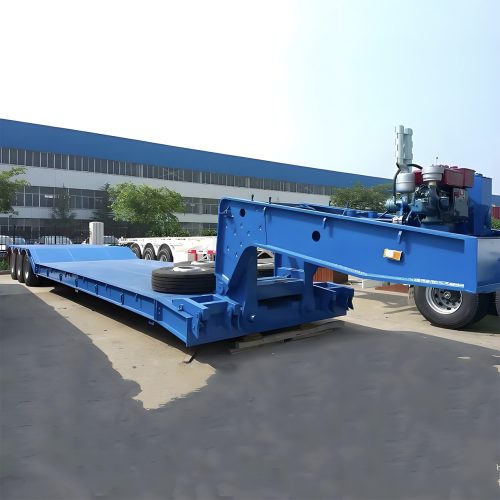
A third mistake is ignoring loading method. This creates a lot of avoidable frustration. Rear-ramp loading and detachable gooseneck loading do not simply look different. They create very different user experiences, and that difference matters when the trailer is used often.
Another frequent error is buying too narrowly. A trailer that is perfect for one current machine may become restrictive as soon as another project, another attachment, or another machine enters the operation.
And finally, buyers often underestimate the cost of daily inconvenience. A trailer that is technically “good enough” but repeatedly awkward to use may end up costing more in time, stress, and lost efficiency than a better-matched option that cost more upfront.
Mistakes worth avoiding
- Buying based only on rated tonnage
- Ignoring how the machine actually loads and sits on the deck
- Choosing a model that only fits one narrow use case
- Focusing only on upfront price
- Overlooking route and jobsite realities
How to Use It Better in Daily Work
Buying the right trailer is only part of the result. Daily use matters just as much. Better loading habits, better planning, and consistent checks help protect the trailer, the machine, and the transport team at the same time.
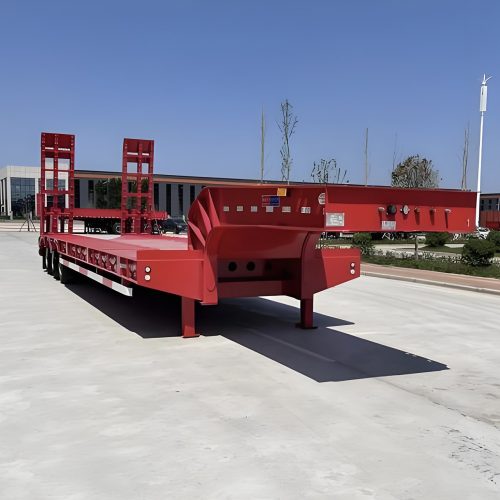
Before loading, the basics should always be checked: ground condition, approach line, ramp support, visible structure, and whether securement tools are already ready. During loading, smoothness usually matters more than speed. A centered, steady climb often means less correction and less stress. After loading, the job is not finished until chain angles, binder tension, rear visibility, ramp security, and front-to-rear balance are checked one more time.
These habits may sound simple, but they affect long-term value. Rough loading, poor alignment, repeated impact, and careless securement can shorten service life quietly. Better habits preserve the trailer in ways that become obvious only later.
Conclusion
In the end, the right lowbed trailer is not simply the one with the most impressive headline specification. It is the one that makes heavy equipment transport easier, steadier, and more predictable in daily work. That is what buyers are really paying for: less loading stress, better route confidence, more practical flexibility, and stronger long-term value.
If your machinery is heavy, tall, or moved regularly between projects, choosing the right trailer can improve more than transport. It can improve workflow, reduce avoidable mistakes, and make the entire hauling process more efficient. That is why so many serious buyers focus not only on tonnage, but on fit.
The fastest way to move closer to the right decision is to compare your machine weight, dimensions, loading method, and destination market with actual available models. Once those details are clear, it becomes much easier to tell whether a standard working model, a detachable gooseneck design, or a heavier-duty configuration is the better fit for your business.
Ready to Compare the Right Trailer for Your Equipment?
If you already know your equipment weight, overall dimensions, or preferred loading method, this is the best time to compare real product options and narrow down the right model.
Browse available lowbed trailer solutions, or check Boca Vehicle’s manufacturing and customization capabilities before making your final decision.