
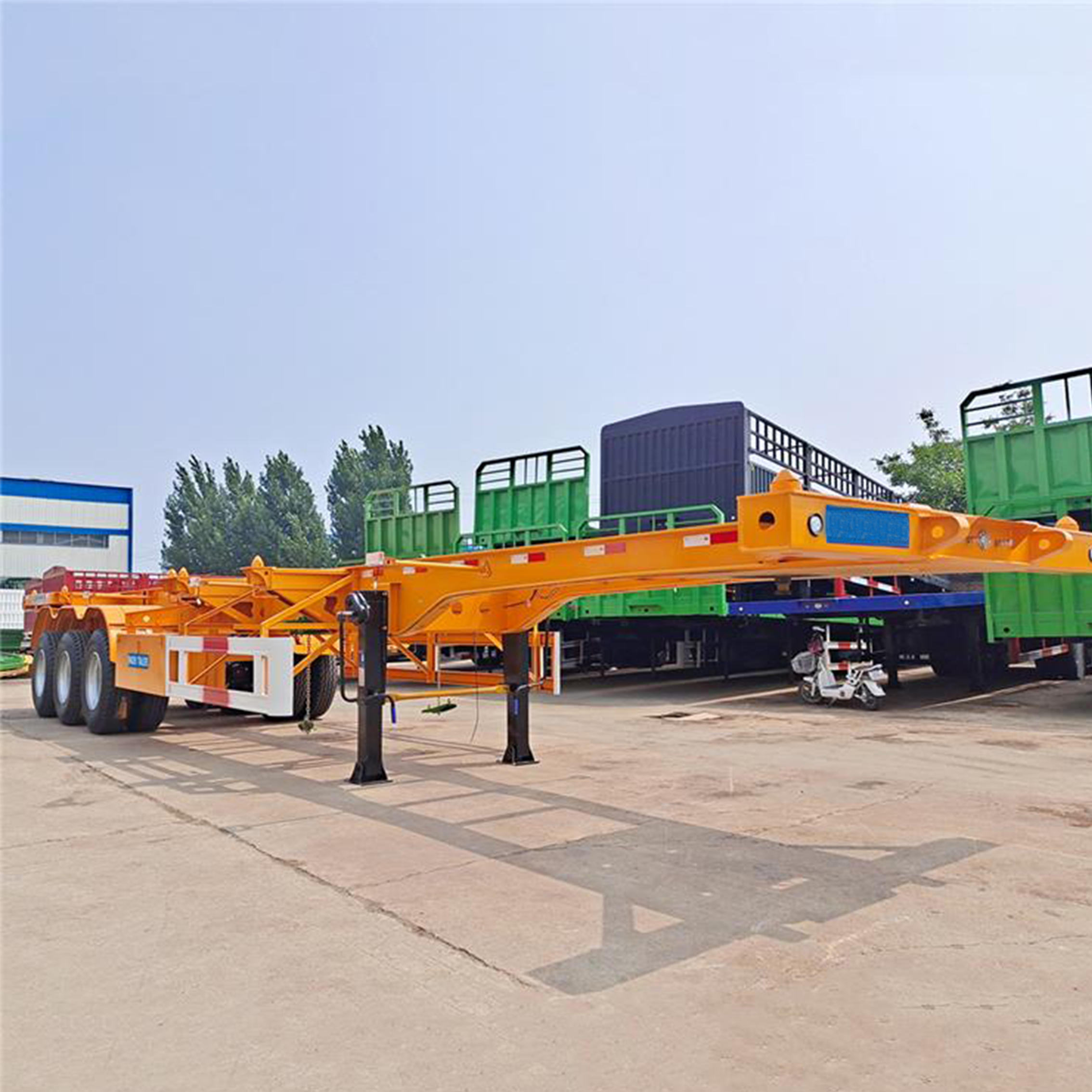
What’s the Difference of Flatbed vs Gooseneck container chassis?

Overview
In the logistics and transportation industry, choosing the right container shipping semi trailer type is crucial for ensuring cargo safety, improving operational efficiency, and achieving cost-effectiveness. Globally, the two most commonly used trailer types are flatbed container semi trailers and gooseneck container chassis trailer. Although they may look similar, their intended uses are quite different.
This guide explores the differences from their application areas, technical specifications, operational advantages, and optimal use cases for each type.
Flatbed container semi trailer
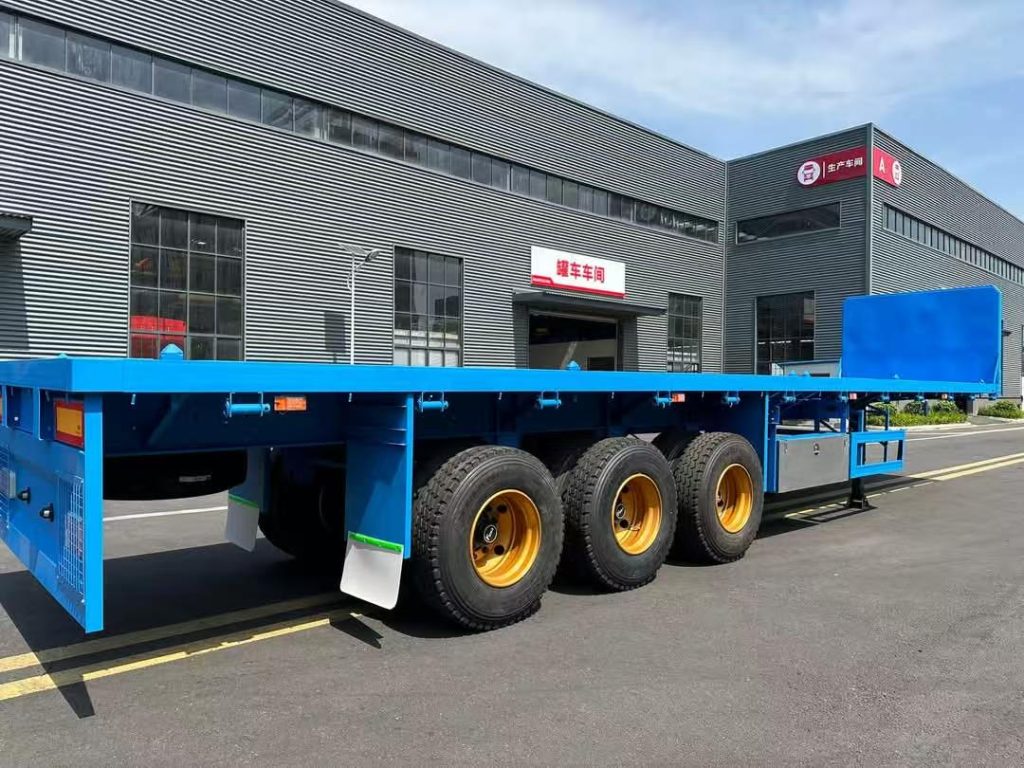
Flatbed container trailer with a flat, open body structure, lacking side panels and a roof. Its design facilitates flexible loading and unloading of cargo.
1.1 Key Features
Flat, open cargo storage surface
Capable of handling oversized or irregularly shaped cargo
Requires the use of strong straps, chains, or tarpaulins to secure cargo.
1.2 Container flatbed semi trailer common applications
Building materials: steel beams, timber, pipes
Machinery and equipment
Oversized or irregularly shaped cargo
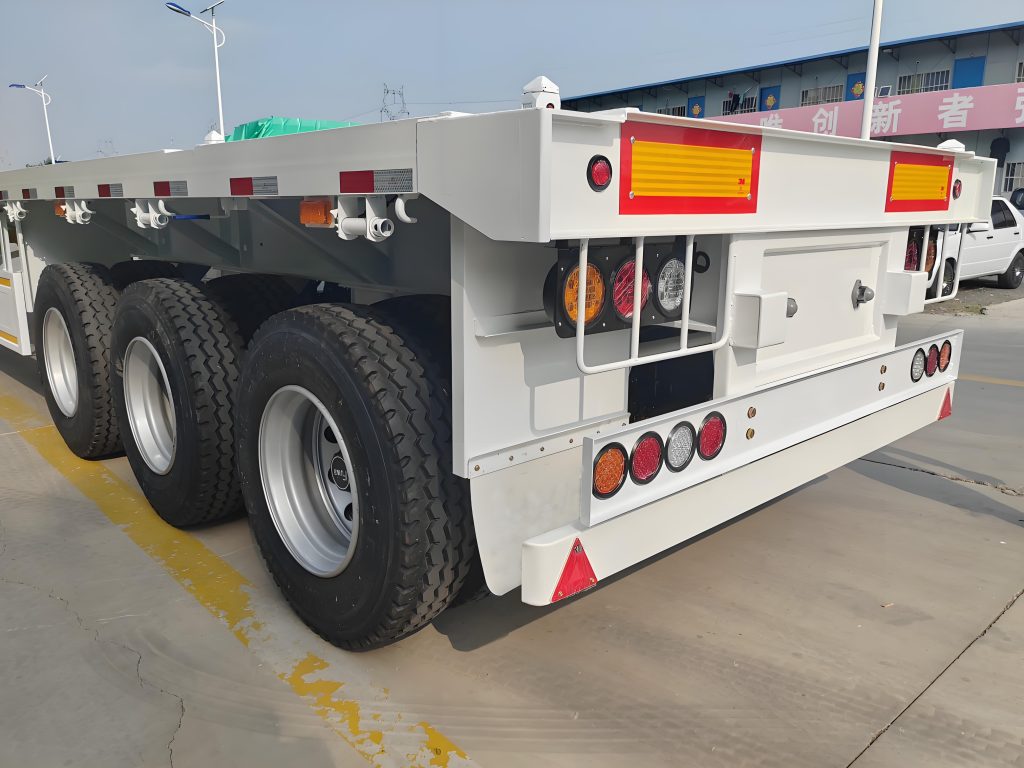
1.3 Common flatbed container semi trailer Specifications
| Parameter | Standard Flatbed Semi Trailer | Extended Flatbed Semi Trailer |
| Length | 40–53 ft | 60–80 ft (extendable) |
| Width | 8.0 ft (2.44 m) | 8.0 ft |
| Height | 1.2–1.5 ft | 1.2–1.5 ft |
| Tare Weight | 6,000–8,000 lbs | 8,000–10,000 lbs |
| Axles | 2–3 | 3–4 |
| Payload | 48,000–52,000 lbs | 48,000–52,000 lbs |
| Suspension | Mechanical leaf spring or air | Mechanical leaf spring or air |
| Deck Material | Steel / Wood / Aluminum | Steel / Wood / Aluminum |
Container gooseneck semi trailer
Gooseneck container chassis trailer for sale are vehicles specifically designed for transporting standard international shipping containers. Unlike flatbed container shipping trailers, these gooseneck container chassis trailer are equipped with turn locks at every corner of the container to secure it during transport.
2.1 Key Features
Fixed frame to support the container
Turn locks for security
Compatible with 20foot, 40foot, and 45foot containers, as well as high cube containers
2.2 Gooseneck container trailer for sale common applications
Multimodal container transport
Port-to-warehouse transport
Rail-to-road container transshipment
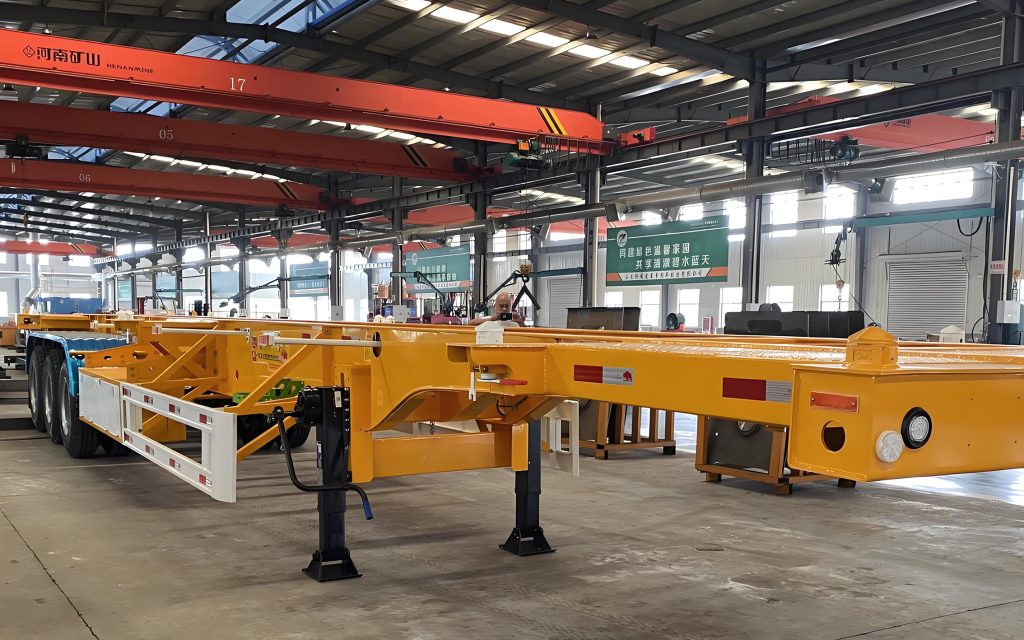
2.3 General shipping container gooseneck semi trailer Specifications
| Parameter | 20 foot container chassis | 40 foot container chassis |
| Length | 7,200–8,200 mm | 12,480–12,600 mm |
| Width | 2,480 mm | 2,480 mm |
| Height | 1,500 mm | 1,550 mm |
| Axles | 2 (optional 3) | 2–3 (tri-axle preferred) |
| Tare Weight | 3,800–4,500 kg | 5,800–7,500 kg |
| Payload | Up to 36 tons | 36–42 tons |
| Suspension | Mechanical / Air | Air recommended for long-haul |
| Twist Locks | 4 | 4–8 |
| Material | Q345 steel | Q345/T700 steel |
Flatbed trailer vs Container Chassis
| Feature | Flatbed shipping container trailer | Container Chassis semi trailer |
| Purpose | General cargo, oversized loads | ISO container transport |
| Deck | Open flat surface | Skeletal frame with twist locks |
| Cargo Security | Requires straps, chains, or tarps | Secured via twist locks |
| Cargo Flexibility | High, can carry irregular shapes | Limited to standard container sizes |
| Maneuverability | Moderate | High for container-specific logistics |
| Typical Payload | 48,000–52,000 lbs | 36–42 tons |
| Axle Configuration | 2–4 | 2–3 (tri-axle preferred for 40ft) |
| Loading/Unloading | Forklift, crane, or manual | Container crane or forklift (for port/terminal) |
| Cost | Moderate | Slightly higher due to reinforced frame |
Advantages and Limitations
Container flatbed semi trailer
Advantages:
Capable of transporting irregularly shaped and oversized goods.
Flexible across multiple industries.
Simple structure, easy to maintain.
Limitations:
Requires additional securing devices.
Not suitable for standardized container transport.
Exposed goods may require coverings or tarpaulins.
Gooseneck container chassis trailer
Advantages:
shipping gooseneck container chassis Optimized for container transport.
High security due to twist lock design.
Suitable for multimodal transport.
Limitations:
Inefficient for transporting non-containerized goods.
Less flexibility in urban distribution, and unpredictable cargo loading conditions.
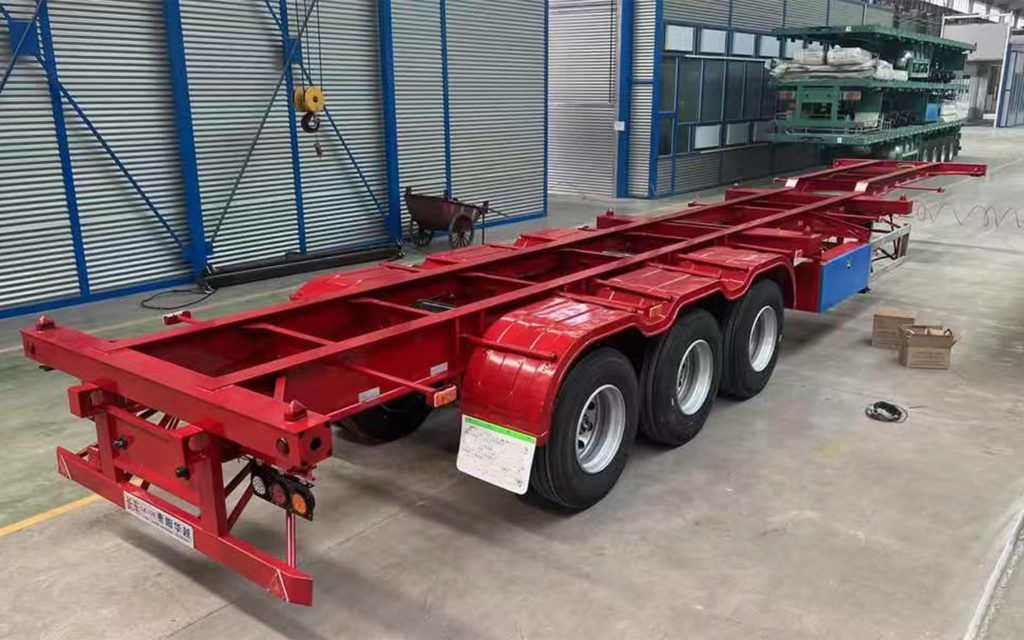
Price Difference
| Trailer Type | Price Range (USD) | Notes |
| Flatbed Container trailer | 8,000–12,000 | Steel deck, 40–53 ft |
| Extendable Flatbed Trailer | 12,000–20,000 | For long or oversized cargo |
| 20ft Container Chassis Trailer | 5,000–7,500 | Basic port/terminal use |
| 40ft Container Chassis Trailer | 8,000–12,000 | Tri-axle, long-distance |
| Extendable Container Chassis Trailer | 12,000–18,000 | Supports multiple container sizes |
Which One Should You Choose?
Choose
Flatbed Chassis if:
You need simple structure
Short-distance transport
Lower cost solution
Choose Gooseneck Chassis if:
You need better stability
Long-distance transport
Heavy container loads
Conclusion
Gooseneck chassis trailer are becoming more popular in global container logistics due to improved safety and stability in heavy transport operations.
If you are choosing between flatbed and gooseneck container chassis, we can help you select the right model based on your cargo and transport route.
FAQ
What are the main differences between flatbed and gooseneck container chassis?
The main difference lies in their structure. Flatbed container trailer have an upright frame, while gooseneck chassis have a lower front section, which helps improve stability and lowers the trailer’s center of gravity during transport.
Which is better: flatbed or gooseneck container chassis?
Gooseneck chassis are generally better suited for long-distance and heavy-load container transport due to their greater stability.
What types of containers can a gooseneck chassis carry?
A gooseneck container chassis can typically carry 20foot, 40foot, and 40HQ containers, depending on its locking system and axle configuration.
Are flatbed container trailer cheaper than gooseneck chassis?
Yes. Flatbed trailer generally have a simpler structure, so they are usually less expensive than gooseneck chassis. However, the price also depends on factors such as the number of axles, steel quality, and whether customization is required.
Why do ports favor gooseneck container chassis?
Ports prefer gooseneck chassis because their lower front design provides better stability during container loading and unloading, as well as long-distance transport within logistics parks.
Can both chassis types be used for international standard containers?
Yes. Both flatbed and gooseneck container chassis are designed for transporting standard-sized containers used in global logistics and multimodal transport systems.
What is the load capacity of container chassis trailers?
Most container chassis trailers have a load capacity range of 30 to 70 tons, depending on the axle configuration (2 axle, 3 axle, or 4 axle models).
Which chassis type is more stable on rough roads?
Gooseneck container chassis are more stable on rough roads due to their lower front design and more even weight distribution.
How do I choose between a flatbed and a gooseneck chassis?
Choosing a flatbed semi trailer reduces costs and is suitable for short-distance transport.