

What Is a Skeleton Semi Trailer and How Does It Work?

Overview
Skeleton semi trailer, also known as container chassis semi trailers, are an indispensable component of modern logistics and transportation operations. Their simple and lightweight frame design helps improve overall transport efficiency by maintaining structural strength while reducing unnecessary weight.
Unlike flatbed semi trailers, they lack side panels or roofs; instead, they rely on twist locks or other securing devices to firmly hold the container in place during transport. This design facilitates rapid loading and unloading, making them ideal for seamless container transshipment between ports, ships, trucks, and rail systems.
Skeleton semi trailer play a crucial role in multimodal logistics, enabling the smooth flow of goods between various modes of transport. Whether used for short-haul port haulage or long-haul transport to inland hubs, they provide reliable and flexible support for containerized cargo. Their efficiency and adaptability make them an important asset in today’s global supply chains.
In the following sections, we will explore this practical transport solution in greater depth, covering its basic concepts, structural components, key advantages, and typical application scenarios.
Definition of a Skeleton semi trailer
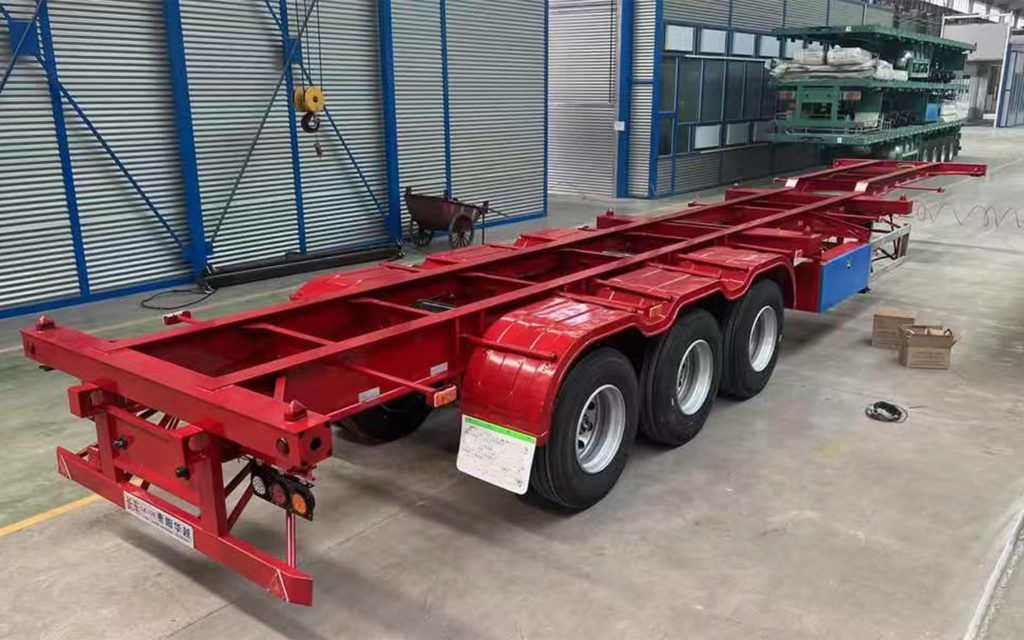
Skeletal container semi trailer is a type of transport vehicle designed specifically for transporting containers, eliminating the need for a complete cargo box or hold surface. Its primary function is to secure the container using torsion locks at each corner.
With the continuous advancement of container logistics, skeletal semi trailer have gained increasing favor within the transportation sector, distinguished by their high adaptability and operational efficiency. This shift is largely driven by the sustained expansion of global trade, which has fueled a growing demand for faster and more efficient logistics systems. By streamlining loading and unloading processes and minimizing the need for auxiliary equipment, these trailers enable businesses to more easily manage increasingly complex supply chains.
Skeletal container trailers eature a streamlined, open-frame structure designed specifically for the transport of standard shipping containers. Lacking side panels or a roof, they instead utilize specialized locking mechanisms to secure the container, thereby ensuring safety and stability during transit. This structural design facilitates the efficient transfer of containers between ports, vessels, trucks, and other transportation hubs, serving as a critical component of multimodal transport systems. These trailers perform equally well in both short-haul port drayage and long-haul inland distribution, ensuring the seamless continuity of logistics networks.
The design emphasizes a combination of robustness and simplicity. Its main frame—along with reinforced front and rear support structures—enables rapid container loading and unloading while ensuring secure positioning. By eliminating unnecessary structural components, the trailer enhances operational efficiency without compromising durability.
Advantages of skeleton trailers:
The frame of a skeletal semi trailer is composed of a combination of main longitudinal beams, crossbeams, and end beams, creating a robust structure specifically designed to support shipping containers. This streamlined configuration helps reduce the trailer’s overall weight while maintaining structural integrity. Consequently, it demonstrates exceptional durability and reliable performance across a wide range of road and operating conditions.
Lightweight skeleton frame structure, contributing to improved fuel efficiency
Standardized torsion locks for container security
Suitable for 20 foot, 40 foot, 45 foot, and high cube containers
Suitable for multimodal transport: including road, rail, and port terminals.
Comparison with Other Container shipping semi trailers
| Feature | Skeleton Semi Trailer | Flatbed Container Semi Trailer | Container Chassis Semi Trailer |
| Cargo Support | ISO Containers | General cargo | ISO Containers |
| Deck | None (skeletal frame) | Open flat deck | Skeletal frame with twist locks |
| Cargo Security | Twist locks | Straps/chains/tarps | Twist locks |
| Flexibility | Limited to containers | High | Limited to container sizes |
| Weight | Lightweight | Heavier | Moderate |
| Loading/Unloading | Crane or forklift | Crane/forklift/manual | Crane or forklift |
How Does skeletal semi trailer Work?
Skeletal container trailer constitutes a vital asset in modern logistics, designed to maximize efficiency in the loading, transport, and unloading of shipping containers. Featuring an open “skeletal” structure—devoid of roof or side panels—it is specifically engineered for standard containers while retaining the flexibility to accommodate the diverse requirements of various cargo types.
Its primary components include a reinforced frame, a suspension system, and twist-lock mechanisms. The frame is typically constructed from high-strength steel, offering exceptional load-bearing capacity while maintaining a lightweight profile. This balance contributes to improved fuel efficiency and enhanced operational agility. Furthermore, the suspension system plays a pivotal role in maintaining vehicle stability during transit, effectively dampening vibrations and minimizing the impact of uneven terrain on the cargo.
Twist locks are among the most critical components of skeletal semi trailers. Installed at the four corner points, they serve to securely fasten the container to the chassis, thereby preventing any shifting during transit. Depending on the specific design, these locking mechanisms can be operated either manually or via automated systems, ensuring secure and reliable immobilization throughout the entire transportation process.
Key Components
Frame: The main structure, typically made of high-strength steel (such as Q345 or T700).
Rotary Locks: Four-corner locks that secure the container at its four corners through rotation.
Undercarriage: Supports the trailer after separation from the truck.
Axles and Suspension System: Typically equipped with 2 to 3 axles, using mechanical or air suspension to ensure stability over long distances.
Lighting and Reflectors: Standard 24-volt LED lighting for road safety.
Operating Procedures
Place the trailer skeleton under the container at the port or dock.
Insert the twist locks into the corner castings of the container.
Secure the skeleton trailer for sale with the undercarriage before loading.
Move the container to the designated location.
Release the twist locks and safely unload the container.

Types of skeleton semi trailer
Skeleton container semi trailer can be classified according to the size of the container and its special functions:
| Type | Description | Applications |
| 20ft Skeleton Semi Trailer | Designed for one 20ft container | Urban logistics, short-haul transport |
| 40ft Skeleton Semi Trailer | Designed for one 40ft container | Long-distance road transport, intermodal operations |
| 45ft Skeleton Trailer | Supports 45ft high-cube containers | Ports and specialized cargo |
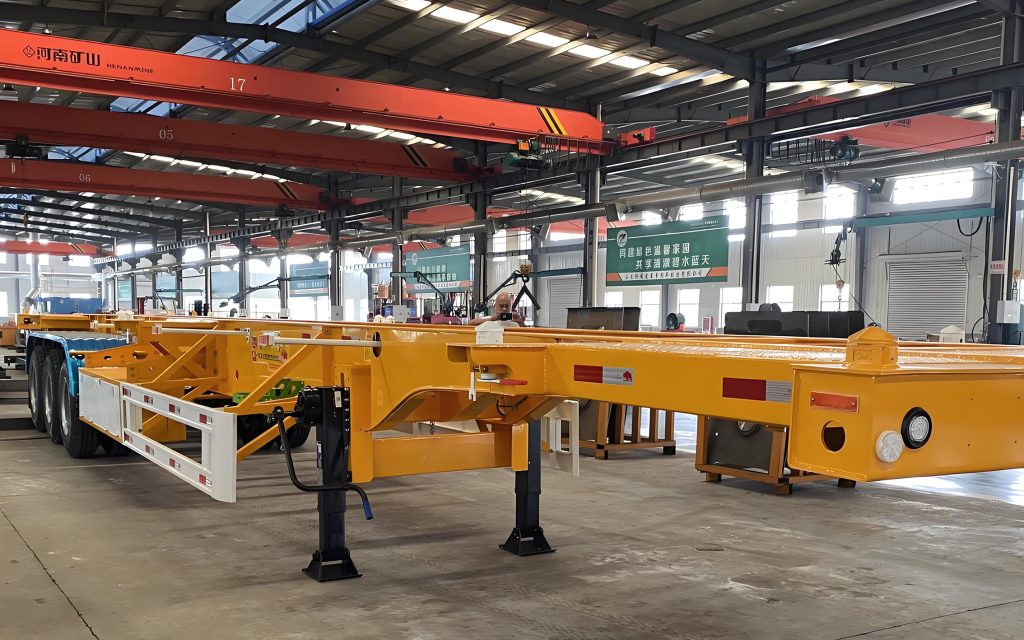
| 3 axles skeleton semi trailer | 3 axles for heavier payloads | Heavy containers, long hauls |
| Extendable Skeleton Trailer | Can adjust length from 20ft to 40ft | Mixed container fleet, flexible operations |
| Gooseneck Skeleton Trailer | Front deck elevated for high-cube containers | Easy loading and improved stability |
Technical Specifications
20ft Skeleton Trailer
| Parameter | Specification |
| Length | 7,200–8,200 mm |
| Width | 2,480 mm |
| Height | 1,450–1,500 mm |
| Axles | 2 (optional 3) |
| Tare Weight | 3,500–4,500 kg |
| Payload | Up to 36 tons |
| Suspension | Mechanical leaf spring or air |
| Twist Locks | 4 sets |
| Material | Q345 steel |
| Landing Gear | 28T JOST two-speed |
40ft Skeleton Trailer
| Parameter | Specification |
| Length | 12,480–12,600 mm |
| Width | 2,480 mm |
| Height | 1,520–1,550 mm |
| Axles | 2–3 (tri-axle recommended) |
| Tare Weight | 5,800–7,500 kg |
| Payload | 36–42 tons |
| Suspension | Air suspension recommended |
| Twist Locks | 4–8 sets |
| Material | Q345 or T700 steel |
| Landing Gear | 28–30T JOST two-speed |
Advantages of skeletal container semi trailer
Skeletal semi trailers are widely recognized for their superior structural integrity and exceptional safety features, providing reliable support for container logistics operations. By utilizing high-strength steel in conjunction with an optimized load distribution design, these trailers successfully strike a balance between operational efficiency and transport safety.
Structural Design
These container semi trailers feature a lightweight yet robust frame, fabricated from premium-grade steel using advanced manufacturing processes. This construction enables the structure to withstand rigorous usage while maintaining a low tare weight. Consequently, fuel consumption is reduced, and performance remains stable—even during long-haul transport.
Load Distribution System
A key advantage of this design lies in its intelligent load distribution capabilities. By ensuring that cargo is distributed evenly across the chassis, the trailer maintains superior balance during transit, thereby mitigating the risk of instability and enhancing overall driving safety.
Safety and Locking Systems
To safeguard containers during transport, skeletal trailers are equipped with reliable locking and securing systems—such as twist locks and supplementary lashing devices. These components work in concert to prevent container movement or shifting, thereby providing multiple layers of protection throughout the entire transportation process.
Lightweight Design:
This skeleton semi trailer utilizes a lightweight yet high-strength frame structure, significantly reducing overall vehicle weight while ensuring durability. This optimized structure helps reduce fuel consumption in both short and long-haul transport, thereby improving overall operating cost efficiency.
High Stability:
Designed specifically for standardized container transport, this container semi trailer provides excellent stability even in harsh road conditions. Its structural layout, precise weight distribution, and reliable locking system effectively reduce container swaying and vibration during transport. This not only improves driving safety but also protects the integrity of the cargo, especially at high speeds, when turning, or on uneven surfaces.
What is the price for skeleton trailer?
| Skeleton Trailer Type | Price Range (USD) | Notes |
| 20ft Skeleton Trailer | 5,000–7,500 | Standard short-haul operations |
| 40ft Skeleton Semi Trailer | 8,000–12,000 | Most commonly used internationally |
| 45ft Skeleton Semi Trailer | 10,000–15,000 | High-cube container transport |
| Tri Axle Skeleton Semi Trailer | 15,000–20,000 | Heavy-duty long-distance haul |
| Extendable Skeleton Semi Trailer | 12,000–18,000 | Flexible container fleet usage |
How to Choose the Right Skeleton Trailer?
Choosing the right skeleton container trailer is crucial for ensuring the safety, efficiency, and economy of container transportation. The right choice depends on your operational needs, cargo type, and long-term logistics strategy.
Analyze Your Container Fleet
First, assess the types of containers you frequently handle, including their dimensions (e.g., 20 foot, 40 foot, or high cube containers) and maximum load weight. Understanding your cargo helps determine the required trailer strength, locking configuration, and overall load capacity.
Transportation Routes and Operating Environment
Different transportation scenarios place different demands on trailers. Urban delivery typically requires better mobility, while port operations prioritize rapid loading and unloading efficiency. For long-haul routes, durability, stability, and fuel efficiency become more important.
Consider Axle Configuration and Load Capacity
Axle design plays a critical role in performance and load distribution. For heavy-duty transport, three axle skeleton trailer generally recommend due to their greater load-bearing capacity and improved stability. In contrast, two axle configurations better suit for light cargo and short-haul transport, offering greater flexibility and lower operating costs.
Material Quality and Structural Strength
The durability of a skeleton trailer largely depends on the quality of its materials and manufacturing process. High-strength steel structural designs enhance resistance to deformation and fatigue, extending service life and reducing maintenance frequency.
Manufacturer Reliability and Support Services
Choosing a reputable manufacturer is just as important as choosing the trailer itself. Reliable suppliers typically offer product warranties, readily available spare parts, and expert technical support. This ensures smoother operations, faster repair responses, and reduced downtime in the event of equipment failure.
Future Fleet Expansion Plans
Considering long-term business development is equally crucial when making purchasing decisions. Scalable or retractable skeleton trailers offer greater flexibility, allowing operators to adapt to changing container volumes and evolving logistical needs without replacing the entire fleet.
Why Choose Our Skeleton Semi Trailer?
Extensive Manufacturing Experience
With over 10 years of experience in semi trailer manufacturing, we deeply understand the practical needs of container shipping. This experience enables us to design and manufacture skeleton trailers that deliver reliable performance under various operating conditions.
Global Export Track Record
Our skeleton semi trailer have been successfully exported and widely use in Africa, Southeast Asia, and the Middle East. This international presence reflects the adaptability of our products to different road conditions, climates, and logistical requirements.
Tailor-Made Design Solutions
We offer customized configurations based on your specific transportation needs, including axle layout, load capacity, chassis structure, and locking systems. This ensures that each trailer optimize for your cargo type and operating environment.
Strict Quality Control Standards
Each skeleton container trailer manufacture under rigorous quality inspection processes and meets international production standards. From raw materials to final assembly, every step carefully control to ensure durability, safety, and a long service life.
Customer Case
A logistics company in Zambia recently purchased our three axle skeleton semi trailers for container transport between the port and inland distribution centers. These container semi trailers use in daily high-intensity operations, frequently loading and unloading under harsh transport conditions.
After 12 months of continuous use, the equipment has demonstrated exceptional structural reliability and stable performance. The high-strength frame and stable axle configuration contribute to smooth operation with minimal downtime. Furthermore, the customer reports significantly reduced maintenance requirements compared to previous equipment, resulting in lower overall operating costs.
As a result, the company has been able to improve transport efficiency, shorten port turnaround times, and achieve more stable logistics performance across its container transport network.
Conclusion
Skeletal container semi trailer are crucial for efficient container transport, providing stability, safety, and multimodal compatibility. Choosing the right trailer type (whether 20 foot, 40 foot, telescopic, or three axle) depends on your operational needs, cargo weight, and fleet strategy.
For businesses aiming to optimize their logistics processes, investing in high-quality skeletal container semi trailer for sale can reduce operating costs, improve cargo safety, and enhance overall efficiency. Leveraging modern innovations such as telescopic frames, air suspension, and lightweight, high-strength steel, skeleton semi trailers have become the preferred solution for containerized cargo worldwide.
FAQ – Skeleton Semi Trailer
What is a skeleton semi trailer used for?
It is used to transport ISO containers such as 20ft, 40ft, and 45ft containers in ports, logistics, and freight transport.
What is the difference between a skeleton trailer and a container chassis trailer?
There is no real difference. “Skeleton trailer” and “container chassis trailer” refer to the same type of trailer with a steel frame and twist locks for containers.
What container sizes can a skeleton trailer carry?
It can carry standard 20ft and 40ft containers, and some models can also carry 45ft containers or multiple 20ft containers.
How much weight can a skeleton semi trailer carry?
Most models can carry between 30 and 60 tons depending on axle number and frame design.
What are the main types of skeleton trailers?
Common types include 20ft chassis, 40ft chassis, tri-axle chassis, and extendable skeleton trailers.
How are containers fixed on a skeleton trailer?
Containers are secured using twist locks that connect directly to the container corner castings for safe transport.
Get a Quote
Looking for a reliable skeleton semi trailer manufacturer?
Contact us today to get a customized solution and competitive price.