
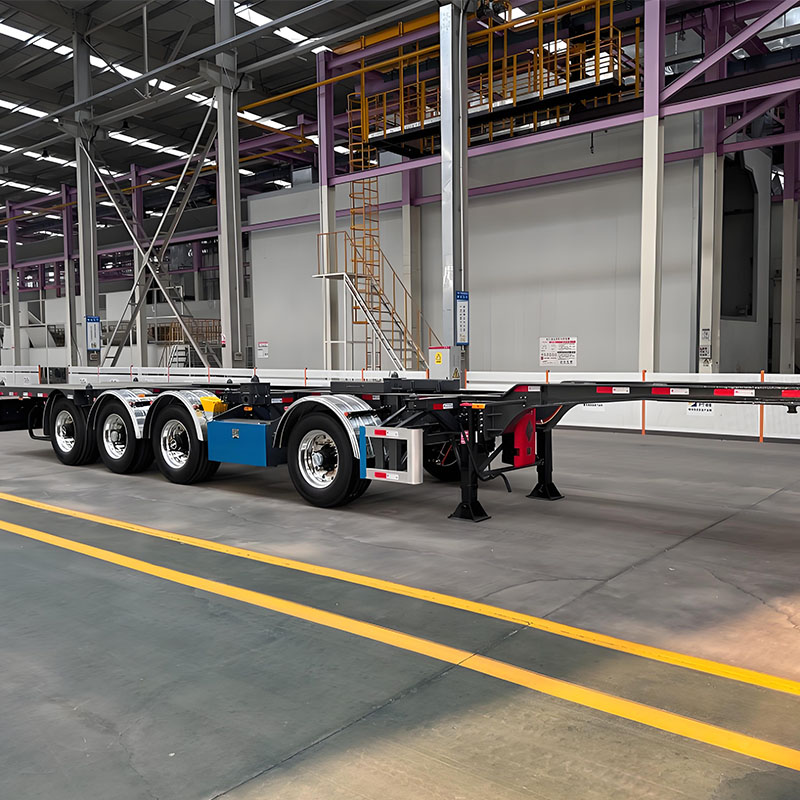
How to Choose the skeletal container semi trailer for Transport

Overview
Container shipping is a vital component of global logistics. Commonly used container trailers are employed to transport standard containers, and selecting the right skeletal container semi trailer for your fleet significantly impacts efficiency, safety, and operating costs.
This guide details how to select the most suitable skeleton container semi trailer based on type, technical specifications, operational factors, and cost-effectiveness.
Why Choosing the Right skeletal container semi trailer is Crucial
Choosing the right skeleton semi trailer is not just a technical decision—it directly impacts safety and efficiency. The advantages are particularly pronounced when selecting a three axle skeleton trailer.
Cargo Security:
A well-designed twist lock and securing system firmly holds containers in place.
Reduces the risk of container movement during transport.
Improves safety on highways and rough roads.
Protects cargo and equipment from damage.
Operational Efficiency:
Matching trailers to container sizes (20ft, 40ft, etc.) increases loading speed.
Optimized design reduces loading and unloading time.
Appropriate configurations for different routes (ports, highways, cities) minimize delays.
Improves overall fleet productivity.
Cost Management:
Lightweight design helps reduce fuel consumption.
Appropriate axle configurations reduce tire wear and maintenance costs.
Highly efficient load capacity reduces the number of trips required for transport.
Improves overall profitability of the transport business.
Fleet Scalability and Flexibility:
Retractable (telescopic) container chassis can accommodate various container sizes.
Reduces the need to invest in multiple trailer types.
Supports business growth and evolving logistical needs.
Improves fleet utilization.
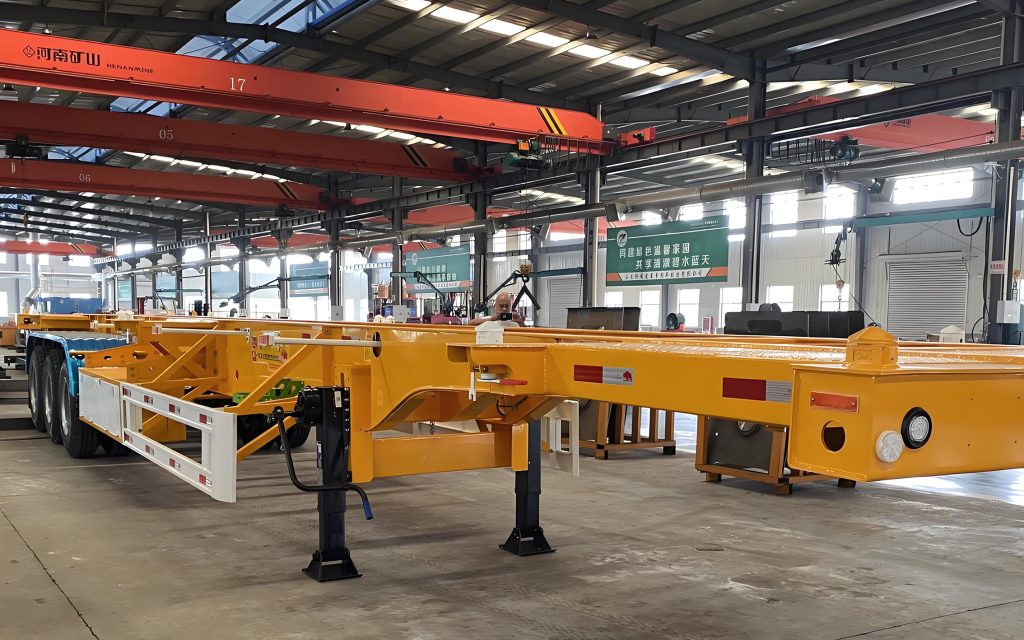
Assess Your Container Shipping Needs
Before selecting a skeletal container semi trailer, assess:
Container Type and Size: Do you primarily transport 20ft 40ft or 45 ft skeleton semi trailer?
Route Requirements: Short-haul city deliveries and long-haul international shipping.
Cargo weight: Heavy-duty containers require a three axle skeleton semi trailer design and reinforced frames.
Loading/unloading method: Do you rely on cranes, forklifts, or port equipment for loading and unloading operations?
Fleet composition: Compatibility between skeletal container semi trailer and existing container shipping semi trailer and equipment needs to be considered.
Types of Skeleton Semi Trailers
| Trailer Type | Description | Best Use Case |
| 20ft Skeleton Trailer | Short-frame trailer for one 20ft container | Port shuttles, urban deliveries |
| 40ft Skeleton Trailer | Standard 40ft container support | Long-distance shipping |
| 45ft Skeleton Trailer | Supports 45ft high-cube containers | Specialized or oversized containers |
| 3 axles skeleton semi trailer | Extra axle for heavier loads | Heavy-duty freight and long-haul |
| Extendable Skeleton Trailer | Adjustable frame for 20ft–40ft containers | Mixed-size fleets |
| Gooseneck Skeleton Semi Trailer | Elevated front frame | High-cube containers and easier loading |
Key Characteristics to Consider
Container transport semi trailer Frame Materials and Structure
High-strength steel, such as Q345 or T700
Reinforced chassis for heavy loads
Anti-corrosion coating for extended service life
Gooseneck skeleton semi trailer Suspension System
Leaf springs: durable, low-cost, suitable for medium loads
Air suspension: reduces vibration, improves ride comfort for sensitive cargo
Axle Configuration
Dual axles for lighter containers or short-haul transport
Triple axles for heavier loads and long-haul transport
Twist Locks and Safety
Four corner twist locks for standard containers
Adjustable locks for retractable trailers or combinations of containers of different sizes
Other Considerations
Undercarriage: must be able to support the weight of the container when disassembled
Lighting and Safety Equipment: LED lights, reflectors, road-compliant braking system
Weight Efficiency: Lighter trailers can improve fuel efficiency without compromising safety

Skeleton trailer maintenance recommendations
| Component | Frequency | Checklist |
| Tires | Weekly | Pressure, tread, alignment |
| Twist Locks | Every trip | Check engagement, lubrication |
| Suspension | Monthly | Inspect leaf springs/air bags |
| Axles/Bearings | Quarterly | Grease, inspect wear |
| Brakes | Weekly | Air pressure, pads, ABS function |
| Landing Gear | Monthly | Grease, smooth operation |
| Frame | Semi-annual | Check for cracks, corrosion, deformation |
The development trend of Skeletal trailer
Lightweight, high-strength steel contributes to improved fuel efficiency.
Retractable trailers are compatible with a variety of container sizes.
Standard air suspension provides a smoother long-haul ride.
Integration of digital sensors and GPS for load monitoring.
Global 20ft skeleton semi trailer manufacturers are expanding their operations to meet international logistics demands.
Conclusion
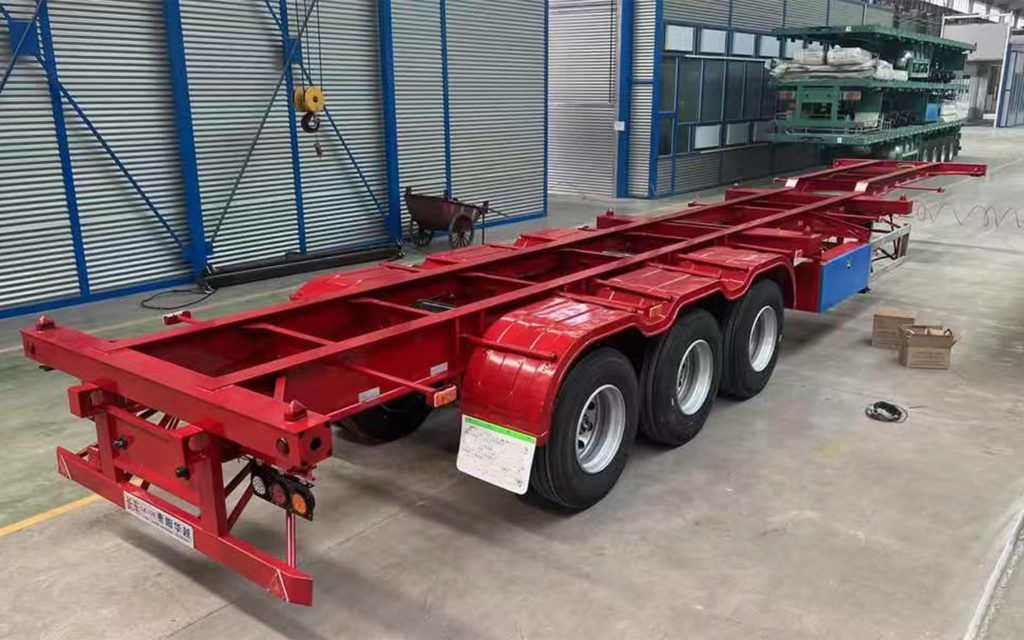
Choosing the most suitable container semi trailer requires careful analysis of the container’s dimensions, cargo capacity, suspension system, chassis quality, and operating routes. Modern designs, such as three axle, telescopic, and gooseneck designs, enable logistics companies to optimize fleet efficiency, reduce costs, and improve safety.
By evaluating these factors and partnering with reliable skeleton semi trailer manufacturers, businesses can ensure their skeleton trailers meet current and future container transport needs.
FAQ
1: Which container sizes should I consider?
A: Determine whether you primarily transport 20foot, 40foot, or 45foot containers. Choose a fixed or retractable chassis accordingly.
2: How many axles do I need?
2 Axle→ Light or short-haul transport
3 Axle→ Standard and common configuration suitable for heavy cargo
More Axle→ Greater load capacity and more even weight distribution
3: Should I choose a fixed trailer or a retractable trailer?
Fixed chassis → Lower cost, suitable for a single container size
Extendable chassis → Greater flexibility for multiple container sizes
4: How will road conditions affect my choice?
Rough roads → Reinforced chassis and suspension system
Highways → Lightweight design for improved fuel efficiency
6: How important is the manufacturer?
Very important. A reliable manufacturer can guarantee product quality, provide spare parts, and offer after-sales service.
7: Can I personalize my trailer?
Yes, most manufacturers offer customization options such as axle brand, length, locking system, and load capacity.