
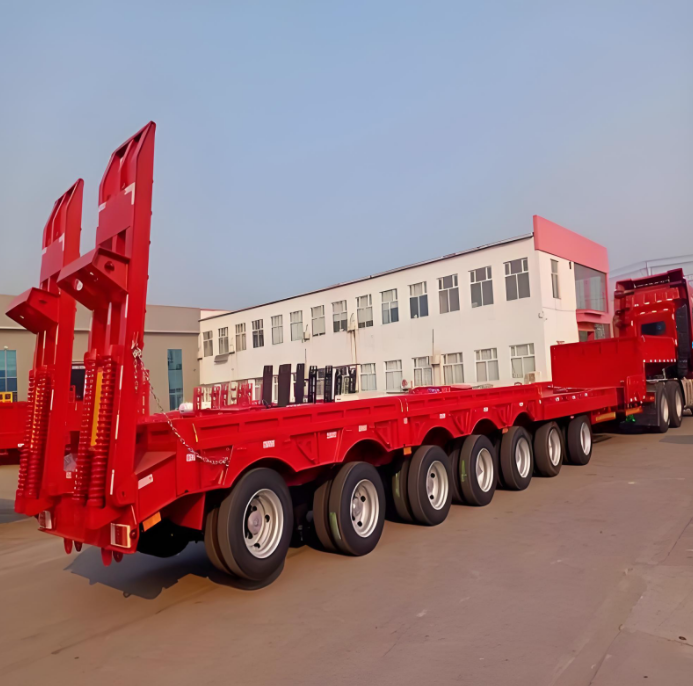
Lowboy Semi Trailer Buying Guide: 7 Specs That Matter

Heavy-haul transport looks predictable on drawings. Still, real routes add grades, rough entrances, and tight turns. Because of that, specs matter more than labels. This guide stays practical and measurable, with short sections that support quick decisions. For reference, the core product range sits under lowboy semi trailer, and the rest of this article explains how to shortlist configurations without noise.
Why low-deck heavy-haul designs fit demanding jobs
First, a low deck lowers the center of gravity. As a result, tall machines sit steadier through corners. On windy highways, that stability reduces sway. In practice, lower height also helps with overhead clearance.
Next, a low-deck structure supports awkward weight distribution. Tracked equipment concentrates pressure into smaller areas. Meanwhile, modules can place mass toward one end. For that reason, beam layout and deck reinforcement become critical.
Also, loading becomes safer when approach angles stay manageable. Gentle angles reduce track slip and sudden pitching. Over repeated cycles, that reduces deck damage. It also protects ramps and hinge points.
Finally, heavy haul rewards repeatability. A consistent configuration reduces dispatch uncertainty. Over time, that consistency lowers wear variability. It also simplifies inspection routines.
Configuration table for fast shortlisting
A table helps connect search terms to real builds. This lowboy semi trailer configuration table is designed for quick shortlisting, especially when axle count, ton class, and neck style must align. From there, suspension, ramps, and securement can be refined.
Heavy-haul configuration table
| Shortlist category | Axle layout options | Typical ton class | Neck style options | Loading approach | Best-fit cargo examples | Notes that affect planning |
|---|---|---|---|---|---|---|
| Balanced workhorse | 2 axle, double axle | 40–50 ton | gooseneck | rear ramps | compact excavators, skid machines, smaller rollers | tighter turning, shorter overall length |
| General heavy equipment | 3 axle, tri axle | 50 ton, 60 ton | gooseneck, detachable gooseneck | rear ramps or front loading | mid excavators, loaders, pavers | versatile distribution, common fleet baseline |
| Higher distribution need | 4 axle | 60–80 ton | detachable gooseneck, RGN (rgn) | front loading preferred | large excavators, heavy dozers | better axle-group flexibility for permits |
| Long-route heavy duty | 5 axle | 80 ton, 100 ton | detachable gooseneck, removable gooseneck | front loading or assisted ramps | large modules, thick steel units | stronger braking reserve becomes important |
| Special heavy moves | 7 axle | 100 ton+ | removable gooseneck, RGN (rgn) | controlled front loading | oversized machinery, heavy components | maximum distribution, more space required |
Internal browsing note: the category page groups axle layouts by product listing, which helps compare build styles by ton class.
7 specs that define heavy-haul capability
Spec 1: Rated capacity and working margin (50 ton to 100 ton)
Capacity should reflect real working mass. That includes attachments, fuel, and securement gear. In addition, timber blocks and mats add weight quickly. A simple load sheet prevents under-rating.
Working margin matters because loads rarely sit perfectly centered. Tracked machines concentrate pressure during loading transitions. Meanwhile, modules can shift the center of gravity forward. A margin reduces beam deflection and fatigue growth.
Ton class usually correlates with structural reinforcement and axle options. A 50 ton class often fits common construction moves. Later, 80 ton and 100 ton classes support heavier footprints and longer routes. That support shows up in stability and durability.
A quick rule helps: plan for the heaviest repeat job, not the rare edge case. Over time, that reduces maintenance spikes. It also reduces schedule risk when routes change. Even a small margin can prevent frequent repairs.
Spec 2: Deck height, well geometry, and breakover clearance
Deck height controls stability and clearance. A lower deck reduces overall transport height. It also lowers the center of gravity. On curves, that reduces lateral roll tendency.
Well geometry shapes how cargo sits across the platform. A longer well gives more positioning freedom. That makes axle distribution easier to tune. It also improves tie-down angles in many cases.
Breakover clearance matters at real entrances. Steep transitions can scrape rear frames. Uneven ramps can twist the deck under load. For that reason, approach angles should be checked early.
Deck height also interacts with suspension behavior. Air systems can offer small ride-height changes. Hydraulic systems can level more aggressively. Mechanical systems stay consistent and simple. The best match depends on route roughness.
Spec 3: Axle configuration, spacing, and load distribution (2 axle to 7 axle)
Axle count sets how weight spreads across pavement. 2 axle and double axle layouts often suit lighter heavy equipment. They can also improve maneuverability on tighter sites. Still, distribution limits can tighten quickly.
3 axle and tri axle configurations cover a wide middle band. That middle band includes many construction machines. On mixed routes, tri axle setups balance cost and compliance. They also simplify fleet standardization.
Heavier moves often push toward 4 axle, 5 axle, and 7 axle builds. More axles can reduce per-tire load. That lowers heat buildup on long grades. It also reduces tire stress during braking events.
Spacing matters as much as axle count. Tight spacing can increase scrub during turns. Wider spacing can improve distribution yet lengthens the footprint. Route geometry should guide spacing decisions. Yard turn radii matter just as much.
Steering features can change real-world handling. On long platforms, steering reduces tire scrub. In ports, that can reduce maneuver stress. It also supports cleaner corner tracking. Over time, that reduces uneven wear.
Spec 4: Gooseneck style and loading method (gooseneck, detachable, RGN)
The neck style determines loading workflow. A standard gooseneck often pairs with rear ramps. That approach stays simple and reliable. It also fits many wheeled machines.
A detachable gooseneck enables front loading. Front loading improves approach angle for tracked machines. It also reduces staging steps on busy sites. For repeat cycles, that can save meaningful time.
RGN (rgn) is commonly used as a shorthand for detachable front-loading layouts. The uppercase and lowercase forms refer to the same practical idea in many discussions. In operation, the benefit is controlled, straight-on loading. That can reduce track slip and deck impact.
A removable gooseneck can support heavy-duty operations where quick neck removal matters. However, the interface requires discipline. Pins, locks, and hydraulic connections should be treated as critical controls. A consistent check routine reduces downtime.
In practice, loading environment decides the best neck style. Stable yards can accept rear ramps easily. Rough sites benefit from controlled front loading. Tight schedules benefit from faster cycle time.
Spec 5: Main beam structure, deck reinforcement, and fatigue life
Main beams carry the long-term story. Beam height and web thickness set stiffness. Crossmember spacing supports deck flatness. A strong structure protects ramp alignment over time.
Fatigue matters more than peak stress in many fleets. Repeated small impacts cause micro-cracks. Those cracks often start at joint transitions. Clean welding and reinforcement placement reduce initiation points.
Deck reinforcement protects against point loads. Tracks concentrate pressure during the first climb. Wheels can create shifting force during braking. Wear plates and reinforced zones reduce gouging. They also reduce corrosion entry points.
Corrosion protection affects lifecycle cost. Coating quality and drainage details matter. Sealed edges prevent trapped water. In wet regions, that can reduce structural weakening. Simple cleaning routines add extra protection.
Spec 6: Suspension system and ride control (mechanical, air, hydraulic)
Suspension controls how the deck behaves on rough routes. Mechanical systems offer durability and straightforward service. They also provide predictable geometry. On harsh access roads, that simplicity helps.
Air suspension improves ride comfort and can reduce vibration. That benefits sensitive machines and long highway runs. It can also reduce bouncing that loosens securement tension. Small height changes can help clearance in some yards.
Hydraulic suspension supports leveling and load sharing. That matters with multi-axle builds on uneven ground. Leveling improves tire contact consistency. It also supports more predictable braking behavior. For special moves, hydraulic control can be valuable.
Selection should match route reality. Rough sites stress components differently. Long highway moves emphasize stability and comfort. A mixed fleet may choose different setups by job profile. Consistency within each profile helps maintenance planning.
Spec 7: Control interfaces — braking, ramps, and securement
Control interfaces deserve separate attention. Braking, ramps, and securement interact every day. For that reason, each part should be evaluated clearly. A system view reduces surprises.
7A) Braking and stability on grades
Braking performance must match total mass and axle count. Multi-axle braking spreads heat across more components. That reduces fade risk on long descents. It also improves control during repeated stops.
Air supply health matters continuously. Moisture control protects valves and chambers. Hose condition affects response time. A simple inspection routine prevents small issues from becoming major failures. On heavy loads, that consistency matters.
ABS compatibility improves predictability on mixed traction surfaces. Wet pavement and dusty sites can reduce grip. ABS helps maintain steerability in sudden stops. It also reduces flat-spotting risk. Over time, that protects tires.
7B) Ramps, approach angle, and loading safety
Ramp angle controls loading risk. Gentler angles reduce track slip. They also reduce sudden pitch changes. Stable ramp support reduces deck twist during loading. That keeps alignment healthier.
Ramp strength matters over repeated cycles. Tracked machines punish ramp edges early in the climb. Reinforced hinges reduce deformation. Strong supports reduce ramp bounce. Hydraulic ramps can add control on uneven surfaces.
Ground preparation often decides ramp safety. Timber mats stabilize soft ground. Steel plates bridge uneven transitions. Those accessories reduce sink and twisting. They also improve traction and confidence during loading.
7C) Securement layout and tie-down geometry
Securement depends on anchor placement. Chain points and rub rails should support multiple angles. That reduces awkward chain paths. Clean angles improve restraint under braking and cornering.
Anti-slip mats help maintain friction under the load. Edge protectors reduce abrasion on straps and chains. Consistent gear selection reduces variability. It also simplifies inspections and documentation. Small habits create big reliability.
Accessory storage matters for safety. Chocks and blocks should be secured on the trailer. Chains should have defined storage positions. Loose gear becomes a hazard in yards. A tidy system reduces incidents and saves time.
Common heavy-haul scenario combinations
Scenario combinations match how dispatch decisions happen. Instead of reading every spec again, a short pattern helps. These combinations also reflect common search intent. Each one ties axle count, ton class, and neck style together.
Combination 1: Mid-size excavators and loaders (steady mixed routes)
Many fleets move mid-range machines every week. A 3 axle / tri axle platform often fits. The ton class commonly lands around 50 ton to 60 ton. That range supports stable distribution and common permits.
Gooseneck choice depends on loading rhythm. Rear ramps work well on stable surfaces. Detachable gooseneck helps when front loading saves staging steps. For tracked machines, front loading often feels calmer.
Ramp surface matters more than expected. Clean traction reduces slip. Gentle angles reduce sudden pitch. Over time, that protects both ramps and decks. It also reduces track scarring on surfaces.
Combination 2: Large tracked dozers (high point loads, rough sites)
Tracked dozers impose intense pressure. Beam strength and deck reinforcement become priorities. Axle layouts often shift toward 4 axle or 5 axle. That shift spreads mass and supports compliance.
Front loading supports better control for tracked machines. Detachable gooseneck, removable gooseneck, or RGN (rgn) layouts can help. Straight-on loading reduces steering corrections. It also reduces ramp edge impacts.
Suspension selection should reflect harsh access roads. Mechanical durability can help. Robust hydraulic leveling can help in uneven staging areas. The best match depends on maintenance preference. Either way, consistency matters.
Combination 3: Oversized components and special moves (maximum distribution)
Special moves often focus on distribution first. A 7 axle build can spread extreme loads. Many such moves align with 100 ton class planning. That combination increases stability and reduces per-axle stress.
Route planning becomes stricter here. Turning radius and lane control need attention. Steering features can improve tracking in corners. Braking reserve becomes critical on grades. Heat management matters on long descents.
Securement plans must handle unusual shapes. Dunnage needs defined contact points. Tie-down geometry should avoid sharp edges and offsets. A clear plan reduces inspection delays. It also reduces shift risk.
Combination 4: Port and industrial yard moves (tight turns, frequent stops)
Yard moves reward maneuverability and predictable braking. Axle spacing should match tight corners. Steering assistance can reduce tire scrub. Strong braking response supports stop-and-go work. Consistency reduces stress for operators.
Loading method also affects cycle time. Detachable gooseneck and RGN (rgn) layouts can reduce staging. Rear ramps can work when surfaces are consistent. For busy yards, speed and control matter. A stable workflow reduces congestion.
Visibility habits matter around traffic lanes. Lighting checks should be routine. Reflective markings help in low light. Clear flagging supports safer movement. Small habits reduce yard incidents.
Product images from the low-bed category (4)
Below are four product visuals that align with the configurations discussed above. Each image includes a short title and an alt text with an attribute phrase.
1) 100 ton heavy-haul deck (high capacity)
Title: 100 ton heavy-haul low deck
Use case: high-capacity machinery and heavy components where stability matters.
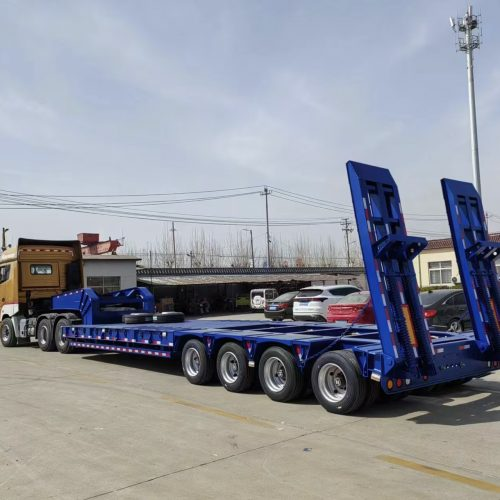
2) RGN front-loading layout (detachable gooseneck workflow)
Title: RGN front-loading configuration
Use case: tracked machines that benefit from controlled straight-on loading.
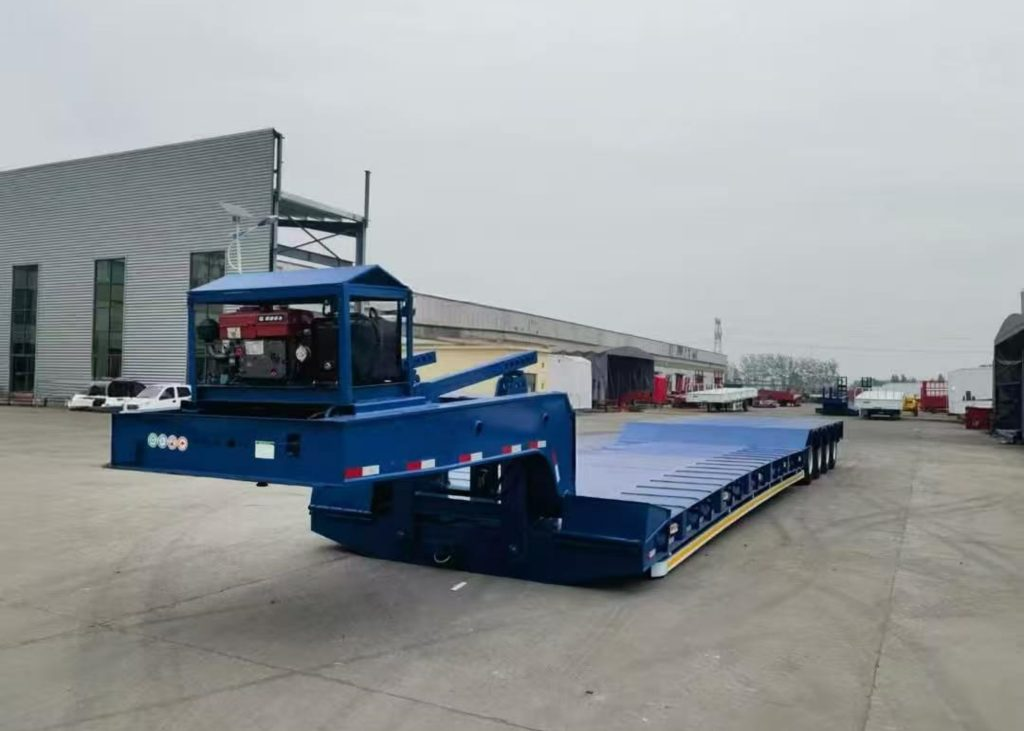
3) 7 axle distribution build (special heavy moves)
Title: 7 axle distribution platform
Use case: special moves where spreading load across more tires is essential.
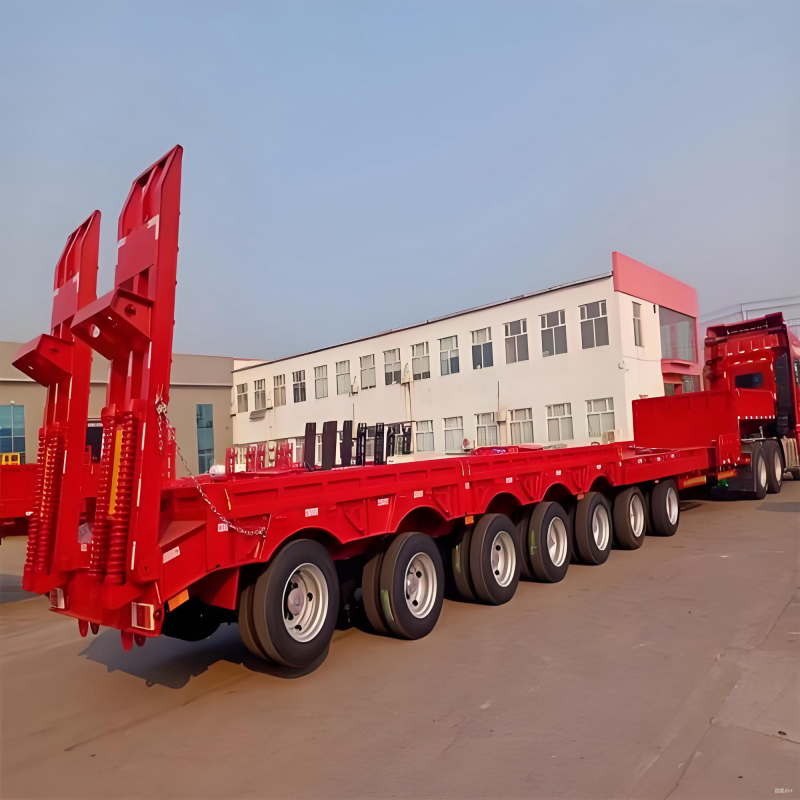
4) Tri axle versatile build (frequent construction moves)
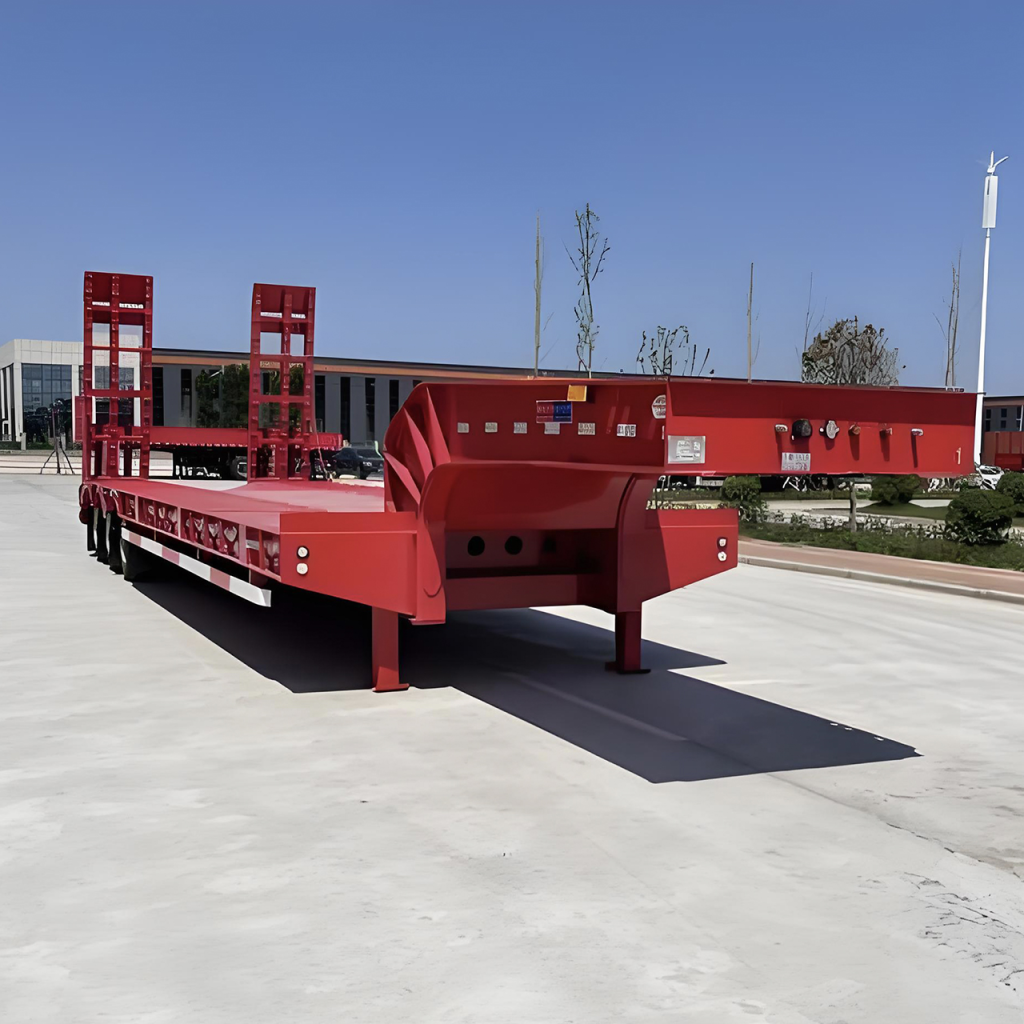
Title: Tri axle versatile lowbed
Use case: frequent mixed-route moves that need balanced distribution.
Selection checklist and “avoid-the-pitfalls” notes ✅
This section is short on purpose. It is designed for quick evaluation. Each step reduces misfit risk. Small checks prevent large problems.
Step 1: Define cargo geometry before choosing ton class
Start with length, width, and height. Then record contact pattern, like tracks or wheel lines. Point loads often drive deck reinforcement needs. Blocking plans should be noted as well.
A quick rule helps: weight alone is not enough. A moderate load can still be harsh. Small contact patches raise pressure quickly. Early notes prevent later surprises.
Pitfall to avoid: selecting by ton label only.
Contact pressure and loading transitions can still damage decks.
Step 2: Match axle count to distribution limits and turning needs
Route constraints shape axle needs early. Bridge limits and axle group rules matter. Turning space matters just as much. A longer footprint can complicate tight corners.
In practice, aim for compliance without overbuilding. More axles spread weight well. Yet more axles can also increase length. The best answer balances both realities.
Pitfall to avoid: adding axles without checking yard geometry.
Tire scrub and maneuver constraints can increase quickly.
Step 3: Choose the loading method that fits the site
Loading surfaces vary by job type. Stable concrete allows simple ramp loading. Soft ground adds sink and twist risk. Uneven staging areas increase alignment stress.
Detachable gooseneck or RGN (rgn) loading can reduce staging steps. Front loading can also reduce track slip. Rear ramps remain practical for many wheeled machines. The key is matching the common site pattern.
Pitfall to avoid: steep ramps on soft ground.
Ramp sink and deck twist often rise together.
Step 4: Treat braking, ramps, and securement as one system
Braking reserve supports safer control on grades. Ramp selection supports safer loading transitions. Securement geometry supports safer travel behavior. Each part impacts the next.
Standard gear lists help. Chains, binders, edge protectors, and mats should match job profiles. Consistency supports inspections and reduces improvisation. Over time, that lowers incident risk.
Pitfall to avoid: planning securement at the last minute.
Improvised angles can create sharp edges and weak restraint paths.
Step 5: Build a repeatable configuration sheet for common jobs
A simple sheet improves dispatch speed. List common cargo categories and typical routes. Assign axle layout, neck type, and ramp method for each. Add preferred securement patterns as well.
This is where terminology can matter. Internal reference reading helps align teams on consistent language and buying considerations.
- Lowbed trailer buying guide (terminology + buying considerations that support consistent selections)
Pairing the trailer with tractor setup and accessories
Tractor pairing affects deck attitude. Fifth wheel height influences level travel. Kingpin spec influences coupling stability. Air supply capacity influences braking response.
Accessory planning reduces delays. Timber mats stabilize soft ground. Steel plates bridge uneven transitions. Wheel chocks and blocks reduce roll risk during loading. Small items can prevent large disruptions.
Deck protection improves lifecycle value. Wear plates reduce gouging at contact points. Edge protectors prevent strap abrasion. Anti-slip surfaces help reduce shifting forces. Those details reduce repair frequency over time.
Marking and visibility support safer movement. Reflective markings help in low light. Lighting checks reduce yard incidents. Clear flagging improves awareness around traffic. Simple routines improve outcomes.
Maintenance habits that protect heavy-haul performance
Maintenance works best when it is consistent. Short inspection routines catch issues early. That reduces downtime and repair cost. It also supports safer operation.
Tire patterns reveal misalignment and uneven loading. Shoulder wear can signal scrub. Hot spots can signal braking issues. Regular checks prevent blowouts and rapid wear.
Structural checks should focus on stress zones. Gooseneck interfaces deserve attention. Ramp hinges deserve attention. Beam joints and crossmembers deserve attention. Early crack detection prevents larger failures.
Air systems benefit from moisture control. Hose checks prevent leaks and response delays. Brake chamber condition affects reliability. A tidy air system supports predictable braking. That matters on grades and stop-and-go routes.
Coating care protects structural strength. Clean drainage paths prevent trapped water. Touch-up coating slows corrosion. Regular wash-down helps in wet regions. Small habits extend service life.
FAQ
These FAQs address the most common lowboy semi trailer selection questions, with an emphasis on specs and job fit rather than slogans.
What makes low-deck transport more stable for tall machines?
A lower deck reduces the center of gravity. That reduces sway through corners. It also improves overall height management. Stability improves most when load placement is planned.
When is tri axle the most practical choice?
Tri axle setups fit frequent mid-range moves well. They often align with 50 ton to 80 ton planning. Distribution stays manageable without excessive length. This configuration supports many construction profiles.
Why do detachable gooseneck designs help tracked machines?
Detachable gooseneck systems enable front loading. Approach angles can be gentler and more controlled. That reduces track slip on steep ramps. It also reduces deck impact during the first climb.
How do 4 axle and 5 axle layouts change wear behavior?
More axles spread load across more tires. Per-tire stress can drop on long routes. Heat buildup often becomes easier to manage. Braking capacity often improves with additional axles.
What is the main advantage of a 7 axle configuration?
A 7 axle build spreads extreme loads widely. Distribution and compliance can improve for special moves. Stability can rise on long highway segments. This setup often needs more turning space.
Which features matter most for ramp safety?
Ramp angle and ramp strength matter most. Gentle angles reduce slip and sudden pitching. Strong hinges reduce deformation over time. Stable ground support reduces deck twist during loading.
How should securement points be evaluated?
Anchor placement should support clean tie-down angles. Chains should avoid sharp edges and hoses. Rub rails should allow flexible routing. Consistency supports faster inspections and safer travel behavior.
Does suspension choice affect securement tension?
Ride behavior can influence tie-down stability. Air suspension can reduce bounce on highways. Hydraulic leveling can improve load sharing on uneven staging areas. Mechanical systems can provide consistent simplicity.
What is a common mistake when choosing ton class?
A common mistake is ignoring contact pressure. Tracks concentrate load into small areas. Deck reinforcement may still be needed below rated weight. Loading transitions can spike stress quickly.
How can a fleet standardize selections?
Create job profiles and assign configurations. Include axle layout, neck type, and ramp method. Add securement patterns and accessory lists. Standardization improves maintenance planning and dispatch speed.
Conclusion and 3 actionable recommendations
Heavy-haul success comes from matching specs to real conditions. Axle layout, deck geometry, and neck style should be evaluated together. Braking, ramps, and securement should be treated as a system. Over time, that approach reduces wear and improves predictability.
3 actionable recommendations:
- First, build load profiles that include height, footprint, and tie-down needs.
- Next, choose axle count and spacing based on route distribution and turning limits.
- Finally, standardize loading methods and securement kits by common job scenarios.
For a clean starting point that matches these steps, lowboy semi trailer options can be reviewed by axle layout, ton class, and neck style in one place.