
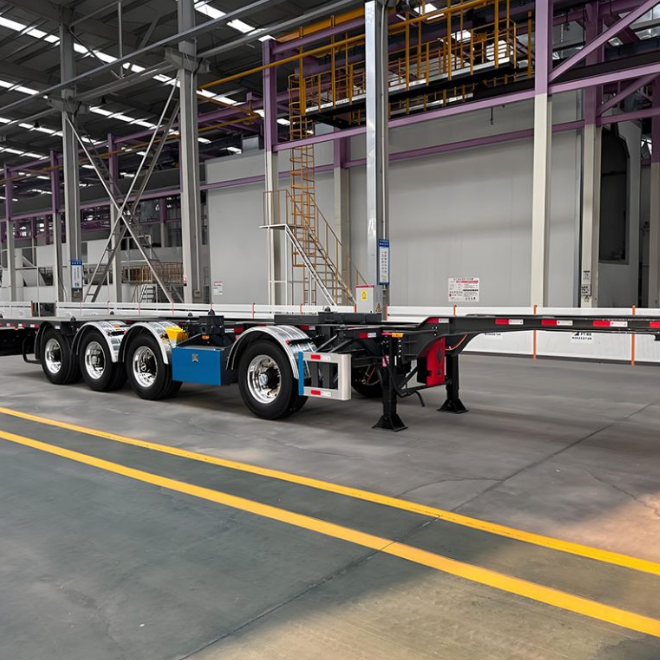
45 ft Container Chassis: When to Use It and Compliance Checklist

Some trailer decisions look simple on a quotation sheet and much more important in real work. A 45-foot chassis is one of them. On paper, it is easy to reduce the choice to length, axle count, and payload. In daily transport, however, the real difference is felt somewhere else. It shows up in how naturally a long box sits on the frame, how much calm remains in the yard when the day turns busy, and how often a team has to compensate for equipment that is only almost right. That is why the container chassis trailer becomes a route decision as much as a product decision. The right setup does not just carry the load. It reduces friction around the load.
Readers looking at this topic usually want more than a list of parameters. They want to know when a 45-foot chassis actually earns its place in a fleet, what signs point to a good fit, how to judge it without overcomplicating the purchase, and how to use it in a way that keeps the work smooth over time. Those are practical questions. They come from ports, yards, inland corridors, export projects, and warehouses where long containers are part of the weekly rhythm rather than occasional surprises.
This article takes that practical angle from start to finish. Instead of turning the page into a technical wall, it focuses on the moments readers actually care about: what this setup feels like in real operations, when it truly helps, how to read the route before reading the brochure, what habits make it easier to live with, and which compliance points deserve attention before the order becomes final. The goal is a clear, useful answer that feels grounded in transport life rather than written only for a catalog.
Why a 45 ft chassis feels different in real work
The first thing people notice about a correctly matched 45-foot chassis is usually not a number. It is a feeling. A long container looks more at home on it. The platform underneath the box feels more deliberate. The combination appears less like a workaround and more like a plan. That visual difference matters because it usually reflects a deeper operational difference as well. When the trailer and container belong together, loading decisions become simpler, checks feel less hesitant, and the entire route tends to begin with more confidence.
Picture an ordinary weekday at a terminal or inland yard. Trucks line up, release times move around, and nobody has extra time for equipment that needs explanation. In that environment, a long container on a less suitable platform can create a surprising amount of small friction. Someone pauses to check positioning again. Someone wonders whether the route will still feel stable later in the day. Someone mentally carries that concern through the first part of the trip. None of these moments look dramatic in isolation, yet together they create drag on the whole operation.
A good 45-foot chassis removes much of that drag. The box sits with more composure. The load path feels more obvious. The working day loses a layer of uncertainty. That is why this type of equipment is often appreciated most on repetitive lanes. The more often the same kind of box appears, the more valuable that calm becomes. Over time, it does not feel like extra trailer length. It feels like the right footprint for the job.
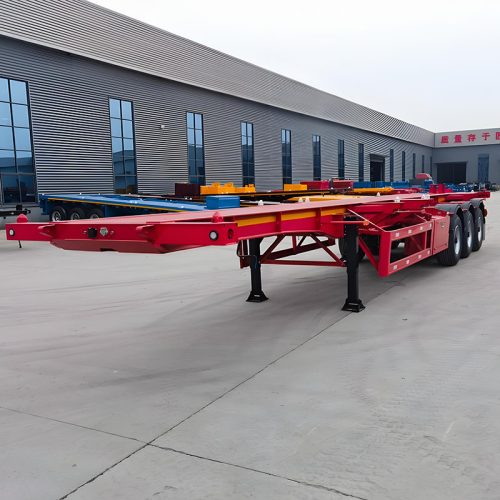 Shop this product
There is also a human side to this topic that many equipment articles overlook. Long shifts make people value clarity. Rainy yards make people value confidence. Busy release windows make people value equipment that does not ask for repeated interpretation. A trailer that better matches the box lowers a certain kind of background stress. The route may still be demanding, but the equipment is no longer adding unnecessary tension to it.
This is one reason route-fit decisions often matter more than headline-heavy sales language. A chassis can look impressive in a product list and still feel awkward in the real world. By contrast, a well-chosen long-frame setup may seem simple on paper and then prove deeply practical once it begins working on the right lane. That difference is exactly what many readers are trying to understand before they commit to a purchase.
Where readers usually feel the value first
- In repeated 45-foot traffic, because the trailer no longer feels like a compromise under the box.
- In yard scheduling, because fewer loading exceptions mean less last-minute improvisation.
- On longer inland corridors, because the combination tends to feel calmer once the road opens up.
- In export planning, because the chassis can be specified around a real route instead of treated as a generic platform.
That does not mean every fleet needs this format. It means the fleets already facing these situations should take it seriously. The strongest reason to choose a 45-foot chassis is never fashion. It is fit.
When it makes sense and when it does not
The best way to judge whether a 45-foot chassis belongs in a fleet is to look at the route before looking at the brochure. This sounds basic, but many costly decisions begin when the order is reversed. If the product leads and the route follows, the result often looks convincing at first and awkward later. When the route leads, the decision tends to stay calmer and more honest.
A 45-foot setup usually makes sense when long containers are part of the normal operating picture rather than occasional exceptions. The lane often includes a meaningful amount of highway or open-road running, and the loading environment has enough room for a longer platform to feel natural instead of demanding. In those conditions, the added length stops feeling like extra equipment and starts feeling like the correct tool for the traffic pattern.
It is especially useful when the same type of long-box movement keeps returning on the same route. Repetition changes the economics of fit. On a one-off move, general flexibility often wins. On a repeated move, the right dedicated solution usually starts to save time, effort, and decision fatigue. In that sense, the choice is not only about what the trailer can carry. It is about what the operation has to keep thinking about every day.
Strong signs that the fit is right
- 45-foot containers appear often enough to justify a dedicated platform.
- The lane rewards smooth repetition more than general-purpose flexibility.
- Most of the work happens between ports, dry ports, warehouses, or inland logistics points with reasonable maneuvering space.
- The team wants to reduce hesitation during loading, dispatch, and trailer assignment.
- The business is ready to think in route-based configurations rather than broad generic specifications.
Signs that another format may fit better
- The work is still highly mixed, with no stable box pattern from week to week.
- The route is short, dense, and dominated by tight city turns or cramped customer sites.
- The operation needs one trailer to do too many different jobs at once.
- The legal and road environment reduces most of the real advantage of the longer frame.
- The current pain point comes from something other than fit, such as scheduling, maintenance, or tractor mismatch.
One very useful judgment tip is to listen to the language already used around the route. If people keep saying things like “this can still work” or “we can manage it again,” that usually means the equipment pattern and the freight pattern are not lining up as well as they should. Those phrases often reveal hidden friction long before the numbers do.
Another helpful trick is to identify the real source of frustration. Sometimes the problem is not payload. Sometimes it is not axle count. Sometimes it is simply that the trailer never feels naturally matched to the load. That distinction matters. A heavier or more complex solution does not automatically solve a mismatch problem. Quite often, the better answer is the platform that stops asking the operation to improvise.
Readers also tend to benefit from thinking in scenes instead of categories. Imagine a late-day warehouse drop after a delayed release at the port. Imagine wet pavement, a tired team, and a site that still expects the move to happen cleanly. In that moment, the right chassis is not the one with the most dramatic brochure wording. It is the one that still feels settled when the day is no longer easy.
How to judge the right model before buying
Most readers do not need a complicated formula. They need a clean way to look at the options and decide whether a model feels credible for the work they already know. A useful buying process is often just a filtering process done with more honesty. Remove what clearly does not fit. Then compare what remains from the perspective of route life, not showroom language.
A good starting point is to picture the trailer with the real box already on it. Not in a perfect catalog setting, but in the actual conditions where it will be used. Think about the yard surface, the stop frequency, the weather, the quality of the roads after the port, the waiting time at sites, and the maintenance discipline of the fleet. When viewed this way, some options immediately feel less convincing. Others start to look more sensible than they did at first glance.
Five judgment questions that usually reveal the truth
- Does the route genuinely deserve a dedicated 45-foot solution? If long-box traffic is still occasional, the gain may not be large enough yet.
- Will this trailer reduce decisions or create more of them? The best specification makes dispatch easier, not more complicated.
- Does the road environment support the setup? Long, stable corridors usually reward it more than dense urban loops.
- Can the trailer be checked and lived with easily? Simple inspection access often matters more than people expect.
- Is the factory discussion route-based or only price-based? The better conversations usually begin with lane, load, climate, and destination requirements.
Another overlooked technique is to compare the trailer in three imagined conditions: an easy day, a crowded day, and a bad-weather day. Many options look fine on the easy day. The right option keeps looking right when the yard is messy, visibility is poor, and the pressure is noticeably higher. That mental test is simple, yet it often reveals more than a long sheet of specifications.
 Shop this product
It is also worth judging the equipment from a human-movement perspective. Can people walk around it easily and understand what they are looking at? Do the locking points feel straightforward to inspect? Does the overall layout suggest calm daily handling rather than repeated small frustrations? These questions may sound soft, but they are often what determine whether a trailer remains pleasant to work with months after delivery.
At this stage, comparison matters more than isolated reading. Instead of viewing one product page and treating it as the whole answer, it helps to compare the long-frame option with the wider container chassis lineup. The comparison clarifies not only what a 45-foot model is, but what it is relative to other working formats. That usually leads to a calmer buying decision.
Simple pre-buy checklist
- Map the real route, not the ideal route.
- Count how often 45-foot containers actually appear.
- Identify the tightest point on the lane, not just the longest point.
- Note the roughest road segment and the wettest operating condition.
- Review local road rules before treating any payload figure as practical.
- Decide whether simplicity of maintenance or refinement of ride matters more.
- Ask whether the configuration supports a repeatable daily routine.
How to use it well in daily operations
Choosing the right chassis is only half the work. The other half is using it in a way that allows the design to stay calm under pressure. A well-specified trailer can still feel average if the daily operating habits around it are weak. By contrast, a properly handled chassis often feels better with time because the routine supports the equipment rather than fighting it.
The first useful habit is to treat loading as part of route design, not as a separate event. A 45-foot chassis works best when the loading environment has already been considered. That includes the available space, the usual lifting method, the pace of the site, the visibility conditions, and the kind of visual checks that happen before departure. If loading is treated as an afterthought, even a good trailer can start the trip with unnecessary tension built into the day.
Practical habits that make the setup easier to live with
- Pair it with a stable tractor whenever possible. Consistency helps the whole combination feel more predictable.
- Do a short visual rhythm check before departure. Locks, tires, landing gear, lamps, and overall posture are all worth a quick look.
- Keep route sequencing realistic. A long-frame setup rewards predictability more than improvisation.
- Use it where it naturally belongs. It is a strong answer for the right lane, not a universal answer for every lane.
- Protect the finish and exposed working points early. Surface care is a reliability issue, not just an appearance issue.
Another practical rule is very simple: if the trailer begins to create conversations it should not be creating, something in the routine deserves attention. The best chassis quietly disappears into the work. It should not be the subject of constant repeated concern. When it becomes one, the cause is often not dramatic. It may be poor pairing, rushed loading, inconsistent checks, or a route that was not quite right from the start.
Daily use also has a comfort side that experienced teams feel immediately. People who work around trailers all day become very good at sensing whether something feels settled. They notice how the unit stands in the yard, how easy it is to walk around, how naturally the box sits, and how much mental energy it keeps drawing from the day. Those reactions are not vague. They are part of operational intelligence. The more naturally the trailer fits the work, the less attention it steals.
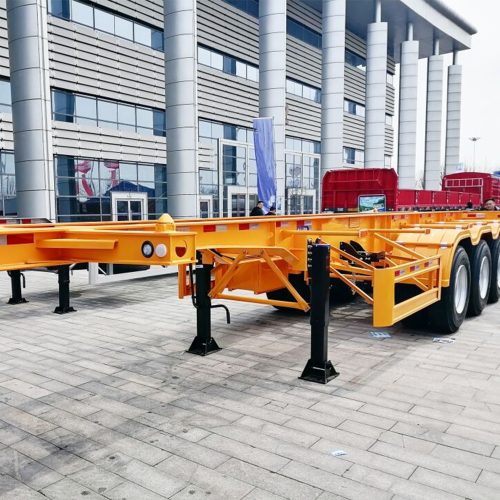 Shop this product
There is a natural temptation to answer every operational question with more hardware. In reality, many improvements come from cleaner routines instead. Better route matching, better inspection timing, steadier tractor pairing, and clearer loading habits often create more peace than another optional feature. That is why good daily use can make an already solid chassis feel even stronger over time.
The same logic applies to maintenance. A trailer that is easy to understand is easier to keep reliable. Quick checks become more likely. Small issues are caught earlier. The equipment remains familiar rather than annoying. Over a long working life, these practical advantages matter just as much as the headline numbers that appear first on a quotation.
A plain-English compliance checklist
Compliance can sound heavier than it needs to. In practical terms, it means the trailer must fit the box, fit the road, fit the legal environment, and fit the inspection reality of the destination market. The easiest way to handle it is not to memorize every regulation at once. It is to ask a handful of clear questions early enough that the answers can still influence the final specification.
1. Is the chassis truly matched to the intended container program?
This is the first checkpoint because everything else follows from it. If the operation is genuinely moving 45-foot containers with useful regularity, a dedicated platform deserves serious attention. If the traffic is still mixed and unstable, flexibility may remain more valuable. Starting with this question prevents many later regrets because it forces the decision back toward the real traffic pattern.
2. Is the legal payload conversation happening early enough?
Many buyers naturally look first at what the trailer can carry structurally. The better sequence is to begin with what the route and market will actually allow in real life. Once that is understood, the structural margin becomes easier to judge. This keeps the discussion grounded and reduces the risk of buying a setup that looks powerful on paper but offers less practical value on the road.
3. Are braking, visibility, and electrical details being treated as first-order issues?
Lamps, reflectors, brake layout, and electrical reliability can sound routine, yet they are often the details that create the most annoying delays later when they are not settled clearly up front. In everyday terms, compliance is often won or lost in these ordinary parts of the trailer. The more complete the discussion is before shipment, the smoother the handover tends to be after arrival.
4. Is securement simple, visible, and confidence-inspiring?
A locking system should not feel mysterious. It should be easy to inspect, easy to understand, and easy to trust in repeated work. If the securement logic already feels awkward in a calm viewing environment, it is likely to feel worse under time pressure. That is a strong sign to slow down and review the layout more carefully before moving forward.
5. Is the documentation clear enough for a smooth handover?
Product drawings, key component notes, customization details, after-sales contact routes, and market-specific changes should all be easy to review. Clean documentation is not paperwork for its own sake. It is part of the confidence of the purchase. A clear handover reduces misunderstanding and makes the trailer easier to maintain from the first month onward.
That shift in perspective usually improves buying quality immediately. It also keeps the article useful to readers who are less interested in theory and far more interested in whether the trailer will work smoothly in the world they already know.
Pairing, factory questions, and selection logic
A 45-foot chassis rarely succeeds as an isolated decision. It succeeds when it fits into a broader fleet logic. That means looking at the tractor, the route, the maintenance style, and the sourcing conversation as one connected picture. When those parts line up, the equipment feels coherent. When they do not, even a strong trailer can feel slightly out of place in daily work.
Pairing begins with the tractor because road behavior is never created by the trailer alone. Height relationship, braking feel, turning environment, and expected combination behavior all influence how settled the full unit feels once it is actually moving. Readers often know this instinctively, but it still helps to say it clearly: a good chassis decision usually becomes much better when the tractor decision is already in the room.
Pairing also includes maintenance style. Some operations genuinely benefit from simplicity above all else. Others are comfortable with a more refined configuration because their service routines are stronger and their spare-parts support is more organized. There is no universal answer here. The right answer is the one the operation can actually support month after month without turning the trailer into a source of irritation.
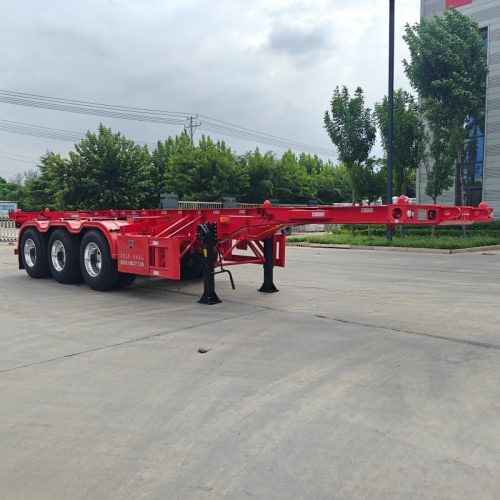 Shop this product
Useful questions to ask a factory before moving forward
- Which configuration best fits a route that mixes port transfer and longer inland runs?
- How should the chassis be adjusted for humid coastal work, rough roads, or longer standby time in the yard?
- Which components are easiest to maintain in the intended market?
- What changes are available for axle layout, suspension style, lock arrangement, and visibility equipment?
- What documentation is normally included for the final configuration?
- How does the factory help shape a route-based specification instead of only offering a generic one?
These questions matter because they reveal the quality of the sourcing conversation itself. A factory that only repeats catalog language may still build good products, but a factory that can discuss route feel, road condition, climate, and practical configuration choices is usually easier to work with. That is why it often helps to read the product selection together with the broader manufacturer page. The product pages explain the equipment. The manufacturer page gives a wider sense of how the equipment is supported, customized, and positioned for export.
There is also a softer buying signal that should not be ignored: whether the supplier seems interested in the work itself. A better supplier conversation usually sounds more specific. It asks about lanes, not only length. It asks about conditions, not only price. It asks how the trailer will live, not just how it will be sold. Readers can often feel the difference immediately.
Need a route-based quotation instead of a generic price sheet?
Send the lane type, destination market, expected container mix, preferred axle layout, and road conditions first. That usually leads to a more useful recommendation and a cleaner final specification.
For readers who want to compare before deciding, it is often worth viewing the category, the dedicated 45-foot model, and the manufacturer page together. That path usually creates a more confident decision than treating one page as if it already contains the full answer.
Final thoughts and practical next steps
A 45-foot chassis is not a prestige purchase. It is a route-fit purchase. That distinction matters because it keeps the decision honest. The best reason to choose one is never that it sounds bigger or looks more serious. The best reason is that the route already wants it. The box format is regular, the lane rewards calm repetition, and the operation is ready to benefit from a platform that feels naturally aligned to the work.
When that fit is real, the gains tend to be steady rather than dramatic. Loading conversations get shorter. Dispatch becomes cleaner. The combination looks more settled on the road. The workday loses a little avoidable tension. These are exactly the gains many transport teams value most, because they keep paying back long after the excitement of a new purchase fades.
At the same time, discipline still matters. The route should be reviewed honestly. The legal environment should be checked early. The trailer should be imagined on a hard day, not only on an easy day. The supplier discussion should stay practical. And the operating routine should support the equipment with good habits instead of assuming the equipment will fix every weak point around it.
- Start with the route, not the brochure. If 45-foot traffic is stable and repeated, the long-frame solution becomes easier to justify.
- Judge the model by how it will feel on a crowded day, a wet day, and a rough-road day. Easy-day confidence is not enough.
- Ask for a route-based quote with clear configuration notes. That usually produces a much better result than asking only for a general price.
Handled this way, the selection process becomes simpler and more grounded. It stops being a search for the most impressive specification and becomes a search for the most suitable daily tool. In heavy transport, that is usually where the best long-term decisions come from. In that final sense, the right container chassis trailer is the one that keeps the day moving without asking the whole operation to keep adapting around it.
Frequently asked questions
Is a 45 ft container chassis always better than a 40ft setup?
No. It becomes better when the route regularly handles 45-foot containers and when the operating environment has enough room and enough repetition to benefit from a dedicated long-frame solution. If the traffic is still mixed or the route is very tight and urban, a 40ft setup may remain the more natural choice.
When does a 3 axle chassis make the most sense?
A 3 axle configuration often makes the most sense when the route needs a stronger balance between stability, legal flexibility, and repeated daily use. It is especially useful when the work includes longer runs, regular container transfer, and a need for more confident weight distribution.
What usually affects 45 ft chassis price the most?
Price usually changes with axle layout, suspension choice, steel and finish approach, visibility and braking requirements, and the amount of export customization. The most useful quotes usually come from a route-based request rather than from a broad request for a number only.
How should capacity be judged without over-focusing on specs?
Start with the legal and practical route limits first. Then compare that reality with the structural ability of the trailer. This keeps the conversation grounded and helps avoid choosing a configuration that looks strong on paper but offers less real-world value on the actual lane.
What is the simplest way to use a 45 ft chassis well after delivery?
Keep the routine simple and disciplined. Pair it consistently with the right tractor, use a short walk-around inspection before departure, protect the finish from preventable damage, and make sure the loading environment matches the trailer’s intended role. Small habits usually protect long-term performance better than dramatic changes later.
What should be checked before ordering one for export?
Review route fit, destination-market requirements, expected container mix, securement logic, axle and suspension choice, and final documentation. A good order should feel clear before payment, not only after the chassis arrives.