
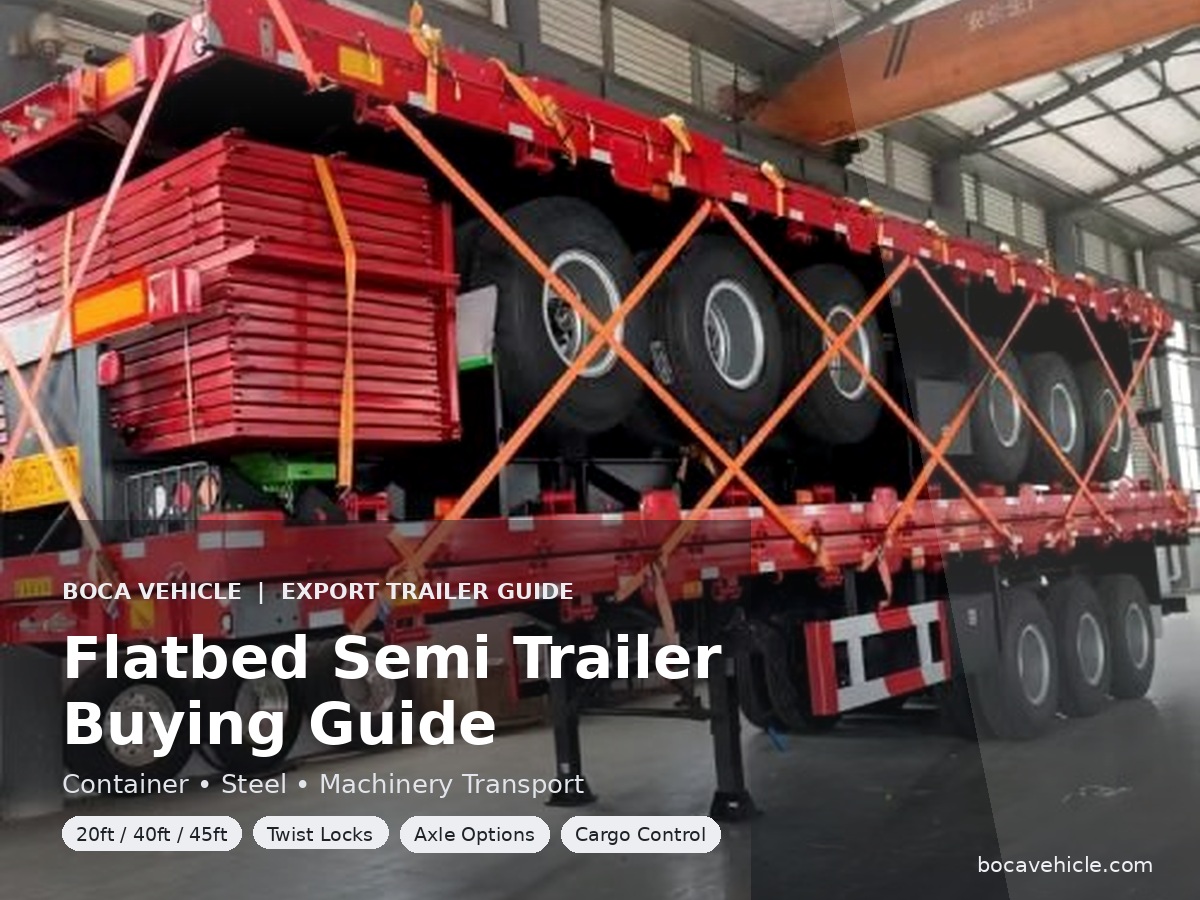
Flatbed Semi Trailer Buying Guide for Container, Steel and Machinery Transport
A practical guide to choosing a flatbed semi trailer for container, steel, machinery, timber, pipe, and building material transport, covering deck length, axles, twist locks, side stakes, lashing rings, suspension, and export quotation details.

A flatbed semi trailer is often selected for transport routes that need one open platform for containers, steel, machinery, timber, pipes, pallets, and building materials. Therefore, the right model should not be chosen by deck length alone. Deck structure, axle quantity, twist locks, suspension, side stakes, lashing rings, and export rules all affect loading speed, road stability, cargo safety, and long-term maintenance.
Quick Buying Logic
First, confirm the most frequent cargo. Container transport needs correct twist lock positions, while steel, pipes, timber, and machinery require stronger cargo-control accessories.
Next, match axle quantity and suspension with the real route. Highway routes, mining roads, rural roads, mountain roads, and port yards create different stress on the trailer frame.
Finally, prepare cargo type, loading capacity, cargo dimensions, destination country, shipping method, and required accessories before requesting a formal quotation.
What Is a Flatbed Trailer?
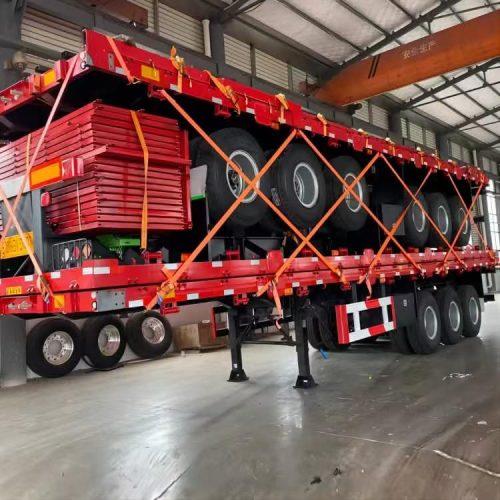
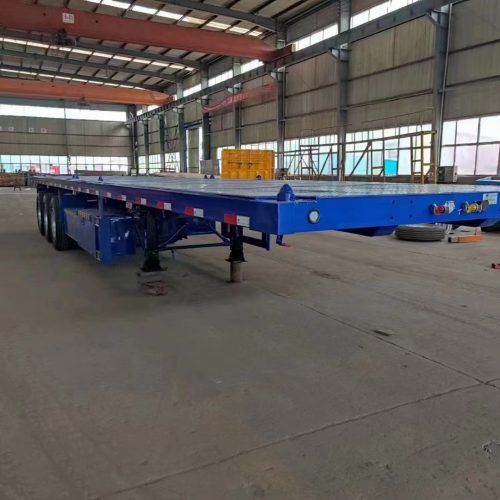
A flatbed trailer is an open-deck semi trailer without fixed side walls or a roof. As a result, cargo can be loaded from the side, rear, or top by crane, forklift, side loader, reach stacker, or yard equipment.
In practical transport work, this open platform gives more loading freedom than a closed trailer. For example, one fleet may carry 40ft containers in the morning, steel pipes in the afternoon, and construction machinery on the next project.
However, the open platform must still be configured carefully. Main beam strength, cross beam spacing, deck surface, axle group, suspension, and fastening points decide how well the trailer performs after months of heavy use.
Key Specifications to Compare Before Ordering
The trailer specification should match cargo shape and road condition. A platform used mainly for container transport may need a different layout from one used for steel coils, pipes, timber, pallets, or machinery.
Also, total loading capacity is not enough by itself. Deck pressure, axle load, suspension type, lashing position, tire size, brake system, and local road regulations should be reviewed together.
Core Configuration Checklist
| Item | Common Options | Why It Matters |
|---|---|---|
| Deck length | 20ft, 40ft, 45ft | Matches container size, cargo length, loading site space, and turning conditions. |
| Axle group | 2 axle, 3 axle, 4 axle | Affects payload, road stability, tire cost, braking demand, and axle load rules. |
| Deck material | Steel deck, wood deck, mixed deck | Controls cargo contact, traction, deck wear, and long-term durability. |
| Cargo control | Twist locks, side stakes, hooks, rings, front wall | Keeps containers, steel, machinery, timber, and pipes stable on the road. |
Deck Length: 20ft, 40ft, or 45ft
A 20ft platform works well for compact cargo, medium equipment, and short industrial routes. Moreover, it is easier to operate in narrow yards, construction areas, and local delivery points.
A 40ft platform is the most common option for mixed export transport. It can carry 40ft containers, steel bars, pipes, machinery frames, pallets, and building materials.
A 45ft platform gives more deck space for long freight. However, turning radius, port access, route length limits, and destination rules should be checked before production.
For deck-length selection, compare 20ft vs 40ft flatbed semi trailer options before confirming the final configuration.
Axle Quantity and Suspension
A 2 axle model suits lighter routes and compact cargo plans. Meanwhile, a 3 axle model gives a stronger balance between payload, stability, tire cost, and export flexibility.
For heavier freight or rough roads, a 4 axle design may distribute load better. In addition, mechanical suspension is practical for tough road conditions, while air suspension can help protect sensitive machinery or packaged cargo on better road networks.
How to Choose the Right Configuration by Cargo Type
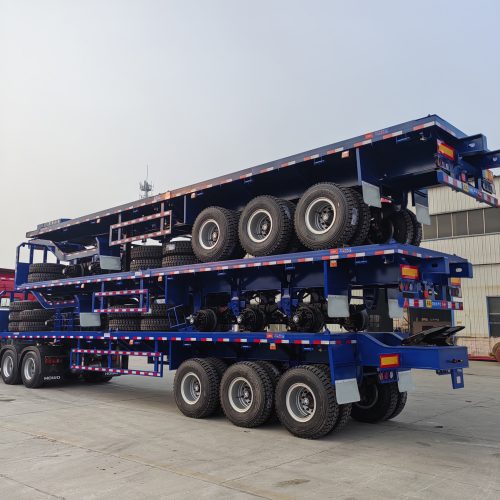
Cargo type should guide the trailer structure. Containers, steel, machinery, timber, pipes, and building materials create different pressure points and different securing requirements.
Therefore, a practical configuration should start from the most frequent cargo, then add enough flexibility for secondary transport tasks.
Container Transport
For container work, twist locks are essential. In addition, the lock layout should support the required 20ft, 40ft, 45ft, or mixed container plan.
If container work is the only task, a container chassis trailer may also be compared. However, a flat platform gives more flexibility when steel, pallets, pipes, building materials, and machinery also appear.
Steel, Pipe, and Building Material Transport
For steel beams, plates, pipes, and rebar, cross beam support and lashing rings matter. Also, side stakes help control long bundles during braking, turning, and uneven road movement.
For palletized materials, deck access and rope hooks improve loading speed. Meanwhile, a steel deck can better handle repeated forklift and crane work.
Machinery and Equipment Transport
For machinery, concentrated wheel or track loads need stronger deck zones. Meanwhile, heavy lashing rings help secure equipment during braking, cornering, and rough-road vibration.
For tall excavators or heavy tracked machines, a lowbed trailer may give better height control. Therefore, machine height, loading method, ramp angle, and deck height should be confirmed before final selection.
Timber and Long Cargo Transport
For timber and pipe bundles, removable side stakes, rope hooks, chocks, and strap spacing reduce movement and rolling risk. In addition, side control should match bundle height, pipe diameter, cargo weight, and road speed.
Twist Locks, Side Stakes, Rope Hooks, and Lashing Rings
Cargo-control parts should be planned before production. Otherwise, later modification may increase cost and reduce the neatness of the trailer structure.
For container transport, twist locks keep ISO containers fixed on the platform. For steel, timber, pipes, and machinery, side stakes, rope hooks, rated lashing rings, and a front wall are often more important.
For cargo securement planning, the official FMCSA cargo securement rules can be used as a reference when reviewing tie-down points, load restraint, and movement control for open-deck freight. Local regulations should still be checked in the destination market before final operation.
Practical Accessory Matching
- Use twist locks when ISO container transport is part of daily work.
- Use lashing rings for machinery, steel frames, and heavy cargo bundles.
- Use side stakes for timber, pipes, rebar, and long materials.
- Use rope hooks for straps, tarpaulins, and lighter cargo control.
- Use a front wall when forward cargo movement needs extra control.
Road Conditions, Export Rules, and Shipping Details
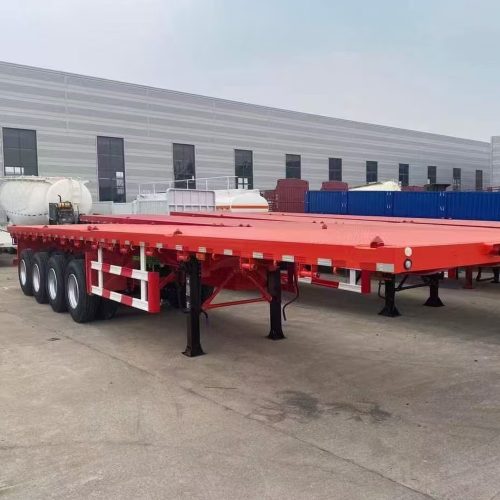
Road conditions can change the best specification. On good highways, a standard 3 axle platform may be enough. However, mining roads, rural routes, mountain roads, desert areas, or construction access roads may require stronger suspension, heavier tires, and reinforced cross members.
Destination rules also matter. Axle load limits, lighting requirements, brake options, overall length, registration standards, and reflective markings should be checked before confirming the drawing.
Shipping method should be discussed early as well. Ro-Ro shipping is convenient when available, while bulk shipping or special loading plans may be used for different port schedules and trailer quantities.
Boca Vehicle Solution for Export Projects
Boca Vehicle supports export trailer configuration with structure discussion, production detail confirmation, and shipment coordination. Therefore, deck length, axle group, suspension, twist locks, deck material, front wall, and cargo-control accessories can be matched to the real transport route.
During production, photo and video confirmation can show visible details such as lashing rings, stake pockets, twist locks, front wall, deck finish, paint surface, lighting layout, tire setup, and suspension structure.
Before shipment, packing information, loading photos, and accessory checks help reduce arrival confusion. As a result, inspection at the destination port becomes more straightforward.
Pre-Quotation Information Checklist
For a more accurate configuration, the following details should be prepared before quotation.
- Cargo type, such as container, steel, machinery, timber, pipe, pallet, or building material.
- Cargo size, including length, width, height, and loading footprint.
- Normal payload and expected maximum working weight.
- Preferred deck length, such as 20ft, 40ft, or 45ft.
- Axle quantity, suspension preference, tire size, and brake requirement.
- Road condition, loading method, destination country, and destination port.
- Required accessories, including twist locks, side stakes, rope hooks, front wall, and lashing rings.
Further Reading
Additionally, these related BOCA category pages help compare nearby trailer solutions without adding unverified article links.
FAQ
What is a flatbed trailer used for?
It is used for cargo that needs open loading access. Common cargo includes containers, steel beams, pipes, timber, pallets, machinery frames, and building materials.
Should the deck be 20ft, 40ft, or 45ft?
A 20ft deck suits compact cargo and narrow sites. A 40ft deck is more common for mixed container, steel, and machinery work. A 45ft deck supports longer freight, but route limits should be reviewed first.
Are twist locks necessary?
Twist locks are necessary when ISO containers will be transported. For steel, timber, pipes, or machinery, lashing rings, side stakes, rope hooks, and a front wall may be more important.
What is the difference between a flatbed trailer and a container chassis?
A flatbed trailer has a full open deck for mixed freight. A container chassis focuses mainly on container movement, so it may be more efficient for dedicated port-to-yard container routes.
Is a 3 axle or 4 axle model better?
A 3 axle model fits many standard export transport routes. A 4 axle model may suit heavier loads and rougher roads, but local axle limits, turning space, and tractor matching should guide the final plan.
Final Selection Advice
In summary, the best open-deck trailer is the one that matches the cargo, loading method, route condition, and destination requirements. A practical specification usually performs better than a trailer chosen only for maximum length or maximum payload.
For a precise flatbed semi trailer configuration, send cargo type, loading capacity, axle quantity, road condition, destination country, and accessory needs to Contact Boca Vehicle.
- First, define the most frequent cargo and normal payload.
- Next, match twist locks, side stakes, rope hooks, lashing rings, front wall, and deck material to cargo control.
- Finally, confirm axle quantity, suspension, tires, brake system, tractor matching, and destination rules before production.