
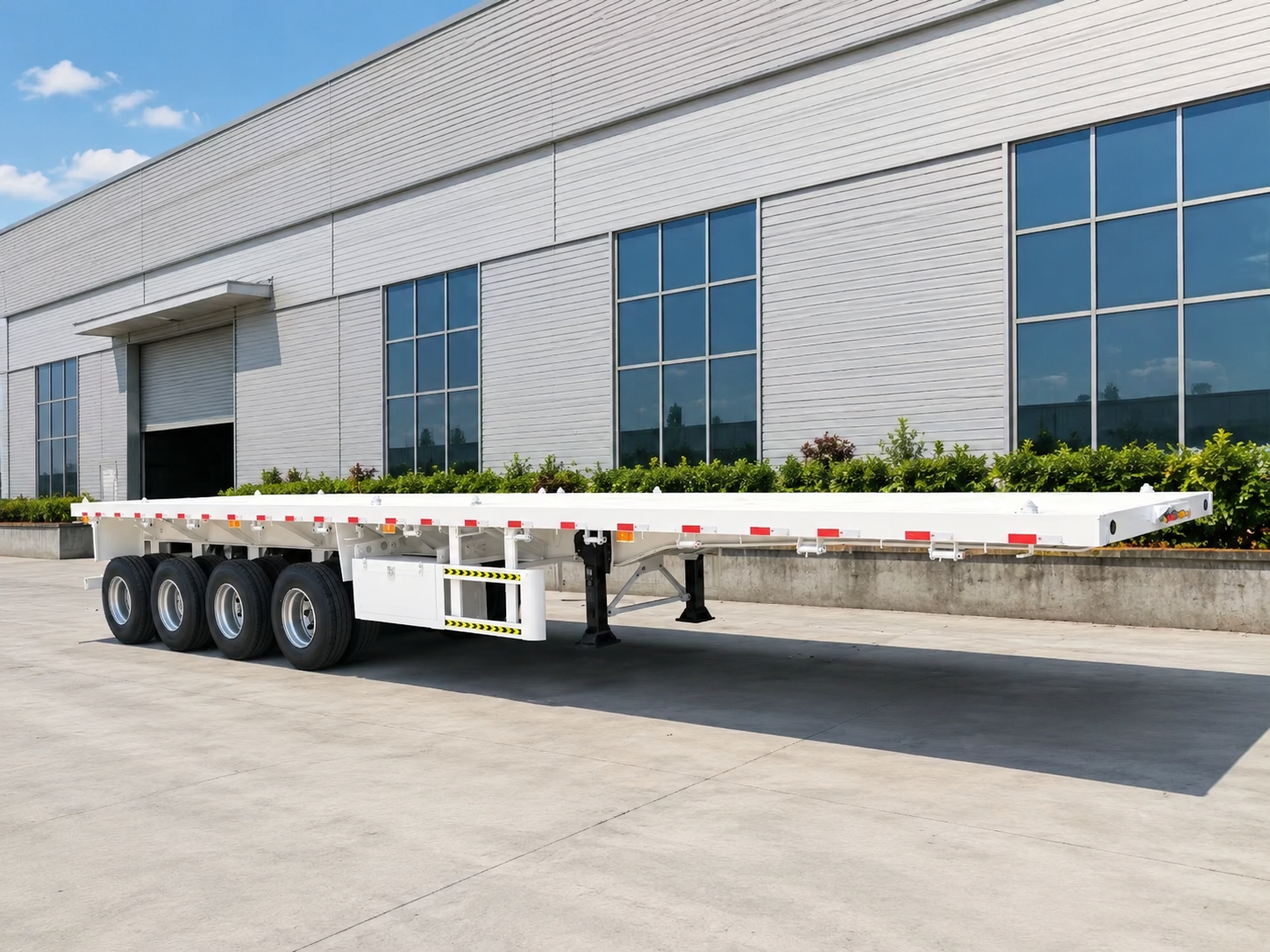
Flatbed Semi Trailer Price Factors: Axle, Length, Deck and Suspension

A flatbed semi trailer price becomes useful only when every quotation follows the same technical and commercial scope. Length alone cannot define frame demand, axle loading, running gear, cargo support, inspection, or export preparation.
A sound comparison starts with the cargo, loading method, route, destination requirements, expected quantity, and agreed commercial boundary. Once those points are fixed, each difference in the quotation can be linked to a real configuration choice.
At the beginning of a sourcing project, the platform should match the transport task rather than a familiar model label. A shorter unit may need substantial support beneath a concentrated machine, while a longer unit may carry relatively light but bulky materials.
Likewise, two trailers with similar outside dimensions can contain different axles, suspensions, tires, brake components, twist locks, deck structures, and inspection scopes. The quotation should separate these items and record accepted alternatives in writing.
This guide is most relevant to fleet procurement, trailer distribution, construction transport, port logistics, industrial cargo movement, and export projects comparing several offers. It focuses on quotation structure and same-specification comparison rather than publishing an unsupported price range.
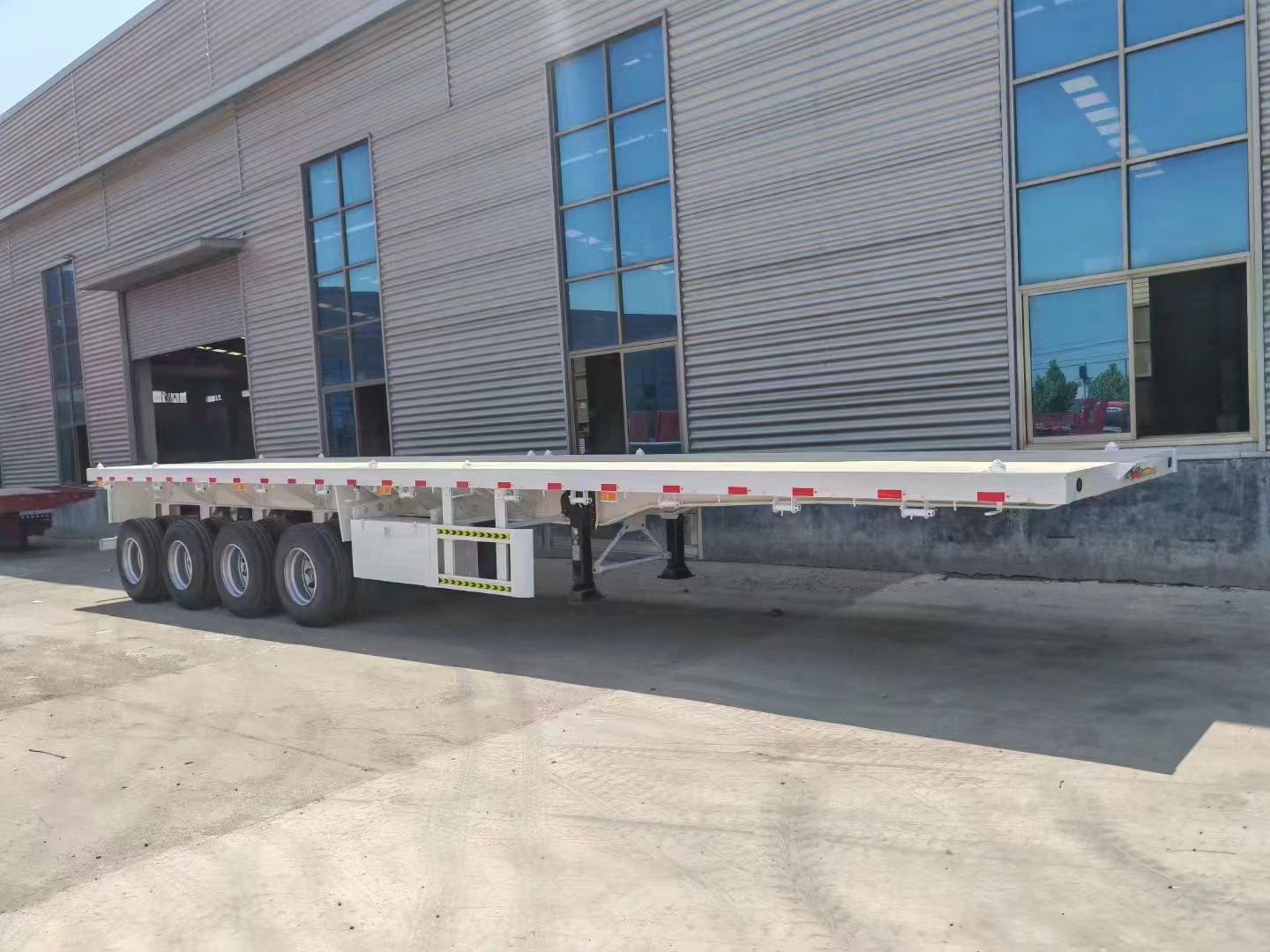
Where This Guide Is Most Useful
Why Flatbed Semi Trailer Prices Cannot Be Compared by One Number
A single total cannot explain the engineering and commercial scope behind a trailer quotation. Instead, the figure combines structure, running gear, accessories, production work, inspection, packing, and delivery terms.
Meanwhile, two offers may use different boundaries. One may cover only the basic platform, while another includes spare items, cargo-securing hardware, inspection evidence, loose-part packing, and shipping preparation.
As a result, the last line of the quotation has little value without a clear inclusion list. Specification alignment should come first, followed by commercial normalization and final approval.
What the flatbed semi trailer price can hide
One configuration change often affects several other systems. A concentrated load may alter the main beams, cross members, local deck support, axle arrangement, suspension, tires, and restraint points.
Likewise, a length change can influence rear overhang, turning behavior, load distribution, tare weight, twist-lock positions, and export packing. No isolated option explains the complete difference between two quotations.
Broad phrases such as reinforced, export type, or heavy duty do not create a measurable comparison. Drawings, material statements, component schedules, and written exclusions provide a stronger basis.
Technical scope and commercial scope should remain separate
Commercial terms can change the visible total without changing the trailer itself. Inland transport, port handling, ocean freight, insurance, taxes, and destination charges may sit outside one offer.
By contrast, another offer may include selected logistics services under a stated trade term. Equipment value should therefore be separated from freight, third-party services, documents, and destination expenses.
Currency, payment stages, bank charges, and quotation validity also affect cash planning. However, favorable commercial terms cannot correct an unsuitable frame, axle plan, or cargo-restraint arrangement.
A comparable quotation should answer the same questions:
- What cargo appears during routine operations and occasional projects?
- Where does the load contact the deck, and how concentrated is that pressure?
- Which length, axle layout, suspension, tires, and brakes support the route?
- Which twist locks, lashing points, stakes, headboards, and toolboxes are included?
- What inspection evidence, packing work, and export scope form part of the offer?
- Which items remain optional, excluded, or subject to destination confirmation?
Once those questions share one answer, quotation differences become easier to interpret. More importantly, the selected configuration can reflect operating risk rather than an incomplete headline number.
How 20ft, 40ft and 45ft Length Choices Affect Configuration
Trailer length influences more than usable deck space. It changes cargo position, axle relationship, turning behavior, rear clearance, frame stress, loading access, and shipping preparation.
However, length should never serve as a shortcut for carrying ability. A compact platform can face severe point loads, while a longer platform may move relatively light but bulky materials.
20ft configurations: compact geometry with concentrated-load questions
A 20ft option may suit compact cargo, selected container movements, short materials, or restricted operating areas. Shorter geometry can also simplify access inside crowded yards and narrow project entrances.
Still, dense machinery, steel coils, blocks, or loaded containers can place high stress within a short area. In that case, support spacing and reinforcement deserve more attention than overall platform length.
The quotation request should therefore show actual support points and loading methods. A total cargo weight without a footprint drawing may leave important structural assumptions unresolved.
40ft configurations: broader cargo flexibility with more layout choices
A 40ft platform can support container movements, steel products, timber, pipe bundles, palletized freight, and mixed project cargo. Consequently, it often contains more configuration choices within one quotation.
Container work may require exact twist-lock positions and supporting structure. General cargo may require different cross-member spacing, deck treatment, lashing points, removable stakes, or a front headboard.
A 40ft quotation cannot rest on length alone. The specification should state whether the platform serves containers, mixed cargo, machinery, steel, timber, or another defined duty.
45ft configurations: additional deck space with route consequences
A 45ft option provides additional support length for long materials and selected logistics operations. However, added length can affect maneuvering, rear geometry, tractor pairing, packing, and local road compliance.
Tight turns, terminal lanes, gate dimensions, loading yards, and route restrictions can reduce the practical value of extra deck space. These limits should be reviewed before the length is fixed.
Accordingly, the inquiry should explain why the longer platform is necessary. Repeated cargo patterns provide a stronger basis than one rare exceptional movement.
Length Selection and Quotation Context
When platform length remains the main operating decision, the detailed 20ft vs 40ft flatbed semi trailer comparison provides additional selection context. In this article, length remains one quotation factor among structure, running gear, accessories, and export scope.
Shipping scope can also shift with platform length. Depending on carrier planning and order quantity, removable components, protective measures, stacking arrangements, or loading supports may change.
In addition, a longer deck may require a different cargo-securing pattern. Lashing positions should follow the actual load footprint rather than generic spacing assumptions.
Length-related information that keeps quotations aligned:
- Routine and maximum cargo length, width, height, weight, and support footprint
- Loading method, including crane, forklift, side access, or other equipment
- Container sizes, loading positions, and frequency of container transport
- Route access, turning space, road surface, and yard restrictions
- Tractor compatibility, coupling details, and destination dimension limits
- Order quantity, packing expectations, and preferred shipping arrangement
Axle Quantity, Axle Brand and Load Requirements
Axle quantity affects load distribution, tire count, braking hardware, suspension layout, maintenance, and legal suitability. Still, more axles do not automatically create a better purchasing decision.
The correct arrangement depends on cargo mass, concentrated loading, axle limits, route conditions, tractor pairing, and expected utilization. Every part of the running gear must follow the same design basis.
Axle count changes more than load distribution
A two-axle, three-axle, or four-axle layout creates a different component package. Each additional axle adds tires, rims, brake parts, suspension connections, wheel ends, and service points.
Axle spacing can matter as much as axle quantity. Destination rules may consider axle groups, spacing, total combination mass, and route categories rather than only the number of axles.
For that reason, a line stating only “three axles” remains incomplete. The quotation should identify axle rating, spacing, brand, suspension integration, brakes, tires, and rims under the agreed specification.
Axle brand should reflect service access
Axle brand can influence component cost, local familiarity, spare-part access, maintenance routines, and workshop confidence. However, brand recognition alone does not prove suitability for a particular route.
In some fleets, a locally supported option may reduce downtime and simplify stocking. In other operations, an established international brand may align better with existing service agreements.
The RFQ should state a preferred brand or an approved alternative process. Any substitute should include a clear technical explanation and written acceptance before order confirmation.
Total load and load concentration are different questions
A total cargo figure describes mass but not the pressure pattern on the deck. Steel coils, machinery feet, container corners, palletized cargo, and long pipes transfer loads differently.
For example, two machines with equal weight may create different structural demands. One may spread pressure through tracks, while another rests on several compact support feet.
Drawings should therefore mark support points and loading positions. Photographs can also show how cranes, forklifts, blocks, or saddles place cargo onto the platform.
Routine work should define the base configuration
A rare maximum load should not automatically define every trailer. Otherwise, additional tare mass and component cost may reduce efficiency during routine operations.
On the other hand, planning only around average loads creates risk when heavy cargo appears frequently. The inquiry should separate routine conditions, repeated peaks, and exceptional movements.
A complete axle section should identify:
- Axle quantity, arrangement, spacing, brand, and approved alternatives
- Axle rating under the agreed cargo and route basis
- Suspension type and the connection between suspension and axle groups
- Brake hardware, tire quantity, rim quantity, and spare-wheel scope
- Destination requirements supplied by the responsible project team
- Any exclusions, substitutions, or locally sourced components
Deck, Main Beam and Steel Selection
The deck and main frame form the structural basis of the trailer. However, visible plate thickness alone cannot confirm performance or explain a quotation difference.
Structural behavior depends on beam geometry, material selection, reinforcement location, cross-member layout, welding control, and the complete load path. Each element should connect to the stated cargo condition.
Main beams, cross members, and local reinforcement work together
Main beams carry major longitudinal stress, while cross members support the deck and spread local pressure. Side rails, gooseneck areas, suspension brackets, and rear sections also share structural work.
Consequently, two frames can use similar amounts of steel but follow different structural concepts. One may add material broadly, while another concentrates reinforcement around known stress areas.
A clear quotation should describe that concept through drawings and component notes. General phrases such as strong frame or reinforced deck do not provide enough detail for comparison.
Steel selection affects design, weight, and fabrication
Steel choice can influence material cost, structural weight, forming methods, welding procedures, and beam proportions. Yet a stronger material label does not remove the need for a suitable structural design.
Likewise, material substitutions can affect both commercial scope and production planning. Any alternative should remain documented through the accepted written specification.
Because project conditions vary, material decisions should remain conditional. Cargo patterns, road conditions, fabrication methods, maintenance goals, and destination requirements should guide the final choice.
Deck design should match contact, wear, and loading methods
A full steel deck may suit mixed cargo and frequent surface contact. Another deck arrangement may better support timber, machinery, containers, or project-specific loading practices.
Surface form also affects grip, drainage, cleaning, repair, and cargo protection. Forklift traffic, for example, may create different wear zones from crane-loaded steel bundles.
As a result, deck cost should include more than material thickness. The quotation should describe the deck material, surface form, support spacing, edge details, and removable sections when required.
Concentrated loads need visible support planning
Machinery feet, container corner castings, coil saddles, and support blocks can create high local pressure. General deck strength may not provide enough information in these areas.
Instead, the specification may need local reinforcement, closer support spacing, load-spreading plates, or dedicated support features. The correct approach depends on the cargo drawing and loading procedure.
Before approval, each concentrated load should appear on a marked layout. This step reduces design assumptions and makes structural quotations easier to evaluate.
Additional steel can also reduce usable payload
Additional reinforcement can increase tare mass, transport cost, and handling difficulty. Under some destination rules, greater tare mass may also reduce the available cargo allowance.
Conversely, aggressive weight reduction can create stiffness or durability concerns without suitable design review. A balanced frame should meet the agreed duty without unnecessary material.
Structural points worth recording in the RFQ:
- Main beam design, material statement, and reinforcement concept
- Cross-member arrangement and support under concentrated cargo
- Deck material, surface form, wear zones, and removable sections
- Kingpin area, gooseneck area, suspension mounts, and rear structure
- Twist-lock support locations when container transport forms part of the duty
- Surface preparation, coating scope, and agreed inspection points
Mechanical vs Air Suspension and Other Running Gear
Suspension influences ride behavior, road impact, load transfer, maintenance needs, and component cost. Mechanical and air systems can both suit flatbed work under different operating priorities.
The choice should follow route quality, cargo sensitivity, workshop capability, operating frequency, and local parts access. Neither suspension type should receive an automatic ranking.
Mechanical suspension favors simplicity and familiar maintenance
Mechanical suspension often fits routes where simplicity and workshop familiarity carry high value. It may also suit operations with rough access roads and limited specialist support.
However, the phrase mechanical suspension covers several possible arrangements. Spring packs, hangers, equalizers, brackets, and axle connections can all change the quotation.
For a fair review, the offer should identify the actual package. Component brands, replacement-part expectations, and any route-driven reinforcement should appear separately.
Air suspension adds control functions and service requirements
Air suspension may support smoother highway behavior and selected height functions. At the same time, the system adds air bags, valves, lines, brackets, controls, and maintenance tasks.
These components affect both purchase scope and long-term service planning. Local workshop knowledge and replacement-part availability should therefore enter the comparison.
In addition, air-system interfaces should match the intended tractor and brake arrangement. Unclear interfaces can lead to local modification after arrival.
Running gear extends beyond suspension
Landing gear, kingpin, hubs, bearings, brake chambers, valves, wiring, lamps, mudguards, and protection structures all affect the quotation. Small components also influence daily operation and registration preparation.
Landing gear should match expected support conditions and parking practice. Likewise, kingpin, air-line, electrical, and coupling details should match the intended tractor and destination requirements.
A complete-looking unit may still need local changes when these interfaces remain unspecified. Therefore, interface details should appear before production rather than after delivery.
Brake scope should remain explicit
Brake configuration connects closely with axle layout, tires, suspension, tractor interfaces, and destination rules. The quotation should state each included component and any project-specific option.
Destination compliance must come from responsible local sources and written project requirements. A general export statement cannot replace market-specific confirmation.
Running-gear lines that should not remain generic:
- Suspension type, arrangement, brands, and replacement-part expectations
- Axle-to-suspension connection and related reinforcement
- Brake-system components, tractor interfaces, and destination requirements
- Landing gear, kingpin, hubs, bearings, and wheel-end scope
- Air lines, electrical sockets, lighting, reflectors, and wiring protection
- Side protection, rear protection, mudguards, and loose fittings
Tires, Brakes, Twist Locks and Cargo-Securing Accessories
Tires, brake components, twist locks, and cargo restraints can create a noticeable quotation gap. These items may appear secondary, although they shape daily service, maintenance planning, and operating suitability.
Each offer should therefore list brand, type, quantity, position, and exclusions. A general phrase such as standard accessories does not create a comparable scope.
Tires and rims should match route and service conditions
Tire choice may differ by brand, size, pattern, quantity, load requirement, and spare-wheel plan. Local availability can sometimes matter more than broad brand recognition.
Highway routes, rough sites, hot climates, wet conditions, and mixed surfaces create different priorities. The selected option should match both the operating environment and the local service network.
Rims also require separate confirmation. Size, material, finish, quantity, and compatibility with the selected tires can affect purchase scope and later maintenance.
Twist locks need an exact loading layout
When container transport forms part of the duty, lock quantity alone provides little guidance. Position, supporting structure, operating type, and intended container combinations should appear on a drawing.
The layout should also account for deck equipment, headboards, toolboxes, and cargo restraints. Interference discovered after production can limit the planned operating range.
A mixed-use flatbed may carry containers during one trip and steel during another. That flexibility can justify additional deck and securing work, but the requirement should be stated before the quotation is finalized.
When container movement dominates the operating plan, a full deck may add little practical value. In that situation, a skeletal configuration deserves comparison as a separate product direction.
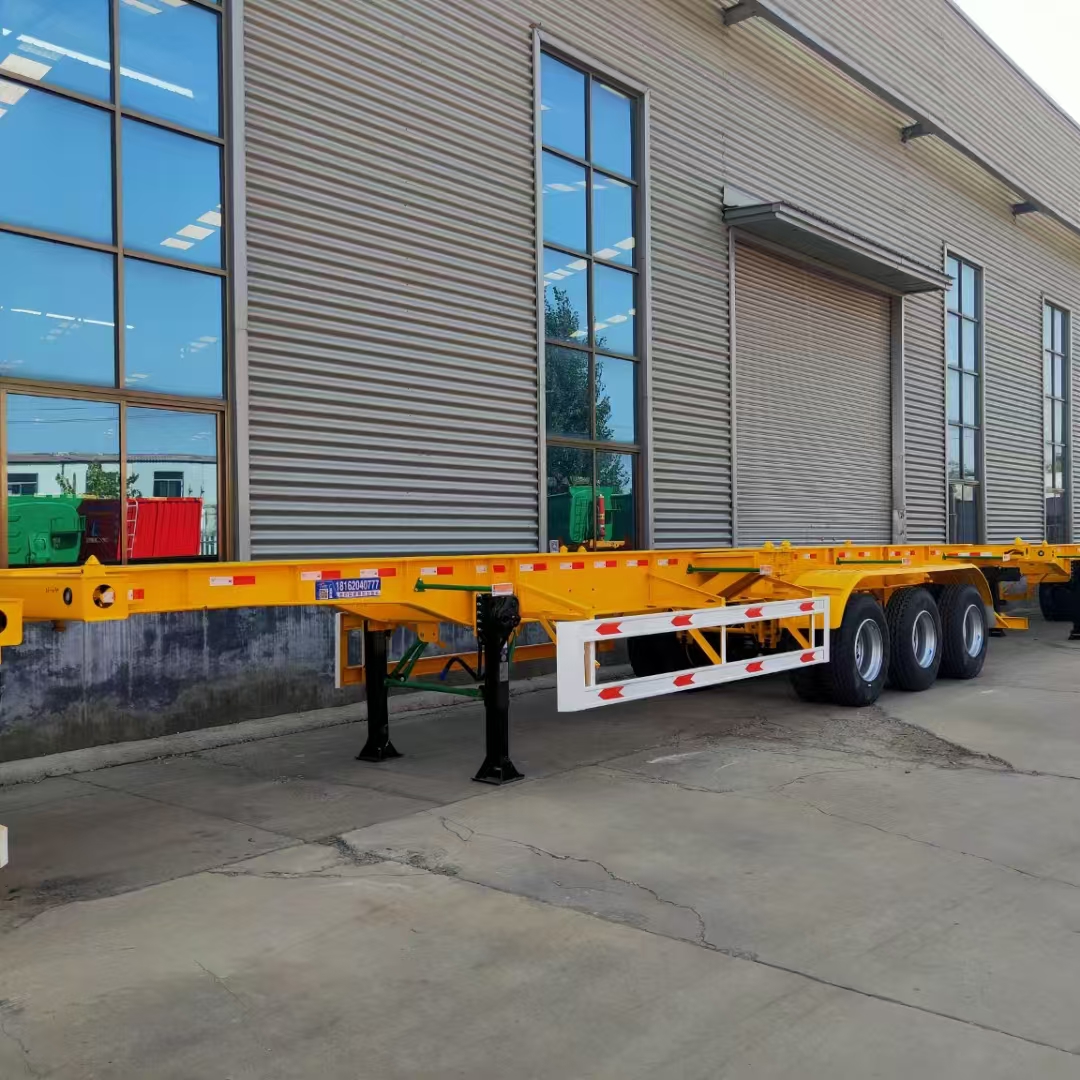
Dedicated container operations may favor a skeletal frame, while mixed cargo often benefits from a complete platform and broader lashing options. Cargo frequency, loading equipment, route use, and fleet strategy should control the decision.
Cargo restraints should follow actual load positions
Lashing rings, rope hooks, stake pockets, removable stakes, headboards, chain points, winches, and toolboxes can all affect the quotation. However, more fittings do not automatically create a better arrangement.
Quantity and position should match the cargo footprint and restraint method. A long steel bundle needs a different pattern from palletized materials, timber, containers, or compact machinery.
The trailer quotation should describe the supplied hardware. Operating procedures, restraint selection, and destination rules should remain part of the transport plan.
Loose accessories often create hidden comparison gaps
One quotation may include spare tires, carriers, toolboxes, straps, locks, warning equipment, or loose fittings. Another may show only the base platform and add those items later.
Consequently, every loose item should appear in an accessory schedule. Packing position and shipment responsibility should also remain clear.
Accessory schedules should cover:
- Tire brand, size, pattern, quantity, and spare-tire scope
- Rim size, material, finish, quantity, and compatibility
- Brake components, connectors, and destination-driven options
- Twist-lock quantity, position, operating type, and support details
- Lashing rings, hooks, stake pockets, stakes, headboards, and chain points
- Toolboxes, spare carriers, warning equipment, and loose packed parts
Customization, Inspection, Packing and Export Scope
Customization should solve a defined operating problem rather than add features without purpose. Each change can influence weight, balance, fabrication, maintenance, inspection, packing, and commercial scope.
A custom request should therefore begin with cargo evidence. Drawings, photographs, support points, loading methods, route information, and destination requirements reduce assumptions during specification work.
Custom options need controlled revisions
Length, axle layout, deck form, reinforcement, suspension, locks, stakes, headboards, and toolboxes may change during discussion. Without revision control, different departments may compare different versions.
Each specification should carry a date and revision number. Accepted drawings should also match the final quotation and purchase documentation.
When an option changes, its technical and commercial effects should appear together. This process prevents a minor request from creating an unnoticed weight, maintenance, or price change.
Inspection language should define evidence and acceptance
A general promise of inspection provides little control. The quotation should instead define agreed dimensional checks, component verification, function checks, photographs, videos, or third-party attendance.
Acceptance criteria should remain measurable. The plan may identify witness points, document requirements, responsible parties, and the process for resolving deviations.
When independent inspection is required, appointment and payment responsibilities should appear early. Late requests can disrupt packing and shipment planning.
Packing scope changes with route, quantity, and shipping method
Export preparation may include protective wrapping, loose-part packing, labels, supports, component removal, stacking preparation, or transit protection. However, no single method fits every shipment.
Carrier rules, port equipment, order quantity, route length, and loading plans can change the appropriate approach. The final method should therefore appear in writing before dispatch.
Packing also needs a clear inclusion boundary. One offer may include all preparation, while another may charge separately for special supports, component removal, or loading assistance.
Export documents and destination requirements vary by project
Commercial invoices, packing lists, transport papers, origin-related documents, and inspection records may form part of an export file. Still, destination procedures can require additional documents or third-party actions.
The RFQ should list each required document and responsible party. Third-party charges and special procedures should appear separately from the trailer configuration.
No certification or destination approval should remain assumed. Applicable requirements should be confirmed through responsible local sources and the final written specification.
For custom production support, the project file should connect cargo data, drawings, component choices, inspection points, packing, and export requirements before the order is approved.
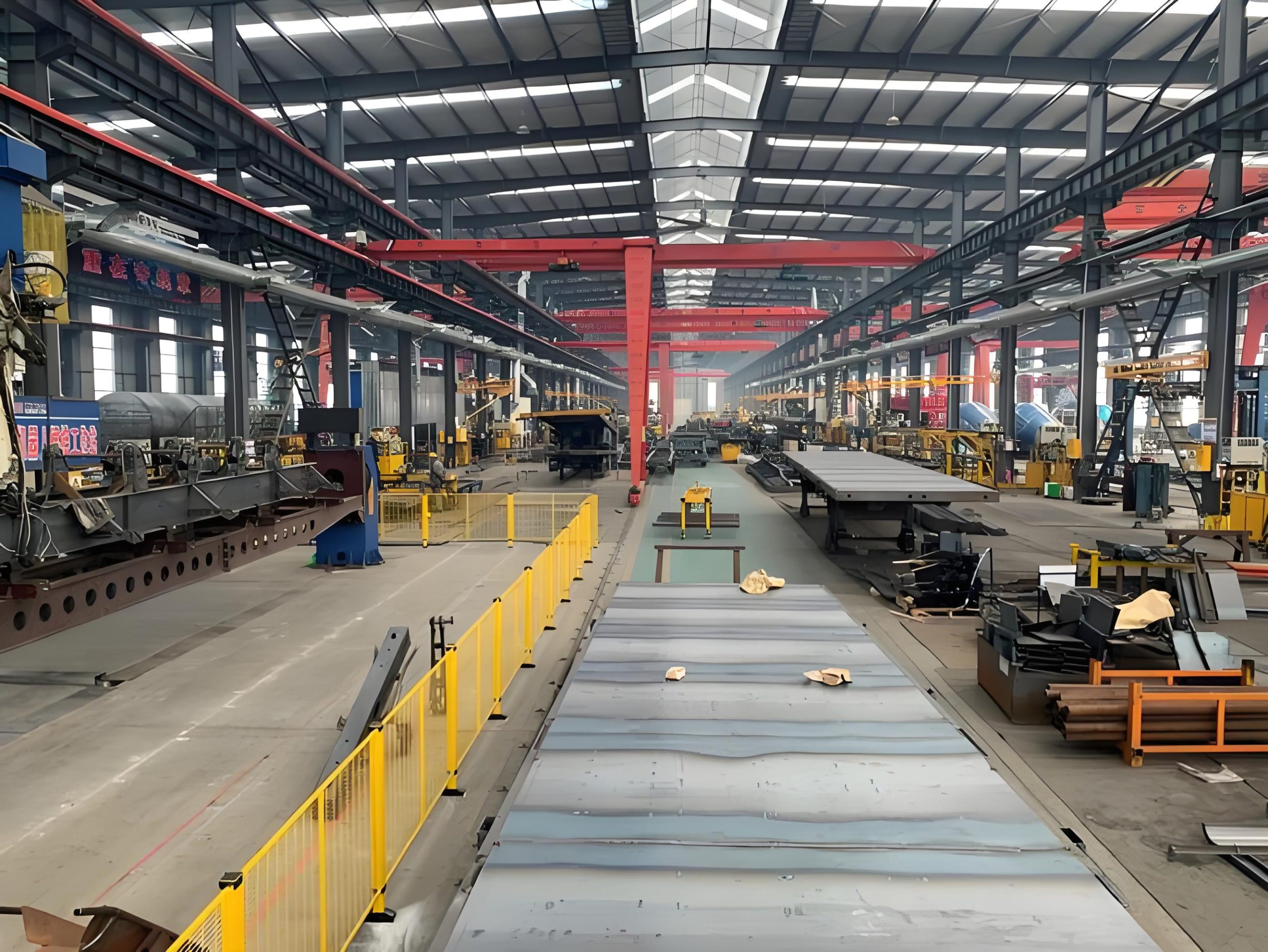
Even with production support, every feature should remain tied to the approved written scope. The same rule applies to inspection evidence, packing preparation, export documents, and approved substitutions.
A complete custom and export scope may include:
- Cargo drawings, support points, loading layout, and route conditions
- Platform dimensions, frame requirements, axles, suspension, tires, and brakes
- Locks, restraints, interfaces, lighting, coating, and loose accessories
- Inspection plan, acceptance evidence, and third-party responsibilities
- Packing method, component removal, loading supports, and shipment preparation
- Export documents, commercial terms, exclusions, and revision status
How to Compare Two Quotations on the Same Specification
A fair comparison starts with one RFQ and one controlled drawing set. Otherwise, each factory may interpret the project differently and quote a different technical solution.
The RFQ should define cargo, route, destination, quantity, tractor interfaces, inspection, packing, and commercial basis. Every offer should also state deviations rather than hiding them inside broad wording.
Separate mandatory requirements from preferences
Mandatory items protect the operating purpose. These may include cargo dimensions, support points, axle arrangement, twist-lock positions, tractor interfaces, route limits, or required documents.
Preferences provide room for alternatives. Component brands, surface finish, toolbox position, or selected accessories may allow approved substitutions.
This separation makes alternatives easier to assess. It also prevents a preferred brand from receiving more attention than a critical load or interface requirement.
Normalize inclusions before comparing totals
One offer may include spare tires, inspection records, special packing, and freight. Another may stop at factory completion and list those items separately.
The comparison should move every cost into a common category. Equipment, accessories, inspection, packing, logistics, third-party services, and destination expenses should remain separate.
A normalized total may differ from the quoted headline. That adjusted figure offers a more useful purchasing comparison because it reveals missing scope.
| Quotation line | What should be checked on the same basis |
|---|---|
| Cargo basis | Routine weight, maximum weight, dimensions, support points, cargo concentration, and loading method |
| Length and deck | Usable platform, deck material, support layout, rear geometry, and loading access |
| Main structure | Beam concept, material statement, cross members, local reinforcement, and weight effect |
| Axles and suspension | Quantity, spacing, brand, suspension package, brake scope, tires, and approved alternatives |
| Locks and accessories | Twist locks, restraints, toolboxes, headboards, spare items, and loose components |
| Inspection and packing | Checks, records, acceptance points, loose-part packing, supports, and shipping preparation |
| Commercial scope | Currency, trade term, payment stages, validity, freight, documents, third-party charges, and exclusions |
Create a deviation list for every offer
A deviation list records every difference from the RFQ. It should include substitutions, omissions, dimensional changes, alternative brands, optional accessories, and commercial exclusions.
Without this list, the review team must search through long documents for hidden changes. That process increases the risk of approving an incomplete or unsuitable configuration.
A clear deviation can still offer value. A locally supported axle option, for example, may improve service access when its technical effect remains documented.
Treat unannounced substitutions as a commercial risk
An approved alternative differs from a silent substitution. The approved option includes technical details, cost effect, service implications, and written acceptance.
By contrast, an unannounced change removes control from the purchasing process. It can also complicate inspection, spare-parts planning, and final acceptance.
The purchase document should therefore identify controlled brands and alternative rules. Any later change should require written approval before installation.
Compare technical risk before small commercial differences
A small saving may carry a larger operating consequence. Missing reinforcement, unsuitable tires, limited local support, or incomplete twist-lock scope can create later modification and downtime.
Meanwhile, a higher total may include a wider scope rather than a more expensive base trailer. The review should identify exactly what creates the difference.
A useful decision record separates technical risk, commercial cost, maintenance effect, and schedule effect. Management can then review clear trade-offs instead of one blended score.
A disciplined comparison sequence:
- Issue one RFQ and one drawing revision for every participating offer.
- Record cargo, route, destination, quantity, and commercial basis once.
- Create a deviation list and confirm each alternative in writing.
- Separate included items, optional items, exclusions, and locally supplied items.
- Normalize inspection, packing, freight, documents, and third-party charges.
- Evaluate technical risk, service access, maintenance, schedule, and total cost.
- Approve only the final quotation and its matching specification revision.
Information to Send Boca Vehicle for a Clear Quote
A strong inquiry defines the operating problem instead of naming only a trailer length. Cargo, loading methods, routes, destination requirements, preferred components, quantity, and commercial expectations all shape the quotation.
When information remains uncertain, the request should mark that point as open. This approach creates a focused technical discussion without replacing evidence with guesses.
Start with cargo and load distribution
State the cargo type, routine weight, maximum planned weight, dimensions, support points, and concentration areas. Drawings or photographs can clarify machinery, coils, pipes, steel structures, timber, and mixed project loads.
In addition, describe the loading and unloading method. Crane lifting, forklift loading, blocks, saddles, and side access can create different deck and restraint requirements.
When several cargo types share one unit, show the expected frequency of each task. The base specification should serve repeated operations rather than a vague list of possibilities.
Describe roads, sites, and operating patterns
Explain whether routes include highways, urban roads, ports, construction sites, mining access, or mixed terrain. Turning space and yard conditions can affect length and axle positioning.
Operating distance and frequency also matter. Repeated long-haul work can create different tire and maintenance priorities from short terminal movements.
Climate and corrosion exposure may need attention as well. Coastal air, standing water, dust, or winter chemicals can influence coating and maintenance expectations.
Explain the reason behind component preferences
A preferred axle brand may reflect local service access. Likewise, a suspension preference may come from route quality, cargo sensitivity, or workshop capability.
When no preference exists, the inquiry can request a recommended option with a written explanation. That explanation should cover the operating effect, maintenance implications, and quotation effect.
Tire sizes, rim types, brake interfaces, air lines, electrical sockets, and lighting requirements need similar context. Existing fleet standards can help define these items.
Define container and cargo-securing requirements precisely
Container work needs container sizes, loading combinations, lock positions, and operating frequency. The request should also state whether general cargo shares the same deck.
Cargo-restraint requirements should include headboards, stakes, rings, hooks, chain points, winches, or toolboxes where relevant. Quantity and position should follow the actual loading plan.
If detailed drawings are unavailable, marked photographs can still help. Clear visual evidence often resolves more questions than a long general description.
Complete the inquiry with destination and commercial scope
State the destination country, relevant port, quantity, expected purchasing schedule, and preferred trade term. In addition, list inspection, packing, document, and third-party service requirements.
Local technical and registration requirements should come from responsible destination sources. Any current requirement affecting dimensions, axles, brakes, lighting, or documentation should enter the RFQ.
Finally, state the preferred quotation currency and validity expectations. This information helps keep commercial comparisons consistent across revisions.
Clear quotation checklist
- Required trailer length or separate length options under review
- Cargo type, dimensions, routine load, maximum load, and support points
- Loading method, unloading method, and cargo-restraint method
- Axle quantity, preferred brand, spacing needs, and approved alternatives
- Mechanical or air suspension preference with route explanation
- Tires, rims, brakes, landing gear, kingpin, and tractor interfaces
- Container sizes, lock positions, and mixed-cargo requirements
- Headboards, stakes, rings, hooks, toolboxes, and loose accessories
- Destination country, route conditions, and applicable local requirements
- Quantity, inspection plan, packing method, documents, and shipping basis
- Drawings, photographs, reference layouts, and specification revision number
FAQ
Final Purchasing Check
Build the Specification Before Comparing the Total
A dependable quotation starts with one defined operating need. Length, structure, axles, suspension, tires, brakes, locks, accessories, inspection, packing, and export scope must all support that need.
Drawings, revision numbers, component schedules, deviation lists, and exclusions create an auditable record. This record supports technical review, inspection, payment approval, shipment preparation, and final acceptance.
Before ranking totals, every offer should describe the same trailer. Otherwise, a lower figure may represent missing scope rather than genuine commercial efficiency.
- Prepare one RFQ covering cargo, route, destination, quantity, and required options.
- Request alternatives as separate lines while keeping the base specification unchanged.
- Normalize inclusions, exclusions, inspection, packing, freight, and documents before approval.
Request a Quotation on One Controlled Specification
Submit the required length, cargo type, loading weight, support points, axle quantity, suspension, tires, twist locks, loading method, destination country, and order quantity. A clear flatbed semi trailer price should follow one approved scope, allowing every quotation to be reviewed on the same basis.
contact Boca Vehicle