
What Is a Cargo Semi Trailer

Overview
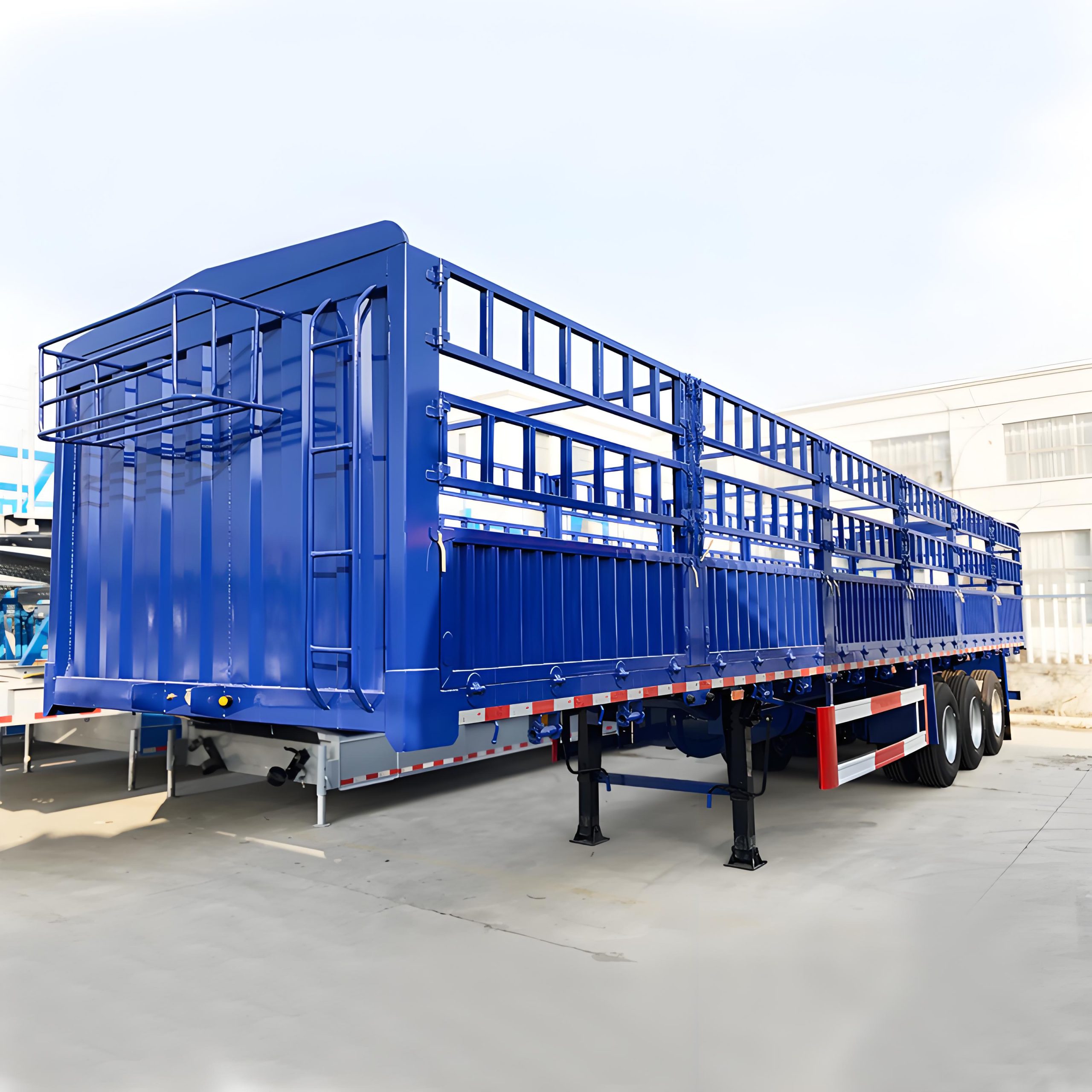
Cargo semi trailer specifically design for long-haul freight transport and have become one of the most important transportation solutions in modern logistics and freight distribution. With their high load capacity, excellent durability, and versatility, cargo semi trailers widely use to transport containers, building materials, agricultural products, industrial equipment, and other types of goods on highways and regional transportation networks.
Understanding what is cargo semi trailer , how they work, and the different types helps fleet operators, logistics companies, and transportation companies select the appropriate equipment based on their needs. Choosing the right semi trailer not only improves transportation efficiency and operational flexibility but also reduces operating costs, enhances cargo safety, and brings higher profitability to long-haul freight operations.
What is a cargo semi trailer?
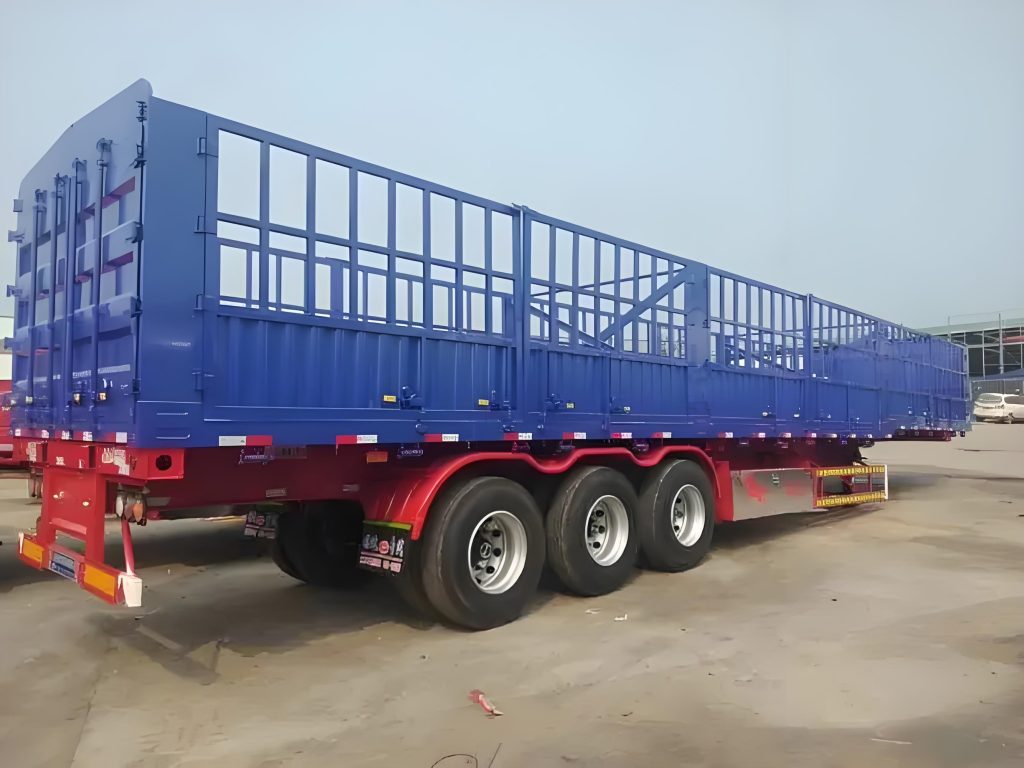
The Cargo semi trailer rely on the tractor units to provide support and power, making them more flexible, easier to operate, and capable of carrying heavier loads. They commonly use for transporting various goods on highways and within the logistics network, including industrial materials and consumer products.
Main components of a bulk cargo semi trailer :
| Component | Description |
|---|---|
| Chassis | The main structural frame of the trailer that supports the cargo and distributes the load. |
| Axles and Wheels | Typically 2 alxe ,3 alxe or 4 axles; the number depends on payload capacity. Supports the trailer and allows movement. |
| Body Structure | The cargo compartment can be configured as: enclosed box trailer, flatbed semi trailer, curtainside trailer, sidewall semi trailer. |
| Landing Gear | Retractable outriggers used to stabilize and support the trailer when uncoupled from the tractor unit. |
| Connection System | Coupling mechanism (fifth wheel) that securely connects the trailer to the tractor for safe towing. |
These components work together to provide strength, stability, and versatility, making bulk cargo semi trailers suitable for a wide range of freight type.
Types of cargo semi-trailers:
Cargo semi trailers come in a variety of configurations, depending on the type of cargo being transported and logistical requirements:
| Trailer Type | Description | Application |
| Dry Van Semi Trailer | Fully enclosed trailer to protect cargo from weather. | Consumer goods, electronics, packaged food. |
| Flatbed Semi Trailer | Open platform without sides or roof. | Machinery,Container, construction materials, oversized items. |
| Sidwall Semi Trailer | Equip with sidewall | Bulk Material |
| Curtain Side Semi Trailer | Side curtains that can be opened for easy loading/unloading. | Palletized goods, mixed cargo. |
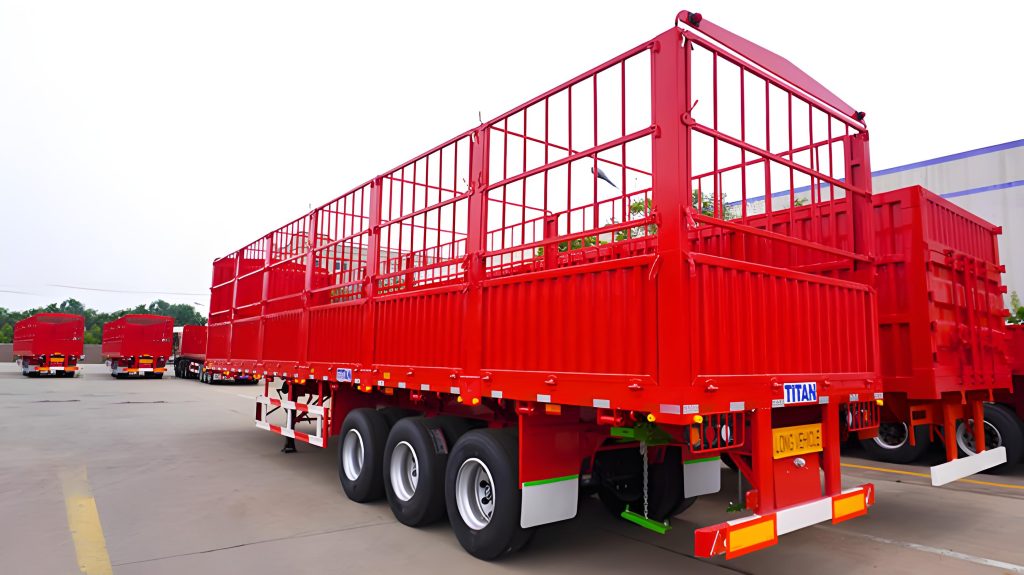
| Fence Semi Trailer | Equip with fence | Bulk Material,Vegetables, livestock |
Each type of bulk cargo semi trailer design to maximize cargo safety, increase load capacity, and improve operational efficiency.

3 Axle Cargo Semi-Trailer Specification
| Component | Specification / Description |
|---|---|
| Trailer Type | 3 Axle Cargo Trailer (Flatbed / Sidewall / Curtainside / fence / box trailer options) |
| Axles | 3 × 13T–16T heavy-duty axles (FUWA / BPW / Titan brands common) |
| Payload Capacity | 20–45 tons (depending on model and construction) |
| Overall Dimensions | Length: 12,000–13,600 mmWidth: 2,480–2,550 mmHeight: 1,500–1,700 mm |
| Wheelbase | 6,800–7,500 mm + 1,300 mm + 1,300 mm (distance between axles) |
| Tires | 12 × 12R22.5 or 315/80R22.5 |
| Rims | 9.0–9.75 × 22.5 steel disc wheels |
| Suspension System | Mechanical leaf spring suspension (air suspension optional) |
| Brake System | Dual-line air brake system, ABS optional |
| Chassis Material | High-strength steel (Q345B / Q460) |
| Body Options | Flatbed, sidewall, curtain side, or custom cargo box |
| Landing Gear | Two-speed, 24–30T capacity |
| Connection System | Standard 2” or 3.5” fifth wheel coupling |
| Paint / Coating | Anti-rust primer + polyurethane topcoat |
Cargo Semi Trailers Key Features
High Load Capacity:
Designed for efficient transport of large volumes of goods, suitable for pallets, building materials, steel products, agricultural products, and general freight.
Rugged Chassis Structure:
Constructed with high-strength steel and equipped with a reinforced chassis and main beams, ensuring excellent durability and reliability under heavy-load and long-haul transport conditions.
Multiple Body Configurations:
Available in a variety of designs, including flatbed, sidewall, lower sidewall, pillar, fence, and curtain trailer, allowing operators to handle different types of goods using the same transport platform.
Superior Stability and Safety:
The three axle design achieves optimized weight distribution, improving braking performance and road stability, ensuring safe operation on highways and in complex road conditions.
Low Operating Costs:
High load capacity and efficient design help reduce the cost per ton of transport while maximizing fleet productivity and fuel efficiency.
Ease of Maintenance:
Standardized components from internationally renowned brands simplify maintenance processes, reduce downtime, and lower long-term operating costs.
Customizable Options:
Air suspension, mechanical suspension, ABS, EBS, lifting shaft, cargo securing system, toolbox, spare tire rack and other optional features can be added to meet specific transportation needs.
Choosing the Right cargo semi trailer
Selecting the appropriate freight semi trailer is of vital importance for achieving safe, efficient and cost-effective transportation. Several key factors that need to consider include:
| Factor | Description |
|---|---|
| Cargo Type | Determine whether the goods require refrigeration, weather protection, or open-air transport. Select a flatbed trailer, sidewall trailer, curtain trailer, or refrigerated trailer based on the requirements. |
| Load Capacity | Ensure the trailer can safely carry the expected weight. two,three of four axle configuration . |
| Route and Terrain | Evaluate road conditions, bridge limits, legal height/width restrictions, and urban delivery constraints. |
| Operational Efficiency | Consider ease of loading/unloading, ramp or curtain systems, turnaround time, and fuel efficiency. |
| Compliance Requirements | Verify adherence to local traffic regulations, weight limits, and safety standards. |
Conclusion
Freight semi trailers are an indispensable part of the modern logistics system, featuring flexibility, efficiency and safety. They can carry a large amount of goods, offer flexible operation methods, and can be integrated with multimodal transport systems.